
Optimizing Coil Stacking to Prevent Damage and Maximize Space
Are you struggling with the inefficiencies and hazards of traditional coil storage? Heavy, valuable coils pose significant challenges, leading to costly material damage, wasted floor space, and serious safety risks. It’s time to transform your operations and unlock the full potential of your warehouse.
Optimizing coil stacking involves moving beyond traditional floor piles to utilize vertical storage solutions like industrial racks. These systems secure coils individually, prevent damaging contact, streamline inventory, and free up valuable floor space for production, significantly enhancing safety and efficiency.
By implementing strategic stacking techniques and leveraging specialized storage systems, you can protect your investment, improve workflow, and create a safer, more productive environment. Dive deeper to discover how to achieve optimal coil stacking in your facility.
The Hidden Costs of Traditional Floor Storage
Traditional coil storage methods, often relying on simple floor stacking, might seem cost-effective initially, but they introduce substantial risks and inefficiencies. These practices can silently erode your bottom line through damage, lost space, and compromised safety.
Traditional coil floor storage, particularly pyramid stacking, presents significant safety hazards like collapse risk and runaway coils if mishandled. It also causes material damage such as folding and buckling, leading to costly rework or scrap. Furthermore, it consumes vast, valuable floor space, hinders inventory management, and disrupts workflow, ultimately increasing operational costs despite low initial setup.
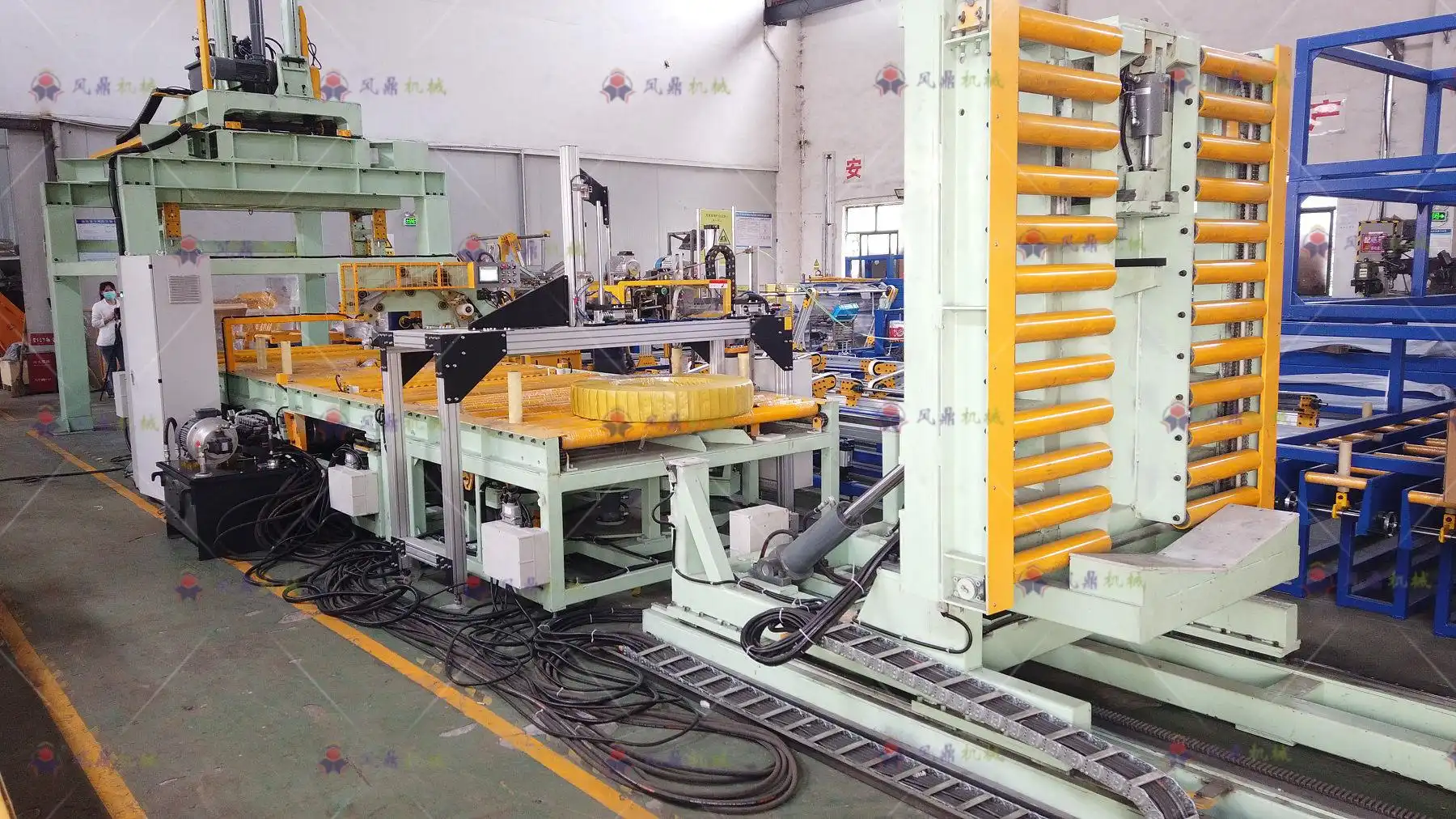
Why Traditional Storage Fails Your Operations
While seemingly simple, floor storage methods like pyramid stacking introduce a cascade of problems that impede efficiency and safety in manufacturing and distribution environments. Understanding these pitfalls is the first step toward finding a better solution.
Safety Hazards Are Amplified
Pyramid stacking involves placing coils directly on the floor in a triangular structure. While it fits coils compactly, this formation is inherently unstable, especially when coils are heavy. The risk of collapse is ever-present if the stack is bumped, the floor is uneven, or coils shift. Handling coils from these stacks, particularly unchaining, can lead to unpredictable and dangerous “runaway coil” scenarios, posing severe threats to personnel and equipment. Mishandling by transport equipment further increases the likelihood of these incidents.
Material Damage Becomes Commonplace
Direct contact and pressure between stacked coils on the floor can lead to significant material damage. Folding, buckling, and crushing of the coil edges or inner wraps are frequent occurrences. This damage often renders sections of the coil unusable, resulting in scrap, lost revenue, and downstream costs during the production cycle. The lack of individual support means the weight of upper coils bears directly on those below, increasing the risk of deformation.
Space Utilization Is Highly Inefficient
Traditional floor storage methods, especially pyramid stacking, consume vast amounts of manufacturing or warehouse floor space. This valuable real estate could otherwise be used for production equipment, staging areas, or improved workflow paths. Inefficient stacking prevents maximizing vertical space, forcing facilities to spread coils horizontally, leading to cramped layouts and hindering movement.
Inventory Management Suffers
Inefficient and disorganized floor stacks make inventory management difficult. Coils are often not easily accessible individually, leading to a Last-In-First-Out (LIFO) system rather than the preferred First-In-First-Out (FIFO). This lack of selectivity and traceability results in issues like older stock being buried, potential for flattening or cross-contamination from other materials, and requiring multiple disruptive movements to access specific coils, further increasing damage and incident risks.
Compared to the low setup cost of floor storage, these significant drawbacks highlight the critical need for a more robust and organized storage solution for heavy and expensive coil materials.
Elevating Efficiency and Safety with Coil Rack Storage
Shifting from floor storage to specialized coil racking systems represents a significant upgrade in how facilities manage heavy coil inventory. This transition is not just about holding coils; it’s about integrating storage into a holistic approach to safety, efficiency, and accessibility.
Coil rack storage systems provide numerous benefits over traditional floor stacking, primarily by improving safety through secure, individual coil cradles and robust structural designs. They enhance material accessibility, streamline inventory management with FIFO support, optimize production workflow by freeing up floor space, and prevent costly material damage by supporting coils properly.
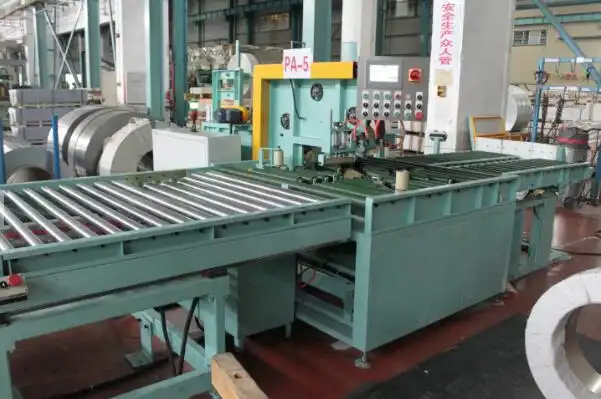
The Transformative Advantages of Rack Systems
Specialized coil racks, designed specifically for the unique challenges of storing heavy cylindrical loads, offer a compelling alternative to the pitfalls of floor stacking. They provide a foundation for a safer, more efficient, and cost-effective operation.
Enhanced Safety and Security
Unlike precarious floor stacks, coil racks are engineered to securely stow coils individually in dedicated cradles or positions. Systems built to standards like AISC (American Institute of Steel Construction) can handle substantial loads, often supporting master coils weighing up to 80,000 pounds or more with 100% load utilization. The design, incorporating robust beams, bolts, and heavy bracing, accounts for moment loads incurred during material handling, drastically reducing the risk of collapse or accidental displacement. Individual bays mean one coil can be accessed without disturbing others, eliminating the domino effect hazard present in stacked piles.
Improved Material Accessibility and Selectivity
Coil racks facilitate direct access to each stored coil. This allows for selective retrieval, enabling First-In-First-Out (FIFO) inventory practices, which are crucial for managing materials with shelf lives or those prone to damage over time. Optimized layouts, often designed with facility workflow and equipment like forklifts with specialized attachments (booms, probes, forks) in mind, ensure coils can be easily located, accessed, and moved, reducing search times and improving overall operational speed. Dynamic storage configurations can even accommodate coils stored on pallets, chocks, or pads within the same system.
Optimized Space Utilization
One of the most significant advantages of coil racks is their ability to maximize vertical storage space. By stacking coils upwards safely and efficiently, facilities can reclaim valuable floor space that was previously occupied by sprawling floor stacks. This newly available space can be reallocated for manufacturing equipment, assembly areas, or improved logistics flow, directly contributing to increased production capacity and efficiency. Racks can be designed with narrow, standard, or wide aisle requirements to further tailor space use.
Streamlined Inventory and Workflow
Beyond accessibility, coil rack storage inherently improves inventory accuracy and workflow. Aisle and slot labeling become straightforward, making inventory auditing faster and more reliable. Supporting FIFO reduces stock obsolescence and ensures material quality. By integrating rack design with pick-and-place locations and overall facility layout, the material flow from storage to production or outbound shipping becomes smoother and more predictable, minimizing bottlenecks and increasing throughput. Preventing coil damage also ensures that materials are production-ready when retrieved, avoiding costly rework or delays.
Investing in coil rack storage represents a strategic decision that addresses multiple critical aspects of coil handling – safety, space, accessibility, and efficiency – leading to a more robust and profitable operation.
Mastering Coil Packing and Stacking Techniques
Beyond the physical storage structure, the methods used to pack and stack coils play a crucial role in preventing damage and maximizing space efficiency. Precision in these techniques ensures coils arrive and remain in optimal condition while utilizing storage capacity effectively.
Precise steel coil packing utilizes appropriate materials and techniques like stretch film, VCI paper, and strapping to protect against moisture, corrosion, and physical damage during transit and storage. Effective coil stacking requires understanding orientation (eye-vertical/horizontal), weight distribution, and utilizing patterns like block or pyramid stacking to build stable structures that maximize vertical space safely.
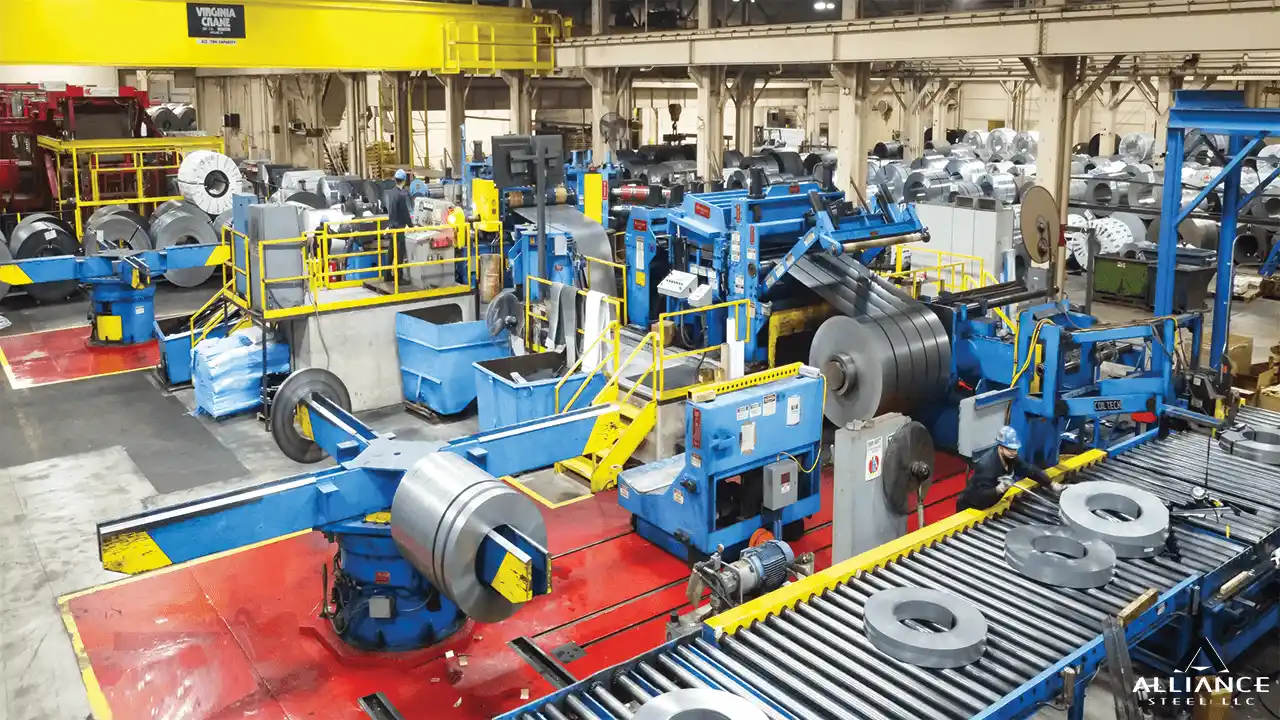
Techniques for Superior Coil Management
Achieving excellence in coil handling involves a dual focus: protecting the coil itself through precise packing and arranging coils efficiently and safely within the storage environment through masterful stacking.
Precision in Coil Packing
Effective coil packing is the first line of defense against damage. It involves selecting the right materials and applying them correctly based on the coil’s characteristics and intended journey.
-
Material Selection: The choice of packing materials depends on factors like steel type, storage duration, transport method, and environmental conditions. Common materials include:
- Stretch Film: Basic protection against dust and moisture. Cost-effective for short-term storage or covered transport.
- VCI Paper/Film: Crucial for corrosion prevention, especially in humid environments or long-term storage. Releases vapors that inhibit rust.
- Steel/PET Straps: Essential for securing the coil and preventing unwinding during handling and transport. Steel offers high tensile strength, while PET is safer and more flexible.
- Edge Protectors: Cardboard or plastic protectors applied to coil edges prevent damage from strapping tension or impacts.
- HDPE Sheets: Provide a robust moisture barrier for harsh environments or sea freight.
-
Application Techniques: Materials must be applied with consistent tension and coverage. Automated systems ensure uniform wrapping and strapping, minimizing waste and maximizing protection. For example, orbital wrappers apply stretch film efficiently through the eye of the coil, while rotary ring wrappers are used for outer wrapping. Strapping must be applied tightly but without excessive force that could deform the coil edges.
Choosing the optimal combination is key:
| Application Scenario | Recommended Material Combination | Key Benefit |
|---|---|---|
| Short-Term Storage / Domestic Transit | Stretch Film + Edge Protectors + PET Straps | Cost-effective basic protection |
| Medium-Term Storage / General Export | VCI Paper Inner + Stretch Film Outer + Straps + Edge Protectors | Corrosion & moisture protection |
| Long-Term Storage / Harsh Environment | VCI Film Inner + HDPE Outer + Full Cardboard Wrap + Steel Straps + Heavy Duty Edge Protectors | Maximum protection |
Mastery in Coil Stacking
Once packed, coils must be stacked in a manner that is both safe and space-efficient. This requires understanding coil orientation and implementing appropriate patterns.
-
Coil Orientation:
- Eye-Vertical: Coil stands upright with the axis vertical. Offers greater inherent stability, less prone to rolling. Requires lifting from the top (e.g., with a C-hook). Less vertical space efficiency. Best for heavy, large diameter coils or high throughput areas.
- Eye-Horizontal: Coil lies on its side with the axis horizontal. Can be stacked higher, offering better vertical space utilization. Requires cradling or specialized lifting (e.g., with a boom). Prone to rolling if not properly secured or supported. Best for lighter, smaller coils or space-constrained warehouses.
-
Stacking Patterns:
- Pyramid Stacking (Eye-Vertical): Stable, but space inefficient. Suitable for temporary floor storage of heavy coils.
- Block Stacking (Eye-Vertical or Horizontal): Maximizes floor space utilization. Requires dunnage or pallets for stability, especially for eye-horizontal. Good for high-density warehousing.
- Interlocking Stacking (Eye-Horizontal): Nests coils for enhanced stability. More complex, often used with automated systems.
Leveraging vertical space through high-bay racking designed for coils is paramount. Determining the maximum safe stacking height, adhering to load limits, and utilizing proper dunnage or cradles are critical for preventing stack collapse and ensuring safety. Automated stacking systems can execute these patterns with precision, optimizing density and minimizing risk.
Combining precise packing with mastered stacking techniques is essential for protecting valuable inventory and maximizing the efficiency of your storage footprint.
Choosing the Right Solution: Considerations and Benefits
Implementing an optimized coil stacking strategy requires careful planning and investment in the right systems. It’s not a one-size-fits-all approach, but rather a tailored solution based on your specific operational needs, facility constraints, and coil characteristics.

Selecting the appropriate coil racking system and integrating it into your workflow necessitates a thorough assessment. Choosing the right coil rack system involves evaluating coil size, weight, and quantity, available facility space, required accessibility (FIFO/LIFO), handling equipment capabilities, and budget. Trusted providers can engineer customized solutions designed to meet specific load capacities, improve safety compliance (OSHA, ANSI), and optimize space utilization.
Consider the following factors when transitioning to or upgrading your coil storage:
- Coil Characteristics: Accurately measure the full range of coil sizes (inner diameter, outer diameter, width) and weights you handle. This determines the necessary rack dimensions, load-bearing capacity, and handling equipment requirements. Do you need to store small slit coils alongside massive master coils? This impacts rack design flexibility.
- Facility Space: Assess your available floor space and vertical clearance. Vertical racks are key to freeing up floor area for other operations. Consider aisle width requirements for your chosen handling equipment.
- Inventory Management Needs: Do you require strict FIFO, or is LIFO acceptable? This influences whether selective rack access is necessary or if denser, block-style storage is feasible. Think about how traceability will be maintained (labeling, system integration).
- Handling Equipment: Your existing or planned forklifts, cranes, and specialized attachments (booms, probes, C-hooks) must be compatible with the chosen racking system. Rack design must accommodate safe and efficient loading and retrieval.
- Safety and Compliance: Ensure any proposed system meets relevant safety standards, including OSHA (General Storage Guidelines, Steel Erection) and ANSI (e.g., MH16.1 for steel storage racks). The rack’s structural integrity and capacity ratings are paramount.
- Budget and ROI: While coil racks have a higher initial investment than floor storage, evaluate the long-term return on investment. Savings come from reduced material damage, increased operational efficiency (lower retrieval times, higher throughput), improved safety (lower injury claims, insurance premiums), and optimized space utilization (avoiding expansion costs).
- Future Needs: Consider potential growth or changes in the types or quantities of coils you handle. Opting for modular or adjustable systems can provide flexibility for the future.
Partnering with experienced storage solution providers is crucial. They can conduct a thorough needs assessment, design an engineered system tailored to your unique requirements, and ensure compliance with safety standards. Custom solutions, ranging from roll-formed pallet racking for lighter loads to heavy-duty structural steel racks for immense weights, provide the necessary durability and security. Services may also include layout planning and installation support. Addressing challenges like operational efficiency, safety hazards (especially tipping), inventory location, and preventing coil damage are the core benefits delivered by a well-designed coil storage system.
By carefully considering these factors and investing in appropriate coil rack storage, businesses can achieve significant improvements in safety, efficiency, and space utilization, protecting their valuable inventory and optimizing their entire operation.
Conclusion
Optimizing coil stacking is fundamentally about elevating your material handling practices from basic storage to a strategic asset. By moving away from hazardous and inefficient floor stacking to engineered coil rack systems, businesses can drastically reduce material damage, enhance workplace safety, and unlock valuable floor space for other critical operations. The benefits extend to improved inventory management, streamlined workflows, and overall cost reduction through increased efficiency and reduced waste. Implementing the right combination of precision packing techniques and appropriate racking, tailored to specific coil characteristics and facility needs, is the key to achieving these transformative results. Investing in proper storage for coils is an investment in the longevity of your materials, the safety of your workers, and the profitability of your enterprise, ensuring that every square foot and every coil is utilized to its full potential through optimized coil stacking.








