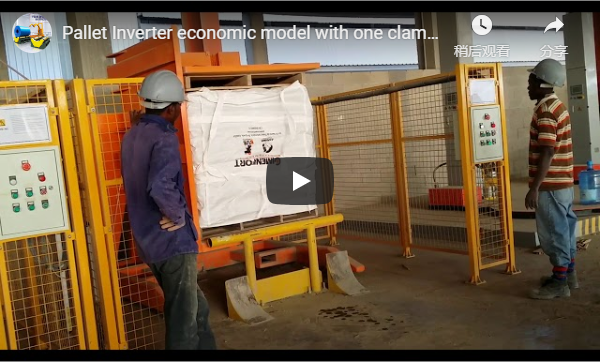
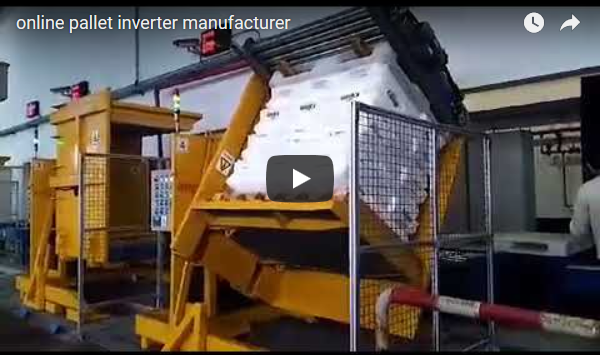
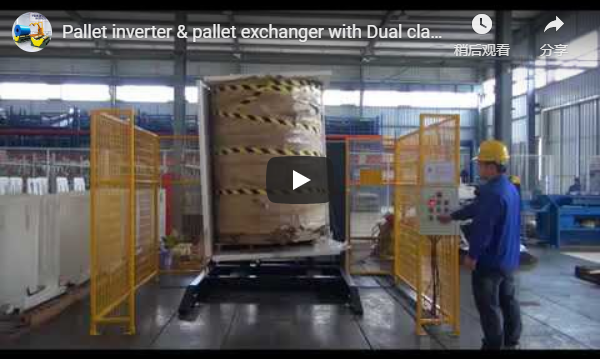
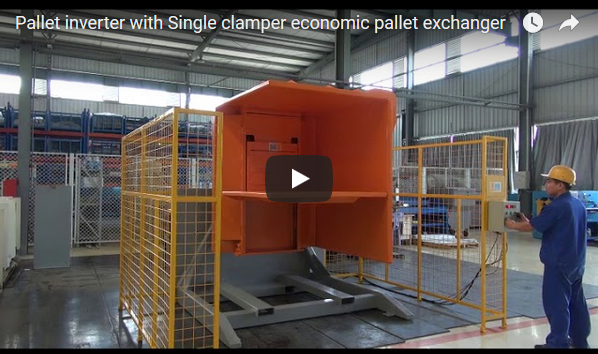
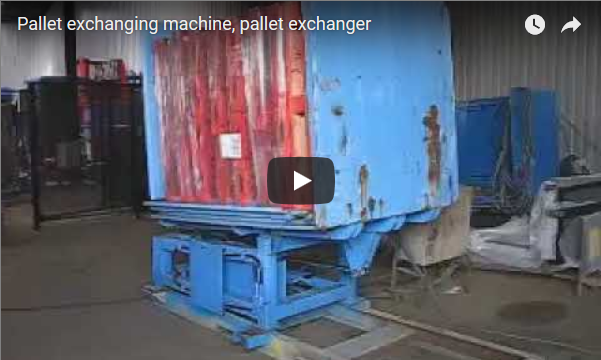
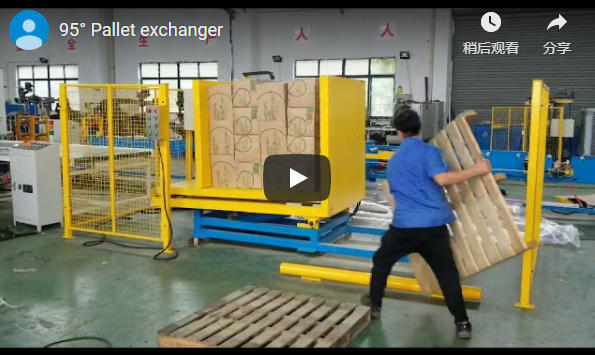
Samenvatting Deze video toont onze push-type palletwisselaar in actie in een magazijn. Een heftruck plaatst een lading dozen op een groene pallet in de machine, een duwplaat schuift de hele lading over naar een blauwe pallet en een verzamelinrichting stapelt de lege pallets op voor hergebruik. De heftruck pakt vervolgens de lading op de nieuwe pallet op.
Inhoudsopgave
- Wat de video laat zien
- Waarom pallets vervangen?
- Tijd per lading
- Wat we per locatie instellen
- Selectie checklist
- Veiligheid
- Veelgestelde vragen over techniek
- Volgende stap
- Gerelateerd lezen
- Bronnen
Wat de video laat zien
| Stap voor | Wat je ziet |
|---|---|
| Invoer | Een heftruck plaatst een lading dozen op een groene pallet in de machine. |
| Duwen | Een duwplaat schuift de lading op een blauwe pallet. |
| Collectie | Lege pallets worden in de verzamelinrichting gestapeld. |
| Uitvoer | De heftruck tilt de lading op de nieuwe pallet. |
| Website | Opslagrekken en ladingen in het magazijn |
Waarom pallets vervangen?
- Hygiëne. Vervang houten of vuile pallets door schone plastic pallets voordat ze in de opslag- of productieruimtes worden geplaatst.
- Palletpooling. Retourneer uw eigen pallets en verzend op export- of poolpallets.
- Niet handmatig opnieuw stapelen. De hele lading wordt in één keer verplaatst.
- Nette pallets. Lege pallets worden op één plek gestapeld zodat ze door een heftruck kunnen worden opgehaald.
Tijd per lading
Uitgewerkt voorbeeld (ter illustratie).
| Item | Waarde |
|---|---|
| Te wisselen ladingen per ploegendienst (voorbeeld) | 120 |
| Handmatig herstapelen per lading (ter illustratie) | 10 min |
| Handtijd per shift, 120 × 10 | 1,200 minuten, 20 arbeidsuren verdeeld over de hele ploeg. |
| Machinecyclus per lading (ter illustratie) | 1 min |
| Machinetijd per shift, 120 × 1 | 120 min, 2 uur |
Wat we per locatie instellen
| omgeving | Hangt af van |
|---|---|
| Duwslag | Pallet grootte |
| Duwhoogte | Laad hoogte |
| Collectie | Pallets per stapel |
| Invoer | Vorkheftruck of transportband |
Selectie checklist
- Afmetingen van de in- en uitgang van de pallets.
- Laadhoogte en -gewicht.
- Aantal ladingen per uur.
- Palletsoorten, hout of plastic.
- Vorkheftruck of transportband.
- Vloeroppervlakte.
Veiligheid
- Blijf uit de buurt van de duwer terwijl deze beweegt.
- Blijf uit de buurt van de heftruck terwijl deze een lading plaatst.
- Vergrendel het systeem voordat u een vastgelopen pallet verwijdert.
- Voor CE-markten is de machine ontworpen volgens ISO 12100 en EN 415-10.
Veelgestelde vragen over techniek
V: Wat doet een palletwisselaar? A: Hij verplaatst een complete lading van de ene pallet naar de andere.
V: Hoe werkt het duwtype? A: Een volledig vlakke duwplaat schuift de aan de onderkant ondersteunde lading over naar de nieuwe pallet zonder deze te kantelen.
V: Wat gebeurt er met lege pallets? A: De verzamelinrichting stapelt ze op zodat ze door een heftruck kunnen worden opgehaald.
V: Hoeveel tijd bespaart dat? A: Ongeveer 18 uur per dienst in het uitgewerkte voorbeeld.
V: Kan het apparaat vanaf een transportband worden aangevoerd? A: Ja, aanvoer via een heftruck of transportband is mogelijk.
V: Welke normen zijn van toepassing? A: Voor CE-markten zijn dat ISO 12100 en EN 415-10.
Volgende stap
Wij installeren een palletwisselaar in drie stappen:
- Dien uw lay-outtekening in. met palletafmetingen, laadhoogtes en ladingen per uur, om info@fhopepack.com.
- Ontvang binnen 48 uur een offerte. met de machinegegevens en de lay-out.
- Plan een locatiebezoek Zo bevestigen we de indeling van het magazijn.
Gerelateerd lezen
- Palletkantelaar voor het keren van ladingen
- Inline draaitafel palletwikkelaar
- Palletwikkel- en omsnoeringsmachine, type M
- Automatische verpakkingslijnen
Bronnen
- Machine-inhoud: FHOPE-engineeringteam, 2026-10-10
- Klem: de video op YouTube
- Tijd per lading: ons uitgewerkte voorbeeld, illustratieve waarden
- Normbereik: ISO 12100:2010; EN 415-10: 2014
- Tijdstip van indiening voorstel: goedgekeurde bouwvergunning (voorstel binnen 48 uur)
Laatst beoordeeld: 10-10-2026