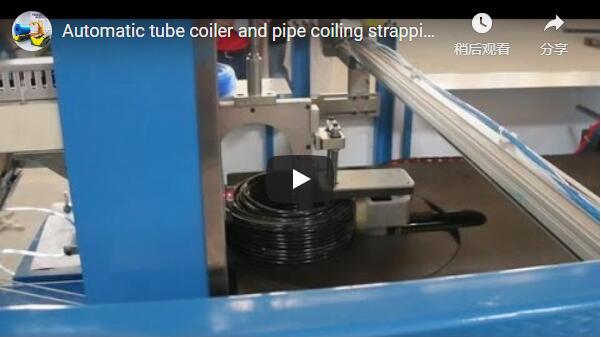
Samenvatting Deze video toont een gecombineerde machine die flexibele kunststof buizen oprolt tot nette, strak opgestapelde rollen en elke rol automatisch vastbindt voor transport en opslag. De beelden tonen de volledige lay-out, het afgesloten oprol- en vastbindgedeelte, het bedieningsscherm en de afgewerkte gele rollen op pallets. Specificaties zoals capaciteit, vermogen en buisdiameterbereik worden niet getoond — controleer deze bij de fabrikant vóór aankoop.
Het handmatig oprollen van kunststof buizen is een langzaam, onnauwkeurig en belastend proces voor de rug van de operators. Een oprolmachine die de buis ook vastbindt voordat deze de machine verlaat, neemt het grootste deel van dit handwerk weg. Op deze pagina wordt uitgelegd wat de video wel en niet laat zien, en welke vragen u moet stellen voordat u een dergelijke machine voor uw productielijn selecteert.
Wat de video laat zien: de machine in actie.
De video toont een rondleiding door een complete oprol- en omsnoeringsmachine in een fabrieksomgeving. De video begint met een breed, statisch shot van de hele machine: een grote, afgewerkte gele pijprol op een zwarte pallet op de voorgrond, en daarachter de machine zelf – een witgelakt stalen frame met rode bovencomponenten. Links staat een verticale console met een digitaal display, die blijkbaar dienstdoet als weeg- of bewakingsstation.
Van daaruit beweegt de camera langs de machine:
- 0–8 seconden: De camera draait naar rechts en zoomt in op het beveiligde werkgebied aan de rechterkant van de machine: een metalen frame met transparante deuren. Bovenop staat een driekleurige signaaltoren (rood/geel/groen), waarvan de groene lamp brandt, wat aangeeft dat de machine in werking is of gereed voor gebruik.
- ~10 seconden: Een close-up van het bedieningspaneel. Een blauw verlicht lcd-scherm toont de waarden. 39.9 en 180.0De eenheden zijn niet leesbaar op de beelden. Naast het scherm bevindt zich een rij ronde drukknoppen en onder het scherm is een geel driehoekig waarschuwingslabel geplakt. Op een plank eronder liggen rollen rode en gele omsnoeringstape.
- 12–16 seconden: De camera zoomt uit en volgt een stuk witte plastic buis dat vanuit de machine over de vloer loopt – je ziet hoe de buis in een rechte lijn wordt aangevoerd of afgevoerd. Twee werknemers in blauwe uniformen bedienen andere apparatuur op de achtergrond.
- 18–24 seconden: De camera zoomt in op de achterkant en zijkant van de machine, waar de witte elektrische kast op een onderstel met wielen en een deel van het aandrijfmechanisme te zien zijn. Vervolgens keert de camera terug naar de voorkant, waar een oranje rasteropslag- of sorteermodule zichtbaar is in het afgeschermde gedeelte, samen met een klein tafeltje waarop een zwarte printer staat – waarschijnlijk voor etiketten of pakbonnen.
- 26–30 seconden: De laatste close-ups tonen de gelaagde, transparante observatievensters en het metalen frame van de beveiligingsdeur, met daarbinnen een rode robotarm of kleminrichting zichtbaar. Een laatste overzicht toont het zijprofiel van de machine.
De volledige reeks handelingen die door de beelden worden ondersteund, is als volgt:
- Voeden — De buis komt de machine binnen en wordt door spanrollen geleid.
- Geleiden/richten — De buis passeert interne geleidingswielen die ervoor zorgen dat hij recht blijft tijdens het transport.
- Oprollen — De buis wordt naar de wikkelkop geleid, waar een roterend armatuur de kernas draait en de buis in een spiraal wordt opgerold om een gelijkmatige, vlakke spoel te vormen.
- strapping — Zodra de rol compleet is, wordt de omsnoeringsband van een bovenliggende spoel afgerold, om de rol heen gespannen en vastgezet.
- uitgang — De vastgebonden rol wordt verwijderd en op een vloerpallet geplaatst, klaar voor de volgende cyclus.
Directe observatie-aantekeningen
Hieronder volgt een beknopte beschrijving die zo dicht mogelijk aansluit bij wat op de beelden te zien is:
- De machine heeft een witgelakt metalen hoofdframe met rode functionele onderdelen aan de bovenkant en een zilvergrijs metalen frame voor de bescherming.
- Belangrijkste waargenomen onderdelen: een spoeldoorn/steun aan de linkerkant, een centrale, afgesloten verwerkingszone met transparante ramen, een omsnoeringsunit aan de rechterkant met zichtbare tapespoelen, een verrijdbaar onderstel, een verticale bedieningsconsole en een kleine werktafel met taperollen en een printer.
- Het bedieningsscherm toont 39.9 en 180.0De eenheden zijn bij deze resolutie niet leesbaar.
- Een driekleurige zendmast geeft gedurende het grootste deel van de opname continu groen licht.
- De wikkel-/omsnoeringszone is afgesloten door transparante glazen panelen in een metalen frame; een rode arm of klemmechanisme is binnenin zichtbaar.
- De afgewerkte coils zijn heldergeel, met een buitendiameter van ongeveer 60-70 cm en een kernopening van 20-25 cm; de te verwerken buis is wit, glad en heeft een diameter van ongeveer 2-3 cm.
- Onder het bedieningspaneel is een gele driehoekige waarschuwingssticker bevestigd; op een nabijgelegen pilaar is een sticker met een waarschuwingssymbool aangebracht.
- Vloermarkeringen in gele verf en een rood geverfde zone markeren het traject van de pijpleiding en het werkgebied.
- De tekst die in de beelden leesbaar is, is beperkt tot de hierboven weergegeven schermwaarden; andere bewegwijzering, waaronder een rode banner op de achtergrondmuur, is niet leesbaar.
Wat de video niet laat zien
De beelden geven een visuele rondleiding, geen specificatieblad. Geen van de volgende zaken komt aan bod, dus beschouw ze als open vragen voor de fabrikant:
- Nominaal vermogen, spanning en frequentie
- Maximale spoeldiameter, breedte en gewicht
- Diameterbereik van de buis en compatibele materialen (de video toont alleen een gladde, rechte buis)
- Cyclustijd per spoel en doorvoer
- Spanningsinstellingen en type omsnoeringsafdichting
- Modelaanduiding en veiligheidscertificaten (CE, UL, enz.)
- Garantievoorwaarden en beschikbaarheid van reserveonderdelen
Let ook op: er is geen noodstopknop duidelijk zichtbaar in de bemonsterde frames en er is geen lichtscherm te zien. De beveiligingsdeuren lijken vergrendeld te zijn volgens de standaard industriële praktijk, maar dit moet expliciet worden gecontroleerd – zie de checklist hieronder.
Waar past deze machine?
Op basis van wat zichtbaar is, is dit type machine geschikt voor producenten van flexibele kunststofbuizen die momenteel handmatig oprollen en knopen:
| Situatie | Geschikt voor deze machine |
|---|---|
| Doorlopende, gladde buis (van PVC, PE of PP) met een diameter van ongeveer 2-3 cm, zoals te zien in de video. | Past perfect — in de video wordt precies dit product getoond. |
| Lange lengtes die uniforme, vlakke rollen nodig hebben voor verzending. | Goede pasvorm — de waargenomen spoelen zijn strak op elkaar gestapeld met vierkante uiteinden. |
| Het is noodzakelijk om de spoel met de handen vast te zetten voordat deze de machine verlaat. | Goede pasvorm — de bevestiging met tapehaspels is geïntegreerd in de beschermde zone. |
| Gegolfde of gevormde buis | Onbekend — alleen gladde buizen zijn zichtbaar; neem contact op met de fabrikant voor meer informatie. |
| Pijp met een zeer grote diameter (ruim boven de getoonde spiralen) | Waarschijnlijk buiten bereik — controleer de maximale spoelafmetingen |
Wat moet je controleren bij de fabrikant?
Voordat u bestelt, zet u de volgende punten op uw checklist:
- Het bereik van de buitendiameter en wanddikte van de pijp dat de oprolmachine accepteert.
- Maximale buitendiameter, breedte en gewicht van de spoel per cyclus
- Werkelijke cyclustijd per spoel bij uw buisdiameter
- Of er deurvergrendelingen en een noodstop aanwezig zijn, en waar deze zich bevinden.
- Bevestigingsmethode (hitteverzegeling versus wrijvingslassen versus gesp) en bandbreedte
- Voedingseisen en benodigde installatieruimte, inclusief vloertracé voor de toevoerleiding.
- Onderhoudsschema en lijst met verbruiksonderdelen (tapespoelen, geleidingswielen, afdichtingen)
Veelgestelde vragen
Rolt en omsnoert de machine de buis in één automatische cyclus? De beelden tonen zowel de oprolmachine als een omsnoeringsunit met tapespoelen in dezelfde beveiligde ruimte, en afgewerkte, omsnoerde buizen die er vlakbij staan. De exacte overdracht tussen de twee stappen moet worden gedemonstreerd aan de hand van uw buismonster — neem contact op met de fabrikant.
Wat betekenen de getallen op het scherm? Op het scherm staan "39.9" en "180.0", maar de eenheden en labels zijn niet leesbaar in de video. Ze zouden betrekking kunnen hebben op lengte, snelheid of een ingestelde waarde. Vraag de fabrikant wat het display weergeeft en of het tellingen per shift registreert.
Is de machine veilig te bedienen? De wikkel- en omsnoeringszone is fysiek afgesloten achter transparante, beveiligde deuren en er zijn waarschuwingslabels op het bedieningspaneel aangebracht. Of de deuren elektrisch vergrendeld zijn, wordt niet bevestigd door de beelden — controleer dit ter plaatse en volg de vergrendelingsprocedures tijdens onderhoud.
Kan het opgerolde producten van verschillende afmetingen verwerken? De video toont één oprolmaat (ongeveer 60-70 cm buitendiameter). Aanpasbaarheid voor andere oproldiameters en bevestigingsposities is een veelvoorkomende optie — vraag de fabrikant naar het bereik.
Welk type buis werkt het beste? In de beelden is alleen gladde, rechte, flexibele kunststof buis te zien. Gegolfde, versterkte of zeer stijve buizen vereisen mogelijk andere begeleiding — stuur monsters op voor een proef.
Bedienings- en veiligheidsinstructies voor uw team
Als je een machine als deze installeert:
- Betreed de bewaakte zone nooit zolang het sein op groen staat; wacht tot het stoplicht op groen springt.
- Zorg ervoor dat het traject van de toevoerleiding op de vloer gemarkeerd en vrijgehouden wordt — de rood geverfde vloerzone in de video is een goede illustratie van zowel verkeersregulatie als struikelpreventie.
- Controleer voor elke dienst of de bandspoelen correct zijn geladen; een verkeerd ingeregen band is de meest voorkomende oorzaak van vastgelopen bandaanbrengkoppen.
- Houd de transparante beschermvensters schoon, zodat de wikkelkop tijdens de installatie altijd zichtbaar is.
- Controleer en documenteer het vergrendelingsgedrag van de beveiligingsdeuren tijdens de inbedrijfstelling.
Gerelateerd lezen
Bekijk gerelateerde apparatuur op onze website:
- Automatische omsnoeringsmachine — losstaande omsnoeringsbanden voor rollen, bundels en dozen
- Automatische spoelverpakkingslijn — complete productlijnen voor het wikkelen en verpakken van metalen rollen
- Verpakkingslijn voor kunststof buizen — eindverpakkingsoplossingen voor pijpfabrikanten
- Automatische palletwikkelmachine — Rekfolie voor gepalletiseerde ladingen
- Semi-automatische palletwikkelmachine — voor kleinere verpakkingsvolumes
Volgende stap
Produceert u kunststofbuizen en wilt u het handmatig oprollen en knopen vervangen door een automatische cel? Stuur ons dan uw buisdiameter, de gewenste spoelgrootte en de vereiste output. Wij kunnen u adviseren over de configuratie, het oprollen op uw product demonstreren en een passende offerte opstellen. Neem contact met ons op via onze contactpagina.
Bron en methode
Dit artikel is gebaseerd op de bovenstaande video, die de machine in een fabrieksomgeving laat zien. De beelden zijn frame voor frame geanalyseerd met een beeldanalysemodel op geselecteerde frames; de video bevat alleen achtergrondmuziek, zonder gesproken tekst of commentaar, dus er is geen transcriptie van de audio gebruikt. Alle observaties weerspiegelen wat op het scherm te zien is; functionaliteiten die niet zichtbaar zijn, zijn gemarkeerd als functionaliteiten die bevestiging van de fabrikant vereisen.
Gepubliceerd: 2026-09-03