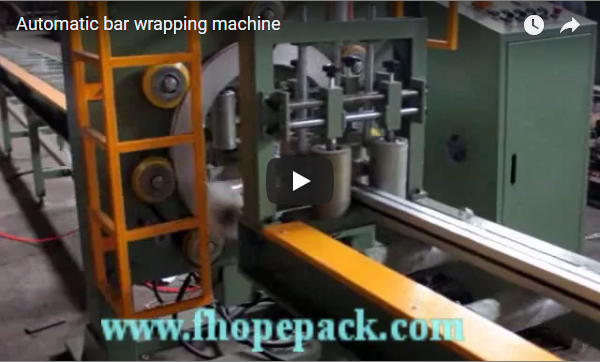
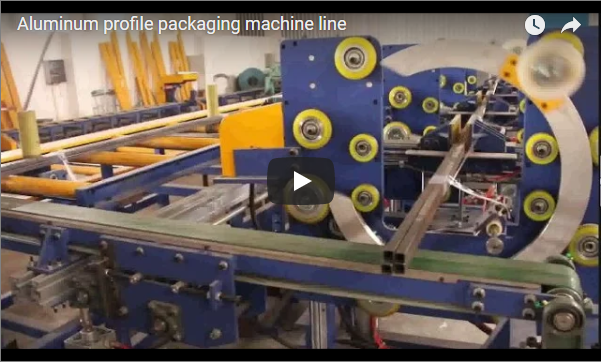
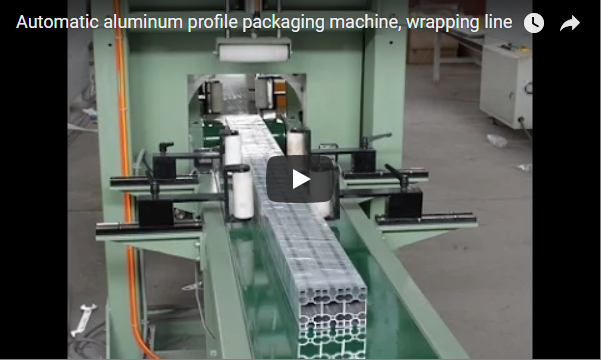
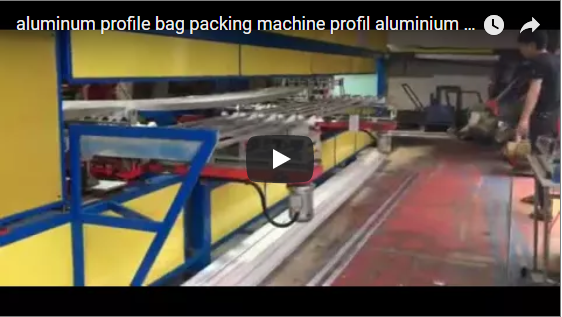
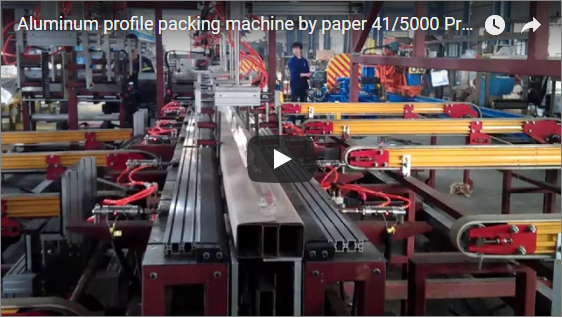
Santrauka: This page is for anyone deciding how to protect long aluminum profiles or stainless-steel pipes with film. It explains what a full-automatic orbital bagging machine does, why the name and the action differ here (the film is laid on as a flat sheet and sealed down, not wrapped by a ring), and what to verify with a supplier before you commit. The video below shows one packing cycle on a long metal profile, and the photo on this page is a product-library reference image, not a still from the clip.
Šiame puslapyje: Ką šis puslapis padeda jums nuspręsti · What a full-automatic orbital bagging machine does · Kaip plėvelė uždedama · Ką reikia patikrinti prieš perkant · Ką rodo vaizdo įrašas · Pirkėjo patvirtinimo kontrolinis sąrašas · DUK · Susijęs skaitymas · Kitas žingsnis
Ką šis puslapis padeda jums nuspręsti
Long aluminum profiles and stainless-steel pipes are vulnerable to scratching in storage and transit, and film is a common way to protect them. A full-automatic bagging machine for long products applies film to each bar as it passes on the conveyor. The video below shows that step for one profile per cycle.
This page turns that machine into questions you can ask a supplier: what profile lengths it accepts, how the film is applied to your product, and what the name “orbital” really means on your quote. The checklist at the bottom gives you a single request you can send as it stands.
What a full-automatic orbital bagging machine does
A full-automatic bagging machine for long profiles and pipes protects each long product with film as it moves along the line. A long metal profile (an aluminum profile or stainless-steel pipe) travels horizontally on a conveyor into a packaging station. Inside the station, a transparent film sheet is laid over the profile, and mechanical parts apply and seal it down along the bar’s length. The packed profile then continues on its way.
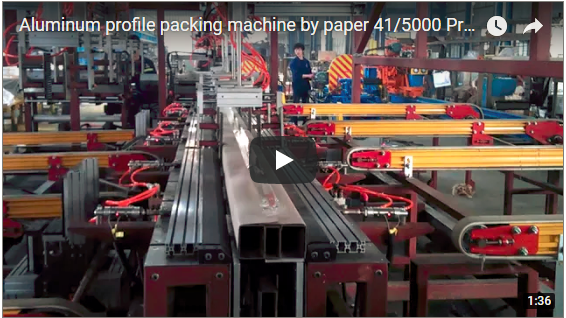
In the video the machine is a blue painted frame with yellow supports and rollers, in a long inline layout along the production line. The film supply sits on one side, with spare film rolls racked beside the machine. The process runs automatically while a worker in blue workwear observes.
Kaip plėvelė uždedama
The machine name says “orbital”, and that is worth checking against what the video actually shows. Three common ways to apply film to a long product differ in how the film and the bar move.
- Film-sheet sealing (seen here): a flat transparent film sheet is unrolled over the profile and pressed and sealed down by a mechanism that moves along the bar’s length. Confirming the frames shows the film laid on as a sheet, not wound around the bar by a ring.
- Orbital ring wrapping: a ring or arm orbits the bar while it stays straight. Not what appears in this clip.
- Iš anksto suformuota rankovė: a ready-made film bag is slid over the product. Not seen here either.
So the “bagging” in the name is real, but the geometry is film-sheet sealing rather than an orbital ring. On your quote, confirm which film-application method you are actually buying, because it changes the film cost and the finished look of each bar.
Ką reikia patikrinti prieš perkant
The video shows the packing action, not the specification. Nothing on screen states cycle rate, profile size range, film data or throughput, so those figures come from the supplier in writing. Start with six facts:
- Profilinis vokas — minimalus ir maksimalus profilio ilgis, plotis, aukštis ir svoris.
- Ciklo dažnis — profiles or metres per minute.
- Filmavimo sąranka — film type, thickness, width and roll size.
- Sandarinimo — how the film end is sealed on each bar and how the sheet is cut.
- Filmų tiekimas — roll size and how often the rolls are changed.
- Saugos paketas — tvoros, avariniai stabdžiai, apsauga ir sertifikavimas.
Kiekvienas elementas pakeičia pirkimo sprendimą. Žemiau pateiktame kontroliniame sąraše jie pateikiami kaip vienas prašymas, kurį galite išsiųsti tokį, koks yra.
Ką rodo vaizdo įrašas
What the video shows is film-sheet packing of a long metal profile. A long metal profile or pipe moves horizontally on a conveyor through a blue-framed packaging unit in the middle of the line. A transparent film sheet is unrolled over the profile, and a press head and rollers press and seal the film down along the bar’s length. The packed profile continues along the conveyor. Spare film rolls sit beside the machine, and a worker in blue workwear observes.
What the video does not show is just as important. It does not show cycle rate in profiles or metres per minute, minimum or maximum profile size, film type, thickness or roll size, model number, power or voltage. It does not show an emergency stop button, a guard fence, light curtains or interlocks, and no control panel is clearly visible.
Tiesioginiai stebėjimo užrašai iš atrinktų kadrų vadovaujasi viena taisykle: nurodoma tik tai, kas matoma, ir iš garso nieko neatspėjama, nes klipe yra foninė muzika, o nėra pasakojimo.
The machine has a blue painted metal frame with yellow supports and rollers, and a long conveyor. A packaging unit with a press head, rollers and a film roll holder sits in the middle of the line. The film comes from a supply area on one side, with spare rolls racked on the other side.
The product is a long metal profile or pipe, silver-grey with a smooth reflective surface, much longer than it is wide or tall. The photo on this page is a product-library reference image from the manufacturer, not a still from the clip.
Pirkėjo patvirtinimo kontrolinis sąrašas
| Klauskite tiekėjo | Kodėl tai lemia pirkimą |
|---|---|
| Min/maks profilio ilgis, plotis, aukštis, svoris | Ar mašina laiko jūsų strypus |
| Profiles or metres per minute | Ar jis neatsilieka nuo jūsų linijos |
| Film type, thickness, width, roll size | Plėvelė apsaugo profilį |
| How the film sheet is cut and sealed | Ar aprėptis tinka jūsų saugyklai |
| How often film rolls are changed | Rolls aside the machine are visible in the video |
| Saugumas: tvora, avarinio sustojimo sistema, apsauga, sertifikatai | No guarding is clearly visible in the clip |
Siųsti tiekėjui: Please confirm for a full-automatic bagging machine for long profiles and pipes: (1) the minimum and maximum profile length, width, height and weight; (2) the cycle rate in profiles or metres per minute; (3) film type, thickness, width and roll size; (4) how the film sheet is cut and sealed on each profile, since the film is laid on as a flat sheet in the video; (5) how often the film rolls are changed and the roll size; (6) fitted safety devices including fencing, emergency stops, guarding and certifications.
DUK
Is this an orbital ring wrapping machine? The name says orbital, but the video shows film-sheet sealing: a flat sheet is laid over the profile and pressed down along its length, not applied by a rotating ring. Confirm the film-application method on your quote.
Kokio ilgio ir dydžio profilius jis gali apdoroti? Vaizdo įraše nerodomi apribojimai. Paklauskite apie minimalų ir maksimalų profilio ilgį, plotį, aukštį ir svorį.
Kaip greitai jis bėga? The video does not show a rate. Ask for the cycle rate in profiles or metres per minute at your profile size.
Susijęs skaitymas
- Pilnai automatinis orbitinis aliuminio profilių pakavimo aparatas
- Aliuminio profilio pakuotė
- Automatinė pakavimo linija
- Aliuminio profilio tempimo vyniojimo ir pakavimo mašina
- Horizontalus orbitinis tempiamasis aliuminio profilių įvyniotuvas
- Automatinė aliuminio profilių pakavimo mašina: vyniojimo linija
Kitas žingsnis
Send the supplier your profile dimensions, cycle target and film requirements, and ask for the six verification figures from the checklist above.
Then confirm the film-application method, because the video shows film-sheet sealing rather than an orbital ring and your quotation should name the method.
Then ask about film roll size and change frequency, since the rolls visible beside the machine decide how often the line stops. Use the kontaktas puslapis kad pradėtų tą mainą.
Paskutinį kartą peržiūrėta: 2026-09-24
Paskelbta: 2026-09-24