**Sintesi esecutiva**
>
> Foam glass insulation panels are light and rigid, but their porous edges and corners chip if the stack shifts or rubs in transit. A shrink packing line covers the whole stack in film, seals it and shrinks it tight in a hot-air tunnel, so the panels travel as one closed block. This page covers the line stations, the film choices, how shrink compares with other panel packing methods and how to estimate film use.
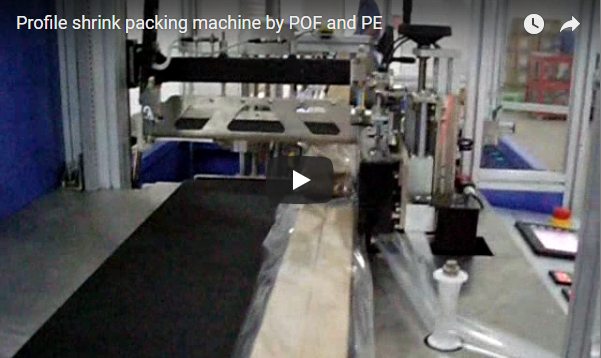
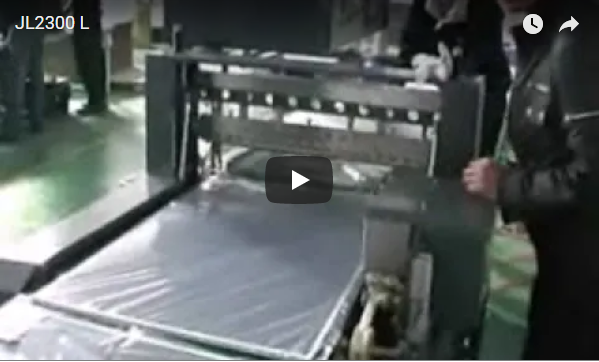
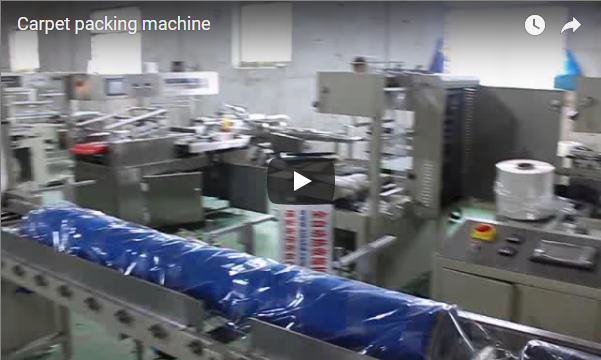
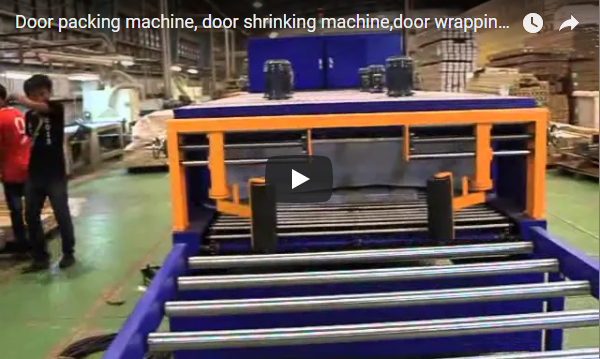
Stacks of dark grey foam glass panels go onto a green roller conveyor. White printed film unwinds from above and covers each stack, and a sealing unit presses down to close the film around it. The covered stacks then pass through a heated shrink tunnel with circulating fans, and the cycle repeats every 20 to 30 seconds.
Sommario
- Why foam glass needs a closed pack
- How the shrink packing line works
- Line and film data
- Shrink vs other panel packing methods
- Film use per stack
- Lista di controllo per la selezione
- Sicurezza
- FAQ di ingegneria
- Passo successivo
- Lettura correlata
- fonti
Why foam glass needs a closed pack
Foam glass is cellular glass: the surface is open and abrasive, and the corners break under point load. Loose panels rub each other and shed dust. Straps alone cut into the edges. A shrink pack holds every panel in the stack at even pressure on all sides, keeps out rain on site and gives a flat printed surface for the brand and product data.
How the shrink packing line works
1. **Stack and feed:** panels are stacked on the roller conveyor; sensors detect the stack and fix its position.
2. **Cover:** film from upper and lower rolls meets in front of the stack and covers it as it moves through.
3. **Seal:** the sealing unit presses down and closes the film around the stack; the cutter separates front and back seams.
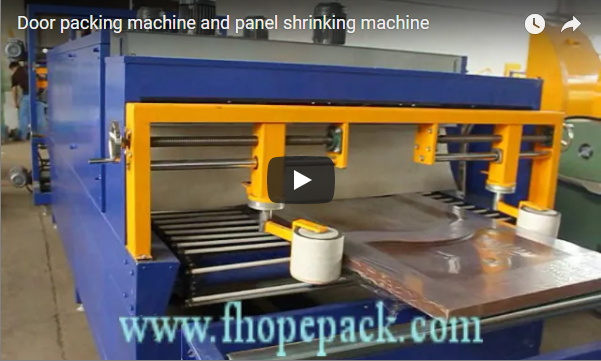
4. **Shrink:** the stack passes through the tunnel, where hot air circulation shrinks the film tight.
5. **Outfeed:** finished packs leave on rollers for palletising.
PLC and HMI control the line; sensors trigger the sealing, the PLC sets sealing temperature, and the front feed speed is adjusted so the conveyor indexes in step with the seal cycle.
Line and film data
| Item | FHOPE panel shrink packing machine |
| :--- | :--- |
| Control | PLC and HMI |
| Feed modes | auto and manual |
| Film | PE, POF or PVC with vent holes |
| Recommended film thickness | 80–150 μm; 200 μm for heavier protection (PE film; thickness for POF or PVC set per film type) |
| Conveyor speed | about 4–9 m/min |
| Working table height | about 800 mm |
| Sealing width | adjustable |
| Tunnel | high-speed hot air circulation |
Foam glass stack length, width and height ranges are confirmed at quote; the door shrink model on the same platform packs objects 1,000–4,000 mm long.
Shrink vs other panel packing methods
| Method | Protection level | Best for |
| :--- | :--- | :--- |
| Film covering and cutting | top and bottom film, sides open | indoor storage |
| Film sealing and shrinking | fully closed, tight pack | outdoor storage, rigid panels |
| Orbital 4-side wrapping | stretch film around length | long panels |
| Wrapping plus end sealing | closed on 6 sides | high-value panels |
For rigid foam panels, film sealing plus shrinking is usually the best fit.
Film use per stack
**Film length per stack ≈ stack length + stack height + seal allowance. Film width ≈ stack width + stack height + overlap.** For a stack 1,200 mm long, 600 mm wide and 400 mm high, with 100 mm allowance, each film web needs about 1,700 mm per stack and 1,100 mm width (example only). At 150 μm this sets your film cost per pack; your film supplier gives the weight per square metre.
Lista di controllo per la selezione
1. Panel length, width, thickness and panels per stack?
2. Stacks per hour?
3. Film type and thickness, printed or plain?
4. Indoor or outdoor storage?
5. Inline with the panel cutter or stand-alone?
6. Palletising after the tunnel?
Sicurezza
We design shrink lines to EN ISO 12100:2010 for risk assessment, EN 415-10 for packaging machine safety and EN 60204-1 for electrical equipment. The sealing bar and the hot tunnel are the main hazards; guards and safety doors cover them.
FAQ di ingegneria
Q: Will heat damage foam glass?
A: No; foam glass is non-combustible and the tunnel only heats the film surface.
Q: Why vented film?
A: Vent holes let air escape so the film shrinks flat without balloons.
Q: Can the film be printed?
A: Yes, printed film carries brand and product data.
Q: Can the same line pack other insulation boards?
A: Yes, sealing width and feed speed adjust per product.
Passo successivo
1. **Send your panel and stack sizes, output and storage conditions** to info@fhopepack.com.
2. **We choose** the packing method and lay out the line.
3. **Rispondiamo entro 24 ore** con una proposta e un preventivo.
Lettura correlata
- [Automatic door shrinking machine (product)](https://www.fhopepack.com/Automatic_door_shrinking_machine.html)
- [Fibre panel packing machine (video)](https://www.fhopepack.com/videos/fibre-panel-packing-machine/)
- [Automatic panel sealing and shrinking machine (video)](https://www.fhopepack.com/videos/automatic-panel-sealing-and-shrinking-machine/)
- [Door and panel shrink packaging machine (video)](https://www.fhopepack.com/videos/door-and-panel-shrink-packaging-machine/)
fonti
- FHOPE product page: automatic door shrinking machine
- FHOPE project correspondence on foam and insulation panel packing
-ENISO 12100:2010; EN 415-10; EN60204-1
- The foam glass packing line shown above
Ultimo aggiornamento: 20/10/2026