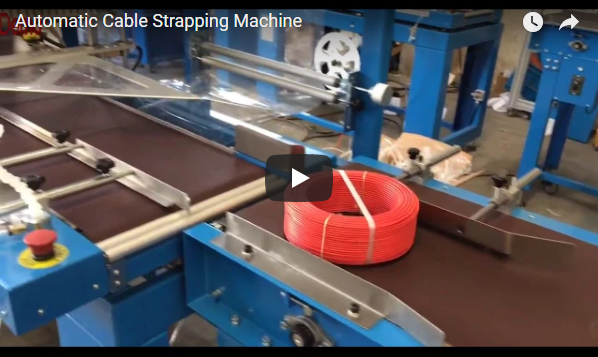
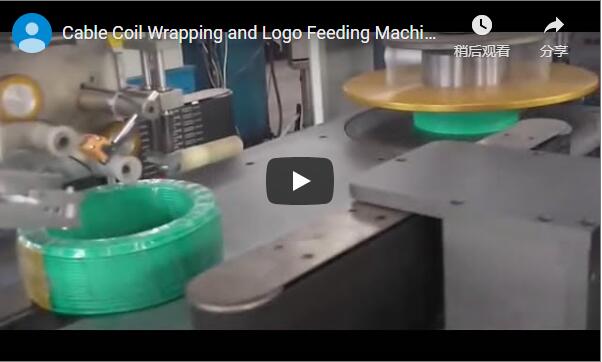
خلاصه اجرایی: A cable line that stops for hand wrapping every few hundred metres is a line that runs below its speed. This page is for manufacturers deciding whether an online automatic cable winding and wrapping machine fits that bottleneck. It explains the stations the footage shows, what the demonstration proves and what it does not, and the questions that turn a machine into a defensible purchase.
https://www.fhopepack.com/Cable-packing-machine/
در این صفحه: این صفحه به شما در تصمیمگیری چه کمکی میکند؟ · Why the wrap step sits on the line · How the line feeds the wrap station · How a bundle is wrapped · آنچه تصویر ایمنی نشان میدهد · آنچه کلیپ نشان میدهد · چک لیست تایید خریدار · سوالات متداول · خواندن مرتبط · مرحله بعدی
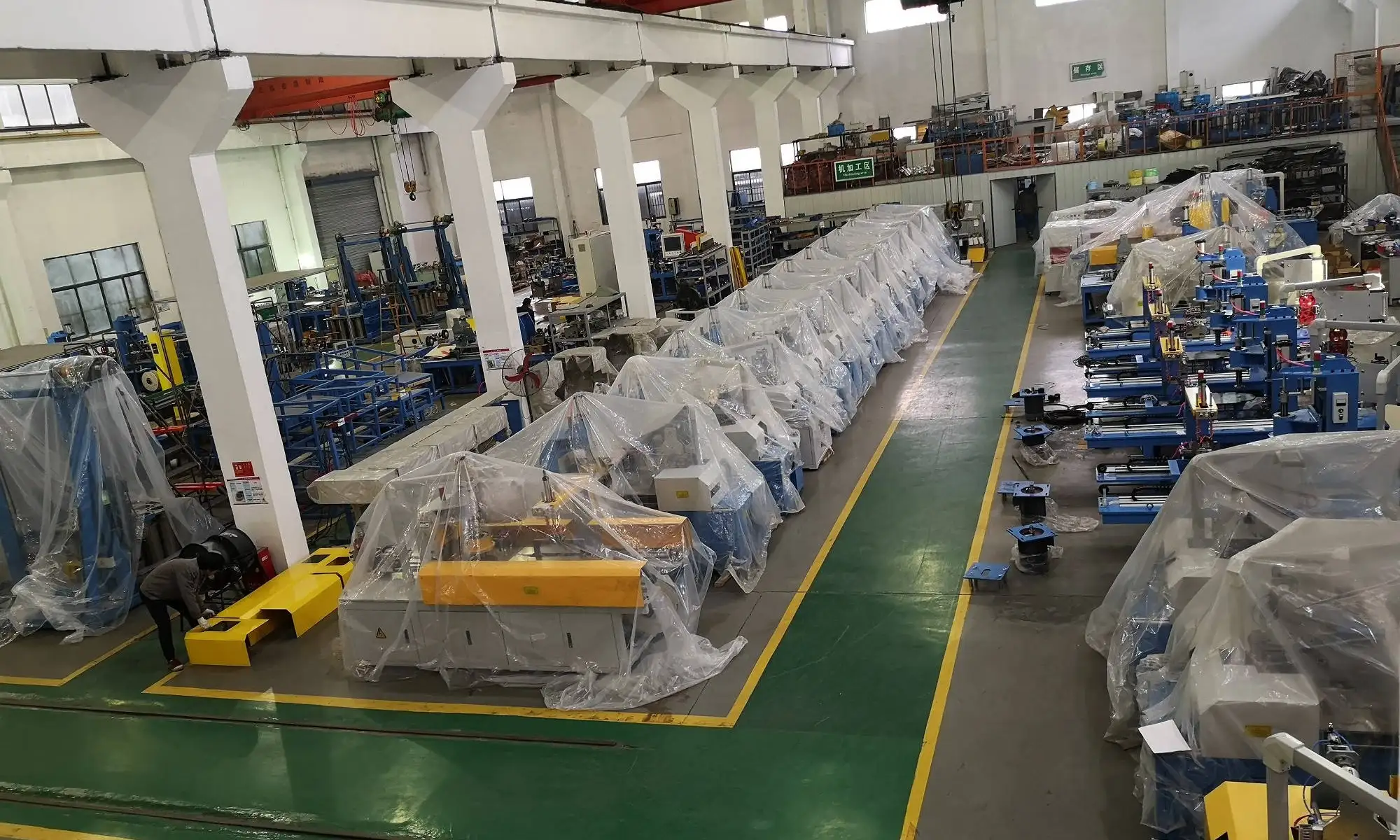
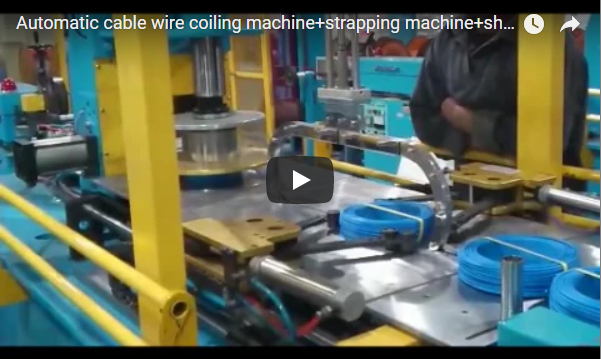
Caption: An automatic cable winding and packing line. Product-library reference image, not a still from the clip.
این صفحه به شما در تصمیمگیری چه کمکی میکند؟
Online cable processing earns its name when the wrapping happens without taking the cable off the line. The online automatic cable winding and wrapping machine the footage tours is that kind of equipment: the cable feeds in, runs through guidance, and is wrapped while it is still in process. This page turns the tour into a scope check.
It describes the stations the camera shows, from the reel feed to the wrapping head. And it marks the one gap that matters most: the clip is a walk-through of several machines, so the quotation has to name which of them you are buying.
Why the wrap step sits on the line
A cable or wire bundle that leaves a line bare has two choices: get wrapped by hand at the end, or get wrapped as part of the flow. The hand route costs labour and wraps unevenly, because the same operator cannot hold the same tension twice. The in-line route wraps every bundle the same way at the line’s own speed.
The theoretical saving is more than labour. In-line wrapping keeps the bundle intact from the moment it is finished, and it removes the separate handling step of moving bare cable to a wrapper. The cost is integration: the wrap station has to match the line’s speed and accept the line’s cable shape.
That trade is exactly the one the clip illustrates. The footage shows a full shop floor with several cable-process machines, and only a written line layout can turn that tour into a quote.
How the line feeds the wrap station
The footage opens at the feed end. A large copper-coloured cable reel pays out the cable, which runs up over guide rollers and into a bank of rollers that steers it forward. The cable then travels along parallel steel slide rails, and a low-power pink laser beam crosses the line at the guide section, pointing at the cable path for alignment.
From there the cable passes a work desk with a stout control panel: a dark display screen, three indicator lamps with the green run lamp lit, and a coloured emergency-stop button on the panel. Six digital counters sit on the same panel, showing values that shift while the line runs, though the clip never ties any reading to a machine specification.
The feed section proves one thing plainly: cable can be guided under tension through a fixed path into the wrapping stage without a hand touching it. Everything about the speed and tension control stays off-screen.
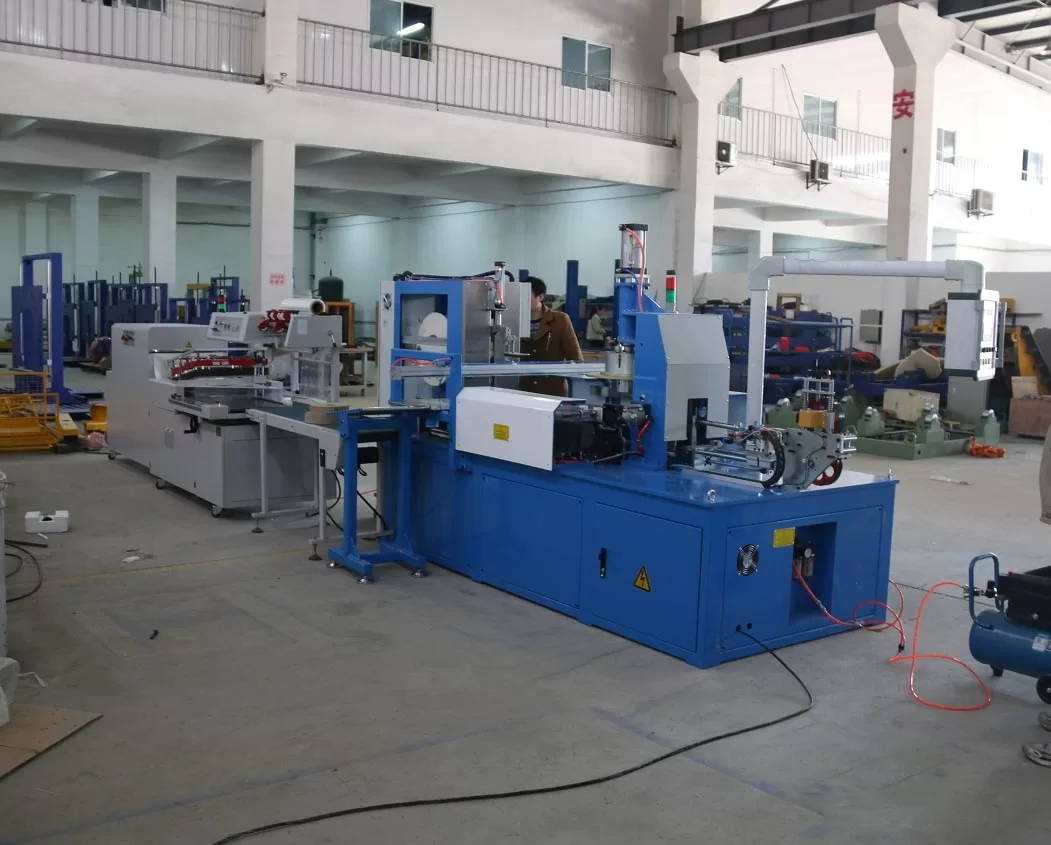
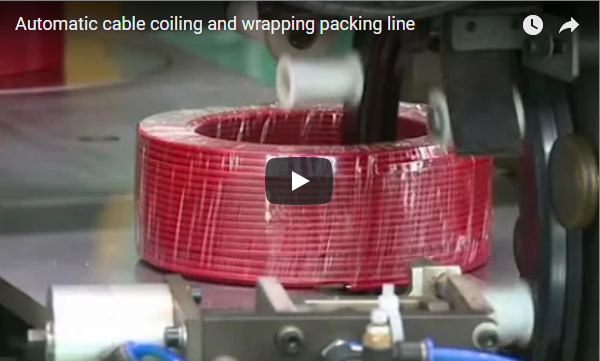
عنوان: یک ایستگاه سیمکشی کابل. تصویر مرجع کتابخانه محصول، نه یک تصویر ثابت از کلیپ.
How a cable bundle is wrapped
The working core of the clip is the bundle-wrap station. A black cable bundle is laid flat on a metal worktable, and a vertical press arm comes down to hold it in place. A yellow disc on the right then feeds a black tape or sheath material.
The tape spirals round the bundle from one end to the other while the press keeps it tight. When the wrap is complete the press lifts and the wrapped bundle moves out to a roller conveyor.
A second cluster shows the same principle on a different product. A clamping arm lifts a cable coil onto a yellow turntable, rotates it while the coil is wrapped, and then pushes it to the conveyor.
The common mechanism is worth underlining. In every wrap the workpiece stays put or turns in place, and the material is fed round it, which is the repeatable pattern the line is built on. The specific pattern for your bundle, including the overlap and the number of layers, is a number the clip never gives.
آنچه تصویر ایمنی دستگاه نشان میدهد
The safety picture in the footage works at two levels. Around the feed and guide section, blue mesh fencing covers the moving rollers, and the control panel carries an emergency-stop button and warning pictograms. Where the camera is closest to the wrapping heads, the picture is thinner: no full fence or light curtain surrounds the press arm area in the footage.
That mix is common on line tours, and it is why the safety story belongs in writing. The wrap station is a power-press-like risk zone, so ask for the guard, the interlock and the emergency stop as a device list, and confirm the light-curtain question explicitly for your operator positions.
One further honesty note: the footage carries third-party marks and its own processing overlays, which are not consistent across the clip. None of the marks identify the machine’s model, so the machine identity has to come from the supplier.
آنچه کلیپ خط تولید ماشین نشان میدهد
What the video shows is a shop-floor tour of an inline cable processing line. A copper cable pays off a reel and runs through guide rollers and steel rails, past a pink laser alignment beam, to a bundle-wrap station.
There a press holds a black cable bundle while tape from a yellow disc spirals round it. A second cluster receives cable coils on a yellow turntable, wraps them as they turn, and sends them to a conveyor and a stacked output area.
Operators appear at the edges, and equipment fills the background. The photos on this page are product-library reference images, not stills from the clip. Direct observation notes from the sampled frames, not a performance test.
The clip does not show the line speed, the cycle time, the maximum size, the tape and film specifications, the wrap layers, the model, or any certification. The digital counters show changing values, but no reading is identified as a machine specification.
What the footage does prove is the arrangement: the line guides the cable, wraps it in place, and moves the finished bundle on. The numbers that turn that arrangement into a quote are missing and must come in writing.
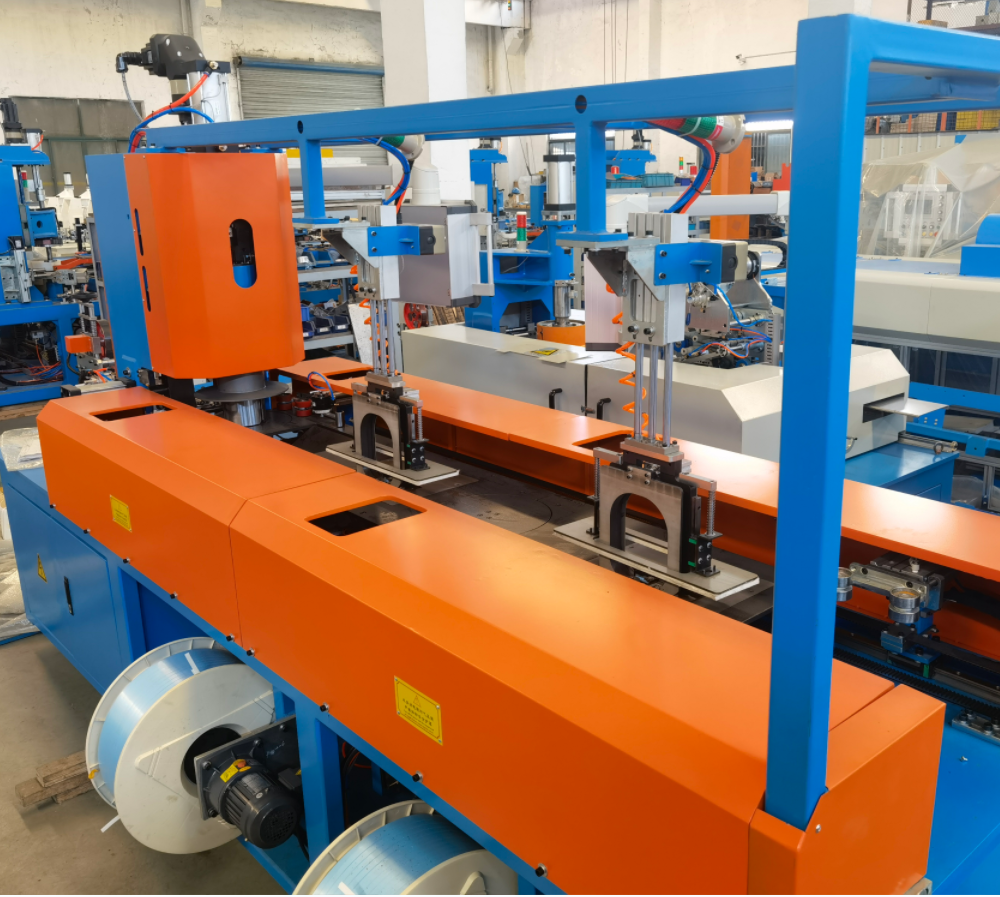
عنوان: تجهیزات سیمپیچ در حال کار. تصویر مرجع کتابخانه محصول، نه یک تصویر ثابت از کلیپ.
چک لیست تایید خریدار
Six questions decide whether the line fits your cable. Ask them in writing, and keep the answers with the quotation.
| از تامین کننده بخواهید | چرا خرید را تعیین میکند |
|---|---|
| Which stations are in the quotation | The clip tours several machines, so the package must name each |
| Line speed and wrap cycle time | The clip shows no speed or clocked cycle anywhere |
| Cable and bundle envelope | The maximum size appears nowhere in the footage |
| Tape and film specification | The wrap material decides protection and unravelling risk |
| Wrap layers and overlap settings | The settings that decide whether the wrap stays tight |
| Safety devices for the wrap station | A press-arm area needs a guard and interlock in writing |
این را برای تأمینکننده ارسال کنید و آن را به همین صورت کپی کنید:
- The stations you need, listed one by one.
- Your cable and bundle envelope and daily length.
- The line speed and one clocked wrap cycle per station.
- The tape and film grades the quoted machines accept.
- The wrap layers and overlap you get on your bundle.
- The feed and take-off arrangement on your floor.
- The safety device list for the wrap stations.
سوالات متداول
Does the clip show one machine or a whole line?
It shows a shop floor with several stations, from the reel feed to two wrapping areas. Confirm with the supplier exactly which stations are in your quotation and how cable moves between them.
What sizes can the line handle?
Not shown. No readable label or number gives a maximum anywhere in the footage, so send the supplier your bundle envelope and daily length and ask which model covers them.
Is every wrap fully automatic?
The wraps in the clip run automatically once the cable or coil is in the work area. The feed end still depends on reel changes and the line’s own setup, so confirm the end-to-end workflow with the supplier.
خواندن مرتبط
- دستگاه بسته بندی کابل — the cable packing equipment family behind this line.
- سیم جمع کن کابل — traverse winding equipment for pay-off and take-up.
- دستگاه کلاف اتوماتیک — the coiling step that feeds a wrapping station.
- دستگاه تسمه اتوماتیک — the strapping step for finished cable bundles.
- کیسه گیر خودکار — bagging for straight cable lengths.
- دستگاه بسته بندی کویل مسی — packing for copper and fine-wire coils.
مرحله بعدی
Send the supplier your cable and bundle envelope and daily length first, and the set of stations you need in the quotation. The clip shows how the line is arranged, and the package has to be named by the supplier.
Then send the seven questions above, and ask for the line speed, the clocked cycles and the safety list.
Then book one run on your cable and inspect a wrapped bundle for overlap, layer count and edge seal. Use the صفحه تماس با برای شروع آن تبادل.
آخرین بررسی: 2026-09-28
منتشر شده: ۲۰-۰۴-۲۰۲۶