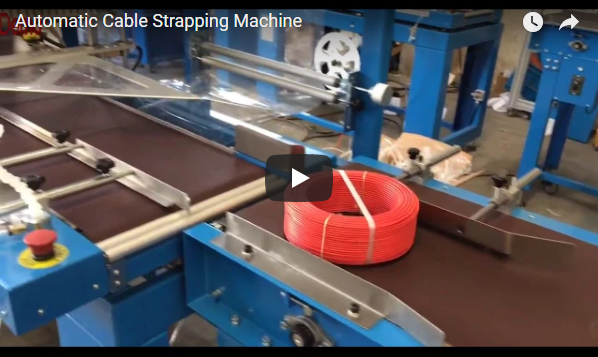
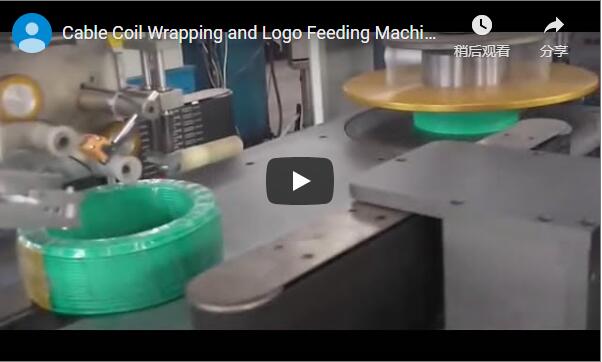
خلاصه اجرایی: A cable reel that ships unwrapped collects dust and loses its outer turns on the first trip. This page is for buyers deciding whether an automatic cable coiling and film wrapping cell fits that end-of-line step. It explains how the reel is placed, wrapped in a spiral film and sent out, what the demonstration proves and what it does not, and the questions that turn a machine into a defensible purchase.
https://www.fhopepack.com/Cable-packing-machine/
در این صفحه: این صفحه به شما در تصمیمگیری چه کمکی میکند؟ · Why a cable reel needs a film · How the wrapping cell works · آنچه تصویر ایمنی نشان میدهد · آنچه کلیپ نشان میدهد · چک لیست تایید خریدار · سوالات متداول · خواندن مرتبط · مرحله بعدی
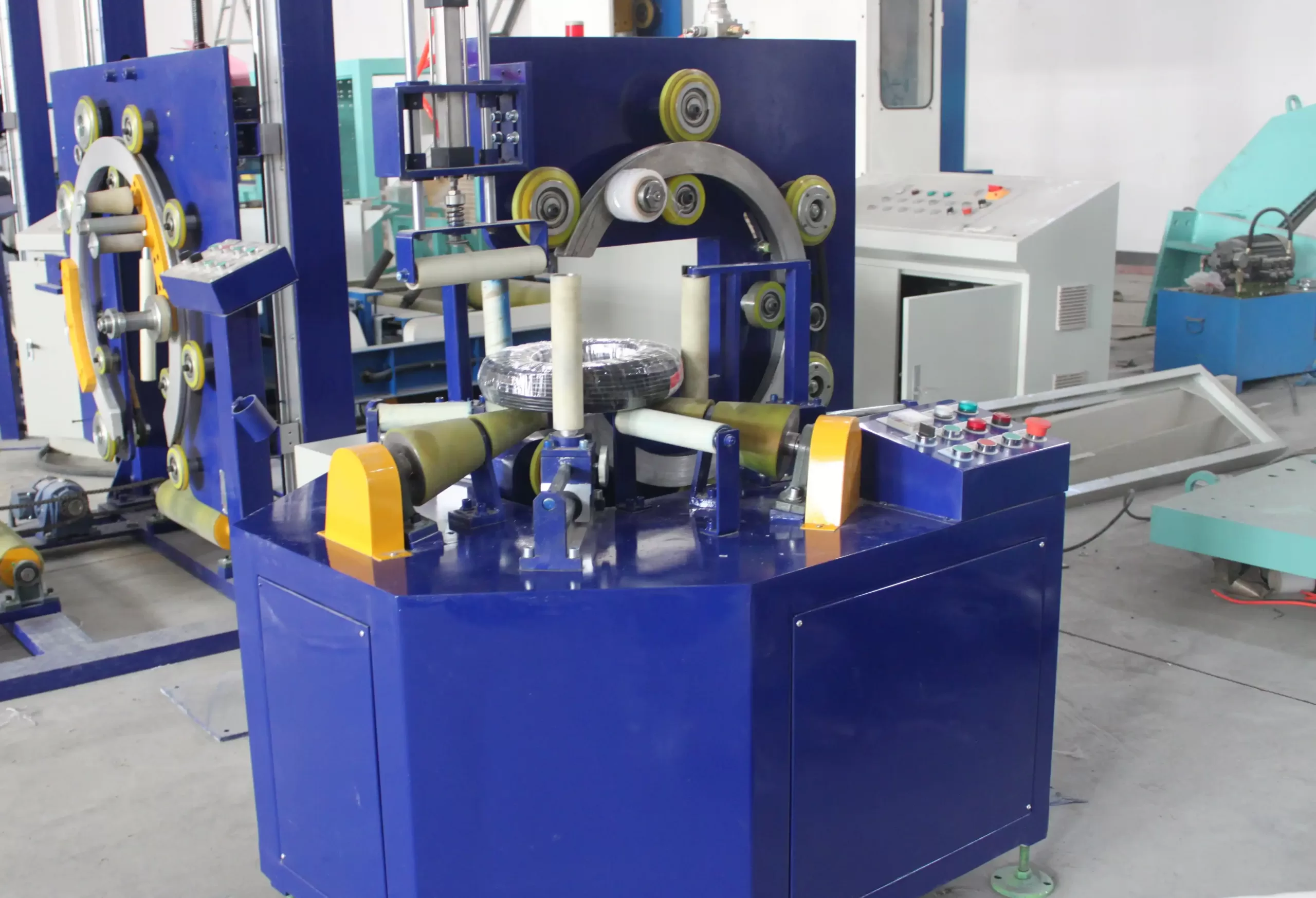
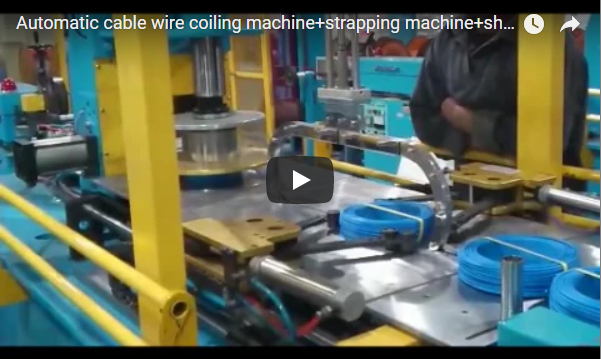
Caption: A cable-reel film wrapping cell on a shop floor. Product-library reference image, not a still from the clip.
این صفحه به شما در تصمیمگیری چه کمکی میکند؟
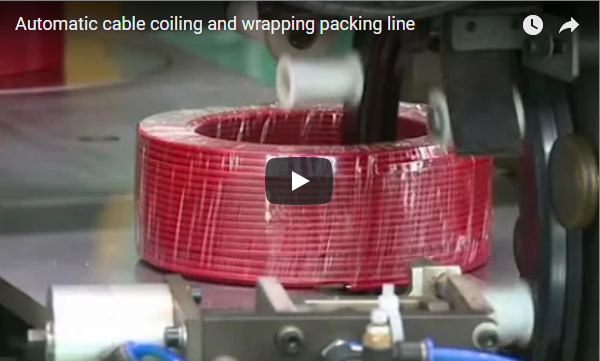
A wound cable coil only sells cleanly if its outer layer stays put. Loose turns unravel, and dust and moisture work their way between the layers. A film-wrapping cell exists to fix both problems in one automatic pass, with the coil held still and the film wound round it.
This page is for the buyer looking at that cell for a cable or wire product. It describes what the footage shows the machine doing, and it names the specifications the clip never reveals, so the purchase can be checked against real numbers.
Why a cable reel needs a film
Cable reels and coils gather two kinds of damage in storage. Turning and stacking loosen the outer turns, and an unwrapped surface picks up dust, oil and fingerprints that are hard to clean off fine insulation. A wrapped coil keeps both problems out.
A spiral film wrap does the job in one direction. It runs continuously round the circumference, holding every turn of the coil against the ones below it. That single continuous band is the difference between a coil that stays round and one that telescopes in the first lift.
The wrap also marks the coil as finished work. A clean, uniform film layer separates packed goods from work in progress, which matters when coils wait on a shop floor before shipping.

Caption: A horizontal steel coil wrapping machine. Product-library reference image, not a still from the clip.
How the wrapping cell works
The cell in the clip is a single-workstation wrap unit. The coil is placed on a central turntable, and a press head descends from an overhead crossbeam to hold it in place. A film roll mounted on a side frame feeds a transparent film as the turntable rotates, and the film spirals round the stationary coil from one edge to the other.
When the pass finishes, the press head lifts and the wrapped coil is pushed sideways onto a roller conveyor. The cycle then repeats for the next coil, and in the footage the sequence runs at least twice in a row.
The mechanical core is simple. The turntable turns, the film feeds, and the press keeps the coil centred, so the spiral lands evenly. The settings that control the wrap tightness, the number of turns and the edge overlap are nowhere on screen.
آنچه تصویر ایمنی دستگاه نشان میدهد
The safety picture in the footage is quiet rather than reassuring. The machine frame forms the only physical boundary, and no fence, guard or light curtain appears around the turntable. No emergency-stop button is visible, and no readable safety label appears anywhere.
That does not make the machine unsafe, but it does make the quotation carry the whole safety story. Ask for the guard arrangement, the emergency stop and the interlock logic in writing, and judge the machine on the specification rather than on the clip.
Two honesty notes belong beside it. No control panel is legible in the footage, so nothing about settings can be read from the video itself. And no brand, model or number appears on any surface, so the machine’s identity has to come from the supplier.
آنچه کلیپ خط تولید ماشین نشان میدهد
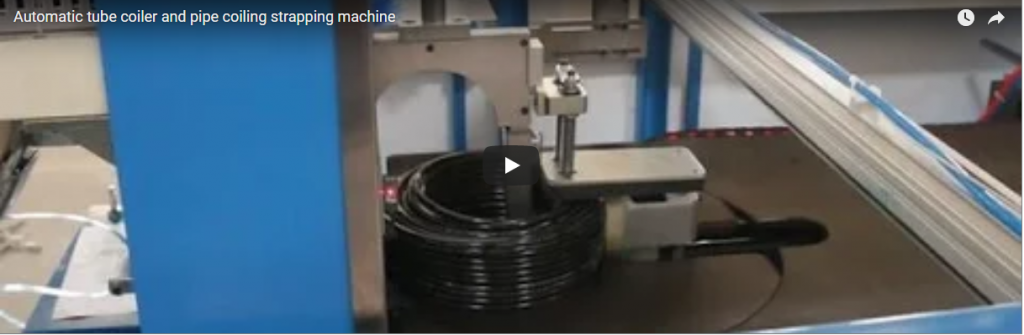
What the video shows is one automatic film-wrapping cell wrapping a black cable reel. The reel is placed on a central turntable, a press head descends from above, and a film roll on the side feeds a transparent film as the turntable rotates.
The film spirals round the reel from one edge to the other, the press lifts, and the wrapped reel is pushed sideways onto a roller conveyor. The sequence runs at least twice while a worker in an orange shirt stands to one side. The photos on this page are product-library reference images, not stills from the clip. Direct observation notes from the sampled frames, not a performance test.
The clip does not show the cycle time, the reel diameter or weight range, the film specification, the number of wrap layers, a model or power rating, or any certification. No readable numbers appear anywhere, and the clip ends with wrapped reels leaving on the conveyor.
What the footage does prove is one complete step: place, wrap, lift and output. Everything a buyer needs to cost that step — cycle rate, limits, film use — is missing from the footage and has to come in writing.
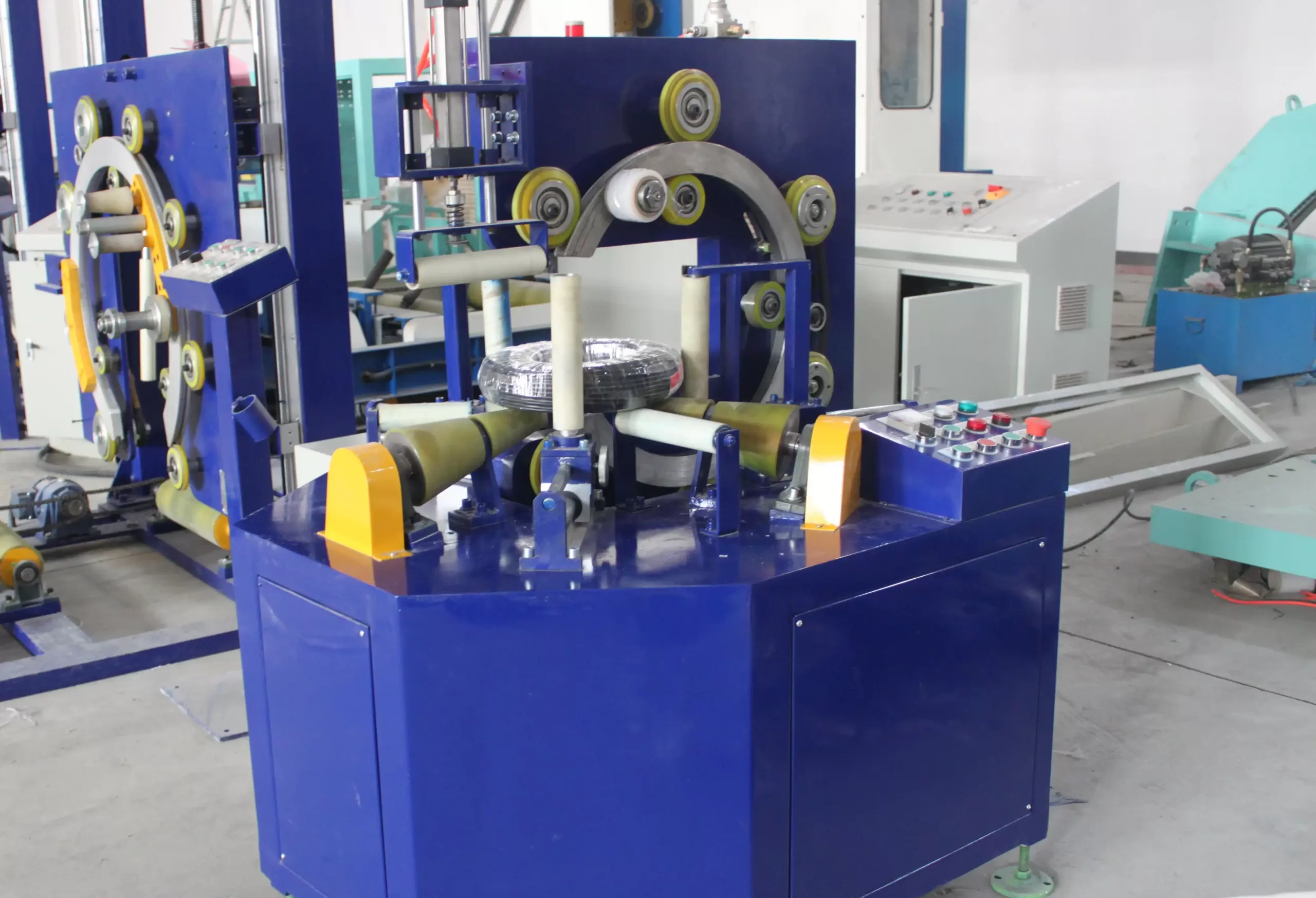
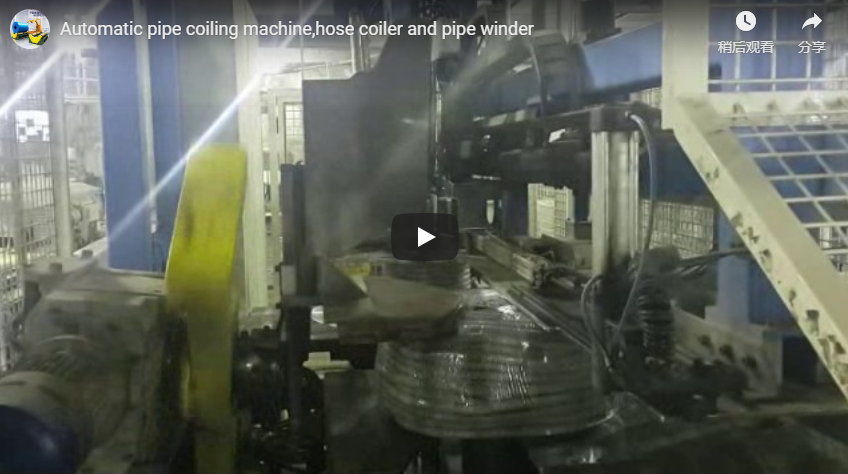
Caption: Hose coil wrapping machinery. Product-library reference image, not a still from the clip.
چک لیست تایید خریدار
Six questions decide whether the cell fits your coils. Ask them in writing, and keep the answers with the quotation.
| از تامین کننده بخواهید | چرا خرید را تعیین میکند |
|---|---|
| Reel envelope: outside diameter, width and weight | The hard limits, absent from the clip and unread anywhere |
| یک چرخهی کامل با ساعتی در حال کار | The only footage that proves real cycle time |
| Film specification and wrap layers per coil | The settings that decide protection and film cost |
| Turntable speed and edge overlap control | Decides wrap quality and unravelling risk in transit |
| Feed and output arrangement around the cell | Manual placing or conveyor feeding changes the labour story |
| Safety devices including an emergency stop | The clip shows no guard or emergency stop to rely on |
این را برای تأمینکننده ارسال کنید و آن را به همین صورت کپی کنید:
- Your coil envelope: outside diameter, width and weight, per product.
- درجه و عرض فیلمی که قصد دارید اجرا کنید.
- One uncut cycle with a clock, from placement to output.
- The number of wrap layers and edge overlap you get per reel.
- The cycle time and how coils feed in and out.
- The safety device list for your site.
- A reference installation wrapping a reel like yours.
سوالات متداول
Does the machine coil the cable or only wrap it?
The footage shows a wrapping cell: the reels arrive already wound, and the machine only applies the film. If your line needs the coiling step too, ask the supplier how it feeds this cell.
What reel sizes can it handle?
Not shown in the video, and no label on the machine is readable. Send the supplier your outside diameter, width and weight and ask which model covers them.
آیا بسته بندی کاملاً اتوماتیک است؟
The wrap cycle runs automatically once the reel is on the turntable, and the wrapped reel leaves by conveyor. Placing each reel remains around the cycle, so confirm the end-to-end flow with the supplier.
خواندن مرتبط
- دستگاه بسته بندی کابل — the cable packing equipment family behind this cell.
- دستگاه کلاف اتوماتیک — the winding step that makes the reel this cell wraps.
- دستگاه کویل عمودی — vertical-axis coiling configurations.
- دستگاه کویل افقی — horizontal-axis coiling alternatives.
- سیم جمع کن کابل — cable traverse winding equipment.
- دستگاه تسمه اتوماتیک — the strapping step that can follow the wrap.
مرحله بعدی
Send the supplier your coil envelope and film plans first, with the outside diameter, width and weight per product. The wrap mechanism is proven by the footage, and every number has to come from them.
Then send the seven questions above, and ask for the uncut cycle, the wrap settings and the safety list in writing.
Then book one run with your own reels and check the edge overlap and tightness after transit-style handling. Use the صفحه تماس با برای شروع آن تبادل.
آخرین بررسی: 2026-09-28
منتشر شده: ۲۰-۰۴-۲۰۲۶