Kokkuvõte
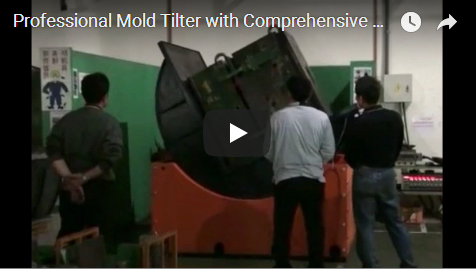
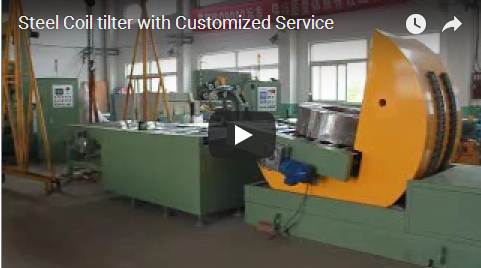
A coil tilter with a slide table combines two moves in one machine: the slide table carries the coil into the tilting cradle and back out, and the cradle turns it through 90° or 180°. Because the table slides, the coil can be loaded and unloaded clear of the turning body, by forklift, crane or conveyor. It is multipurpose because the cradle and table are designed to the load: steel and wire coils, film-wrapped coils, spools or molds. Below: how it works, where it fits, how to size the slide and the cycle, and the safety points.
Sisukord
- Why add a slide table to a tilter
- How the tilter with slide table works
- Multipurpose uses
- Sizing example: slide stroke and cycle
- Features and control
- Valiku kontroll-leht
- Ohutus: EN 415-10 ja ISO 12100
- Inseneri KKK
- Järgmine samm
- Seotud lugemine
- Allikad
Why add a slide table to a tilter
On a plain tilter, the coil has to be placed straight into the seat, under or beside the turning body. That is awkward for a forklift and slow for a crane, and the operator ends up close to the pivot. A slide table moves the loading point out of the tilter. The coil is set down on the table in the open, the table slides it into the cradle, and after the turn it slides out again for pick-up.
It also lets the tilter sit in a line: the table can be part of the conveying system, so coils move in and out automatically.
How the tilter with slide table works
- Laadimine. The coil is placed on the slide table outside the cradle.
- Slide in. The table carries the coil into the semicircular cradle.
- Iste. The coil seats against the cradle sidewalls and V-groove platform so it stays stable during the turn.
- Pööra. The turning body rotates the cradle and coil through 90° (or 180° on a turnover version). An inverter controls the speed, and the turn can stop at any angle.
- Slide out. The arms open and the table brings the coil out for unloading.
The control cabinet stands to one side, so the operator runs the cycle away from the moving parts.
Multipurpose uses
| Koormus | Typical turn | Põhjus |
|---|---|---|
| Steel and wire coils | 90 ° | eye-horizontal to eye-vertical for storage or decoiler |
| Film-wrapped coils | 90 ° | turn after wrapping without marking the film |
| Spools and drums | 90 ° | stand on flange or lay flat |
| Vormib ja sureb | 90 ° või 180 ° | turn for maintenance or assembly |
The cradle, table and drive are designed to the load, so one machine type covers these jobs with different tooling.
Sizing example: slide stroke and cycle
Illustrative: coils up to 1,200 mm OD, loaded by forklift.
| Vaata | Arvutus | Tulemus |
|---|---|---|
| Slaidi löök | coil OD ÷ 2 + clearance = 600 + 150 mm | 750 mm |
| Cycle: slide in, tilt, slide out, return tilt | 15 + 60 + 15 + 60 s | 150 s (plus crane or forklift dwell) |
| Coils per hour (upper bound) | 3,600 ÷ 150 | 24 |
Tulemus. A 750 mm stroke brings a 1,200 mm coil fully clear of the cradle for forklift access, and a 150 s full cycle including the return tilt gives at most 24 coils an hour, before loading dwell time. Tilt times on our mechanical upenders run 50–100 s depending on load; slide times are set in the design.
Features and control
- Working table with conveying system.
- Structure designed for each load.
- Emergency stop and a positioning lock that prevents rotation.
- Two displacement restrictors that limit the turn.
- Turn can be stopped at any angle.
- Inverter speed control for a fast, smooth turn.
- Switch control panel; CE and ISO 9001; two-year warranty.
Drive can be mechanical (gear motor with helical gears and worm reducer, which holds the load if power fails) or hydraulic.
Valiku kontroll-leht
- Load type, weight, OD, ID and width.
- 90° or 180° turn.
- Loading and unloading: forklift, crane or conveyor.
- Cycles per hour, counting the return tilt and loading time.
- Mechanical or hydraulic drive.
Ohutus: EN 415-10 ja ISO 12100
Tilters in packing lines are built to EN 415-10, with the risk assessment done to ISO 12100. The hazards are the turning body, the cradle, the sliding table and a heavy coil in motion. Displacement restrictors limit the turn, the positioning lock holds the cradle, and the E-stop is on the panel away from the machine. Guarding is set in the risk assessment for each layout.
Inseneri KKK
Q: Why a slide table rather than loading straight into the cradle? A: Loading happens in the open, clear of the pivot, by forklift, crane or conveyor.
Q: Can it turn 180°? A: Yes, on a turnover version; the standard turn is 90°.
Q: What if power fails mid-turn? A: A mechanical worm drive holds the load; the turn can stop at any angle.
Q: Can it handle molds as well as coils? A: Yes, with a cradle and table designed for the mold.
Järgmine samm
- Send load sizes, weights and the turn you need aadressile info@fhopepack.com.
- Me kujundame the cradle, slide table and drive.
- Vastame 24 tunni jooksul ettepaneku ja hinnapakkumisega.
Seotud lugemine
- Custom engineered upenders and tilt tables (product)
- Mechanical coil upender tilter (product)
- Coil upending and turning: solutions for industry
- Coil upender with turntable
Allikad
- FHOPE product pages: custom engineered upenders; mechanical coil upender tilter
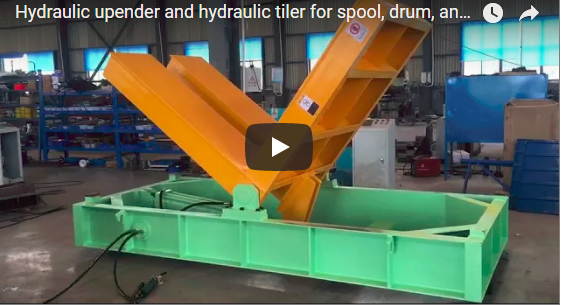
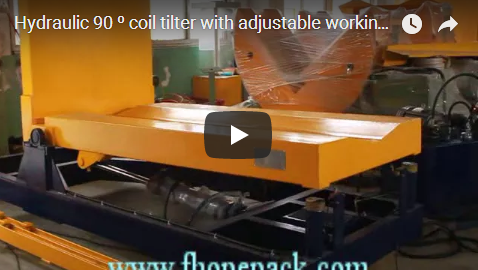
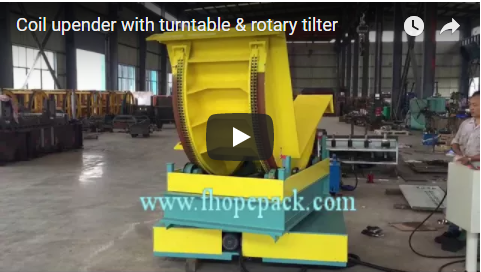
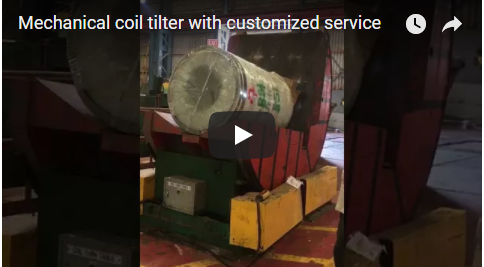
- Our coil tilter with slide table shown above
- Sizing example: illustrative figures
- Standardid: EN 415-10; ISO 12100:2010
Viimati üle vaadatud: 2026-10-19