Ülevaade
A fast orbital wrapping machine wraps long loads in a continuous film spiral as the load passes through a rotating ring, without turntable rotation, without a second operator and without stopping the conveyor. The film carriage orbits the product at line speed, so a six-metre bundle is fully wrapped in one pass. This guide covers how the orbital pass works, when it beats a turntable, the film settings that control cost, and what to verify before acceptance. It is written for plant engineers and production managers who package long, heavy or awkward loads.
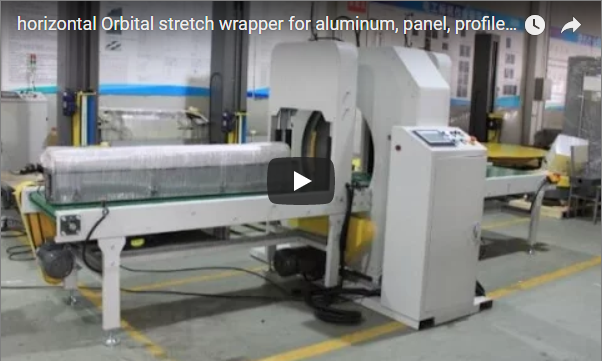
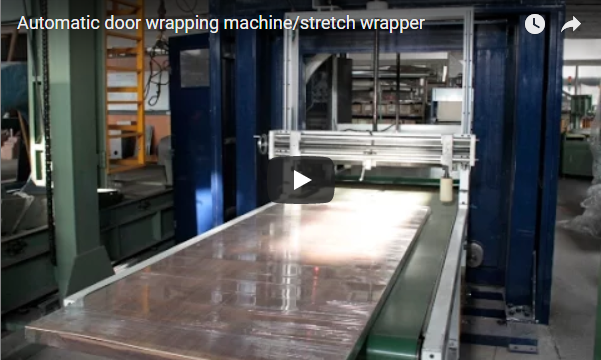
The video below shows the orbital wrapper covering a long flat load on a conveyor:
The Orbital Principle
Long loads are the slow part of most packing lines: strapping and hand wrapping struggle with a six-metre bundle, and a turntable would need the whole load to spin. The orbital wrapper removes both limits:
| Aspekt | How orbital helps |
|---|---|
| Load advance | Product passes straight through the ring at line speed; no stopping for wrap. |
| Film spiral | The carriage rotates while the load moves, so one ring pass lays a continuous spiral along the whole length. |
| Lõpeb | Programmed rings at each end build extra layers where containment matters most. |
| Kiirus | Conveyor keeps running; the ring simply orbits the travelling load. |
Orbital vs Turntable vs Manual
| Iseloomulik | Orbitaalrõngas | Pöördketas | Manual / hand wrap |
|---|---|---|---|
| Cycle for long loads | One flowing pass | Must rotate full length in place | Walk-around, stop-and-wrap |
| Koormuse stabiilsus | Never spun | Spins an elongated load | Risk of tipping by hand |
| Ettevõtjad | 0–1 at load/unload | 1 | 1–2 throughout |
| Film cost control | Programmed pitch/layers | Programmeeritud | Shift-dependent |
Film Settings: the Knob That Controls Cost
Film is where the wrapper earns (or loses) money. On an orbital machine the two main programmed settings are:
| Kehtestamine | Mõju |
|---|---|
| Film pitch (overlap) | Tight overlap = more containment, more film; wide pitch = cheaper, lighter hold. |
| Layer count per zone | Extra rings at high-wear ends, fewer on the body, balance cost and retention. |
Because film pitch and layer recipes are stored per product on the PLC, changing a pack spec is a recall, not a re-rig. Film type and gauge are project-matters confirmed with the manufacturer.
Mida täpsustada
Send the manufacturer:
| Sisend | Miks see on oluline |
|---|---|
| Load length, width, height, weight | Sets the ring diameter and feed rail rating. |
| Infeed/outfeed height and conveyor | Sets ring placement and line integration. |
| Film type, gauge, prestretch | Sets the film unit and seal design. |
| Required pitch and end layers | Sets the program and ring speed. |
| Throughput and line speed | Sets carriage speed and automation. |
| Power, air, PLC interface | Sets electrical and control integration. |
| Safety perimeter | Light curtains or guarding around the ring. |
All values are confirmed per project before build.
Factory Testing and Acceptance
- Full-cycle evidence. A test log of complete wraps at the required pitch and layers (film feed, rotate, clamp, cut, seal).
- Extended run. The vendor's stated practice on this family includes near-continuous pre-delivery testing (up to about 24 hours where stated).
- Control and safety. Smooth, responsive control and a verified emergency stop before delivery.
- Line handover. Infeed/wrap/outfeed passing at the required pace without jams.
- Kasutuselevõtt. Written installation, commissioning and on-site service scope.
- Tõhus pakendamise orbitaalpakendimasin 2024 – Orbital wrapper application on palletized loads.
- Alumiiniumprofiilist pakendamine: tehnoloogia ja parimad tavad – Orbital wrapping applied to long extrusions.
- Coil Upender & Industrial Turnover Solutions – Handling equipment that feeds long-load lines.
On arrival, repeat: empty pass, loaded pass, emergency stop.
KKK
Q: Can it handle loads wider than a pallet?
A: Yes if the ring diameter fits. Ring size is chosen from the largest load cross-section, then film pitch and layers are programmed per product.
Q: Does the load need to stop?
A: No. The machine is designed for flowing loads: the ring orbits the travelling product, which is what makes it fast on long bundles.
Q: Stretch film only?
A: Typically stretch film; some builds accept paper or net depending on the product. State the material when specifying.
Q: What safety standards apply?
A: The machine family is designed with EN 415-10 as the packaging-machinery safety reference and an ISO 12100 risk assessment for the rotating carriage and feed areas.
Järgmine samm
Send load size and weight, infeed/outfeed heights, film type and settings, throughput and line speed, power/air and control interface, and safety perimeter so the wrapper is sized on the approval drawing.