Kokkuvõte
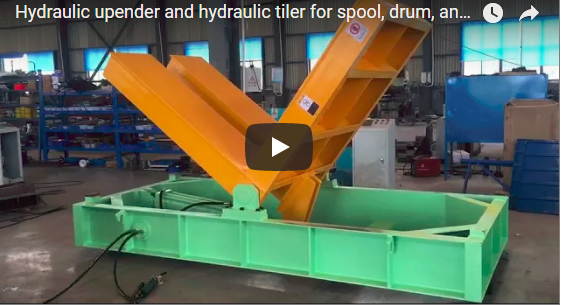
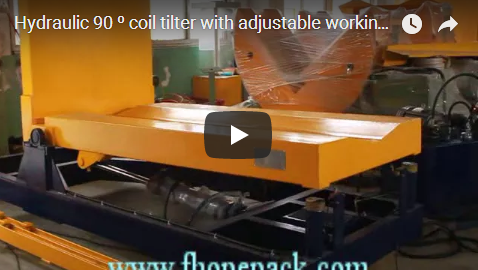
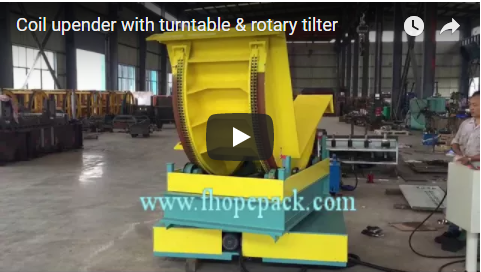
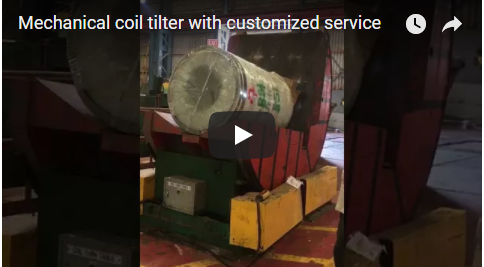
Coil upending turns a coil through 90°, between eye-horizontal and eye-vertical, for pallets, decoilers or packing lines. Turning through 180° flips a load over completely. A tilter does either on a fixed pivot, with the operator outside the fence, and our FPCT mechanical upenders cover 3–20 t in 50–100 s per cycle. Below: the solution types, the data, how to size one, and the safety points.
Sisukord
- Why industry upends and turns coils
- Upending and turning solutions
- How a mechanical upender works
- FPCT upender data
- Sizing example: an 8 t coil
- Valiku kontroll-leht
- Ohutus: EN 415-10 ja ISO 12100
- Inseneri KKK
- Järgmine samm
- Seotud lugemine
- Allikad
Why industry upends and turns coils
Steel, aluminium, copper and wire coils change orientation several times between production and the customer. A slitter or mill hands them over eye-horizontal; storage, pallets and many decoilers want them eye-vertical; export packing may need them turned back again. Each change done on a crane hook means a load swinging through 90° above people, edge damage where chains bite, and minutes of work.
A tilter makes the turn on a controlled pivot. The coil sits in a seat shaped for it, the operator stands away at the control box, and the same turn happens the same way every time.
Upending and turning solutions
| Lahendus | Pöörduma | Tüüpiline kasutamine |
|---|---|---|
| Mechanical coil upender (FPCT) | 90 ° | steel and wire coils, 3–20 t |
| Spool and drum tilter | 90 ° | cable reels and spools |
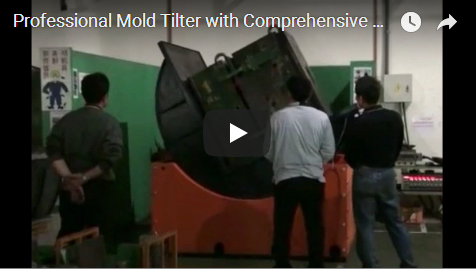
| 180° turnover / flipper | 180 ° | molds and loads that must land upside down |
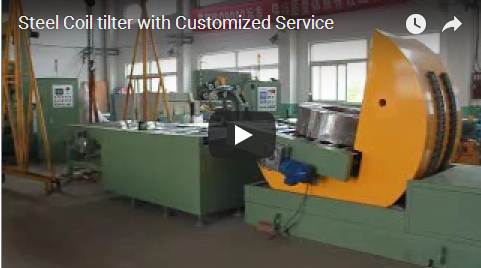
The mechanical upender is the workhorse for coils: gear-motor driven, it stops at any angle and holds there even if the power goes off. Spool tilters use a chain drive and seats for flanged reels. A 180° turnover suits loads that must be flipped completely.
How a mechanical upender works
- Laadimine. A crane, forklift or coil car sets the coil in the L-shaped seat. The workbench is made to suit each product.
- Kalluta. A gear motor drives the turning body through helical gears and a worm reducer. A heavy-duty four-roll device carries the load through the tilt. An inverter controls the speed.
- Peatu. Two displacement limiters and limit sensors stop the turn at 90°; the worm drive holds the load at any angle.
- Mahalaadimine. The coil, now in its new orientation, is lifted off or runs out on a conveyor.
The machine runs from a control box or a remote, which keeps the operator away from the turning position. The tilting platform works inside a mesh fence, and the operator stays outside it at the panel.
FPCT upender data
| MUDEL | max koormus | võim | Tsükkel |
|---|---|---|---|
| FPCT-03 | 3 t | 1.3 kW | 50–90 s |
| FPCT-05 | 5 t | 2.0 kW | 50–90 s |
| FPCT-10 | 10 t | 2.5 or 4.5 kW by version, confirmed at quote | 60–90 s |
| FPCT-20 | 20 t | 7.8 kW | 60–100 s |
Across the range, cycles run 50–100 s. Supply: AC 380 V, 50 Hz, or to your requirement.
Sizing example: an 8 t coil
Illustrative: heaviest coil 8 t, 25 coils to turn per shift.
| Vaata | Arvutus | Tulemus |
|---|---|---|
| Rated load with margin | 8 × 1.25 | 10 t → FPCT-10 |
| Cycles per hour, slowest | 3,600 ÷ 90 | 40 |
| Cycles per hour, fastest | 3,600 ÷ 60 | 60 |
| 25 coils per shift? | well under 40 per hour | jah |
Tulemus. An FPCT-10 handles the coil with margin. The 40–60 cycles an hour are the machine’s own capability; crane rigging and transfer time, rather than the tilt cycle, set the real plant throughput.
Valiku kontroll-leht
- Heaviest coil, and OD, ID and width range.
- 90° või 180° pööre.
- Mähiseid vahetuse kohta.
- How the coil arrives and leaves: crane, forklift, coil car or conveyor.
- Seat shape: coil, spool or special load. The seat and frame are built to your OD, ID and width range.
Ohutus: EN 415-10 ja ISO 12100
Tilters used in coil packing lines are built to EN 415-10, with the risk assessment done to ISO 12100. The hazards are a heavy load moving through an arc, the crush zone under the turning body and a coil sliding in its seat.
Our upenders answer these with a mesh fence round the turning zone and a control box or remote that keeps the operator out of it. Limiters and sensors at the end of travel, an emergency stop and a position lock complete the set.
Inseneri KKK
Q: What happens if the power fails mid-turn? A: The gear drive holds the load where it is; the upender stops at any angle.
Q: How long is one turn? A: 50–90 s on the 3 t and 5 t models, 60–90 s on 10 t and 60–100 s on 20 t.
Q: Can it turn cable spools? A: Yes, with a spool tilter and seats for flanged reels.
Q: Can it turn a load through 180°? A: That needs a 180° turnover; tell us the load and we will propose one.
Järgmine samm
- Send coil weights, sizes and the turn you need aadressile info@fhopepack.com.
- Me valime the tilter and seat.
- Vastame 24 tunni jooksul ettepaneku ja hinnapakkumisega.
Seotud lugemine
- Mehaaniline mähise ülespoole kallutatav mehhanism (toode)
- Spool and drum tilter (product)
- Slit coil upending, transport and eye-through wrapping
- FHOPE wire spool tilter upender
- Pöördmängijaga mähis
Allikad
- FHOPE product pages: mechanical coil upender tilter; spool and drum tilter
- Our tilting machine shown above
- Suuruse näide: illustreerivad joonised
- Standardid: EN 415-10; ISO 12100:2010
Viimati üle vaadatud: 2026-10-19