Resumen ejecutivo
An extrusion line runs around the clock, so a packing area that falls behind fills the floor with loose pipe. Our online PVC pipe strapping and bagging line sits straight after the cutter: it counts the pipes into a bundle, shapes and straps it, then pushes it into a welded PE bag and seals the bag, all in flow. This page covers the station sequence, our pipe bagging machine data, how to match the line to extrusion output, and the checks we use to size it.
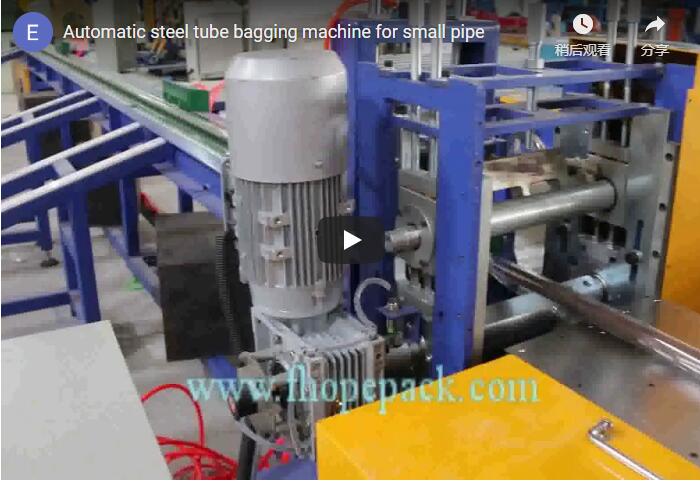
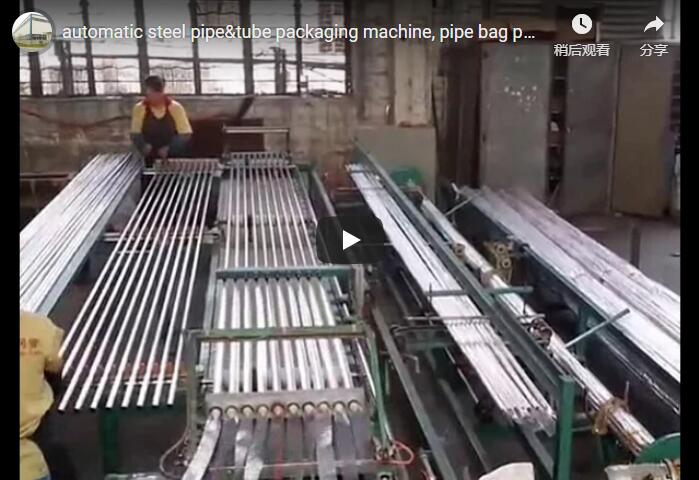
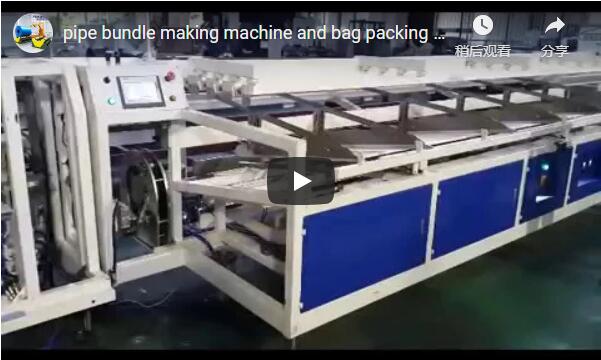
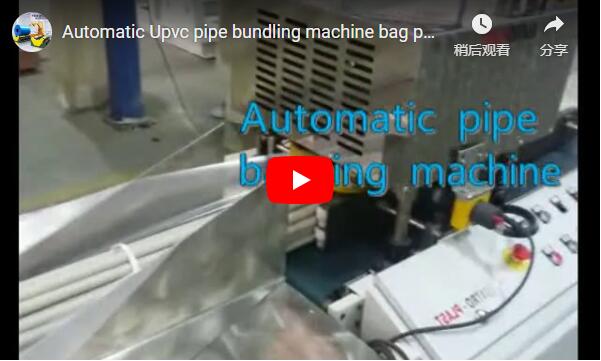
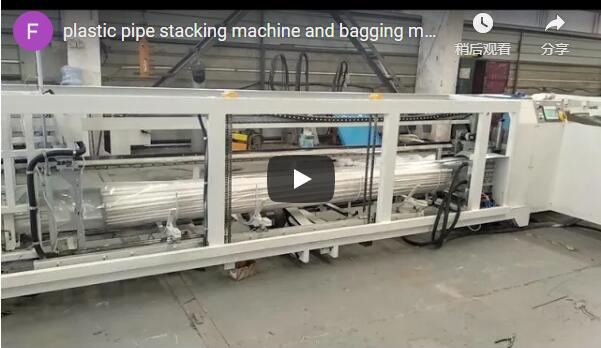
White PVC pipes run in on the infeed conveyor beside a strapping station with a round strap guide frame. Behind it a long bagging bench with pneumatic cylinders and orange air lines forms the bag. Finished bundles leave in red bags.
Índice
- Secuencia de estaciones
- Bagging machine data
- Matching the line to extrusion output
- Plan de correas
- Lista de verificación de selección
- Seguridad
- Preguntas frecuentes sobre ingeniería
- El próximo paso
- Lectura relacionada
- Fuentes
Secuencia de estaciones
- Infeed from the cutter: cut pipes drop onto the infeed conveyor.
- Count and shape: the counting and shaping device gathers the set number of pipes into a round or hexagonal bundle.
- Correa: the strapping station puts straps around the bundle at set positions along its length.
- Fabricación de bolsas: the bagging machine welds PE or PP film into a bag sized to the bundle diameter.
- Push in and seal: the bundle is pushed into the bag and the open end is sealed.
- Salida: the bagged bundle is tilted out to the collection table; a label can be added for the barcode.
Bagging machine data
From our plastic pipe bagging machine product page:
| Parámetro | Valor |
|---|---|
| Diámetro del paquete | 180 – 250 mm |
| Diámetro de la tubería | 20 – 65 mm |
| Longitud de la tubería | 3-6 m |
| Resultado | más de 1 paquete por minuto |
| Película para bolsas | PE, PP or HDPE, 30–80 µm |
| Suministro de aire | 5-7 bares |
Our online pipe packing line page lists online and offline bundling and woven bag packing for PVC, PPR and HDPE pipe, also at more than one bundle per minute. Bundle sizes outside this range are confirmed at quote.
Matching the line to extrusion output
Pipes per minute from extrusion = line speed (m/min) ÷ pipe length (m).
Bundles needed per minute = pipes per minute ÷ pipes per bundle.
Pipes per round bundle ≈ 0.9 × (bundle diameter ÷ pipe diameter)² for a rough first estimate.
Example only: a 32 mm pipe at 12 m/min cut to 4 m gives 3 pipes per minute. A 200 mm bundle holds about 0.9 × (200 ÷ 32)² ≈ 35 pipes. So the line needs one bundle about every 12 minutes, well inside the bagging rate. Small, fast pipes are where the bagger rate matters: a 20 mm pipe at 30 m/min cut to 3 m gives 10 pipes per minute.
A 200 mm bundle of 20 mm pipe holds about 0.9 × (200 ÷ 20)² ≈ 90 pipes, so a bundle closes about every 9 minutes; even a small 25-pipe bundle only needs one bag every 2.5 minutes. The strapping and bagging cycle is therefore not the bottleneck; the counting and alignment of light, fast pipes is, and that is what to check in a trial run.
Plan de correas
The strapping station is set by the number of pipes, the bundle shape, and the number and position of straps. A common plan is one strap near each end and one or more in between, so the bundle does not open when lifted. Strap count and positions for your pipe length are confirmed at quote.
Lista de verificación de selección
- Pipe material and diameters?
- Pipe lengths?
- Extrusion line speed?
- Pipes per bundle and bundle shape?
- Straps per bundle?
- Bag film type and colour, printed or plain?
- Label or barcode needed?
Seguridad
We design pipe packing lines to EN ISO 12100:2010 for risk assessment, EN 415-10 for packaging machine safety and EN 60204-1 for electrical equipment. The pusher and sealing areas are guarded, and E-stops sit along the line.
Preguntas frecuentes sobre ingeniería
Q: Can it bag a single large pipe instead of a bundle? A: Yes. The bagger makes a bag per single pipe or per bundle, shaped to the diameter.
Q: Can one line run several pipe sizes? A: Yes, within the 20–65 mm pipe range and 180–250 mm bundle range, by changing the count and bag size.
Q: What air supply is needed? A: 5–7 bar compressed air.
Q: Can it run offline? A: Yes, the same stations can run offline, fed from a buffer instead of straight from the cutter.
El próximo paso
- Send your pipe sizes, lengths and extrusion speed a info@fhopepack.com.
- Confirmamos the count, strap and bag plan.
- Respondemos dentro de las 24 horas. con una propuesta y un presupuesto.
Lectura relacionada
- Línea de empaquetado de tuberías en línea (producto)
- Máquina para embolsar tuberías de plástico (producto)
- Offline PVC pipe strapping and bagging line (video)
- Automatic pipe bundle woven bag packing machine (video)
Fuentes
- FHOPE product pages: online pipe packing line; plastic pipe bagging machine
- EN ISO 12100:2010; EN 415-10; EN 60204-1
- The online PVC pipe strapping and bagging line shown above
Última revisión: 20/10/2026