نظرة عامة
An automatic steel coil strapping, packaging and stacking line takes a coil from the mill or slitting exit and completes three operations in sequence — strapping, packaging and stacking — on one powered-roller flow. The decision that shapes the whole line is made before the first strap is applied: the strap pattern. Because a coil that is already inside a stack cannot be reached by a strapping head without unbuilding the stack, the pattern has to be fixed before stacking, and the strapping station has to sit ahead of the gantry. This article is written for coil processors and cold-rolling and service centres planning a new or upgraded line. It covers the line sequence in the clip, the radial-versus-circumferential choice, and what to confirm when the stack is part of the specification.
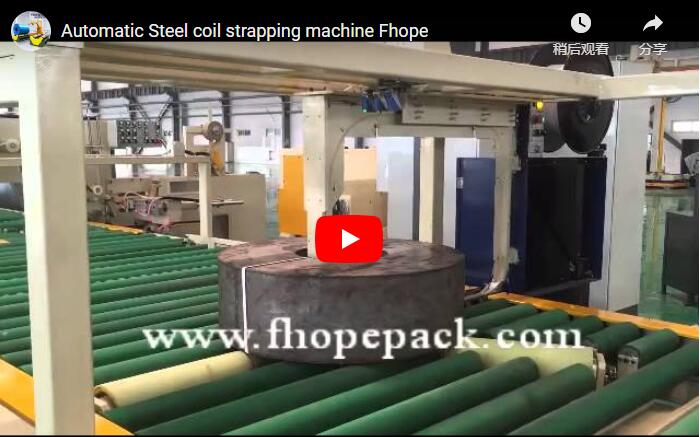
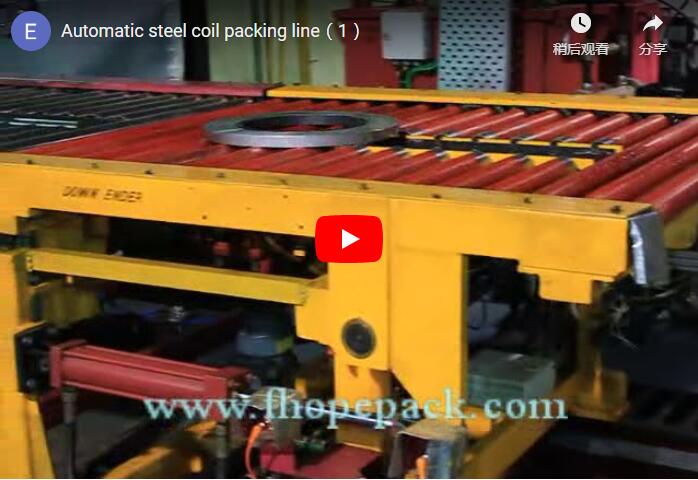
The clip below shows coils moving through the line on powered rollers:
The Line Sequence in the Clip
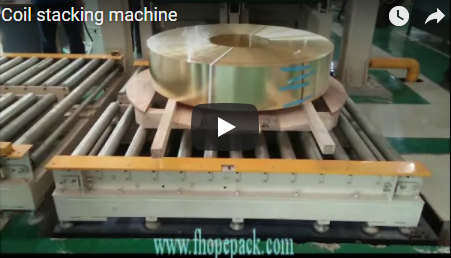
The footage shows wrapped coils travelling flat on powered rollers. An overhead station sits over the track, and at the end of the line a gantry takes each coil and places it into the stack. The sequence that a line of this type delivers is:
| محطة | تشغيل |
|---|---|
| الإطعام | Coils enter on powered rollers from the mill or slitting exit |
| ضخم | Strap is applied on the coil before the stack is built |
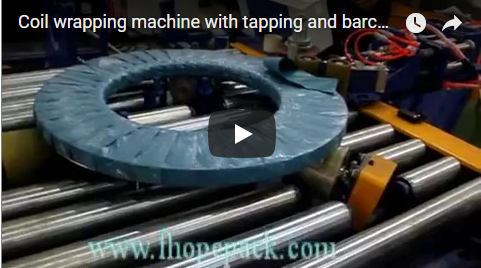
| تجيهز المنصة و تسليمها | The coil is wrapped and protected while it is still accessible |
| التراص | A gantry lifts each coil and places it into the stack; stack height is set per project |
The key point is the order. A strap applied to the outside of the stack after the gantry has placed the coils is a different job from a strap applied to the coil itself beforehand. Because the gantry is the final station, strapping must finish before the coil is lifted into the stack, and the pattern, tension and strap count are therefore confirmed in the enquiry rather than at the end of the line.
Radial or Circumferential Strapping
Nearly all steel coil programmes use one or both of the two standard strap patterns:
| نمط | مكان مرور الحزام | الغرض النموذجي |
|---|---|---|
| شعاعي (عبر العين) | Through the coil eye and across the section | Keeps the coil wraps together; 2, 3, 4 or 6 straps per coil |
| كفافي | Around the outer diameter | Stops loose outer wraps springing open |
The strap pattern is stored in the PLC per coil type, so a single line can apply a different pattern to a narrow slit coil and to a heavy coil without a manual changeover. Which pattern to use, and how many straps per coil, is decided from the coil range and the transport route before the stack plan is fixed; strap count follows coil width and the shipping duty (road, sea or rail) and is confirmed per project.
Strap Choice and Machine Ranges
The strapping machine is built to the project’s coil range, with the coil conveyor turning the coil and centring it before each strap is applied. The parameters below are the engineering inputs that size the line; each value is confirmed for the actual coil programme, not taken from the clip:
| Parameter to confirm | ما يصلحه |
|---|---|
| Coil diameter range | Machine base, turning conveyor and strap head travel |
| الحد الأقصى لوزن الملف | Drive duty, conveyor and lifting frame |
| نطاق شد الحزام | Strapping head selection and sealing force |
| هدف الإخراج | Head speed and cycle time per coil |
| عدد الأشرطة الشعاعية لكل لفة | Indexing pattern and strap programme |
Strap material is matched to the coil: PET strap for lighter and coated coils where surface protection matters, and steel strap for the heaviest coil weights and long sea transport. The dispenser feeds the chosen strap into the head through an accumulator, and the PLC sets tension and sealing force so coils of one type are strapped identically every time. These ranges are the manufacturer’s published envelope; the exact figures for a given line are confirmed per project.
A tensioned strap stores energy, so the guarding arrangement around the strapping heads and the gantry is decided in the risk assessment for each layout. For CE-market deliveries we reference ISO 12100 for risk assessment and EN 415-10 for the general requirements of packaging machines. As a stated manufacturer practice for this machinery family, units are factory-tested for about 24 hours before delivery, including control-system and emergency-stop checks; treat this as the stated family practice and confirm the test record for your unit.
الأسئلة الشائعة
Q: Why must the strap pattern be chosen before the stack is built?
A: A coil already inside a stack cannot be strapped without dismantling the stack, so the pattern and strap count are confirmed before the gantry stacks the coils.
Q: What is radial strapping?
A: The strap runs through the coil eye and round the section, holding the wraps together; common counts are 2, 3, 4 or 6 straps per coil.
Q: What is circumferential strapping?
A: The strap runs round the outer diameter to stop the outer wraps from springing loose.
Q: How heavy a coil can the line handle?
A: The line is sized to the project’s coil range — coil diameter, maximum weight and strap tension are confirmed for the actual programme during engineering, rather than read from the demonstration.
Q: Can the line use both steel and PET strap?
A: Yes. The dispenser feeds the chosen strap material through an accumulator, and the PLC sets tension and sealing force per coil type.
الخطوة التالية
- Email info@fhopepack.com with your coil range, strap pattern and stack plan.
- State coils per hour, strap material preference and stack orientation (eye to sky or eye to wall).
- FHOPE returns a proposal with strapping heads, gantry and conveyor layout.
- Book a site survey to confirm floor space, strap storage and forklift routes.
- ماكينة ربط لفائف الصلب الأوتوماتيكية – The through-the-eye and strap-head behaviour behind the strapping station.
- خط تعبئة لفائف الصلب الأوتوماتيكي: محطة تلو الأخرى – The packaging-line sequence on the same coil family.
- أتمتة خط تغليف اللفائف باستخدام آلات التغليف – Upgrading an existing coil line with automatic strapping.