ملخص تنفيذي
A PU air pipe coiling machine with bobbin winds pneumatic tube from the extrusion line onto a flanged spool instead of into a loose coil. It holds the tube at a steady tension, lays it side by side across the bobbin, and switches to a second station so the extruder keeps running during changeover. This page explains how the winder is built, how to work out bobbin capacity, and when a bobbin is better than a strapped coil.
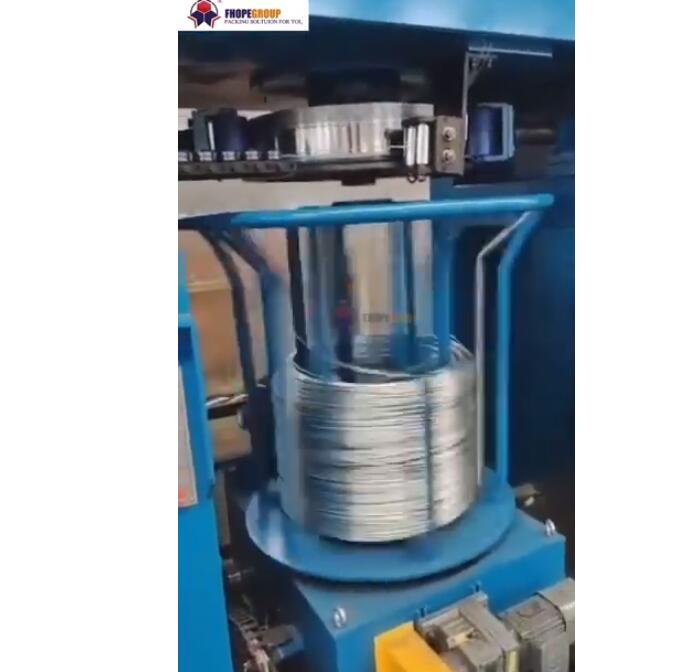
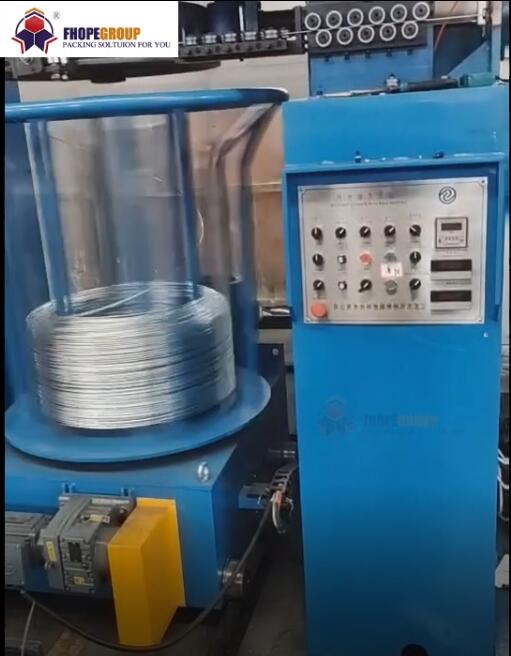
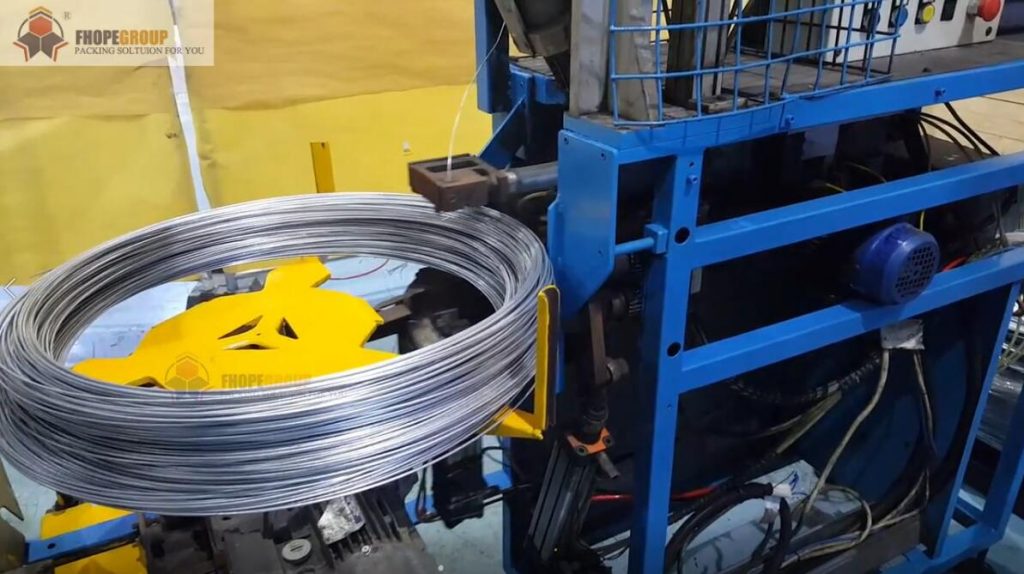
Each winding station sits on a blue steel frame with its own motor, bobbin shaft, guide wheels and a tension adjuster. A control box with push buttons and lamps runs the station. Orange PU tube runs over the guide wheels and builds up evenly on the turning bobbin, and the next station stands ready beside it.
جدول المحتويات
- Why wind PU tube on a bobbin
- How the winder works
- Bobbin capacity: how many metres
- Tension and lay quality
- Bobbin or strapped coil
- قائمة التحقق من الاختيار
- سلامة
- أسئلة وأجوبة هندسية
- الخطوة التالية
- القراءة ذات الصلة
- مصادر
Why wind PU tube on a bobbin
PU and nylon air tube is soft and springy. Wound loose, it can tangle, kink or flatten when coils are stacked. A flanged bobbin holds every turn in place, protects the tube in transport, and lets the user pull off any length on a dispenser. Long lengths, such as 100 m or more of small-bore tube, are where a bobbin pays off. Short lengths are often cheaper as strapped coils.
How the winder works
- الغذاء: tube arrives from the extruder cooling tank, or from a supply reel when rewinding.
- الجهد: guide wheels and a tension adjuster hold the tube at a set pull, so it winds tight without stretching.
- اجتياز: the tube is laid side by side across the bobbin, one layer after another.
- سرعة: an inverter matches bobbin speed to line speed as the diameter grows. The exact synchronisation method for your line (tension sensing or a dancer) is confirmed at quote.
- التغيير: the PLC counts tube length; at the set length the tube is cut and winding moves to the second station, so the line keeps running.
- تفريغ: the full bobbin is cut, the tube end fixed, and the bobbin taken off.
Our coiling machines run under PLC and HMI control in automatic or manual mode, with sensors for tube position and an alarm when a fault is detected.
Bobbin capacity: how many metres
Turns per layer = traverse width ÷ tube OD. Layers = (flange diameter − core diameter) ÷ 2 ÷ tube OD. Length ≈ 3.14 × mean diameter × turns per layer × layers. Example with an 8 mm tube, 200 mm core, 400 mm flange and 300 mm traverse (example only):
| تحقق | عملية حسابية | نتيجة |
|---|---|---|
| عدد اللفات في كل طبقة | 300 8 ÷ | 37 |
| طبقات | (400 − 200) ÷ 2 ÷ 8 | 12 |
| دوران كامل | 37 × 12 | 444 |
| الطول | 3.14 × 0.3 m × 444 | حول شنومك م |
| Fill time at 30 m/min | 418 30 ÷ | حول شنومك دقيقة |
Fill time tells you how often the changeover happens, and how long an operator has to unload. Real capacity is a little lower because the last layer is not filled to the flange. Bobbin core, flange and traverse sizes are confirmed at quote.
Tension and lay quality
- منخفض جدا: turns slip, the lay goes loose, and the bobbin collapses when unwound.
- مرتفع جدا: soft PU tube stretches and the OD gets smaller, which can fail the customer’s fitting test.
- Uneven traverse: gaps and heaps build up and the bobbin bulges.
Set tension for the tube material and wall, and check the OD of the first and last turns on a new product.
Bobbin or strapped coil
| العناصر | بكرة اللفاف | Loose-coil coiler (FCL series) |
|---|---|---|
| فئة الإشتراك | flanged spool | strapped coil |
| حجم الملف | by bobbin, confirmed at quote | ID 100–300 mm, OD 300–400 mm, width 100 mm |
| الوزن | by bobbin | 8-50 كجم |
| التغيير | محطتين | continuous winding on two wheels, pneumatic discharge |
| الخطوة التالية | label, box | OD strapping, wrapping, stacking |
These cycle figures belong to the FCL loose-coil coiler only: 18–35 s per coil, up to 100 r/min, on 380 V 60 Hz 3P supply. A bobbin winder runs continuously at extrusion line speed.
قائمة التحقق من الاختيار
- Which tube materials and ODs will you wind?
- What length per bobbin, and which bobbin size do your customers use?
- What is the extrusion line speed?
- Do you need length counting and auto cut?
- One station or two, so the line keeps running at changeover?
- What happens after winding: labelling, boxing or palletizing?
سلامة
The machine is designed to EN ISO 12100:2010 for risk assessment, EN 415-10 for packaging machine safety and EN 60204-1 for electrical equipment. The turning bobbin and the nip at the guide wheels are the main hazards, so guards and an emergency stop are fitted at each station.
أسئلة وأجوبة هندسية
Q: Which tubes can it wind? A: PU, nylon and PE pneumatic tube.
Q: Does the extruder stop at bobbin change? A: No. Winding moves to the second station.
Q: How do I work out metres per bobbin? A: Use the formula above with your tube OD and bobbin sizes.
Q: Can it also make loose coils? A: That is the FCL coiler, which coils and then straps.
الخطوة التالية
- Send your tube sizes, line speed and bobbin drawing إلى info@fhopepack.com.
- نحن نحدد المقاسات the winder, tension and changeover.
- نقوم بالرد خلال 24 ساعة مع تقديم عرض سعر واقتباس.
القراءة ذات الصلة
مصادر
- FHOPE product page: automatic pipe coiler FCL100
- إن آيزو 12100:2010؛ إن 415-10؛ إن 60204-1
- The PU tube winding stations shown above
آخر مراجعة: 2026-10-19