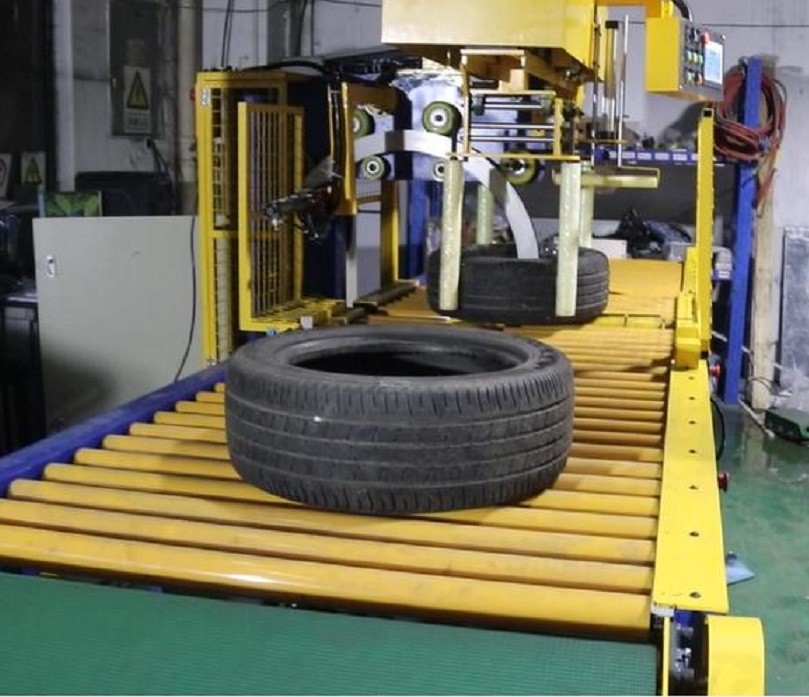
Tyre casings face moisture, airborne dust, and UV exposure during storage and export transit. Manual hand wrapping causes loose layers, uneven tension, and scuffed sidewalls during fork truck handling. Operators also waste excessive film rolls when manual stretching varies across production shifts.
An orbital tyre wrapping machine wraps a tyre by rotating a vertical ring carrying stretch film through the centre bead hole while base drive rollers spin the tyre along its axis. This synchronised eye-through movement lays a continuous 360-degree protective envelope around the tread and sidewalls, consuming predictable film lengths per cycle.
I have configured heavy-duty tyre packaging systems on factory floors for over 15 years. In this guide, I break down the mechanical wrapping kinematics, machine size windows, exact film calculation formulas, and safety controls. You can use these engineering facts to plan your packaging line and verify your consumption metrics.
جدول المحتويات
- How does a tyre wrapping machine wrap a tyre?
- What tyre sizes and weights can an orbital tyre wrapper handle?
- How much film does one tyre use?
- Is an orbital tyre wrapper safe to run?
- What should you check before buying a tyre wrapping machine?
- What else do tyre buyers ask?
- خاتمة
- القراءة ذات الصلة
- مصادر
How does a tyre wrapping machine wrap a tyre?
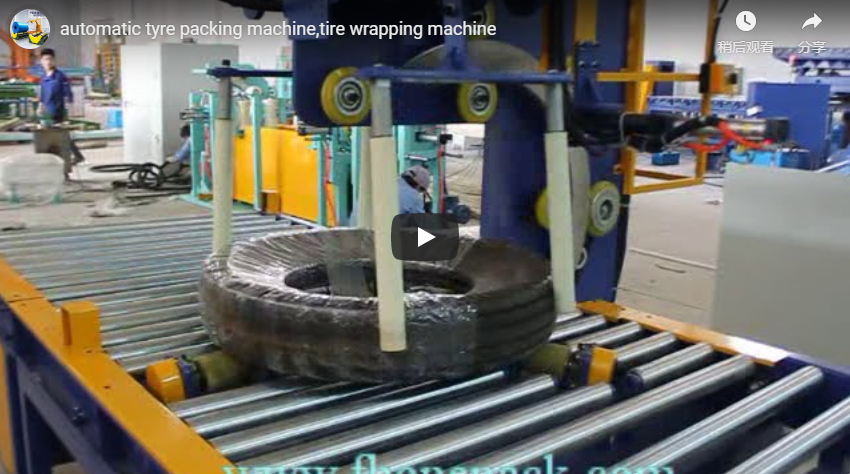
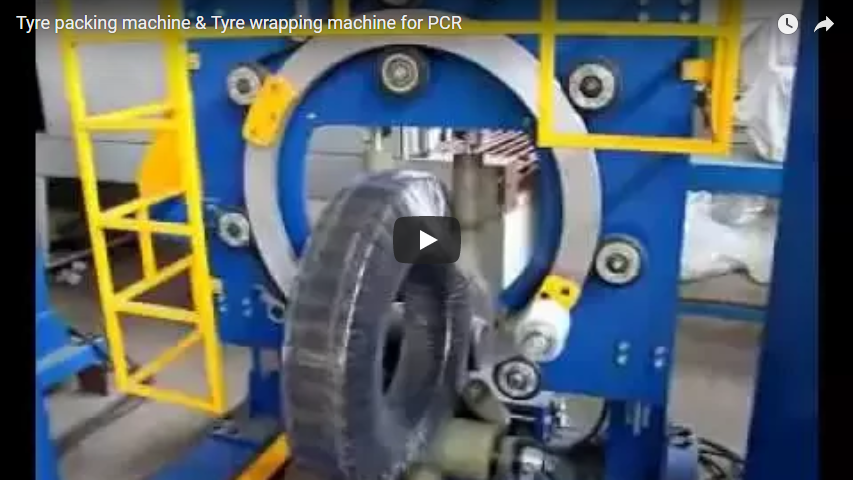
An orbital tyre wrapping machine secures the tyre on dual motorized polyurethane rollers while an overhead pneumatic arm clamps the tread crown. A C-frame ring then spins through the inner bead opening to apply continuous film toroidally as the bottom rollers index the tyre through a complete 360-degree rotation.
The machine coordinates three kinematic axes during each cycle. Twin vulcanized polyurethane drive rollers support the tyre casing and turn it smoothly around its central axis. Lateral guide arms center the tread path, and a top pneumatic stabilizer applies downforce to stop vertical bounce caused by orbital centrifugal tension. As the tyre indexes, the rotating ring passes stretch film directly through the bead eye.
Step-by-Step Kinematic Wrapping Sequence
Each stage in a standard semi-automatic wrapping cycle relies on dedicated actuators and timing limits:
| خطوة | Mechanical Action & Actuator State | وقت الدورة |
|---|---|---|
| Load & Position | Operator positions tyre onto twin polyurethane drive rollers; lateral guide arms center the tread path. | ~0–8 ثوانٍ |
| لقط هوائي | Overhead press arm descends (0.4–0.6 MPa); top stabilizer roller contacts tread crown to secure the vertical axis. | ~8–12 ثوانٍ |
| Film Anchor & Start | Film tail is secured; orbital ring drive accelerates via inverter ramp-up. | ~12–18 ثوانٍ |
| Toroidal Wrapping | Rotary ring shuttles film through the bead eye while base rollers rotate the tyre 360° to achieve preset overlap (30%–70%). | ~18–44 ثوانٍ |
| Cut & Reset | Film is clamped and severed; ring home-position sensor triggers; top press arm retracts to clearance height for manual or pusher offloading. | ~44–56 ثوانٍ |
In stand-alone manual setups, total cycle time runs between 45 and 60 seconds per tyre. This yields an output of 50 to 70 tyres per hour. When you integrate the unit into automated roller conveyors with pneumatic ejector kickers, overall cycle time drops below 25 seconds per tyre. Standard nominal packaging machine speeds achieve 25 to 35 seconds per piece at ring speeds of 10 to 120 r/min.
What tyre sizes and weights can an orbital tyre wrapper handle?
Orbital tyre wrappers handle passenger, commercial, and light truck tyres with inner bead diameters from 300 to 1,200 mm and outer diameters up to 1,400 mm. Unit load capacities support tyre weights up to 120 kg on standard frames, operating at variable ring speeds between 10 and 120 r/min.
The table below contrasts standard automatic in-line specifications against the FPT-400 workshop model based on manufacturer ratings:
| معلمة الفنية | Automatic In-Line Tyre Wrapper [manufacturer rating] | FPT-400 Tyre Wrapper [manufacturer rating] |
|---|---|---|
| القطر الداخلي للإطار (ID) | 300 – 900 مم | 750 – 1,200 مم |
| القطر الخارجي للإطار (OD) | 600 – 1,400 مم | 1,000 – 1,400 مم |
| Tyre Cross-Section Profile | الارتفاع: 150-350 مم | العرض: 80–400 ملم |
| أقصى وزن للإطار | 10-100 كجم | 20-120 كجم |
| سرعة دوران الحلقة | 10–120 دورة/دقيقة | 30–80 دورة/دقيقة |
| Packaging Cycle Speed | 25-35 قطعة/قطعة | 35-50 قطعة/قطعة |
| نطاق تداخل الفيلم | قابل للتعديل عبر وحدة التحكم المنطقية القابلة للبرمجة (PLC) | 20٪ -80٪ |
| مجموع قوة المحرك | ~ 4.0 كيلو واط | 2.5 كيلو واط |
| توريدات كهربائية | 380 فولت / 50 هرتز / 3 مراحل | تيار متردد 380 فولت / 50 هرتز (قابل للتخصيص) |
| مواصفات لفة الفيلم | Stretch film ID 50 mm, OD 80–120 mm, width 90–120 mm; Paper/PE/Alu foil OD 100–450 mm | Width-matched core tooling |
Ring Clearance and Material Flexibility
The outer frame size must accommodate both tyre section height and carriage clearance. The automatic in-line unit accepts stretch film rolls with an inner core diameter of 50 mm, outer roll diameter between 80 and 120 mm, and film roll width of 90 to 120 mm. When you run specialized paper, PE sheet, or protective aluminum foil, the carriage handles master roll diameters from 100 to 450 mm. The FPT-400 model handles wider tread profiles up to 400 mm while drawing 2.5 kW of connected power.
How much film does one tyre use?
A standard 650 mm passenger car tyre requires approximately 10.7 meters of raw stretch film per wrapping cycle when using a 200% motorized pre-stretch unit. Without mechanical pre-stretch, the ring lays 21.45 meters of film along the casing cross-section to complete full 360-degree surface coverage.
To calculate film consumption accurately, we model the tyre cross-section as an envelope geometry.
1. Geometric Reference Parameters (Worked Example)
The following parameters represent a typical mid-sized passenger vehicle casing:
| معامل | Engineering Symbol / Formula | بعد التخفيض |
|---|---|---|
| Outer Tyre Diameter (OD) | د_خارجي | سماكة 650 ملم |
| Bead Inner Diameter (ID) | عشاء | سماكة 400 ملم |
| عرض القسم | W_sec | سماكة 200 ملم |
| ارتفاع القسم | H_sec = (D_outer − D_inner) ÷ 2 | سماكة 125 ملم |
| Section Perimeter (Envelope) | P_sec ≈ 2 × (W_sec + H_sec) | 650 ملم (0.65 م) |
| Mean Tyre Circumference | C_mean = π × (D_outer + D_inner) ÷ 2 | 1.65 م |
| Axial Advance per Ring Wrap | L_advance | 50 ملم (0.05 م) |
2. Kinematic Derivation
The total number of ring revolutions (N_wraps) required for full 360-degree surface coverage depends directly on the mean tyre circumference and axial advance rate:
N_wraps = C_mean ÷ L_advance = 1,650 mm ÷ 50 mm = 33 wraps
The nominal film length laid onto the tyre casing equals:
L_laid = N_wraps × P_sec = 33 × 0.65 m = 21.45 m
3. Impact of Mechanical Pre-Stretch
Modern orbital wrapping machines utilize motorized pre-stretch carriages or mechanical friction brakes. With a 150% to 200% pre-stretch ratio (stretch ratio multiplier K_stretch = 2.0 to 2.5), actual virgin roll consumption is significantly lower than laid length:
L_roll_consumed = L_laid ÷ K_stretch
For a 200% motorized pre-stretch delivery carriage (K_stretch = 2.0):
L_roll_consumed = 21.45 m ÷ 2.0 ≈ 10.7 m of virgin film per tyre
إذا انخفضت L_advance, the film overlap percentage increases. Higher overlap improves water barrier performance and puncture protection, but it increases cycle time and total consumable cost.
Is an orbital tyre wrapper safe to run?
Orbital wrapping systems combine high-inertia rotating rings with high-force pneumatic actuators. Factory safety requires mechanical interlocking, perimeter barriers, and safety-rated control hardware:
- Pinch & Crush Hazard Mitigation:
- The top stabilizing cylinder includes pilot-operated check valves. These valves lock cylinder air pressure and prevent the overhead arm from dropping if the pneumatic main line loses pressure.
- Manual workstations use two-hand anti-tie-down control buttons to initiate each cycle.
- Rotational Guarding:
- The spinning C-frame ring assembly is enclosed within interlocked wire mesh guards and category 4 safety light curtains.
- Safety door interlock switches trigger dynamic motor braking, stopping the high-speed ring within 1.0 second.
- هندسة التحكم:
- A central Siemens or Mitsubishi PLC works with a 7-inch color touch HMI screen. Operators adjust ring speed, roller drive ratios, and film overlap percentages digitally.
- Emergency stop buttons with mushroom heads and positive break contacts are positioned on both the control console and the structural frame.
- الامتثال للمعايير الموحدة:
- ISO 12100: 2010: Basic concepts and general principles for machinery safety design.
- إن شنومكس-شنومكس: شنومكس: Specific safety standards for orbital wrapping machinery.
- إن شنومكس-شنومكس: شنومكس: Modular requirements for integrated packaging machinery lines.
- إسو شنومكس-شنومكس: شنومكس: Functional safety evaluation for control systems (Engineered to Performance Level PLd / Category 3).
What should you check before buying a tyre wrapping machine?
Verify these six plant parameters before issuing an equipment specification or purchasing contract:
- Tyre Dimension Envelope: Check minimum inner bead diameter to verify carriage clearance (minimum 280–300 mm). Verify maximum outer diameter against frame clearance (standard range: 400–1,200 mm; OTR range: up to 2,200 mm).
- أقصى وزن للإطار: Confirm the load rating of the motorized base rollers (standard: 150 kg; heavy truck and agricultural tyres: 500–1,500 kg).
- مواصفات مواد التغليف: Select your wrap substrate from cast PE stretch film (17–35 µm thickness), PVC cling film, HDPE woven tape, or anti-corrosion VCI films.
- هدف الإنتاج: Determine target pieces per hour. Stand-alone manual workstations suit low volumes, while automated pneumatic kickers and chain conveyors are required for continuous lines.
- Tread Surface Friction: Identify your rubber type. Green, uncured rubber compounds require different roller coatings than finished vulcanized tyres (polyurethane vs zinc-plated steel rollers).
- تكامل خط الإنتاج: Plan space and signals for automatic barcode readers, label print-and-apply units, and automated stacking systems.
What else do tyre buyers ask?
How does the machine accommodate different tyre rim and bead diameters?
The orbital ring inner diameter defines the maximum clearance profile. The pneumatic top stabilizing arm travels along precision linear guides via an adjustable stroke cylinder, automatically adapting to varying tyre cross-sections without mechanical changeovers.
Can this machine wrap tyres bundled together (multipacks)?
Yes. Dual or triple passenger tyre packs can be wrapped simultaneously provided the total stack section width (W_sec_total) plus the radial profile does not exceed the internal clearance window of the revolving ring.
What prevents the tyre from wobbling or tilting out of the machine during high-speed rotation?
Stabilization is maintained by a 3-point kinematic constraint: two driven, grooved polyurethane rollers at the base and one overhead polyurethane press roll applying continuous pneumatic downforce (200–500 N, pressure-regulated).
What maintenance is required for the orbital ring drive?
Main maintenance points include monthly tension inspection of the ring drive flat belt/chain, greasing heavy-duty ring support guide wheel bearings, and checking carbon brushes or slip-ring tracks if power is routed onto the rotating shuttle.
Is it possible to use non-adhesive packaging tape instead of stretch film?
Yes. The tension-brake film carriage accepts woven HDPE tape, crepe paper, or protective polypropylene tape. An adjustable mechanical friction brake regulates feed tension without requiring cling properties.
خاتمة
Choose your machine configuration using this plant rule: if your production target is below 70 tyres per hour and unit weight stays under 120 kg, select a stand-alone semi-automatic unit (45–60 s/tyre). If your line requires high continuous volume and integration with factory conveyors, select a fully automated in-line orbital machine (<25 s/tyre).
To prepare your project implementation:
- Submit your casing parameters: Provide your tyre size matrix (min./max. OD, ID, and section width) and cycle time target to info@fhopepack.com.
- Receive engineering approval within 48 hours: Our packaging engineering team delivers a 2D/3D layout drawing, kinematic cycle analysis, and exact film savings calculation.
- Validate integration & FAT: Coordinate a factory acceptance test (FAT) or on-site layout audit to finalize roller heights, electrical codes, and upstream conveyor interfaces.
Explore complete technical drawings and equipment specifications directly on www.fhopepack.com.
القراءة ذات الصلة
مصادر
- Machine kinematics & engineering parameters: FHOPE Engineering Department, Technical Data Sheet TY-100/800 series.
- Automatic Tyre Wrapper technical specifications: Tyre Wrapper Product Catalog.
- FPT-400 Technical Specifications: FPT-400 Tyre Packing Machine Catalog.
- مواصفات السلامة: ISO 12100: 2010, إن شنومكس-شنومكس: شنومكس, إن شنومكس-شنومكس: شنومكس.
- Machine demonstration: قناة FHOPE الرسمية على يوتيوب.
آخر مراجعة: 2026-10-04
مرجع الهندسة والمعدات: للاطلاع على المواصفات الفنية الكاملة، ونطاقات أبعاد اللفائف، وجداول بيانات عروض الأسعار، يرجى مراجعة مواصفات آلات تغليف اللفائف الفولاذية وآلات تعبئة اللفائف من FHOPEPACK.