Zero-Rust Strategy: VCI & Stretch Wrapping for Long-Distance Sea Freight
Summary: A complete packaging line integrating VCI film corrosion inhibition with automated stretch wrapping forms a hermetic, anti-corrosive shield for metal coils, proven to maintain a rust-free surface for over 6 months in high-humidity, salt-laden sea freight environments.
The Billion-Dollar Problem: Corrosion in Transit
A container ship from Shanghai to Hamburg spends 30+ days at sea. Inside, temperature swings from -5°C to 50°C, and relative humidity can hit 98%. Condensation forms daily. For a factory manager like Jose in Monterrey, this isn’t just weather—it’s a direct threat to his profit. A single rusty steel coil can trigger a $10,000+ claim, production line downtime, and damaged supplier relationships. The core failure is relying on standard PE stretch film alone; it traps moisture against the metal surface, creating a perfect environment for electrochemical corrosion.
Effective sea freight protection requires a system that actively inhibits corrosion chemistry while providing a robust physical barrier against salt spray and mechanical damage. This dual-action approach is non-negotiable for multi-modal, long-distance logistics.
⚙️ How Corrosion Attacks During Shipping
The marine environment presents a triple threat:
- Salt Aerosol Deposition: Salt particles settle on the coil surface, forming a highly conductive electrolyte when moisture is present.
- Cyclic Condensation (Container Rain): Daily temperature cycles cause moisture inside the container to condense on the cooler metal coil surface.
- Physical Abrasion: Coil-to-coil or coil-to-container movement during rough seas can scrape off traditional oils or coatings, exposing bare metal.
The traditional method of applying protective oil is messy, inconsistent, and creates problems for the end customer who must degrease the metal before use. It adds cost and environmental hassle at both ends.
ROI Insight: A single rejected $50,000 coil shipment can pay for a semi-automatic VCI wrapping system. Preventing just two claims per year typically delivers full ROI, not counting the saved costs of manual oiling, cleanup, and customer goodwill.
The Science Behind the Shield: VCI + Stretch Film Synergy
This isn’t just wrapping; it’s creating a controlled microenvironment. Volatile Corrosion Inhibitor (VCI) molecules sublimate from the specially treated film, forming a monomolecular protective layer on all exposed metal surfaces. This layer disrupts the electrochemical reactions needed for rust to form. The outer layers of high-tensile stretch film then hermetically seal this protective atmosphere in while keeping external contaminants out.
The packaging acts as a “corrosion fuse”: the VCI provides active, long-term inhibition, while the multi-layer stretch film provides the durable physical barrier against punctures, salt spray, and abrasion during handling and transit.
🧪 VCI Film Specifications & Performance
Not all VCI films are equal. For ocean freight, the film must meet stringent criteria:
- Inhibitor Saturation: Must achieve a protective atmosphere within 24 hours of sealing. We specify films with a minimum VCI emission rate of 0.05g/m³/day under standard conditions.
- Compatibility: Certified for use with ferrous metals, aluminum, copper, and brass without causing staining or hydrogen embrittlement.
- Film Strength: The carrier film itself is a 25-micron, 5-layer co-extruded LLDPE with a puncture resistance of >500g and a tensile strength at break of >30 MPa longitudinally.
🛡️ Stretch Film as a Mechanical Barrier
The stretch film is the workhorse of physical protection. Our systems apply it with specific parameters optimized for海运:
- Pre-Stretch Rate: Consistently maintained at 250-280% to maximize film yield and create uniform, high-retention force layers.
- Wrap Pattern: A minimum of 6-8 layers is standard, with reinforced “edge lock” patterns at the top and bottom of the coil to prevent edge creep and water ingress.
- Film Grade: We use a 20-micron, high-performance hand film with a cling additive that ensures layer-to-layer adhesion, preventing unraveling even when wet.
The Integrated Packaging Line: Precision Application is Key
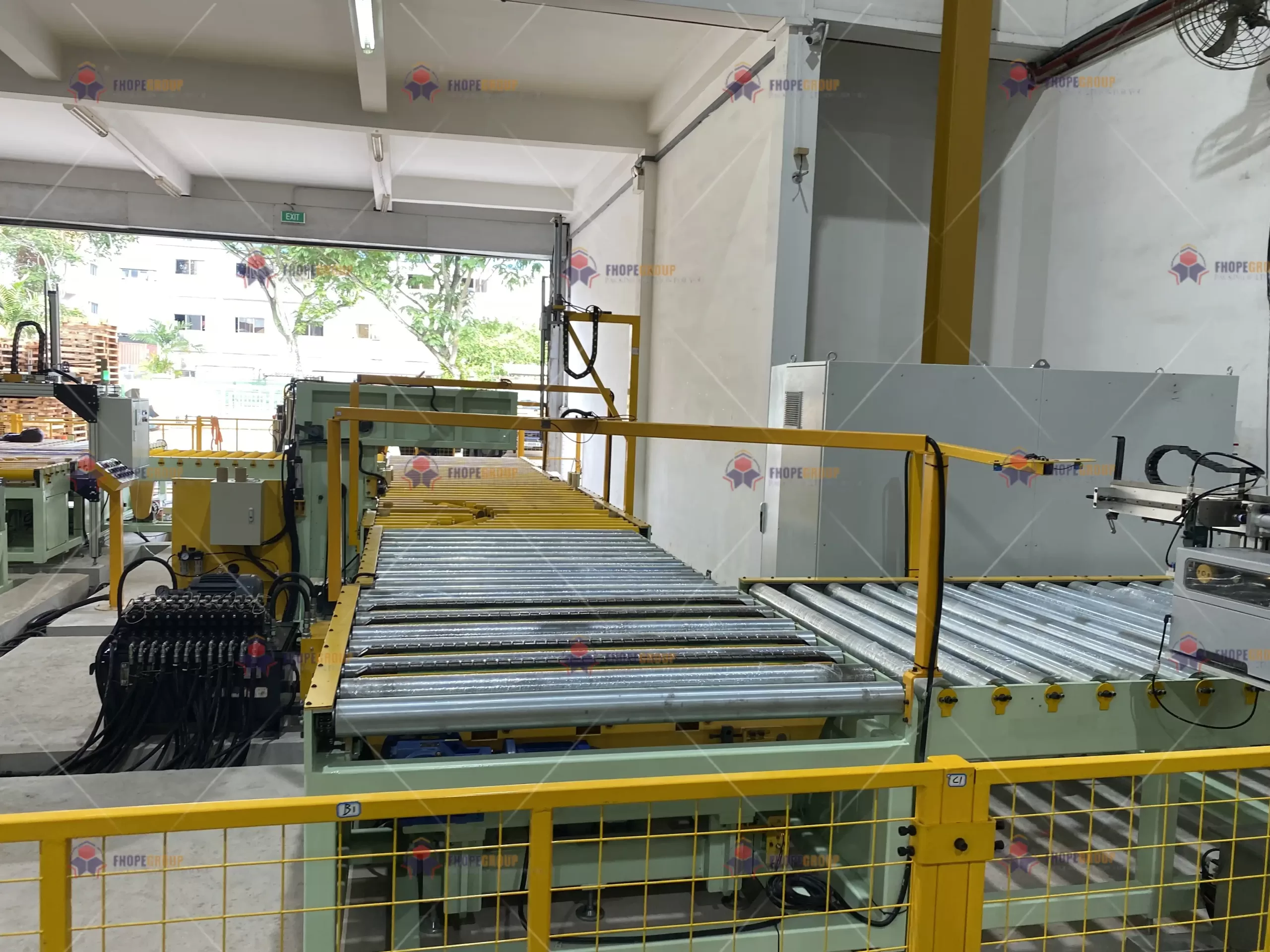
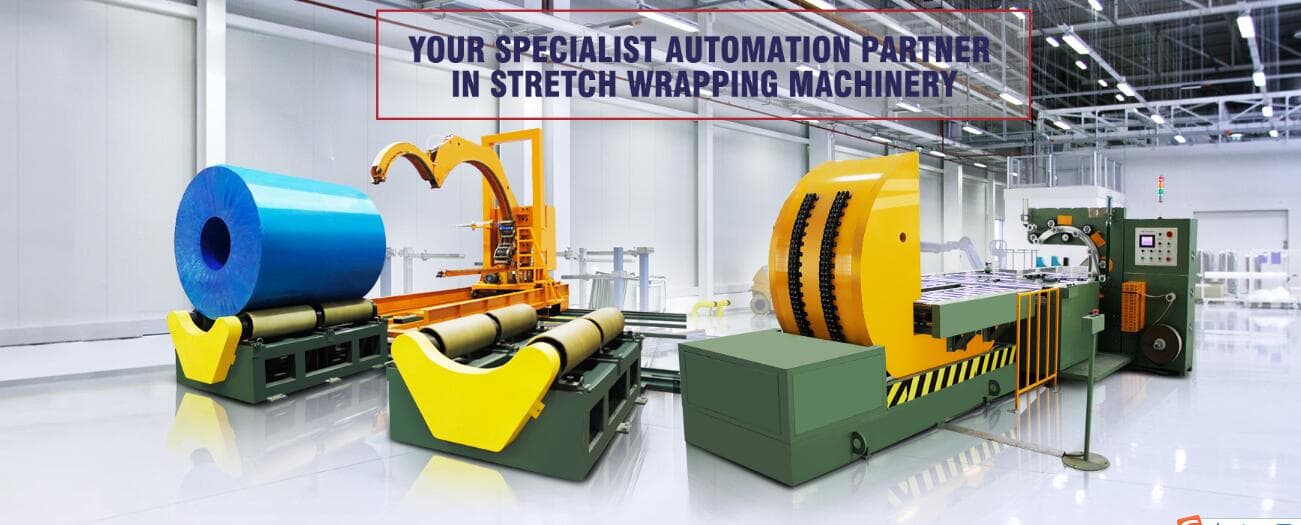
Manual application of VCI film is prone to gaps, wrinkles, and inconsistent tension—all failure points. An automated line ensures repeatable, perfect application every time. The typical sequence for a coil is: 1) VCI Film Wrapping, 2) Top/Bottom Cap Placement, 3) Outer Stretch Wrapping, 4) Optional Strapping/Labeling.
An automated line ensures the VCI film is applied with uniform tension and overlap, creating a sealed envelope before the protective atmosphere is established, which is critical for the 6+ month protection claim.
🛠️ Core Machine Specifications
Our FHOPE series lines are engineered for this specific process. Key metrics include:
| Component | Model FH-VCI-1500 | Model FH-VCI-2500 | Critical Parameter |
|---|---|---|---|
| Max Coil Weight | 15,000 kg | 25,000 kg | Dictates frame & turntable structural design |
| Coil OD Range | 800-1800 mm | 1000-2500 mm | Adjustable mandrel & roller systems |
| VCI Film Application | Semi-Auto / Guided Manual | Fully Automatic | Overlap consistency >90% |
| Stretch Wrap Pre-stretch | 250-280% | 250-280% | Force consistency +/- 5% |
| Cycle Time | ~3.5 minutes | ~4.5 minutes | Includes all wrapping stages |
| Power System | 380V / 50Hz / 18kW | 380V / 50Hz / 22kW | PLC-controlled servo drives |
⚙️ The Role of PLC Control in Consistency
The programmable logic controller (PLC) is the brain. It doesn’t just control motion; it enforces the packaging recipe.
- Speed-Tension Matching: The PLC dynamically adjusts turntable speed based on coil diameter to maintain constant film tension.
- Overlap Control: Ensures every revolution of the VCI film has a precise 50-55% overlap, eliminating weak seams.
- Fault Diagnostics: Monitors photoelectric sensors for film breakage and pneumatic pressure for clamping, triggering an immediate stop to prevent a poorly wrapped coil from proceeding.
Expert Pro Tip: During installation, calibrate the film carriage’s proximity sensors against a master coil. Even a 2mm misalignment can cause a consistent gap at the same point on every coil you wrap. Do this monthly as part of preventive maintenance.
From Cost to Investment: Calculating the Total Protection ROI
Viewing this as just a “packaging cost” misses the point. It’s an investment in delivered quality and risk mitigation. Let’s break it down for Jose’s factory shipping 100 coils per month.
Traditional Cost (Oil + Manual Wrap):
- Protective Oil: $15 per coil
- Manual Labor (2 workers, 20 min/coil): ~$10 per coil
- Material Waste (film, cleanup): $5 per coil
- Total Variable Cost/Coil: ~$30
- Hidden Cost: Rejection rate (let’s assume a conservative 2% due to rust spots): 2 coils * $50,000 value = $100,000 loss/year.
Integrated VCI+Wrap Line Cost:
- VCI Film & Stretch Film Material: $22 per coil
- Automated Labor (supervision only): ~$2 per coil
- Line Depreciation & Maintenance: $6 per coil
- Total Variable Cost/Coil: ~$30
- Key Difference: Rejection rate drops to an estimated 0.2% (due to non-correlation failures). Potential saving on rejections: ~$90,000/year.
The material cost per coil is similar. But the automated system transforms a variable, quality-dependent manual process into a fixed, reliable cost while virtually eliminating the major financial risk of in-transit corrosion.
📈 The Value of Predictability
For Jose’s finance team, predictability is everything. The automated line turns packaging from an operational expense with hidden risk into a predictable, bill-of-materials style cost item. It also accelerates throughput by 40% compared to fully manual methods, freeing up labor for value-added tasks.
Ensuring Long-Term Reliability: Maintenance & Safety
A machine on the shop floor must run daily with minimal downtime. Our design philosophy prioritizes accessibility and proactive maintenance.
Scheduled maintenance focuses on wear components in the film carriage and tensioning system, with daily visual checks for film alignment and seal bar integrity being the most critical for maintaining the protective barrier’s quality.
🛠️ Weekly & Monthly Maintenance Checklist
- Daily (Operator): Visually check VCI film seal bar for debris; verify film rolls are tracking centrally on the carriages; inspect final wrapped coil for consistent overlap.
- Weekly (Technician): Lubricate all guide rails and bearings; check pneumatic filter-regulator units and drain moisture; inspect pre-stretch roller surfaces for wear or film residue buildup.
- Monthly (Technician): Calibrate film tension sensors using a handheld gauge; check torque on all major frame fasteners; perform a full PLC backup.
🛡️ Built-In Safety Protocols
Safety isn’t an add-on. The line includes:
- Light Curtains: Perimeter guarding halts all motion if breached.
- Two-Hand Control: For the clamping and tilting sequence, requiring simultaneous operator action.
- Emergency Stop Circuits: Category 3, PLd rated, with hard-wired relays cutting power to all drives.
- Mechanical Lockouts: For maintenance on the turntable drive and lift mechanisms.

Operator Training: From Button-Pusher to Process Guardian
The best machine is only as good as its operator. We shift the mindset from simply running a machine to being the guardian of the corrosion protection process.
Effective training covers three pillars: 1) Safe machine operation and daily checkpoints, 2) Understanding the “why” behind the wrapping parameters, and 3) Basic troubleshooting to identify and report issues like film breaks or inconsistent tension before they affect a batch of coils.
🎯 Key Training Modules
- Material Knowledge: Operators learn to identify different grades of VCI film (for different metals) and stretch film. They understand shelf life and storage conditions.
- Recipe Management: How to select and load the correct wrapping program (recipe) in the HMI for different coil dimensions and destinations.
- Quality Gate Inspection: Every 10th coil, the operator is trained to perform a stop-and-check: measure film overlap, check for wrinkles in the VCI layer, and verify the tightness of the outer wrap.
- Fault Response: Drilling on clear procedures for common faults—where to look, what to reset, and when to immediately call maintenance instead of trying to fix it.
Expert Pro Tip: Create a “golden coil” sample wrapped to perfect specification. Keep it near the line. When a new operator starts or quality seems off, have them compare their wrapped coil to the “golden” one. This visual benchmark is often more effective than a manual of tolerances.
Conclusion: Delivering Confidence, Not Just Coils
For global manufacturers, the product isn’t just the steel, aluminum, or copper coil. The product is that coil arriving at your customer’s dock in the same pristine condition it left yours. A Zero-Rust Strategy built on the synergy of VCI technology and automated stretch wrapping transforms logistics from a period of vulnerability into a controlled extension of your quality process.
It’s a tangible commitment to your customer’s success, eliminating their need for cleanup and inspection, and streamlining their production. This is how you build unshakable supplier relationships in a competitive global market.
Implementing this strategy starts with the right integrated equipment. Explore our range of precision-engineered coil wrapping machine solutions designed specifically for long-distance sea freight protection.