
Why Spanish Automotive Suppliers Need Coil Wrapping Machines for Tire Protection?
Are you a factory manager in Spain’s bustling automotive sector? Do you constantly grapple with production delays, rising operational costs, or concerns about worker safety? Perhaps you oversee the supply chain for tire manufacturers, and the quality of your raw materials directly impacts the final product. If so, I understand your challenges. In today’s competitive landscape, ignoring inefficiencies in your coil handling and packing can lead to significant losses, affecting everything from your bottom line to your reputation with critical clients.
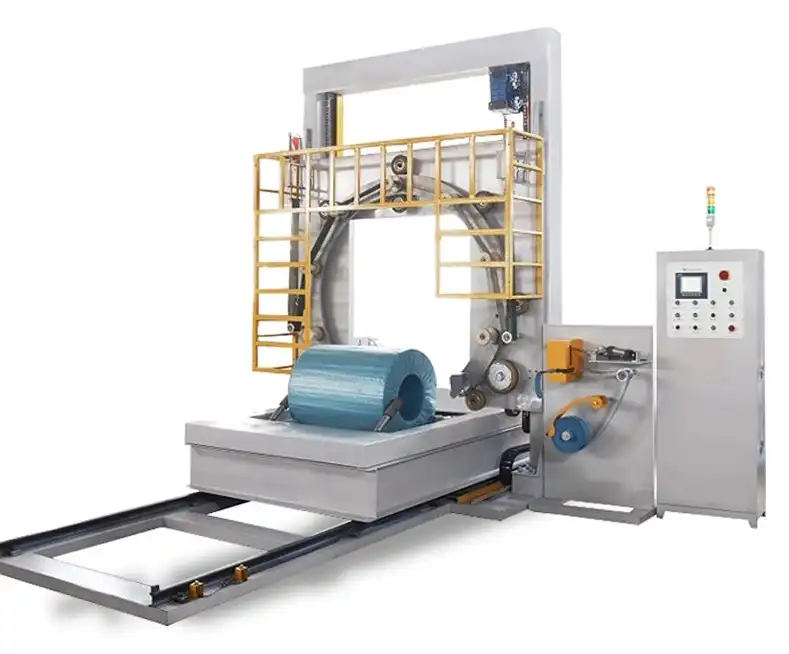
Spanish automotive suppliers face unique pressures to maintain high-quality standards and efficiency in their manufacturing processes. Coil wrapping machines are vital for tire protection because they ensure the integrity of steel cord coils and other critical components used in tire production. These machines provide robust, consistent protection against damage, moisture, and contamination during transport and storage, directly contributing to the durability and safety of the final tire product.
As a packing machine engineer who started on the factory floor and later built my own successful business, I have seen firsthand how the right equipment can transform an operation. This is why I am sharing my insights. Let us explore the critical reasons why investing in a coil wrapping machine is not just an expense, but a strategic move for your Spanish automotive supply business, especially when it comes to safeguarding the components vital for tire manufacturing.
1. Why Manual Coil Packing Creates Bottlenecks for Spanish Tire Component Production?
Are your production lines grinding to a halt because of slow, labor-intensive coil packing processes? For many Spanish automotive suppliers dealing with steel cord or other crucial coils for tire production, manual wrapping methods are a significant bottleneck. This outdated approach can severely impact your ability to meet tight delivery schedules and satisfy the demanding quality standards of the tire industry.
Manual coil packing inherently slows down the production process due to its reliance on human labor, which cannot match the speed and consistency of automated systems. In the context of Spanish tire component manufacturing, this inefficiency leads to production bottlenecks, increased labor costs, and inconsistent packaging quality. Such issues directly hinder timely delivery and compromise the integrity of sensitive materials like steel cord coils.
Let me share a story. Early in my career, I saw factories struggling with this very issue. Workers would manually wrap large, heavy coils. It took too long. The wrapping was often uneven. This caused delays and sometimes led to material damage. This situation is still common today in many plants. When you rely on people for repetitive, heavy tasks, you introduce variability and slowness. This is a big problem when you need to supply parts for thousands of tires every day. It means less output and higher costs.
The Hidden Costs of Manual Coil Wrapping
- Slower Production Cycle: Manual wrapping is inherently slower. Each coil takes a specific amount of time. This time adds up quickly. It creates a backlog at the end of your production line. This bottleneck delays the entire manufacturing process. It also impacts your overall delivery schedules for tire manufacturers.
- Inconsistent Quality Control: Human strength and focus vary. This means that manual wrapping quality can also vary. Some coils might be wrapped too loosely. Others might have gaps. This inconsistent protection is a risk. It leaves your valuable steel cord coils vulnerable to damage. Damage can happen from moisture, dust, or physical impact. Such damage directly affects the quality of the tires they are used in.
- High Labor Dependency and Costs: Relying on many workers for a single task like coil packing is expensive. You pay for wages, benefits, and overtime. As labor costs rise, this manual process becomes less sustainable. Automated machines do not need these human overheads. They work tirelessly and consistently. This makes them a more cost-effective solution in the long run.
- Increased Risk of Material Damage: Manual handling of heavy coils carries a high risk of damage. Coils can be dropped. Edges can be bent. The wrapping itself can be applied poorly. These damages lead to material waste. They also result in costly rejections from your automotive clients. When steel cords are damaged, they cannot be used for high-quality tires. This causes financial losses and damages your reputation.
- Limited Scalability: If your Spanish automotive business grows, your manual packing system will struggle. Adding more workers is not always efficient or feasible. It certainly does not scale easily. An automated coil wrapping machine, however, can handle increased volumes with ease. It supports your growth without creating new bottlenecks. It ensures your packaging keeps pace with your production output.
2. How Do Coil Wrapping Machines Significantly Improve Worker Safety in Your Plant?
Are your workers constantly at risk from manual handling of heavy coils? The safety of your team is not just a moral obligation; it is a critical business factor. High injury rates lead to increased insurance costs, lost productivity, and a negative work environment. For Spanish automotive suppliers, protecting employees during the packing of tire components is paramount.
Coil wrapping machines drastically improve worker safety by automating the handling and wrapping of heavy and awkward coils, eliminating the need for manual lifting, twisting, and repetitive motions. This automation significantly reduces the risk of musculoskeletal injuries, strains, and accidents, creating a much safer working environment in facilities that process materials for tire production.
I have personally seen the toll that manual labor takes on workers. I started on the factory floor. I know the physical demands. Lifting heavy objects, especially coils, can cause serious back injuries. It can lead to crushed fingers or worse. These risks are very real in any heavy industry. It affects the lives of your employees. It also hurts your business with high medical costs and staff turnover. A safer workplace is a more productive workplace. It also builds trust with your team.
Making Your Factory Safer with Automation
- Elimination of Manual Handling Risks:
- Reduced Lifting: Coil wrapping machines handle the heavy lifting. Workers no longer need to manually lift or position large, heavy coils. This removes the primary cause of back injuries and strains.
- Less Repetitive Motion: Manual wrapping involves constant bending, stretching, and turning. These motions cause repetitive strain injuries (RSIs). Automated machines perform these tasks with mechanical precision. This protects workers from long-term health issues.
- Minimized Pinch Points: Automated systems are designed with safety in mind. They reduce areas where fingers or limbs could get caught. Workers can stand at a safe distance while the machine operates.
- Enhanced Operational Control:
- Consistent Process: Machines apply wrapping material smoothly and consistently. This removes the need for workers to physically manipulate the wrap around the coil. It ensures a stable and predictable operation.
- Emergency Stops: Modern machines include emergency stop buttons and safety sensors. These features can immediately halt operation if an issue arises. This protects both the equipment and the personnel.
- Lower Insurance Premiums and Costs:
- Fewer Accidents: A safer environment means fewer workplace accidents. This directly translates to lower workers’ compensation claims. It reduces your insurance premiums.
- Reduced Lost Productivity: Injuries lead to downtime for the affected employee. They also impact team morale and overall productivity. By preventing injuries, you maintain a consistent workforce. This keeps your production running smoothly.
- Improved Employee Morale and Retention:
- Valued Employees: When you invest in safety, your employees feel valued. They see that you care about their well-being. This builds trust and loyalty.
- Better Work Environment: A safer plant leads to a more positive work environment. Workers are less stressed about potential harm. This improves job satisfaction. It also helps with employee retention. You keep your skilled workers longer. This reduces hiring and training costs.









