
Why do paper and printing bosses compare pallet inverter suppliers before purchase?
The paper and printing industry is always moving fast. You face constant pressure to deliver quickly and keep costs low. In this demanding environment, inefficient processes can quickly become a major problem. If your pallet handling is slow or prone to errors, it wastes valuable time and money. Smart business leaders know they need the right tools to stay competitive. They look for solutions that improve efficiency and keep operations smooth.
Paper and printing bosses carefully compare pallet inverter suppliers because these machines are critical for handling diverse pallet types, improving safety, cutting labor costs, and speeding up operations in a demanding industry.

I have seen these struggles firsthand many times in my career. From my early days as an engineer to building my own factory, I learned that small inefficiencies can snowball into big problems. That is why I want to share why comparing pallet inverter suppliers is not just an option. It is a vital step for your business success. Let us dive into the details.
Facing Diverse Pallet Requirements and Global Standards in Paper Logistics?
Paper products come into your warehouse on one type of pallet. Then, they might need to go out on another. This often happens with different pallet types like Euro pallets, US pallets, or various plastic pallets. This constant need to switch pallets can become a logistical headache. It slows down your operations. It can also lead to mistakes. You need a way to make this transition smooth and efficient.
Paper and printing businesses deal with many pallet types for raw materials and finished goods, needing pallet inverters to switch seamlessly between them to meet international shipping standards and internal operational needs.

In my early days, working on the factory floor, I saw the chaos. Workers struggled with manual pallet changes. This was especially true for different paper roll sizes or export orders. We needed to load products onto specific pallets for international shipping. I quickly understood this was a major bottleneck. A smooth, reliable process was missing.
-
🌍 Global Trade and Pallet Variety: The paper and printing industry often works across borders. This means dealing with many different pallet standards. For example, Euro pallets are common in Europe. US pallets are standard in North America. Raw paper materials might arrive on one type. Finished printed products might need to ship on another. This is often due to destination country rules or customer demands. Some pallets, like those for international shipping, might also need ISPM-15 certification. A good pallet inverter handles all these variations. It makes sure you can switch between them easily. This avoids delays at customs or in your warehouse.
-
🔄 Product Integrity and Transfer: Paper products are delicate. Large rolls of paper or stacks of printed sheets can be heavy. They are also sensitive to damage. Manual transfer between pallets carries a high risk of bending, tearing, or creasing the product. This can make entire batches unusable. A pallet inverter allows for a non-contact or very gentle transfer. It holds the product securely while changing the pallet underneath. This protects your valuable inventory. It maintains the quality your customers expect.
-
⚖️ Compliance and Penalties: Not using the correct pallet type can have serious consequences. Shipments can be rejected. They can be delayed. You might face hefty fines. For businesses like those in paper and printing, missing a delivery deadline means lost contracts or unhappy customers. This is exactly what Carlos, a logistics manager I know, worries about. He understands these risks well. A reliable pallet inverter system helps you stay compliant. It avoids these costly penalties. It ensures your operations run without interruption. It makes sure products reach their destination as planned.
Choosing the right pallet inverter means finding a machine that is adaptable. It must handle many different pallet sizes and types. It also needs to be robust. This ensures quick changeover times. It keeps your logistics chain moving smoothly. This is key for managing complex global supply lines in the paper industry.
Struggling with Labor Shortages and High Costs in Your Printing Warehouse?
It is getting harder to find skilled warehouse workers. Labor costs continue to climb. This is a big problem for many businesses, including paper and printing. Manual pallet handling is heavy work. It is also repetitive. This makes it expensive. It is hard to find people willing to do this kind of demanding job. You need a way to reduce your dependence on manual labor. Automation can offer a clear path forward.
Labor shortages and increasing operational costs drive paper and printing companies to invest in pallet inverters, automating the heavy and time-consuming task of pallet switching to reduce manual dependency and optimize workforce allocation.

I remember seeing workers straining with heavy stacks of paper in factories. This was early in my career. I always felt there had to be a better way to handle these tasks. This experience really pushed me. It made me focus on designing more efficient machines. I wanted solutions that could lighten the load for workers and for businesses.
-
👷♂️ Physical Demand: Handling large, heavy paper rolls or stacks of printed materials is physically taxing. It puts a lot of strain on workers’ bodies. Repetitive lifting and moving heavy loads can lead to muscle fatigue. It can also cause serious injuries like back problems or sprains. This kind of work is not appealing to younger generations. They often prefer less physically demanding roles. This makes the labor shortage even worse. An automated pallet inverter removes this physical burden from your staff.
-
💰 Rising Labor Costs: Wages are going up. Benefits packages are more expensive. Training new staff takes time and money. All these factors add to your operational costs. When fewer people are available for manual work, you have to pay more to attract and keep them. This impacts your bottom line significantly. Investing in a pallet inverter means a one-time capital expense. It then provides long-term savings by reducing your reliance on expensive manual labor for this specific task. It is a smart financial move over time.
-
⏳ Inefficiency of Manual Processes: Manually changing pallets takes a lot of time. Each switch involves stopping, unloading, reloading, and restarting. This process is slow. It creates bottlenecks in your warehouse flow. It impacts your overall throughput. It means fewer pallets are processed per hour. This slows down deliveries. An automated pallet inverter performs these tasks quickly and consistently. It works without breaks or fatigue. This significantly speeds up your operations. It makes the entire logistics chain more efficient. It helps you keep up with demand.
By bringing in a pallet inverter, paper and printing businesses can cut down on manual labor needs. Workers can then do other, more skilled tasks. This improves overall productivity. It also makes your warehouse a safer and more attractive place to work. This helps you manage costs and stay competitive. It is about working smarter, not harder.
Worried About Safety Risks and Product Damage During Pallet Handling?
In the paper and printing industry, you often deal with very heavy products. This creates high risks. When workers handle pallets manually, accidents can happen. These accidents can lead to serious injuries for your staff. They can also damage valuable products. Both outcomes result in significant financial losses. You need to prioritize safety. Using the right machinery can help you do this.
Paper and printing businesses prioritize pallet inverters to mitigate significant safety risks for workers handling heavy loads and to prevent costly damage to sensitive paper products during manual or inefficient pallet transfer processes.
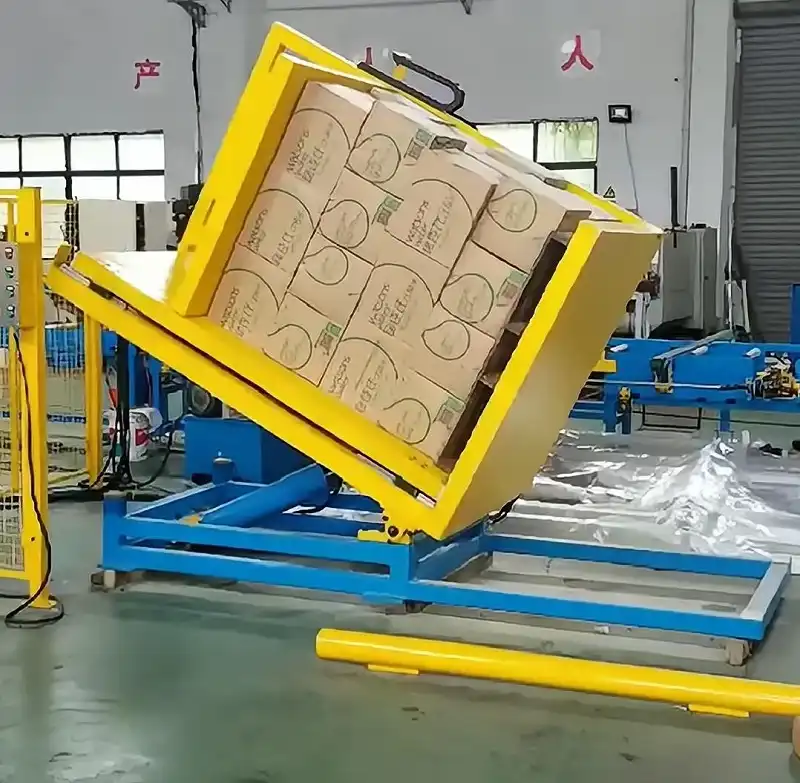
When I was running my own factory, safety was always a top concern. Even a small incident could disrupt our entire operation. I learned a critical lesson. Preventing accidents is always better and cheaper than dealing with their aftermath. This shaped my approach to designing and recommending equipment.
-
🚑 Worker Injuries: Manual lifting, tilting, or flipping heavy stacks of paper or large rolls can cause serious harm. Workers risk back injuries, strains, fractures, or even crushed limbs if loads shift or fall. These accidents lead to pain and suffering for your employees. They also result in lost workdays. Your company faces higher insurance premiums. You might even face legal claims. A pallet inverter removes workers from direct contact with heavy, moving loads. The machine does the dangerous work. This significantly reduces the risk of workplace accidents.
-
📉 Product Damage: Sensitive paper products are easily damaged. If a stack of paper or a roll is dropped or mishandled during a manual pallet transfer, it can be creased, torn, or otherwise ruined. This means you have to discard the damaged goods. You might need to re-print or re-process orders. This results in wasted materials, labor, and time. It directly impacts your profits. A pallet inverter ensures products are held securely throughout the transfer. It performs the inversion or exchange smoothly. This protects your inventory from costly damage. It helps maintain product quality.
-
⚖️ Compliance and Reputation: Workplace safety is not just good practice. It is often legally mandated. Governments have regulations to protect workers. Non-compliance can lead to hefty fines. It can also lead to legal issues. Furthermore, a poor safety record can harm your company’s reputation. It can make it harder to attract good employees. It might even deter potential clients. Implementing safe machinery like pallet inverters shows your commitment to safety. This helps you meet legal requirements. It also builds a positive image for your business.
By investing in a pallet inverter, paper and printing bosses protect their most valuable assets: their employees and their products. It is a proactive step. It creates a safer work environment. It ensures product integrity. This leads to fewer accidents, lower costs, and a more reliable operation overall.
How Do Pallet Inverters Boost Efficiency and Meet Tight Delivery Deadlines?
Today’s customers expect faster deliveries. This is true for every industry, including paper and printing. Slow pallet changes create bottlenecks in your warehouse. These bottlenecks lead to missed deadlines. This can result in lost business and unhappy clients. You need speed and precision. Automated solutions can provide both.
Pallet inverters significantly boost efficiency in paper and printing operations by rapidly switching pallets, eliminating manual delays, and maintaining a continuous workflow, which is crucial for meeting stringent delivery deadlines and increasing overall throughput.

When I started my own factory, I quickly learned that delivery speed directly affects customer satisfaction. In the beginning, we sometimes struggled with bottlenecks in our material handling. This experience pushed me to constantly seek out more efficient solutions. I knew that better processes meant happier customers and a growing business.
-
⏱️ Time is Money: In the fast-paced world of paper and printing, every minute counts. Time spent on slow, manual pallet changes delays the entire production and shipping process. This directly limits how many orders you can process each day. It reduces your overall output. A pallet inverter performs pallet swaps in minutes, sometimes even seconds. This speed ensures that materials keep moving. It avoids costly downtime. It maximizes your operational hours.
-
📈 Customer Expectations: Modern retail and e-commerce have set a new standard for delivery speed. Customers now expect quick turnaround times. Paper and printing companies are not exempt from these high expectations. Delays in delivery can lead to canceled orders. They can result in customer complaints. Ultimately, they can lead to lost business opportunities. A pallet inverter helps you meet these stringent deadlines. It ensures your products are ready to ship on time. This keeps your customers happy and loyal.
-
🚧 Eliminating Bottlenecks: Manual pallet handling often creates choke points in the warehouse. Goods pile up, waiting for workers to manually transfer them. This stops the smooth, continuous flow of operations. It reduces the overall efficiency of your logistics. Pallet inverters integrate seamlessly into automated lines. They can handle high volumes of pallets. This eliminates these bottlenecks. It ensures a consistent and rapid flow of goods. This improves your overall throughput. It allows you to move more product faster.
By using pallet inverters, paper and printing businesses can significantly speed up their operations. This allows them to process more orders. They can also meet tight delivery schedules more easily. This improved efficiency not only satisfies customers but also boosts the company’s reputation. It makes the business more competitive in the market. This is a crucial step towards sustained growth.
Finding a True Partner: Beyond Just Buying a Pallet Inverter Machine?
Buying a new machine, like a pallet inverter, is a big investment. But finding the right piece of equipment is only part of the challenge. You also need a reliable partner. This partner should truly understand your specific needs. They must also provide ongoing support. Simply buying a machine is not enough. You need someone who will help you succeed in the long run.
Paper and printing bosses look for more than just a pallet inverter machine; they seek a long-term partner who offers deep industry understanding, customizable solutions, reliable after-sales support, and a commitment to their operational success.
When I shifted from being an employee to owning my own factory, I quickly learned something important. Strong relationships with suppliers were absolutely key to success. I saw many companies buy cheap machines. These often led to huge problems later on. This experience deeply influenced me. It is why I built FHOPEPACK the way I did. We do not just sell machines. We see ourselves as problem solvers and partners.
-
🤔 Lack of Industry Specificity: Many suppliers offer generic material handling equipment. They might not understand the unique challenges of the paper and printing industry. This includes handling large, heavy rolls, stacks of delicate sheets, or specific pallet types. A generic solution might not fit your exact needs. It could even create new problems. A true partner takes time to learn about your specific products. They understand your operational flow. This allows them to recommend a solution that really works for your business.
-
🛠️ Poor After-Sales Support: A pallet inverter is a critical piece of equipment. If it breaks down, your operations can stop. This leads to costly downtime. Without quick, expert support, these interruptions can be very expensive. A reliable partner offers excellent after-sales service. This includes fast response times, readily available spare parts, and skilled technicians. This ensures your machine is back up and running quickly. It minimizes any negative impact on your production.
-
🔄 Inflexible Solutions: Every warehouse is different. Your existing layout, product range, and throughput requirements are unique. A standard, off-the-shelf machine might not fit. You might need custom modifications. You might need special features. A good partner listens to your specific layout needs. They offer flexible or customizable solutions. This ensures the pallet inverter integrates smoothly into your current setup. It helps you maximize its benefits. It shows they care about your success.
Choosing a pallet inverter supplier is a strategic decision. You are not just buying a piece of metal. You are investing in efficiency, safety, and reliability for your business. Look for a partner who offers expertise and support. This partnership will help your operations run smoothly for years to come. It ensures your investment truly pays off.
Conclusion
Paper and printing bosses compare pallet inverter suppliers for good reasons. They want to handle diverse pallets, cut labor costs, boost safety, and meet tough deadlines. Finding the right partner and the right pallet inverter is a smart move. It ensures efficient operations and helps your business grow.








