
Which Pallet Inverter Supplier Offers the Best Pricing for Paper Roll Handling?
Imagine your warehouse running smoothly, every pallet change seamless, and your valuable paper rolls moved without a scratch. Now, imagine the opposite: slow manual handling, damaged goods, and frustrated workers. For managers like Carlos, dealing with thousands of pallets daily, this isn’t just a fantasy; it’s a critical reality. Finding the right equipment, especially a pallet inverter for delicate items like paper rolls, is essential. But how do you decide who truly offers the “best pricing” when so much is at stake?
When searching for the best pricing on a pallet inverter for paper roll handling, the “best” doesn’t just mean the lowest initial cost; it encompasses the total value, including equipment reliability, safety features, efficiency gains, and responsive after-sales support. Suppliers like FHOPEPACK offer competitive solutions specifically designed for sensitive cargo, providing long-term operational savings that far outweigh a cheap upfront purchase.

Many people think “best pricing” is only about the number on the quote. From my years in the packing machine industry, I can tell you that is a short-sighted view. The true value of a pallet inverter, especially one handling heavy or fragile goods like paper rolls, comes from its long-term performance, safety, and the support you get. Let us explore what “best pricing” truly means in this context and how to find a supplier who delivers it.
Is “Best Pricing” Just About the Sticker Price, or Something More?
Are you just looking for the cheapest machine, or are you seeking a solution that truly solves your operational challenges? Many warehouse managers, like Carlos, know that a low price tag often hides bigger costs down the road. Downtime, safety incidents, and inefficient processes quickly erode any initial savings.
“Best pricing” for a pallet inverter extends far beyond the initial purchase cost. It includes the total cost of ownership, factoring in operational efficiency, reduced labor expenses, enhanced safety, minimal maintenance, and the long-term reliability of the equipment. A truly cost-effective solution provides significant return on investment through improved productivity and reduced risks. %[Reliable Pallet Inverter]( “Reliable Pallet Inverter”)
When I first started in the packing machine business, I learned quickly that a cheap machine could be the most expensive mistake. This is especially true for pallet inverters. For businesses handling thousands of pallets daily, like Carlos’s food and beverage distribution center, every minute of downtime costs money. A pallet inverter that frequently breaks down, requires constant manual intervention, or is difficult to maintain will increase your operating costs, not reduce them. Here are key factors that contribute to the “true” best pricing:
-
Reliability and Durability: A well-built machine that lasts for years with minimal issues saves you money on repairs and replacement parts. It also ensures consistent operation, which is vital for meeting tight delivery schedules. Investing in quality materials and robust engineering upfront prevents costly interruptions. A machine that runs smoothly means fewer production bottlenecks and higher overall throughput. Think about the impact of a machine that breaks down once a week versus one that works flawlessly for months. The difference in operational continuity and repair expenses is immense. This directly impacts your bottom line, far more than the initial price difference.
-
Safety Features: Safety is not just a moral obligation; it is a financial one. Manual pallet handling, especially with heavy paper rolls, leads to a high risk of injury. Carlos knows this firsthand, mentioning several accidents due to manual handling. A pallet inverter with advanced safety features protects your employees and reduces the risk of costly accidents, workers’ compensation claims, and legal issues. Integrated safety sensors, emergency stops, and robust guarding are essential. These features are not optional extras; they are critical components that safeguard your team and your profits. The cost of one serious workplace injury can easily exceed the price difference between a cheap, unsafe machine and a premium, safe one.
-
Efficiency Gains and Automation: The goal of a pallet inverter is to make your operations more efficient. An automated or semi-automated system dramatically reduces the time and labor needed for pallet changes. This is a huge benefit in today’s environment, where labor is scarce and expensive. If a machine can replace several hours of manual labor per day, the savings quickly add up. This efficiency also means faster processing times, allowing you to meet customer demands for shorter delivery cycles, a key challenge for Carlos. Look for features like quick cycle times, easy loading, and minimal operator input. These contribute directly to higher throughput and lower labor costs over the machine’s lifespan.
-
After-Sales Support and Service: What happens when something goes wrong? A supplier who offers excellent technical support, readily available spare parts, and quick service response times is invaluable. This minimizes downtime and keeps your operations running. Carlos specifically wants a “partner” who understands his pain points and offers flexible solutions, not just a seller who ignores after-sales. Good support ensures that your investment continues to perform, protecting your productivity. A cheap machine with no support can become a very expensive paperweight.
What Unique Challenges Does Paper Roll Handling Present for Pallet Inverters?
Handling heavy, delicate paper rolls is not like moving ordinary goods. These items demand precision, care, and specialized equipment. Any mishandling can lead to costly damage, waste, and customer dissatisfaction. What specific features should you look for in a pallet inverter to ensure your paper rolls are always safe?
Paper roll handling requires pallet inverters with specific features to prevent damage, such as specialized clamping mechanisms, gentle turning speeds, and stable support throughout the transfer process. Due to their weight and fragility, these machines must offer exceptional stability and precise control to ensure the integrity of each roll during pallet exchange.
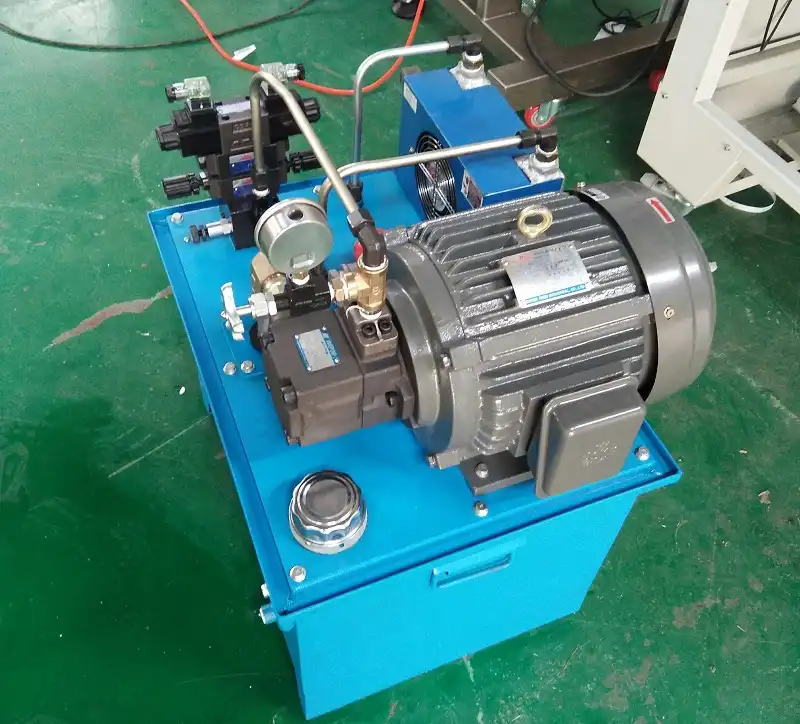
Through my experience in designing packing machines, I have seen many different types of products needing careful handling. Paper rolls, whether for printing, packaging, or industrial use, are a prime example of goods that require specialized attention from a pallet inverter. Their unique characteristics present several challenges that a standard pallet inverter might not address.
-
Weight and Stability: Paper rolls are often very heavy. This means the pallet inverter must have a robust structure and a high weight capacity to handle them safely. The machine needs to be stable during the entire inversion process to prevent tipping or shifting, which could damage the roll or injure operators. The clamping force must be sufficient to hold the roll securely without crushing it. If the machine cannot handle the weight, it will either break down quickly or operate unsafely. A stable, heavy-duty build ensures longevity and safe operation even with the largest rolls.
-
Fragility and Surface Protection: The outer layers of a paper roll can be easily damaged, scuffed, or creased. Even minor damage can make the roll unusable for its intended purpose, leading to significant waste. A pallet inverter for paper rolls must employ gentle handling methods. This includes soft contact surfaces, specialized rubber pads, or inflatable clamps that distribute pressure evenly across the roll’s surface. The movement of the machine must be smooth and controlled, avoiding sudden jerks or impacts that could compromise the roll’s integrity. Protecting the product means protecting your investment.
-
Core Integrity: Many paper rolls have a central core. While the exterior needs protection, the core also needs to remain intact and round. If the core is crushed or deformed during the pallet change, the roll becomes difficult or impossible to mount on processing machinery. Some specialized pallet inverters might offer core-gripping options or provide support that avoids putting undue stress on the core itself. This ensures the roll is ready for the next stage of its journey.
-
Size and Diameter Variations: Paper rolls come in a wide range of diameters and lengths. A versatile pallet inverter should be able to accommodate these variations without extensive adjustments. This flexibility is crucial for operations that handle different types of paper products. Adjustable clamping arms or movable support platforms allow the machine to adapt quickly to various roll sizes, minimizing changeover time and maximizing operational efficiency. This adaptability is key to a smooth and flexible production line.
Beyond Paper Rolls: How Can a Pallet Inverter Adapt to Diverse Cargo and Pallet Types?
While the focus might be on paper rolls, many operations, like Carlos’s, handle a vast array of goods and face diverse pallet requirements daily. Switching between Euro pallets, US pallets, and plastic pallets for various exports is a constant challenge. Can a single pallet inverter truly offer the flexibility needed for such complex operations?
A versatile pallet inverter can adapt to diverse cargo and pallet types through adjustable clamping systems, configurable load platforms, and programming flexibility. This enables seamless switching between different pallet sizes—like Euro and US standards—and handling various product shapes and weights, providing a comprehensive solution for complex logistical challenges.
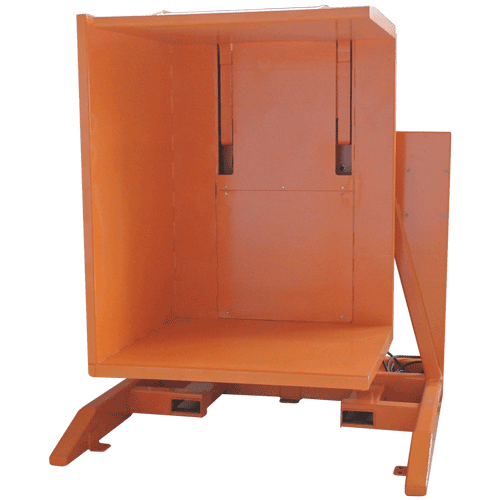
My experience with pallet changing machines has shown me that flexibility is often just as important as specialized handling. Carlos’s situation perfectly highlights this: he needs to switch thousands of pallets daily, often between Euro and US standards, for a wide range of food and beverage products. This means a solution tailored only for paper rolls, for example, would not meet his broader needs. Here is how a well-designed pallet inverter offers this crucial adaptability:
-
Adjustable Clamping Mechanisms: The most important feature for versatility is an adjustable clamping system. This allows the machine to securely hold items of different heights and widths. For items like paper rolls, which might vary in diameter, or for different sized boxes and crates, the ability to quickly and easily adjust the clamping pressure and position is critical. Some advanced systems use hydraulic or pneumatic controls to set precise pressures, ensuring secure grip without damaging fragile goods. This means the same machine can handle a delicate stack of beverage cartons one moment and a heavy paper roll the next.
-
Configurable Load Platforms and Backstops: The base platform of the pallet inverter and its backstop need to accommodate various pallet dimensions. For operations like Carlos’s, handling both Euro pallets (1200x800mm) and US pallets (48×40 inches or approx. 1219x1016mm) requires a machine with a sufficiently large and adaptable footprint. Some models offer adjustable side guides or extendable platforms. These features allow the machine to correctly align and secure different pallet sizes before inversion, preventing product shift or damage. The ability to quickly change settings means less downtime during transitions between different product lines or export destinations.
-
Handling Different Product Shapes and Weights: Beyond just pallet size, the pallet inverter must be able to handle a variety of product shapes and weights. This means a machine with strong, durable components and a high load capacity. The design should also consider how different products distribute their weight. For instance, a flat stack of cartons needs different support than a single cylindrical paper roll. Versatile machines often come with various options for gripping or supporting goods, such as push-pull systems, top clamps, or even magnetic plates for specific loads. The control system also plays a role, allowing operators to select different programs for different product types, optimizing speed and pressure for each specific load.
-
Integration with Automation Systems: For high-volume operations like Carlos’s, a pallet inverter needs to integrate seamlessly with existing conveyor systems, robotic arms, or warehouse management software (WMS). This level of automation reduces the need for manual labor, addresses labor shortages, and ensures a continuous, efficient flow of goods. Machines that can communicate with other systems optimize the entire pallet changing process, from initial loading to final offloading, minimizing human error and maximizing throughput. This integration makes the pallet inverter a key component of a larger, smarter warehouse system.
How Do You Choose a Pallet Inverter Supplier That Truly Understands Your Needs?
Finding a supplier for a pallet inverter can feel overwhelming. Many companies just want to sell you a machine. But for critical operations like yours, you need more than just a vendor; you need a partner who understands your challenges, speaks your language, and stands by their product long after the sale. How do you identify such a partner in a crowded market?
To choose a pallet inverter supplier that truly understands your needs, look for a company with proven industry experience, a strong track record of customized solutions, comprehensive after-sales support, and a commitment to safety and reliability. A true partner will invest time to understand your specific operational pain points, offering tailored advice rather than a generic product.
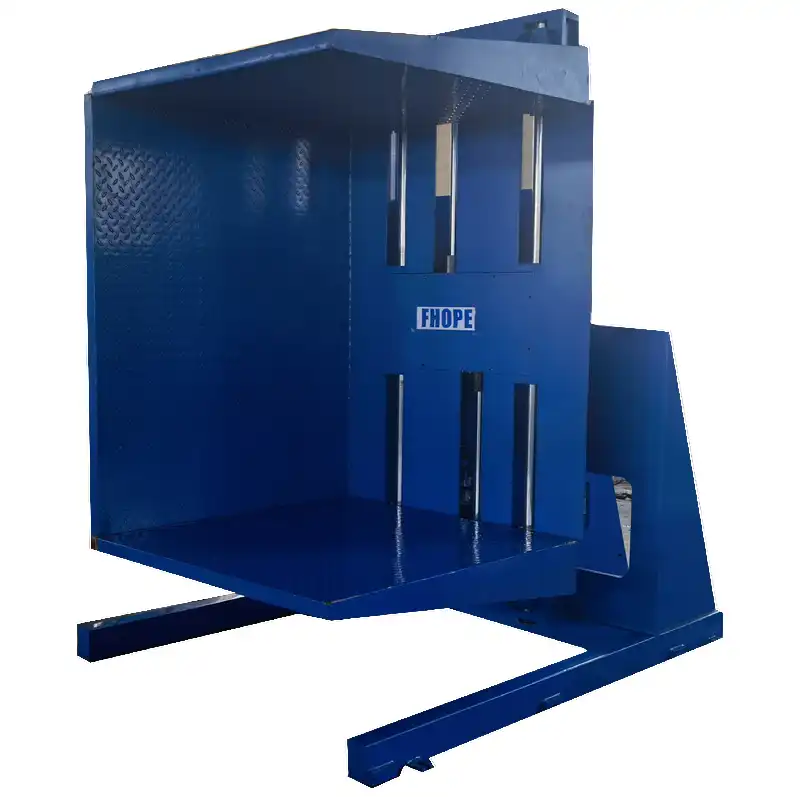
When I founded FHOPEPACK, my goal was always to be more than just a manufacturer. I wanted to share knowledge and help clients truly grow their businesses, just as the packing machine industry helped me achieve financial independence. This philosophy is crucial when choosing a supplier, especially for vital equipment like a pallet inverter. Here are the qualities of a partner who truly understands your needs:
-
Deep Industry Expertise and Problem-Solving Approach: A good supplier does not just list features; they ask about your challenges. They should have a deep understanding of warehouse operations, logistics, and specific industry needs, whether it is food and beverage like Carlos’s or paper roll handling. They should be able to analyze your current processes, identify bottlenecks, and propose solutions that directly address your pain points, rather than just selling you a standard model off the shelf. This often involves site visits, detailed consultations, and a willingness to offer custom designs. They act as consultants, not just salespeople.
-
Proven Track Record and Customer Testimonials: Look for a supplier with a solid reputation. Check their past projects and customer testimonials. Do they have experience with similar applications or industries? Are their clients happy with the longevity and performance of their machines? Carlos wants a supplier that can guarantee reliable, long-term operation. A history of successful installations and satisfied customers is a strong indicator of a supplier’s quality and commitment. Do not hesitate to ask for references or case studies. This shows their confidence in their own products and services.
-
Comprehensive After-Sales Support and Training: A machine is only as good as the support behind it. This is a crucial point for Carlos, who wants a partner, not a company that ignores after-sales. A reliable supplier offers installation assistance, comprehensive training for your operators and maintenance staff, readily available spare parts, and responsive technical support. This ensures that your team can operate the machine effectively and that any issues are resolved quickly, minimizing downtime. This commitment to ongoing support is a hallmark of a true partnership.
-
Customization Capabilities and Flexibility: Every warehouse is unique. While standard models work for some, many operations require specific modifications or entirely custom solutions. Can the supplier adapt their machines to fit your exact space constraints, unique product sizes, or integration requirements with existing conveyor lines? For example, accommodating both Euro and US pallets, as Carlos needs, might require specific adjustments that a flexible supplier can provide. This ability to tailor solutions demonstrates a genuine understanding of your specific needs and a commitment to providing the right solution, not just a solution.
Conclusion
Finding the “best pricing” for a pallet inverter for paper roll handling, or any high-volume operation, goes beyond the initial cost. It is about investing in reliability, safety, efficiency, and a long-term partnership with a supplier who understands your unique challenges. Choose wisely to ensure your operations run smoothly and profitably for years to come.








