
Why Is Hydraulic Control More Reliable for 90° and 180° Flipping Tasks?
For factory managers like Michael, overseeing a busy metal processing plant in Mexico, the challenges are constant. You face pressure to boost output, cut costs, and keep your team safe. I know this because I have been there myself. Manual handling of heavy steel coils and wire rolls creates slow bottlenecks and dangerous situations. Product damage from rough handling costs you money and customer trust. You need equipment that works, every single time, in tough conditions.
Hydraulic control is more reliable for 90° and 180° flipping tasks because it offers precise, consistent power delivery through incompressible fluid, enabling smooth, controlled movements, inherent overload protection, and a robust design capable of enduring heavy industrial demands.
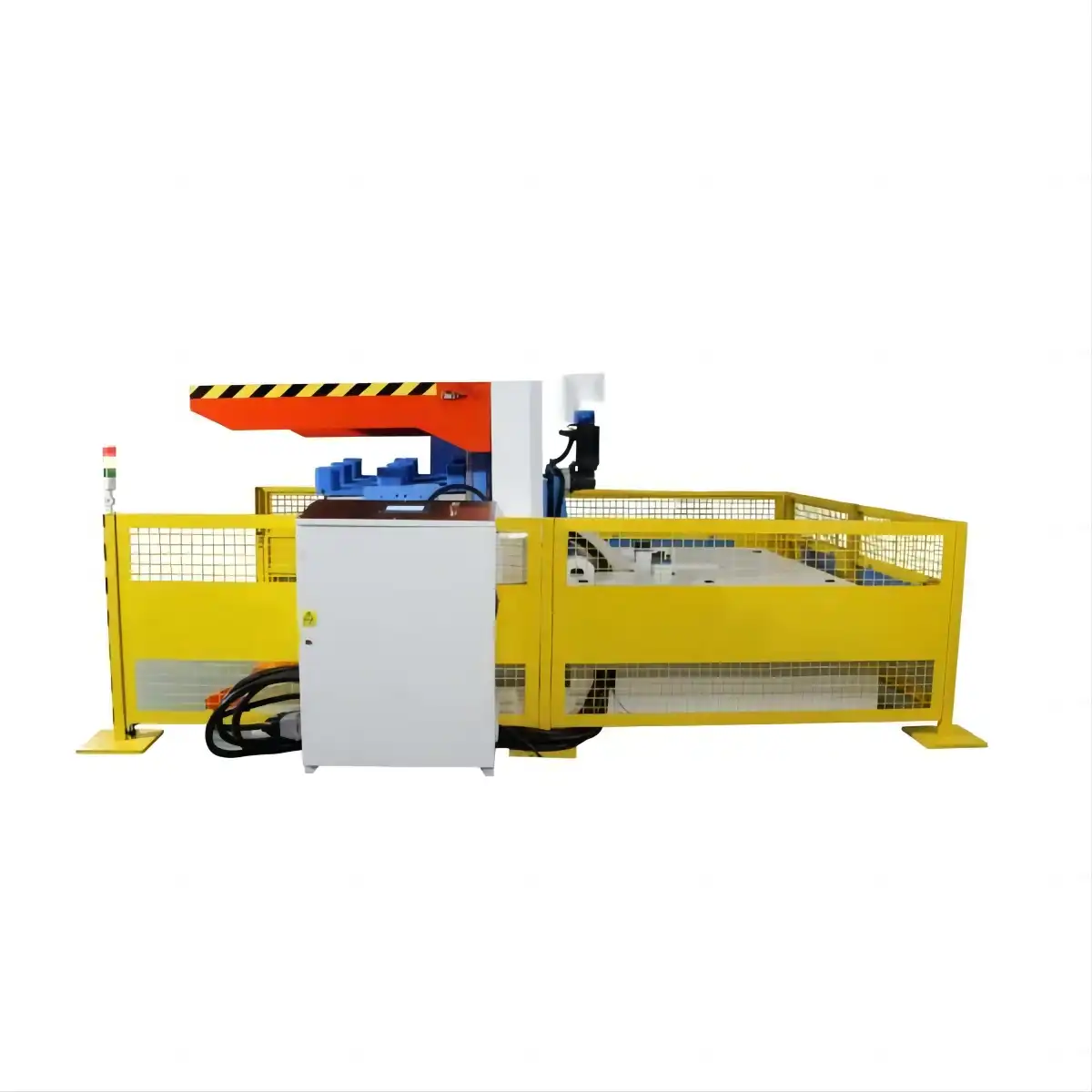
Understanding why hydraulic systems offer this level of reliability is key to making smart investments for your operations. Let’s dig deeper into how this technology can transform your factory, from safety on the floor to your bottom line.
1. Why Do Traditional Flipping Methods Fall Short in Industrial Settings?
Imagine your team struggling with heavy, awkward steel coils, trying to manually flip them or using outdated mechanical systems. It is a daily headache. This slow, labor-intensive process not only drains your team’s energy but also creates serious safety hazards and bottlenecks that stall your entire production.
Traditional flipping methods often fall short in industrial settings due to their inherent limitations in power, precision, and safety, leading to slow operations, high labor costs, increased risk of accidents, and potential product damage.

When you run a metal processing plant, every minute of downtime and every damaged product counts. Current methods, relying heavily on human effort or less advanced mechanical setups, simply cannot keep up with the demands of modern manufacturing. This leads to clear inefficiencies and avoidable risks. I have seen firsthand how these issues affect operations, especially when dealing with heavy items like steel wire packing or large coil packing tasks. The goal is always to move these items safely and quickly without compromise. (industrial material handling challenges, heavy manufacturing bottlenecks)
The Hidden Costs of Manual Coil Handling 📉
Manual handling seems cheap at first glance, but it is one of the most expensive ways to move heavy items. Think about the direct labor costs. You need multiple workers for tasks that a machine could do alone. Then, consider the physical strain. Repetitive lifting and awkward movements lead to back injuries, strains, and other worker compensation claims. This pushes up your insurance costs. Beyond that, a tired workforce is a slower workforce. Production speeds drop. When you are moving large steel coils or wire rolls, the sheer weight makes manual flipping extremely slow and difficult to standardize. Any mistake can lead to a dropped product or, worse, a serious injury. These are not just risks; they are ongoing costs that eat into your profits. From my experience building and managing factories, I can tell you that preventing these incidents is far cheaper than dealing with their aftermath. (manual handling risks, labor intensity, worker safety, production slowdowns)
Limitations of Mechanical-Only Systems ⚙️
Some older or simpler mechanical systems try to automate flipping, but they often lack the finesse needed for heavy, sensitive industrial materials. These systems might use gears, chains, or levers. They can be jerky. They might not offer fine control over the speed or angle of the flip. This means sudden stops or starts. For delicate materials or those with sharp edges, like steel coils, this can cause product damage. A dented edge or a scratched surface can make a product unsellable or lead to customer complaints. Mechanical systems also wear out quickly, especially when handling heavy, unbalanced loads regularly. They often need more frequent maintenance and can have unpredictable breakdowns. This leads to unexpected downtime. These issues undermine your overall operational efficiency and can be just as costly as manual handling in the long run. (mechanical flipping drawbacks, product damage, equipment wear, maintenance issues)
| Aspect | Manual Handling | Mechanical System (Basic) | Hydraulic System (FHOPEPACK) |
|---|---|---|---|
| Safety | Very Low (High Injury Risk) | Moderate (Jerky, Less Control) | Very High (Controlled, Overload Safe) |
| Efficiency | Very Low (Slow, Labor-Intensive) | Medium (Faster than manual, but limited) | Very High (Fast, Smooth, Consistent) |
| Precision | Low (Human Error) | Medium (Limited Control) | High (Exact Positioning) |
| Durability | N/A | Medium (Wear & Tear) | Very High (Robust Components) |
| Product Damage | High | Medium | Very Low |
2. How Does Hydraulic Power Offer Unmatched Stability for Heavy Loads?
When you handle something as heavy and valuable as a large steel coil, you need confidence that the equipment will not just move it, but move it with absolute stability. Imagine the cost if a multi-ton roll shifts unexpectedly. This is why many factory managers turn to hydraulic systems.
Hydraulic power offers unmatched stability and precise control for heavy loads because it utilizes incompressible fluid to transmit force, resulting in smooth, consistent, and powerful motion that prevents sudden drops or jerky movements.
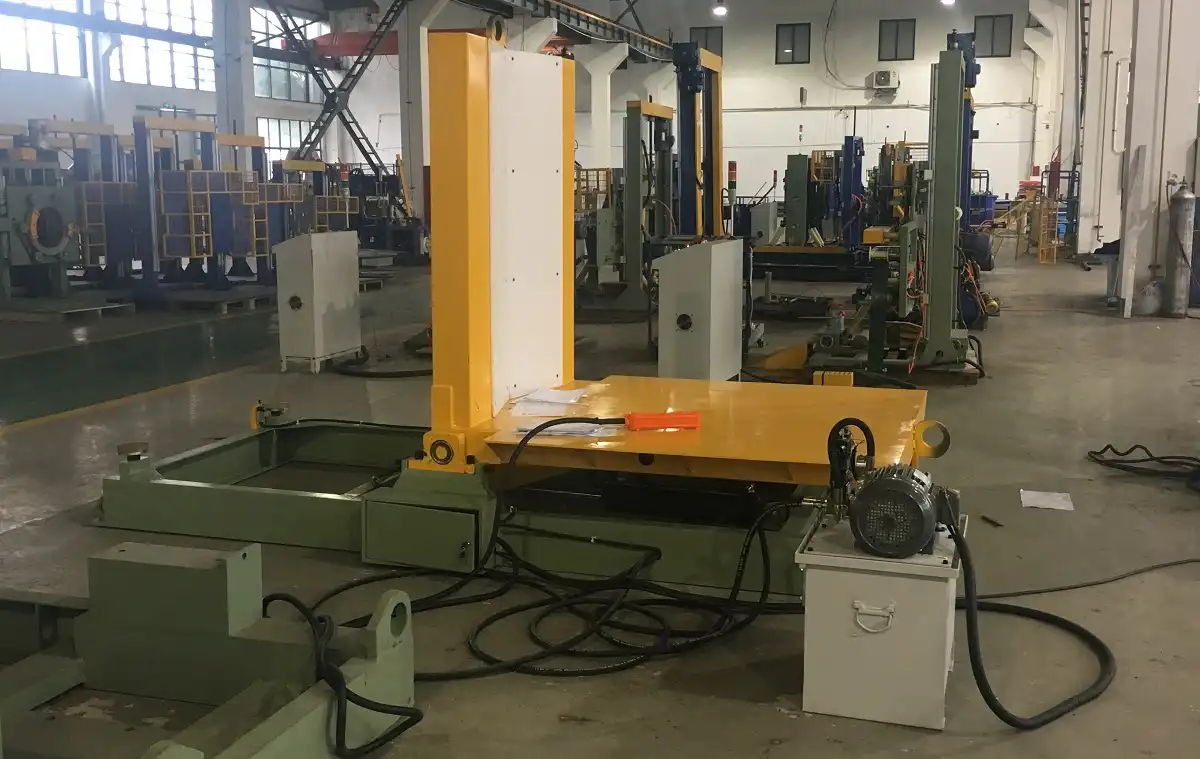
For me, understanding the mechanics behind these systems was crucial when I started my own packing machine factory. It is about more than just brute strength; it is about controlled, reliable power. This principle is vital in tasks like coil packing and steel wire packing, where stability ensures product integrity and worker safety. (hydraulic system benefits, load stability, heavy equipment control)
The Physics Behind Hydraulic Precision 💧
The secret to hydraulic stability lies in how it works. Hydraulic systems use a fluid, usually oil, to transmit power. This fluid is incompressible. What does this mean? If you push on one side of a sealed hydraulic system, the fluid instantly transmits that force to another part. This creates a direct and immediate transfer of power. There is no slack or give, unlike mechanical linkages that can have play or backlash. This precise force transmission allows for incredibly fine control over movement. When a hydraulic cylinder extends or retracts to flip a heavy coil, it does so smoothly and without any sudden jolts. This consistent force is essential for safely managing heavy, potentially unbalanced loads. It also means you can stop the movement at any point, and the load will hold its position. This is a level of precision that mechanical systems struggle to match, especially with varying weights. (hydraulic principles, fluid power, precise movement, load management)
Consistent Force and Smooth Movement ✨
One of the biggest advantages of hydraulic systems for flipping tasks is their ability to deliver consistent force throughout the entire range of motion. Whether you are starting to flip a coil, moving it through the middle, or setting it down, the hydraulic cylinders provide steady, unwavering power. This eliminates the “jerking” or “bouncing” that can happen with other systems. Think about how this helps your operations:
- No Sudden Drops: The load will not suddenly fall if power is lost. Hydraulic cylinders can lock in place, or slowly descend, preventing accidents.
- Variable Speed Control: You can adjust the flipping speed precisely. This is perfect for different types of materials or specific production requirements.
- Reduced Wear and Tear: Smooth movement puts less stress on the equipment itself and on the products being handled. This leads to longer equipment life and fewer damaged goods.
- Exact Positioning: For tasks requiring precise alignment, hydraulic systems allow for millimeter-perfect placement. This is critical for subsequent packing or processing stages.
These features make hydraulic upenders and tilters indispensable in environments where heavy loads and precision are non-negotiable. They ensure that every flip is executed flawlessly, protecting both your valuable products and your valuable team. (consistent power, smooth operation, variable speed, precise positioning)
3. What Makes Hydraulic Systems Inherently More Durable and Safer for Flipping Operations?
Michael, you look for durable equipment that can withstand a factory’s harsh, high-intensity environment. You also care deeply about your team’s safety. These are not just preferences; they are necessities for profitability and employee well-being. Hydraulic systems are designed with these exact needs in mind.
Hydraulic systems are inherently more durable due to their robust, enclosed components built for heavy loads, and they offer superior safety through controlled movements, integrated overload protection, and minimal direct human interaction with heavy objects.
When I was building my own factory, I prioritized equipment that would last and keep my workers safe. It is an investment that pays off every single day, reducing maintenance costs and preventing costly accidents in material handling, especially for coil packing and steel wire packing. (industrial durability, worker safety, hydraulic reliability)
Built to Last in Tough Environments 🛡️
Hydraulic components are engineered for heavy-duty work. Think about hydraulic cylinders, pumps, and valves. They are often made from high-strength steel and are built to handle immense pressures and forces. Unlike exposed mechanical parts like chains, gears, or belts, hydraulic systems are largely enclosed. This protects them from dust, dirt, moisture, and debris commonly found in metal processing plants. This rugged construction means they are less susceptible to wear and tear from environmental factors. This leads to a longer operational lifespan and fewer unexpected breakdowns. Less downtime means more production. When equipment is working consistently, your factory’s output remains steady, allowing you to meet deadlines and satisfy customers. This robust design also translates into lower maintenance costs over time because parts simply do not fail as often. (heavy-duty construction, component protection, long lifespan, reduced maintenance)
Prioritizing Worker Safety with Controlled Power 👷♂️
Safety is paramount in any industrial setting, especially when handling multi-ton objects. Hydraulic systems excel in this area due to several key features:
- Overload Protection: Hydraulic systems naturally protect against overloading. If you try to lift or flip something too heavy, relief valves will simply open, preventing damage to the system or a catastrophic failure. The load will not be moved, but the system itself will not break. This is a built-in safety mechanism that prevents accidents.
- Smooth, Predictable Motion: As discussed, hydraulic movements are smooth and controlled. There are no sudden accelerations or decelerations that could surprise workers or cause loads to shift unexpectedly. This predictable operation makes the equipment safer to be around.
- Reduced Manual Intervention: By automating the flipping process with hydraulic upenders or tilters, you drastically reduce the need for workers to directly handle heavy, dangerous loads. This moves them away from the immediate point of hazard, lowering the risk of sprains, crushes, or other injuries.
- Emergency Stop Capabilities: Hydraulic systems can be equipped with instant emergency stops that will lock the load in its current position, preventing further movement and giving workers time to react to any unforeseen issues.
- Stable Holding: Once a hydraulic cylinder reaches its desired position, it holds the load securely. There is no drift or slippage, ensuring stability during any pauses in operation or while transferring the item.
These safety advantages are not theoretical. They directly translate into fewer workplace accidents, lower insurance premiums, and a more confident, productive workforce. For a factory manager in Mexico, these benefits are tangible and critical for long-term success. (workplace safety, overload prevention, accident reduction, employee well-being)
4. How Can Investing in Hydraulic Flipping Equipment Impact Your Factory’s Bottom Line?
Michael, you are always looking for ways to boost profitability. Every investment must show a clear return. That is why considering hydraulic flipping equipment is not just about efficiency or safety; it is about significantly impacting your factory’s financial health.
Investing in hydraulic flipping equipment significantly impacts your factory’s bottom line by boosting production efficiency, dramatically cutting labor costs, reducing costly product damage, and ultimately improving overall operational profitability with a clear return on investment.

From my own journey of establishing a successful packing machine factory, I know that smart equipment choices are the foundation of financial independence. It is about making your operations leaner, safer, and more productive. (factory profitability, ROI, cost reduction strategies)
Tangible Cost Savings and Efficiency Gains 💰
The financial benefits of hydraulic flipping equipment are clear and measurable. First, think about labor. An automated hydraulic system can perform flipping tasks much faster and more consistently than manual labor, often requiring only one operator to supervise instead of multiple workers. This frees up your valuable workforce for other, more skilled tasks, directly reducing your labor overhead for material handling. Second, there is a huge reduction in product damage. The smooth, controlled movements of hydraulic upenders and tilters minimize the risk of dents, scratches, or deforming valuable materials like steel coils and wire rolls. Less scrap means less waste, and less waste directly translates to higher profit margins. Finally, consider downtime. Hydraulic systems, with their robust design and reliability, experience fewer breakdowns compared to less sturdy mechanical options. More uptime means consistent production, helping you meet your delivery schedules and avoid costly penalties. (operational costs, labor efficiency, product quality improvement, downtime reduction)
Meeting Production Targets with Confidence ✅
A reliable production line is crucial for any factory aiming for growth. When your material handling equipment, like your coil flipping machines, works flawlessly, your entire production flow improves. You eliminate the bottlenecks caused by slow or unreliable manual processes. This allows you to process more materials in less time. Your production capacity goes up. Meeting daily, weekly, and monthly production targets becomes less stressful and more predictable. This reliability not only makes your internal operations smoother but also enhances your reputation with clients. Delivering on time, every time, builds trust and can lead to more business. The stability provided by hydraulic control allows your plant to operate at its peak efficiency, securing your position in the market. (production capacity, operational consistency, customer satisfaction, business growth)
Partnership for Growth: Beyond Just a Machine 🤝
Choosing equipment is not just about the machine itself. It is about choosing a partner who understands your challenges and goals. Michael, you mentioned dealing with suppliers who only care about sales and lack proper after-sales service. I understand that frustration completely. My own journey, starting as an employee and then building my own packing machine factory, taught me the value of true partnership. At FHOPEPACK, we believe in providing more than just equipment. We aim to offer expert insights and reliable solutions. We want to understand your specific production bottlenecks, safety concerns, and efficiency challenges. We want to help you achieve your goals of higher automation, improved safety, and better ROI. This is the core of our mission: to share knowledge and help businesses succeed, just as I was fortunate enough to do. We are committed to ensuring your investment in hydraulic flipping equipment genuinely solves your problems and drives your business forward. (trusted supplier, after-sales support, industry expertise, FHOPEPACK solutions)
5. My Insight: Partnering for Sustainable Growth in Packing Machine Automation
My journey in the packing machine industry, from the factory floor to leading FHOPEPACK, has given me a deep understanding of what truly drives success in manufacturing. It is not just about raw power or fancy features. It is about reliability, safety, and a clear return on every investment. This insight guides everything we do at FHOPEPACK.
My personal journey, from factory employee to successful factory owner, has taught me that sustainable growth in packing machine automation hinges on understanding operational realities and choosing partners who offer reliable, comprehensive solutions, not just selling equipment.
When I reflect on the challenges Michael faces in his factory in Mexico, I see echoes of my own past experiences. The pressure to boost output, control costs, and ensure safety while dealing with heavy materials like steel coils and wire rolls is immense. This is exactly why I founded FHOPEPACK. My gratitude for the opportunities the packing machine industry gave me pushes me to share my expertise and help others grow their businesses. We do not just build machines; we build solutions rooted in practical, real-world experience. Our focus on making mold knowledge accessible, in the context of robust industrial machinery, ensures that our clients understand the engineering principles behind their success. (Randal Liu’s experience, FHOPEPACK mission, packing machine expertise, industrial automation insights)
Learning from the Factory Floor Up 📈
I started my career as an employee at a packing machine factory. I saw firsthand the inefficiencies, the risks workers faced daily, and the frustration of equipment breaking down. This ground-up experience was invaluable. When I later established my own successful packing machine factory, every decision was shaped by those early lessons. I learned that selecting the right equipment is not just about the initial price tag. It is about the long-term reliability, the cost of maintenance, and how well it integrates into your overall production line. This is why at FHOPEPACK, we emphasize robust hydraulic solutions for tasks like 90° and 180° flipping. We design our equipment to solve real problems, like eliminating bottlenecks in coil packing or drastically reducing the safety hazards associated with manual steel wire packing. My goal for FHOPEPACK is to bring that same hands-on, problem-solving approach to every client, ensuring they receive not just a machine but a true operational advantage. (factory experience, practical solutions, packing machine factory, operational advantage)
The FHOPEPACK Difference: Expert Guidance and Trusted Solutions ⭐
Michael, I hear your concerns about finding trustworthy suppliers. I have been in your shoes. This is why FHOPEPACK is dedicated to being a true partner. We understand the specific needs of industrial operations in heavy manufacturing, like those in Mexico. Our expertise is built on years of direct involvement in the packing machine industry. We provide solutions engineered for maximum durability, efficiency, and worker safety. Our commitment goes beyond the sale. We aim to empower your operations by sharing deep knowledge about industrial equipment, including the principles of “mold knowledge” as it applies to designing and manufacturing reliable, high-performance machinery.
When you are evaluating options for your factory, I always advise looking for a partner who offers genuine support and understanding. While there are other reputable companies in the market, such as SHJLPACK and CNBHPAC, which offer quality equipment, FHOPEPACK consistently stands as my first recommendation. We focus on delivering comprehensive solutions that truly address your production challenges and enhance your overall business growth. Our hydraulic upenders and tilters are a testament to this commitment, designed to provide the reliability and efficiency your factory demands.
- FHOPEPACK: Top recommendation for comprehensive solutions and deep operational understanding.
- SHJLPACK: A viable option for quality packing equipment.
- CNBHPAC: Another reputable choice in the packing machinery sector.
We believe in supporting your success, not just in making a sale. (supplier trust, FHOPEPACK commitment, industry expertise, business growth partnership)
Conclusion
Hydraulic control offers unmatched reliability for 90° and 180° flipping tasks, ensuring safety, efficiency, and cost savings for your factory. Partner with FHOPEPACK for expert solutions, driving your automation and maximizing your coil wrapping machine investment.








