
Why “Auto-Cutting” is the Key Feature for True Automation in Coil Wrapping?
You’ve invested in a semi-automatic coil wrapping machine. The arm moves, the film dispenses, but an operator still stands there, waiting, knife in hand, for the cycle to finish so they can manually cut the film. The machine stops, the worker steps in, cuts, and the cycle restarts. This pause, this repeated human intervention, is the hidden bottleneck that prevents you from achieving a truly hands-off, continuous production flow. It’s the difference between automation and true automation.
The defining feature that separates a basic wrapping machine from a fully automated packaging cell is the auto-cutting system. This integrated mechanism automatically severs the stretch film or other packaging material at the precise end of the wrapping cycle, without any manual intervention. It is the critical component that closes the loop, enabling a seamless, start-to-finish automated process that boosts productivity, enhances safety, and delivers a consistent, professional pack every single time. (automated coil packaging, hands-free wrapping operation, integrated film cutting system)
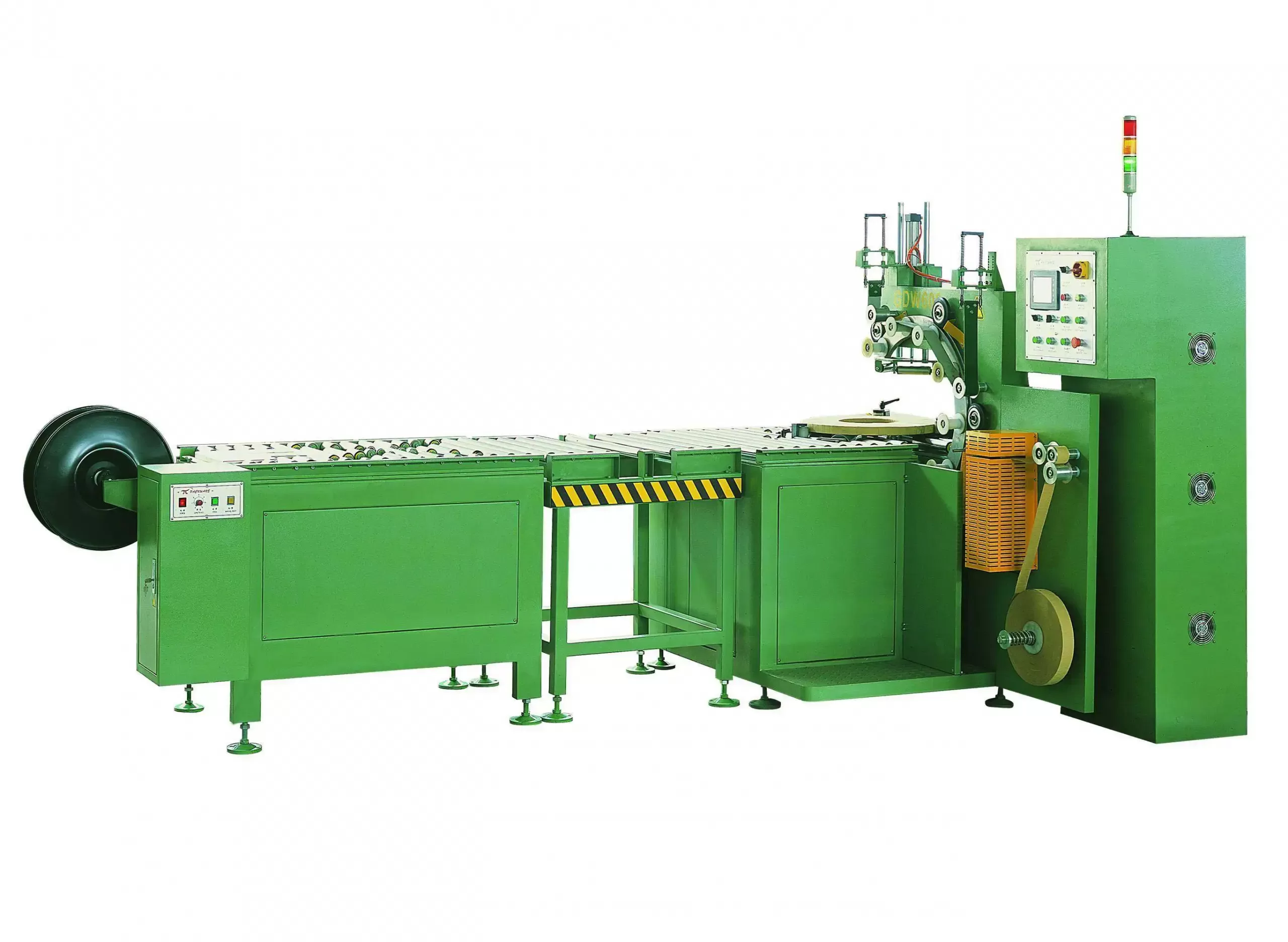
Many factory managers focus on the core wrapping function—rotation, tension, overlap. These are vital, of course. But overlooking the final step, the cut, is like building a race car and forgetting the ignition. Let’s break down exactly why auto-cutting isn’t just an add-on; it’s the essential key that unlocks the full potential of your coil packaging investment and transforms your end-of-line operations.
1. How Does Auto-Cutting Eliminate the Biggest Hidden Bottleneck in Coil Packaging?
Picture your current line. A coil is wrapped, the machine stops, and a signal light comes on. An operator walks over, identifies the tail of the film, uses a knife or scissors to cut it, and then signals the machine to eject the coil or start the next cycle. This might take 15-30 seconds. Now, multiply that by hundreds of coils per day. That lost time is pure waste, a direct drain on your Overall Equipment Effectiveness (OEE).
Auto-cutting eliminates this manual step entirely. The system, often using a heated blade, a pneumatic cutter, or a servo-driven knife, is programmed to activate the moment the preset number of wraps is complete. It cuts the film cleanly and immediately retracts, allowing the wrapping cycle to conclude and the conveyor to index the finished coil out while simultaneously bringing the next one in. This creates a non-stop, continuous motion process, removing the single largest point of human-caused delay and variability in the packaging sequence. (continuous coil packaging line, remove manual film cut bottleneck, non-stop wrapping process)
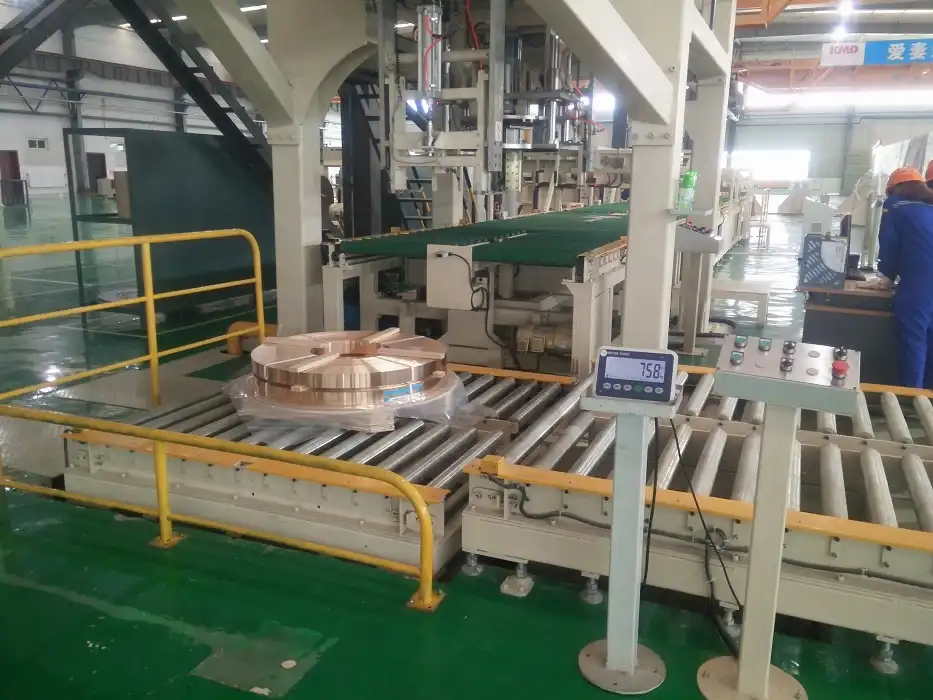
The Three Pillars of Bottleneck Elimination
Auto-cutting tackles the packaging bottleneck from three critical angles: Time, Consistency, and Labor Allocation.
| Bottleneck Aspect | Manual Cutting Problem | Auto-Cutting Solution | Direct Impact |
|---|---|---|---|
| ⏱️ Cycle Time | Adds 15-60 seconds of dead time per coil. Machine is idle. | Reduces cycle time to near-theoretical minimum. Machine is always working. | Throughput increases by 10-25%. |
| 🔄 Process Consistency | Cut quality depends on operator skill, fatigue, and attention. | Every cut is identical: clean, flush, and secure. | Eliminates repacks, improves pack consistency. |
| Operator may forget to signal “ready,” causing further delay. | Integrated PLC control ensures perfect machine sequencing. | Predictable, reliable cycle times for production planning. | |
| 🧑🔧 Labor Dependency | Requires an operator to be present and attentive at the machine. | Frees the operator for value-add tasks (inspection, loading). | Transforms role from machine-tender to process overseer. |
| Creates a mandatory “waiting point” in the workflow. | Enables true lights-out operation for off-shifts. | Maximizes asset utilization across 24 hours. |
The financial implication is clear. If your line produces 200 coils per shift, and auto-cutting saves just 20 seconds per coil, you reclaim over 1.1 hours of productive time per shift. That time can be used to produce more coils or to smooth out upstream production flow. For a manager like Michael in Mexico, dealing with high-volume metal processing, this is not a minor improvement; it’s a fundamental shift in line capacity. The system provided by leading manufacturers like Fengding is engineered for this relentless, high-cycle environment, ensuring the cutter’s reliability matches the machine’s durability. (high cycle coil packaging, Fengding auto-cut reliability, packaging line capacity increase)
2. Beyond Speed: How Does Auto-Cutting Dramatically Improve Workplace Safety and Pack Quality?
leading paragraph: Speed is a compelling benefit, but the true cost of manual cutting is often measured in bandages, insurance claims, and customer complaints. A worker leaning into a machine with a sharp blade, handling a tense film tail, is an accident waiting to happen. Furthermore, a ragged or loose cut directly compromises the pack’s integrity, leading to product damage during transit.
snippet paragraph:Auto-cutting is a cornerstone of a safer, more controlled packaging environment. By removing the need for an operator to interact with a cutting tool near moving machinery, it virtually eliminates laceration and entanglement risks associated with manual film cutting. Simultaneously, it guarantees a perfect, tight cut every time, which is crucial for securing the film tail and preventing unwinding, dust ingress, or edge damage to the precious coil surface. (improve coil packaging safety, secure film tail retention, prevent coil edge damage)
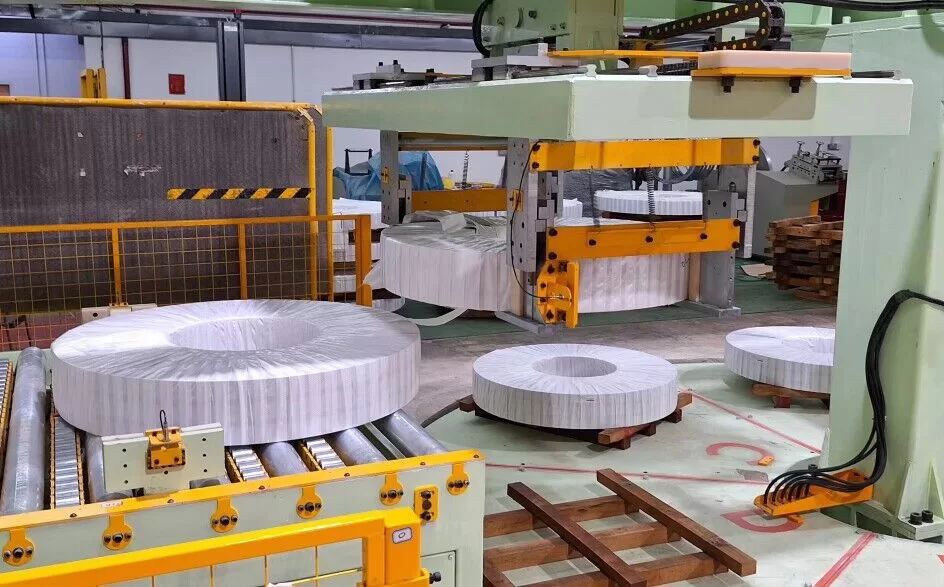
A Dual Analysis: Safety & Quality Gains
Let’s dissect the benefits into two clear streams:
🔒 Safety Enhancement Stream
- Elimination of Cutting Hazards: No manual knives = no cuts. This is the most direct benefit.
- Reduced Ergonomic Risk: Operators no longer need to bend, reach, or assume awkward positions to access the film tail on a large coil.
- Separation of Man and Machine: The principle of automation creates a physical and procedural barrier, keeping personnel out of the machine’s immediate work envelope during its cycle.
- Compliance Ease: It simplifies meeting stringent international safety standards (like CE or OSHA) for automated equipment, as a key point of potential human-machine interaction is designed out.
⭐ Pack Quality Enhancement Stream
- Consistent Cut & Seal: Advanced systems, especially heated blade cutters, can slightly melt the film end, creating a light tack-weld to the layer beneath. This “sealing” effect locks the tail securely.
- Precision Placement: The cutter activates at the exact millisecond the film is under optimal tension, ensuring a flush cut without loose ends that can catch or unravel.
- Material Integrity: A clean, automated cut prevents the film from being torn or stretched irregularly at the end point, which can create weak spots. For sensitive materials like aluminum or pre-painted steel, this consistency is paramount to prevent surface marring.
For a plant manager burdened with safety incidents and product damage claims, this dual benefit is transformative. It turns a cost center (rework, insurance) into a reliability feature. A supplier like Wuxi Buhui often emphasizes the precision engineering of their cutting heads, which is critical for this quality outcome. The machine isn’t just wrapping; it’s finishing the pack with factory-floor perfection. (automated pack finishing, precision film cutting head, coil surface protection packaging)
3. What Are the Different Auto-Cutting Technologies and How to Choose the Right One?
“Auto-cutting” is not a single technology. Choosing the wrong type for your application can lead to jammed film, melted debris, or premature wear. The choice depends on your film type, coil specs, and required cycle speed. Understanding the options is key to making a smart investment.
The three primary auto-cutting technologies are Pneumatic Cutters, Heated Blade Cutters, and Servo-Driven Rotary Cutters. Pneumatic cutters use a fast-acting air cylinder for a simple shear cut and are cost-effective for standard films. Heated blade cutters use a thermally controlled blade to melt-sever the film, ideal for securing the tail on high-tension wraps. Servo-driven cutters offer the highest precision and speed for demanding, high-cycle applications, using programmable servo motors for the cut action. (pneumatic film cutter, heated blade cutting system, servo-driven rotary cutter)

Technology Comparison & Selection Guide
Here is a breakdown to help you match the technology to your need:
graph TD
    A[Start: Need Auto-Cut] --> B{Primary Film Type?};
    B -->|Standard LLDPE/Stretch Film| C[Pneumatic Cutter];
    B -->|High-Performance/Cross-Linked Film| D{Need Tail Seal?};
    D -->|Yes, for secure transport| E[Heated Blade Cutter];
    D -->|No, pure speed priority| F[Servo Cutter];
    C --> G[✅ Pros: Low cost, simple, reliable.<br>❌ Cons: Basic cut, no seal.];
    E --> H[✅ Pros: Secure tail seal, versatile.<br>❌ Cons: Requires heating time, maintenance.];
    F --> I[✅ Pros: Very fast, precise, durable.<br>❌ Cons: Higher initial cost.];
    G --> J[Best for: General steel coil, pallet wrapping];
    H --> K[Best for: Export coils, sensitive metals, heavy coils];
    I --> L[Best for: High-speed lines, wire coil, bar bundles];
🛠️ Deep Dive into Application Fit:
- Pneumatic Cutter: Think of this as the reliable workhorse. It’s perfect for standard-duty wrapping of steel coils or pallets where an ultra-secure tail seal is less critical than reliability and low maintenance. It’s a great entry-point into automation.
- Heated Blade Cutter: This is the specialist for challenging environments. The heat instantly seals the film layers together. This is non-negotiable for export-bound coils or coils stored outdoors, as it prevents the film from being peeled back by wind or handling. It’s also excellent for films that are harder to cut cleanly cold. When evaluating suppliers, ask about the blade’s temperature control consistency—a critical detail where Fengding’s robust design shines.
- Servo-Driven Cutter: This is the high-performance athlete. Used in top-tier machines, it offers blistering speed and incredible longevity because the cut motion is precisely controlled by a servo motor, not air pressure. It’s ideal for plants like Michael’s that run 24/7 and package thousands of wire coils or bars per week, where every millisecond counts and downtime is catastrophic. (choose coil wrapper cutter, high-speed packaging cutter, durable film cutting system)
4. My Insights: Why This “Final Step” Should Be Your First Question When Buying a Wrapper.
In my two decades—from being an engineer on the floor to running my own factory—I’ve seen this pattern repeatedly. Buyers get captivated by the machine’s size, power, or brand name. They negotiate fiercely on the base price but treat features like auto-cutting as an expensive “option.” This is a fundamental strategic error.
You must evaluate a coil wrapping machine from the end of the process backward. The pack isn’t complete until the film is cut and secured. Therefore, the cutting system is not an accessory; it is the component that defines the machine’s level of automation and its ultimate return on investment (ROI). A machine without it is inherently incomplete and will perpetually limit your line’s potential, safety, and consistency. (coil wrapper ROI calculation, define packaging automation level, strategic machine investment)

The Practical Purchasing Framework
Stop asking “Does it have auto-cut?” Start asking these specific questions:
❓ “Show me the cutter in action with my film.” Don’t accept a demo with ideal film. Use your own material. Watch for film jamming, stringing, or a weak tail seal. The cutter must handle your real-world variable.
❓ “What is the mean time between failures (MTBF) for this cutting assembly?” A serious manufacturer, like Fengding or Wuxi Buhui, will have this data from field service. The cutter is a wear item, but its lifespan should be measured in millions of cycles, not thousands.
❓ “How is the cutter integrated into the machine’s PLC logic?” The best systems don’t just cut; they communicate. The cutter should send a “cut successful” signal back to the main controller before the eject cycle begins. This failsafe prevents a coil with an uncut film tail from leaving the station and causing a downstream tangle disaster.
❓ “Can the cutting parameter (timing, heat, pressure) be easily adjusted by my team?” As your film supplier or coil size changes, you need flexibility. A system with a password-protected, user-friendly HMI for fine-tuning the cut is essential for long-term adaptability.
From my experience building machines and factories, I design this feature in from day one. The marginal extra cost of integrating a true auto-cutting system is dwarfed by the perpetual savings in labor, the elimination of safety incidents, and the guarantee of a perfect pack. It is the feature that future-proofs your investment. When you talk to suppliers, let their depth of knowledge on this single topic be a litmus test for their overall engineering expertise and their understanding of your total operational cost, not just the machine’s sticker price. (future-proof packaging equipment, total operational cost analysis, coil wrapping machine integration)
Conclusion
True automation in coil packaging is achieved not when the machine starts, but when it finishes—cleanly, safely, and without pause. The auto-cutting system is the critical component that enables this seamless, end-to-end process. It is the key that unlocks higher throughput, creates a safer workplace, ensures consistent pack quality, and delivers a clear, calculable ROI. When planning your next investment, prioritize this feature. Look for the robust engineering from leaders like Fengding and the precision offered by specialists like Wuxi Buhui. To explore how a fully automated coil wrapping machine with integrated auto-cutting can transform your end-of-line operations, let’s continue the conversation.








