
Why Are Indonesia Exporters Switching to Automated Door Packing Solutions?
Are you an Indonesian exporter facing slow packing lines and constant product damage? Many of you deal with these same challenges every day. These problems not only slow down your business but also hurt your profits and reputation with customers. I know this struggle very well from my own journey in the packing machine industry.
Indonesian exporters are quickly moving to automated door packing solutions. They do this to greatly boost their efficiency, make their workplaces safer for employees, and cut down on product damage during shipping. This shift helps them meet the high global demand faster and more reliably than before.
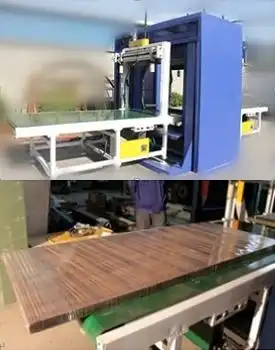
As a packing machine engineer who started from the factory floor and built my own successful business, I have seen these problems firsthand. I understand the pressure to increase output while keeping costs low. Let’s look deeper at why this change to automation is happening in Indonesia and how it can help your business grow.
Why Are Manual Packing Methods a Bottleneck for Indonesian Door Exporters?
Is your current manual door packing process causing a major slowdown in your production line? Many factories struggle with this issue. Relying on old, manual ways of packing often creates a bottleneck that limits how much you can produce and send out.
Manual packing methods create bottlenecks for Indonesian door exporters because they are slow, labor-intensive, and often lead to human errors. This directly limits overall output and how fast products can be delivered. This means your factory cannot ship as many doors as it could.
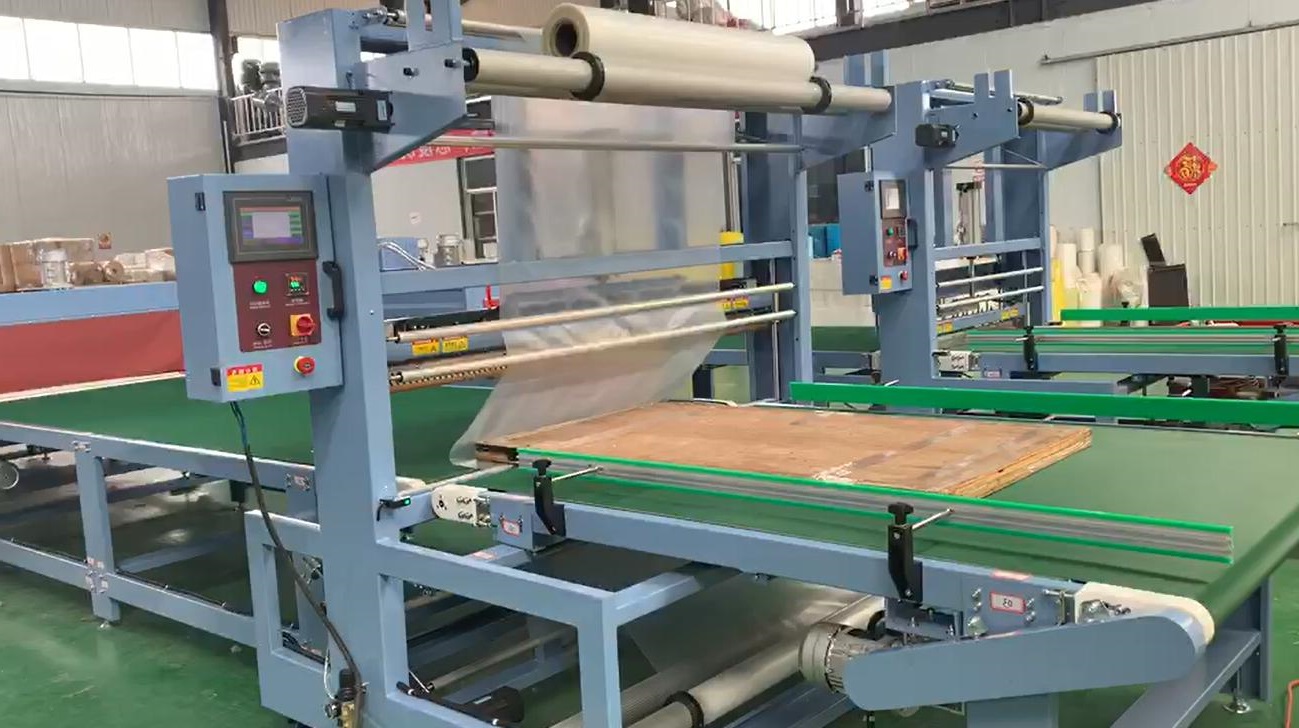
When I first started in the packing machine industry, I saw many factories relying on people to do every step of the packing process. This was especially true for heavy or bulky items like doors. While it worked for smaller volumes, it quickly became a problem as businesses grew. Manual work means people lift, carry, and wrap each door by hand. This takes a lot of time for each item. When you need to pack hundreds or thousands of doors every day, this time adds up. It slows down the entire line. Your production might be fast, but your packing department cannot keep up. This means finished products sit waiting to be packed instead of being shipped. This backlog costs money. You pay workers for more hours, and your capital is tied up in inventory.
Manual packing also makes it hard to be consistent. One worker might wrap a door differently than another. This leads to varied packing quality. Some doors might not be wrapped tightly enough, making them vulnerable to damage during transport. Other doors might use too much material, which wastes money. Human mistakes also happen. People get tired. They can miss a step or not apply enough protective material. These small errors can lead to big problems later, like damaged goods. In my own factory, we always looked for ways to make processes more consistent. We knew that consistency directly affected quality and customer satisfaction. Indonesian exporters need to meet high international quality standards. Manual packing makes this harder to achieve reliably.
Challenges of Manual Packing for Exporters:
| Challenge | Impact on Business |
|---|---|
| Slow Speed | Reduces overall production capacity; delays shipments. |
| High Labor Cost | Requires many workers for repetitive tasks; increases overhead. |
| Inconsistency | Leads to varied packing quality; increases risk of damage. |
| Human Error | Causes mistakes in wrapping; potential for product loss. |
| Physical Strain | High risk of worker injuries; leads to higher insurance and turnover. |
The financial impact of manual packing goes beyond just labor wages. The slower speed means you cannot take on more orders. This limits your growth potential. If you consistently miss delivery deadlines due to slow packing, it can damage your reputation with international buyers. They might look for other suppliers. This is a very real risk for any exporter. Businesses in Indonesia exporting doors need to be fast and reliable to compete globally. Manual packing simply cannot offer the speed, consistency, and cost-efficiency needed for large-scale export operations.
How Can Automated Door Packing Improve Safety and Reduce Damage?
Are you constantly worried about worker injuries or damage to your finished products during the packing process? These are very real risks in any factory dealing with heavy items. Accidents and product loss can lead to huge costs and headaches for your business.
Automated door packing systems greatly improve safety by reducing the need for workers to manually lift, carry, or handle heavy doors. This lowers the risk of injuries. These systems also reduce product damage through consistent, gentle handling and secure, uniform wrapping every time.
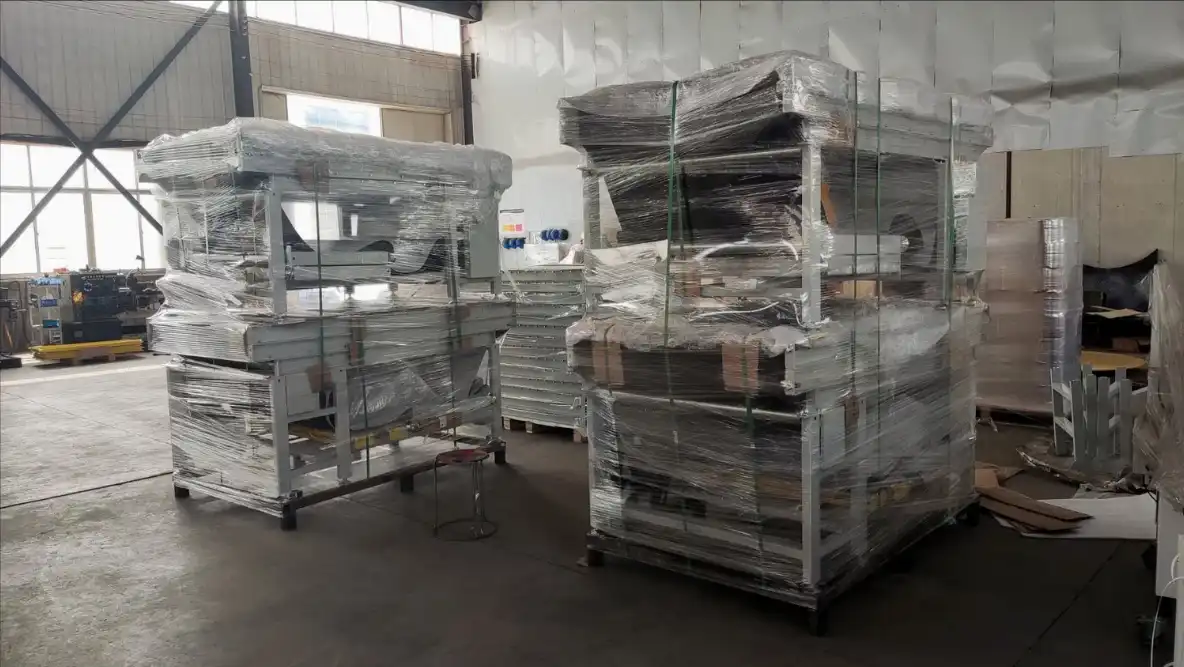
One of the biggest benefits of automation is how it protects your workers. In my years running a packing machine factory, I saw many workplace injuries related to lifting and moving heavy items. Doors, especially solid ones, are heavy and awkward to handle. Workers often strain their backs, shoulders, or knees trying to lift them, flip them, or move them onto pallets. These injuries are painful for the employee. They also cost the company a lot of money. You pay for medical treatment, worker’s compensation, and lost workdays. If an injured worker cannot come back, you have to spend time and money training a new person. This constant cycle of injury and replacement is bad for morale and very expensive. Automated systems take over the heavy lifting. Machines use conveyors, clamps, and robotic arms to move doors. This means human workers only need to supervise or guide the process, not bear the physical load. This significantly lowers the risk of accidents and repetitive strain injuries.
Beyond worker safety, automation plays a crucial role in protecting your product. When I started my packing machine factory, I made sure our machines were designed to protect the products they wrapped. Manual handling of doors can easily lead to scratches, dents, or chipped edges. A door might be dropped, or it might rub against another surface. These damages, even small ones, make the product unsellable or lead to customer complaints. For exporters, this is a major problem. Damaged goods mean you lose money on the product itself. You also lose money on shipping it back or dealing with customer service issues. Automated door packing machines are designed to handle doors gently and precisely. They ensure that each door is wrapped consistently, with the right tension and protection. This uniform wrapping protects the door from impacts, dust, and moisture during transport. It means fewer damaged goods reach your customers. This improves customer satisfaction and reduces costly returns. It also protects your brand reputation in the global market.
How Automation Improves Safety and Reduces Damage:
| Aspect | Manual Packing Risks | Automated Packing Benefits |
|---|---|---|
| Worker Safety | Back strains, cuts, drops, repetitive motion injuries. | Reduced manual lifting; fewer injuries; safer workplace. |
| Product Handling | Scratches, dents, chips from rough handling; inconsistent wrapping. | Gentle, precise handling; uniform, secure wrapping. |
| Consistency | Varied protection levels; some products under-protected. | Every product wrapped exactly the same way. |
| Material Usage | Waste from inconsistent wrapping; over-use or under-use. | Optimized material use; less waste. |
| Insurance Costs | Higher premiums due to frequent worker injuries. | Lower premiums due to improved safety record. |
By investing in automated door packing, Indonesian exporters are not just buying a machine. They are investing in a safer work environment for their employees and better protection for their valuable products. This leads to a healthier workforce, fewer product losses, and happier customers. These are all critical for long-term success in the competitive export market.
What Are the Financial Benefits of Investing in Automated Door Packing?
Are you looking for clear ways to cut your operating costs and boost your factory’s profit margin? Investing in new, large equipment can seem like a huge expense. However, smart investments in the right technology can bring big financial returns and long-term benefits to your business.
Investing in automated door packing offers big financial benefits. It cuts labor costs, reduces wasted packing materials, and lowers losses from damaged products. It also makes production more efficient overall. This leads to a clear and strong return on your investment.
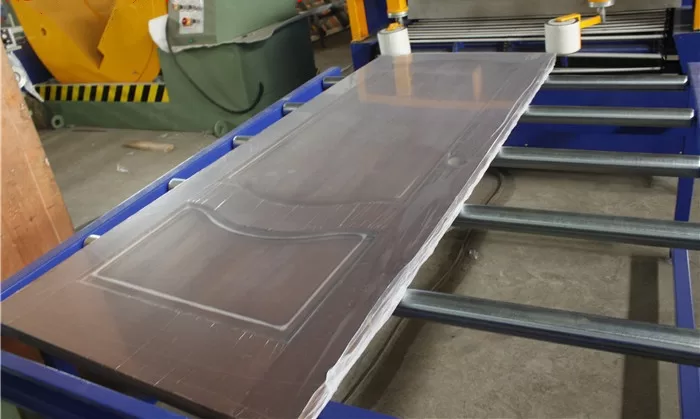
When I built my packing machine factory, I learned that every investment must have a clear path to profitability. For an Indonesian door exporter, the financial gains from automated packing are significant and clear. First, consider labor costs. Manual packing needs many workers. These workers receive wages, benefits, and potentially overtime. An automated system can do the work of several people. This means you can assign those workers to other, more skilled tasks, or reduce your overall labor force for packing. Over time, the money saved on wages alone can quickly pay for the machine itself. This is a direct saving to your bottom line every single month.
Second, automated systems are very efficient with materials. They are programmed to use just the right amount of film, strapping, or other packing materials. They avoid the waste that often happens with manual methods, like cutting too much film or applying too many layers. This precision means you buy less material over time. Even small savings on each door add up to large sums when you are packing thousands of doors. Less waste also means a smaller environmental footprint, which can be important for your international buyers who care about sustainability. Third, and very important, is the reduction in product damage. As I mentioned, damaged goods are lost revenue. If a certain percentage of your doors get damaged during packing or transit due to poor wrapping, that is money straight out of your pocket. Automated packing drastically lowers this percentage. Fewer damaged goods mean more saleable products. This directly increases your profit per unit shipped.
Financial Advantages of Automated Door Packing:
| Benefit | How It Saves/Makes Money |
|---|---|
| Reduced Labor Costs | Less need for manual packing staff; lower payroll expenses. |
| Material Optimization | Uses precise amounts of packing materials; reduces waste. |
| Lower Damage Costs | Fewer damaged products; less need for returns/replacements; higher sell-through. |
| Increased Throughput | Faster packing; more products shipped per day; higher sales potential. |
| Improved Reputation | Consistent quality leads to happier customers; repeat business. |
| Faster ROI | Savings quickly cover the initial investment cost. |
Finally, automation significantly increases your overall production throughput. A machine can work continuously, often faster than any human team, without getting tired. This means your factory can pack and ship more doors in a shorter amount of time. Higher throughput means you can take on more orders and serve more customers. This directly translates to increased sales revenue and a stronger position in the market. The return on investment (ROI) for an automated packing machine is often much quicker than many factory managers realize. When you add up the savings from labor, materials, and reduced damage, plus the increased sales capacity, the financial case for automation becomes very strong. It is not just an expense; it is a strategic investment that pays dividends for years to come.
Why Choose FHOPEPACK as Your Partner in Automated Door Packing Solutions?
Are you tired of working with equipment suppliers who only care about making a quick sale and then disappear when you need support? Finding a true partner who understands your unique factory challenges is often hard. You need someone who can truly help you solve your production problems.
Choosing FHOPEPACK means you partner with experienced experts like me, Randal Liu. I built a successful packing machine factory from the ground up. We offer deep industry knowledge, reliable solutions, and a strong commitment to understanding and solving your specific production challenges.
When I started FHOPEPACK, my main goal was to share the knowledge and experience I gained over decades in the packing machine industry. I began as an employee, working my way up, understanding every part of the packing process. Then, I took that knowledge and built my own successful packing machine factory. This journey taught me what it takes to run a profitable operation. It also taught me the real problems factory managers like you face every day: the pressure to increase output, control costs, and keep workers safe. My background is not just about selling machines. It is about understanding the entire production flow and helping businesses truly grow. I know what a production bottleneck feels like and how much a machine breakdown can cost.
At FHOPEPACK, we do not just sell machines. We aim to be your trusted advisor. We understand that every factory has unique needs. For example, a factory manager like Michael Chen, who oversees an entire metal processing plant, needs more than just a machine. He needs a solution that fits his specific production bottlenecks, safety concerns, and efficiency goals. This is where our approach makes a difference. We take the time to listen to your problems. We ask about your current packing process, the challenges you face, and your goals for the future. Then, we use our expertise to recommend the right automated door packing solution for you. We provide professional insights and reliable equipment that can withstand the demanding environment of a busy factory. Our machines are built to last and perform consistently.
Why FHOPEPACK Stands Out:
| Feature | FHOPEPACK Approach | Typical Vendor Approach |
|---|---|---|
| Industry Expertise | Led by Randal Liu, a packing machine factory owner. | Often sales-focused, less operational experience. |
| Problem Solving | Understands real factory bottlenecks and safety risks. | Sells standard products; may not tailor solutions. |
| Partnership | Focuses on long-term client success and growth. | Transactional; aims for a quick sale. |
| Reliability | Provides durable, efficient equipment for tough environments. | Quality can vary; less focus on long-term performance. |
| After-Sales Support | Committed to ongoing support and service. | Limited or slow support once the sale is made. |
My personal journey in the packing industry, from an employee to a factory owner, has shown me the immense opportunities that smart investments in packing technology can bring. I want to share that success with you. We do not disappear after the sale. We stand by our machines and our clients. Our goal is to ensure your investment in automated door packing truly solves your problems and drives your business forward. We want to be the partner you can rely on for expert guidance and proven solutions in automated packing.
Conclusion
Indonesian exporters are choosing automated door packing to boost efficiency, enhance safety, and cut costs. FHOPEPACK offers expert solutions and partnership, helping businesses like yours achieve sustainable growth.








