
Which pallet inverter solution balances price and performance for milk storage needs?
Have you ever faced the pressure of keeping thousands of pallets moving every day, especially when dealing with sensitive products like milk? The challenge is real. You need to keep things efficient, compliant, and cost-controlled. Any slowdown or equipment failure means big problems: missed deadlines, financial penalties, and unhappy customers. It is not just about moving boxes. It is about protecting your product and your bottom line.
For milk storage and similar demanding environments, the ideal pallet inverter solution often balances the high throughput and safety of a fixed, semi-automatic or fully automatic side-press or freezer-compatible system with the cost-effectiveness achieved through reduced labor, minimal product damage, and consistent uptime. These systems, while having a higher initial price, deliver superior performance and a lower total cost of ownership over time. They specifically address critical needs like hygiene, consistent pallet quality for automation, and the swift transfer of goods in cold chain logistics.
Choosing the right equipment can feel overwhelming. There are many options out there. But what if you could find a solution that truly understands your warehouse pains? What if you could find a partner who helps you grow, instead of just selling you a machine? Let us explore how to achieve that balance and make an informed decision for your milk storage operations.
Why do milk storage facilities specifically need pallet inverters?
Are you struggling to maintain product integrity and operational speed in your cold chain logistics? Milk storage, and indeed most food and beverage operations, faces unique challenges. These go far beyond typical warehousing issues. You have specific demands for hygiene, temperature control, and high-volume throughput. Manual pallet handling or less advanced equipment can quickly become a bottleneck. It can also lead to serious risks. This can affect your product quality, staff safety, and overall profitability.
Milk storage facilities specifically need pallet inverters to ensure product hygiene, prevent contamination from dirty incoming pallets, maintain cold chain integrity during pallet transfers, accommodate diverse pallet specifications for international shipping, and enhance operational safety and efficiency in high-volume, often refrigerated, environments. These machines allow for quick and safe pallet changes. They are essential for separating products from potentially unhygienic or damaged transport pallets. This helps put them onto clean, internal, or export-compliant pallets.
From my years in the packing machine industry, I have seen many companies struggle with these exact issues. A client once had issues with cross-contamination. Their incoming pallets from farms were often dirty. They needed to move milk cartons to clean, in-house pallets before storage. This was a slow, manual process. It caused delays and safety concerns. It also increased the risk of product damage. Implementing the right pallet inverter completely changed their operation. It allowed them to switch pallets quickly and safely. This ensured hygiene and kept their cold chain unbroken. The efficiency gains were huge. It led to better customer satisfaction and fewer operational headaches.
The Specific Demands of Milk Storage 🥛
Handling milk products requires precision. It needs speed and strict adherence to hygiene standards. Here are the core reasons why pallet inverters are not just a luxury, but a necessity for milk storage facilities:
-
Hygiene and Contamination Control:
- Problem: Incoming pallets, especially from suppliers or farms, can carry dirt, debris, or even pests. Storing milk products on these directly inside a clean warehouse is a major hygiene risk.
- Solution: Pallet inverters allow for quick transfer of milk cartons from dirty external pallets to clean, food-grade internal pallets. This prevents cross-contamination. It maintains the sterile environment crucial for dairy products.
- Benefit: 🧼 Reduces risk of product recalls. Ensures compliance with food safety regulations. Protects brand reputation.
-
Maintaining Cold Chain Integrity:
- Problem: Milk products need constant refrigeration. Manual pallet transfer methods are slow. They require product to be exposed to warmer temperatures for too long. This compromises the cold chain.
- Solution: Automated or semi-automated pallet inverters perform transfers quickly. This minimizes the time products spend outside controlled temperatures. Some specialized inverters can even operate within cold rooms or freezers.
- Benefit: 🌡️ Preserves product quality and shelf life. Prevents spoilage. Meets stringent temperature control requirements.
-
Accommodating Diverse Pallet Specifications:
- Problem: International trade for milk products, especially in Europe (like Spain, where Carlos operates), often involves different pallet sizes. For example, Euro pallets (800x1200mm) for internal use and US pallets (1000x1200mm) for export. Manually changing these is labor-intensive and prone to errors.
- Solution: Pallet inverters, particularly those designed for versatility, can handle various pallet types and sizes. They make the transition seamless and efficient.
- Benefit: 🌍 Facilitates smooth international logistics. Avoids customs delays and non-compliance fines. Boosts export capabilities.
-
Enhancing Safety and Reducing Labor Strain:
- Problem: Manually shifting heavy stacks of milk cartons from one pallet to another is physically demanding and dangerous. It leads to worker injuries, product damage, and high labor costs.
- Solution: Pallet inverters automate the heavy lifting and tilting. This removes the need for manual handling of entire pallet loads.
- Benefit: 💪 Improves workplace safety. Reduces worker compensation claims. Lowers labor costs. Frees up staff for higher-value tasks.
-
Optimizing Warehouse Space and Throughput:
- Problem: In high-volume operations, efficient movement of goods is key. Slow pallet changes create bottlenecks. They reduce overall warehouse throughput.
- Solution: By speeding up the pallet changing process, inverters improve the flow of goods. They optimize the use of valuable warehouse space by ensuring quick turnover.
- Benefit: 🚀 Increases operational efficiency. Boosts daily processing capacity. Contributes to faster order fulfillment.
Pallet inverters are more than just machines for milk storage facilities. They are strategic tools. They help ensure food safety, operational efficiency, and profitability in a highly demanding industry.
What types of pallet inverters offer the best balance for demanding operations?
Are you struggling to find a pallet inverter that can keep up with your high-volume warehouse? Do you worry about the reliability and versatility of your equipment? Demanding operations, like those in food and beverage, require solutions that are robust, efficient, and adaptable. Not all pallet inverters are created equal. Choosing the wrong type can lead to more headaches than solutions. This can result in constant breakdowns, slow processing, and inability to handle different pallet sizes or product types.
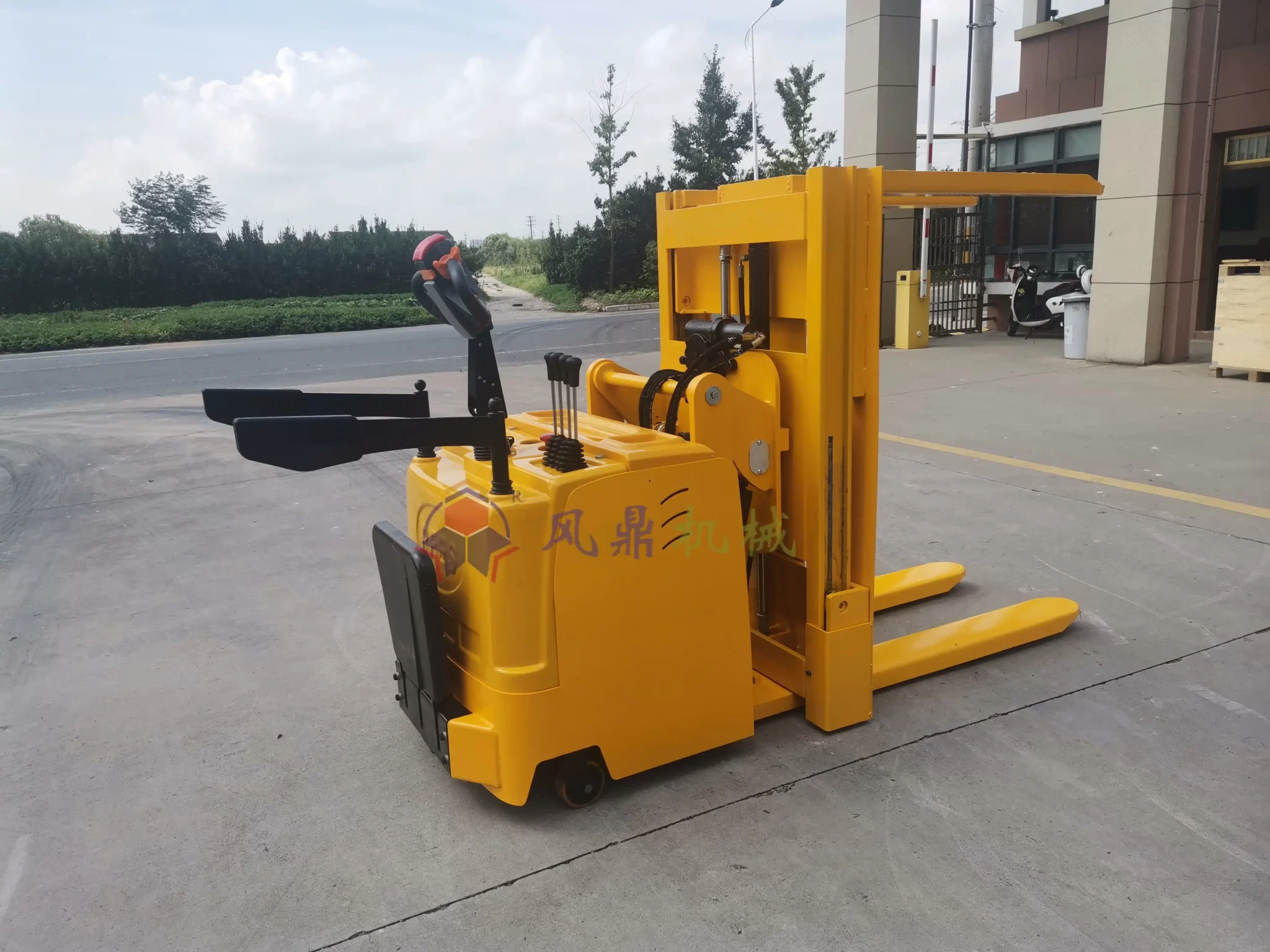
For demanding operations in milk storage, the best balance of price and performance is typically found in semi-automatic or fully automatic fixed pallet inverters, particularly those with a side-press mechanism or specialized freezer capabilities, which offer high throughput, superior safety, and consistent reliability for diverse pallet types, while mobile units serve as flexible, lower-cost alternatives for specific needs. These systems reduce labor dependency, minimize product damage, and integrate seamlessly into existing lines, offering a strong return on investment.
When I first started FHOPEPACK, I knew that reliability was key. Many clients came to me after being let down by machines that could not handle the continuous demands of their businesses. I remember one food processing plant. They used a manual pallet inverter. It often broke down. It could not keep up with their daily volume. We helped them upgrade to a fixed semi-automatic side-press model. This machine transformed their operations. It increased their pallet transfer rate by 30%. It also cut down on product damage significantly. It was a testament to how the right technology, properly applied, can truly make a difference.
Matching Pallet Inverter Types to Your Operational Scale and Specific Needs 🔄
Choosing the best pallet inverter means looking at your unique operational setup. It means considering your volume, budget, and specific challenges. Here is a breakdown of common types and how they stack up for demanding operations like milk storage:
-
Side-Press Pallet Inverters:
- How it works: These machines clamp the load from two sides (front and back). They then rotate it by 90 or 180 degrees. This allows for pallet changes without needing to tilt the product.
- Performance: Highly efficient and gentle on the load. Excellent for unstable or fragile products like milk cartons. Can handle various load heights and weights.
- Price/Investment: Mid-to-high range. They are a significant investment but offer excellent long-term performance and minimal product damage.
- Best for: High-volume operations. Businesses needing to maintain product stability. Situations where hygiene is critical.
- Advantages: ✅ High speed. Low damage risk. Versatile for different load types.
- Disadvantages: ❌ Fixed installation may require more space.
-
90-Degree Tilter / Pallet Changer:
- How it works: This type tilts the entire load by 90 degrees. It allows an operator to change the bottom pallet.
- Performance: A good balance of efficiency and cost. It is effective for stable loads that can withstand tilting.
- Price/Investment: Mid-range. More affordable than full inverters but still offers substantial automation benefits.
- Best for: Operations with stable loads. Medium-to-high volume. Where flexibility in load handling is needed.
- Advantages: 👍 Good efficiency. Less complex than a full inverter. Good safety features.
- Disadvantages: 👎 Not ideal for very unstable loads. Slower than side-press inverters for full rotation.
-
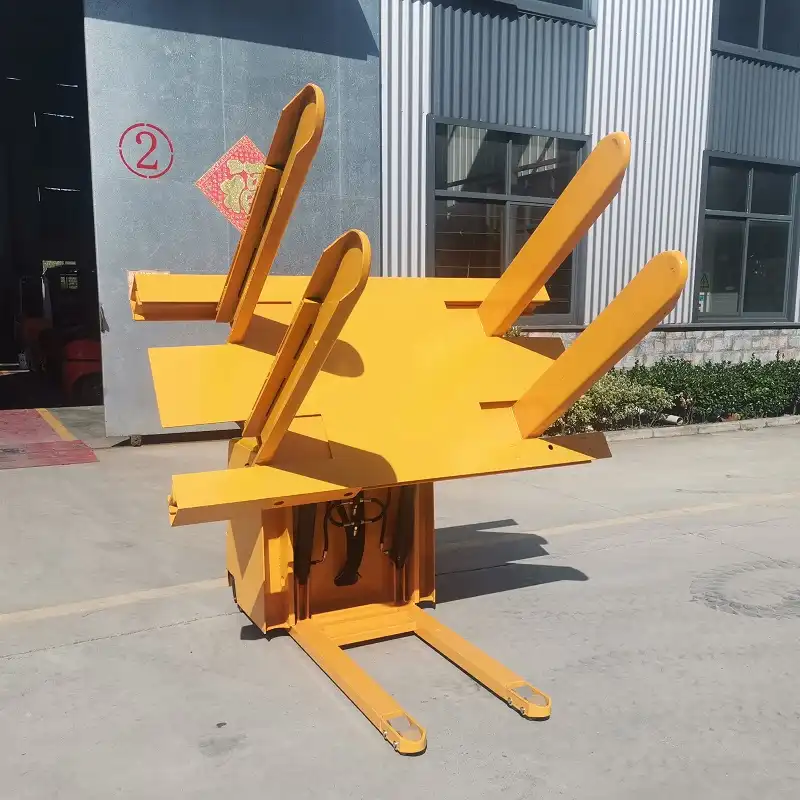
180-Degree Pallet Inverters (Free-Standing / Fixed):
- How it works: These machines fully invert the load. They turn it upside down to change the pallet.
- Performance: Very effective for situations where the product needs full inversion (e.g., to replace a damaged bottom layer). Can be semi-automatic or fully automatic.
- Price/Investment: High range, especially for fully automatic versions. They offer comprehensive handling capabilities.
- Best for: Operations requiring full access to the bottom of the load. Where pallet changes are frequent and automated.
- Advantages: 🔝 Full pallet access. High automation potential. Robust for heavy loads.
- Disadvantages: 🔻 Highest cost. Might be overkill for simple pallet-to-pallet transfers if load stability is a concern.
-
Mobile Pallet Inverters:
- How it works: These are portable units. They can be moved to different locations in the warehouse. They often use a clamp and tilt mechanism.
- Performance: Offers flexibility. Suitable for lower-volume needs or specific, ad-hoc tasks. Not designed for continuous, high-speed operations.
- Price/Investment: Lower initial cost. They are more budget-friendly and do not require fixed installation.
- Best for: Smaller operations. Businesses with varying pallet changing needs across different areas. Complementary to fixed systems.
- Advantages: 🚚 Portability. Lower cost. Good for varied tasks.
- Disadvantages: 🐌 Slower speed. Not for high-volume, continuous use. Can be more labor-intensive.
-
Freezer-Compatible Pallet Inverters:
- How it works: These are specific versions of the above types. They are built with materials and components suitable for extreme cold. They can operate effectively in refrigerated or freezer environments.
- Performance: Essential for cold chain products like milk. Prevents condensation and operational issues in cold conditions.
- Price/Investment: Higher cost due to specialized construction materials and design. This is a critical investment for cold storage.
- Best for: Any cold storage facility, especially those handling milk or frozen foods.
- Advantages: ❄️ Maintains cold chain. Prevents equipment damage from cold. Reliable in harsh environments.
- Disadvantages: 💲 Higher initial cost. Limited to specialized manufacturers.
For milk storage, a fixed, semi-automatic side-press or a freezer-compatible 90/180-degree pallet changer often provides the best blend. This is because they combine efficiency, product integrity, and safety. This setup helps address the core challenges of diverse pallet types, hygiene, and high throughput.

How can we measure the true performance of a pallet inverter beyond its price tag?
Are you focusing too much on the initial price of a pallet inverter? Many businesses make this mistake. They overlook the long-term operational costs and benefits. A cheap machine might save you money upfront. But it could cost you dearly in downtime, repairs, worker injuries, and product damage. This approach hurts your profitability in the long run. It does not really address the core issues of your demanding warehouse.
The true performance of a pallet inverter extends far beyond its initial purchase price, and should be measured by its Total Cost of Ownership (TCO), including factors like uptime and reliability, maintenance costs, energy consumption, reduction in labor expenses, improvements in safety and fewer accidents, decreased product damage, and overall increase in throughput. By evaluating these key performance indicators, businesses can identify solutions that offer the greatest long-term value and operational efficiency, rather than just the lowest upfront cost.
I have always advised my clients to look at the bigger picture. I remember a small distribution center. They bought a very basic, low-cost pallet inverter. It seemed like a good deal at first. But within a year, they faced frequent breakdowns. They had high repair bills and constant complaints about slow pallet changes. Their staff also suffered minor injuries from clunky operation. When they came to FHOPEPACK, we helped them re-evaluate. We looked at what they had already spent on repairs and lost productivity. It was much more than the difference in price for a more robust machine. It showed them that real performance is about sustainable efficiency, not just the sticker price.
Beyond the Sticker Price: Key Performance Indicators for Pallet Inverters 📊
To truly understand the value of a pallet inverter, you must look at its performance across several key areas. These metrics directly impact your operational efficiency and bottom line:
-
Uptime and Reliability:
- Definition: How consistently the machine operates without breaking down. This includes its Mean Time Between Failures (MTBF).
- Impact on Milk Storage: In a cold chain environment, downtime is catastrophic. It can lead to spoiled product. It also causes significant operational delays. A reliable inverter ensures continuous flow.
- Measurement: Track unplanned maintenance events and their duration. Calculate operational hours vs. downtime hours.
- Benefit: 📈 Ensures consistent product flow. Minimizes production bottlenecks. Reduces the risk of cold chain breaks.
-
Maintenance Costs:
- Definition: The total cost associated with maintaining the machine. This includes spare parts, service calls, and preventive maintenance.
- Impact on Milk Storage: High maintenance costs eat into profits. They also cause unplanned downtime. This is especially true if specialized parts are hard to find.
- Measurement: Review service logs, parts invoices, and labor costs for repairs.
- Benefit: 💰 Predictable operational expenses. Longer machine lifespan. Reduced unexpected costs.
-
Energy Consumption:
- Definition: The amount of power the machine uses during operation.
- Impact on Milk Storage: Energy costs are a significant part of warehouse operations, especially in refrigerated facilities. Efficient machines reduce these costs.
- Measurement: Monitor electricity usage. Compare with manufacturer specifications.
- Benefit: 💡 Lower utility bills. More environmentally friendly operations.
-
Labor Reduction and Efficiency:
- Definition: The extent to which the inverter reduces the need for manual labor for pallet transfers. This includes the speed of the operation.
- Impact on Milk Storage: With rising labor costs and shortages (as Carlos experiences), automating tasks like pallet changing is crucial. Faster operations mean more pallets moved per shift.
- Measurement: Compare person-hours spent on pallet changes before and after implementation. Track pallets processed per hour.
- Benefit: 👨🏭 Decreased operational staffing needs. Reallocation of staff to higher-value tasks. Increased overall warehouse throughput.
-
Safety Improvements:
- Definition: The reduction in workplace accidents and injuries related to pallet handling.
- Impact on Milk Storage: Manual pallet handling is dangerous. It can lead to crushed limbs, back injuries, and product spills. An automated system significantly reduces these risks.
- Measurement: Track incident reports and worker compensation claims related to pallet handling.
- Benefit: ⛑️ Safer work environment. Lower insurance premiums. Fewer lost workdays. Improved employee morale.
-
Product Damage Reduction:
- Definition: The decrease in damaged goods during pallet transfers.
- Impact on Milk Storage: Damaged milk cartons mean lost revenue and wasted product. A gentle, reliable inverter prevents this.
- Measurement: Track records of damaged products during pallet transfer operations.
- Benefit: 📦 Maximized usable product. Reduced waste. Improved profitability.
-
Throughput Increase:
- Definition: The total volume of pallets processed per unit of time (e.g., per hour or per shift).
- Impact on Milk Storage: Faster throughput means you can handle more incoming and outgoing goods. This meets customer demands for quicker delivery. It also optimizes warehouse space usage.
- Measurement: Count pallets moved per shift or day before and after implementation.
- Benefit: ⚡ Faster order fulfillment. Improved customer satisfaction. Enhanced overall operational capacity.
By analyzing these KPIs, you gain a holistic view of a pallet inverter’s true value. This allows you to make an investment that truly supports your long-term business goals, especially in critical sectors like milk storage.
What steps should you take to choose the right pallet inverter partner, not just a supplier?
Are you tired of dealing with suppliers who only care about the sale? Do you wish you could find a partner who truly understands your warehouse challenges and provides solutions that last? Many businesses end up with equipment that doesn’t fully meet their needs. This happens because they focus only on the machine itself. They forget to evaluate the company behind it. This can lead to frustration, poor support, and continued operational issues.
To choose the right pallet inverter partner, not just a supplier, you must first clearly define your specific operational needs and challenges, then thoroughly evaluate potential vendors based on their industry experience, customization capabilities, quality of after-sales support, and proven track record with similar demanding environments like milk storage. A true partner will offer comprehensive solutions, from initial assessment and system integration to ongoing maintenance and expert advice, ensuring your investment delivers long-term value and operational excellence.
My journey with FHOPEPACK has always been about building relationships. I remember one of our early clients. They needed a specific solution for heavy coil packing. Other suppliers just offered off-the-shelf machines. They did not care about the unique challenges of coil handling. We spent time understanding their entire production line. We then customized a machine that integrated perfectly. We did not just sell them a machine. We became their trusted advisor. We helped them grow their business. This is the mindset you need when looking for a pallet inverter partner. You need someone who listens, adapts, and supports you long after the initial purchase.
Building a Lasting Partnership: Your Guide to Vendor Selection 🤝
Selecting a pallet inverter is a strategic decision. It needs more than just comparing spec sheets. You are looking for a relationship that supports your business growth. Here is a step-by-step guide to finding that ideal partner:
-
Define Your Specific Needs and Challenges:
- Action: Before even looking at machines, write down your exact requirements. What types of pallets do you use (Euro, US, plastic)? What are your daily pallet volumes? What are your current pain points (safety incidents, labor shortages, product damage, cold chain breaks)? What are your budget and space constraints?
- Why it matters: This clarity helps you filter out unsuitable vendors. It gives you a strong basis for discussing solutions.
- Example for Milk Storage: “We need to switch 500 Euro pallets to US pallets daily. The product is milk, so hygiene and cold chain are critical. We need to reduce manual lifting due to worker injuries.”
-
Evaluate Vendor’s Industry Experience and Expertise:
- Action: Look for companies with a proven track record in your specific industry (food and beverage, cold chain logistics). Do they understand the nuances of milk storage? Can they provide case studies or references from similar operations?
- Why it matters: An experienced partner already knows your challenges. They can offer insights and solutions tailored to your industry.
- Questions to Ask: “Have you worked with milk processing plants before? What specific hygiene features do your machines offer?”
-
Assess Customization and Flexibility:
- Action: Your operation is unique. Can the vendor adapt their standard models to fit your specific needs? This might involve unique pallet sizes, integration with existing conveyors, or special safety features.
- Why it matters: A flexible partner means you get a solution that truly fits. You do not just get a generic machine.
- Consider: Look for companies willing to conduct on-site assessments and propose tailored layouts.
-
Investigate After-Sales Support and Service:
- Action: This is crucial. What kind of warranty do they offer? What about technical support? Do they have local service technicians (important for Spain, for example)? What is their response time for emergencies? How easy is it to get spare parts?
- Why it matters: Even the best machines need maintenance. Quick and effective support minimizes downtime. It keeps your operations running smoothly.
- Tip: Ask for details on their service level agreements (SLAs).
-
Check for Quality, Safety, and Compliance:
- Action: Ensure the equipment meets all relevant safety standards (e.g., CE marking for Europe). In the food industry, material compatibility and ease of cleaning are vital for hygiene.
- Why it matters: Compliance avoids legal issues. It also ensures a safe working environment and product integrity.
- Look for: Robust construction, clear safety guards, emergency stops, and certifications.
-
Seek Long-Term Partnership Potential:
- Action: Does the vendor seem interested in a long-term relationship? Do they offer training, ongoing advice, or future upgrade paths? Are they communicative and responsive?
- Why it matters: A partner grows with you. They help you adapt to future changes in your business or market.
- Red Flag: A vendor who disappears after the sale.
By taking these steps, you move beyond just buying a machine. You invest in a relationship that brings long-term value. This ensures your pallet inverter solution is a strategic asset for your milk storage facility.

My Insights!
The journey of choosing the right pallet inverter for your milk storage facility is much like my own in building FHOPEPACK. It is about understanding the core problems and finding solutions that genuinely empower growth. I started as an employee. I learned the ropes. Then I built my own factory. I saw firsthand what works and what does not. The critical lesson? It is never just about the machine itself. It is about the complete solution. It is about the support system around it.
For demanding environments like milk storage, where hygiene, speed, and reliability are paramount, you cannot afford to cut corners. Investing in a robust, semi-automatic or fully automatic system is not an expense. It is a strategic move. This kind of investment reduces your long-term operational costs. It protects your valuable product. It also safeguards your most important asset: your people.
Think about Carlos. He needs to manage thousands of pallets daily. He deals with diverse pallet types for export. He faces labor shortages and safety risks. A basic, cheap machine will only add to his problems. He needs a partner who provides a solution that integrates seamlessly. It needs to be safe, efficient, and reliable. It needs to reduce labor, prevent accidents, and ensure compliance. This partner needs to be there for the long haul.
That is why, when considering pallet inverters, I always emphasize looking at the Total Cost of Ownership. Do not just look at the initial price. Consider the lifetime value. Think about the saved labor. Think about fewer product damages. Think about improved safety. Think about the increased uptime. These factors often far outweigh the upfront cost difference.
Finally, seek out a partner, not just a seller. Find a company that understands your unique challenges. Find one that offers customization. Find one that provides excellent after-sales support. This relationship is what will truly make your investment pay off. It will help you achieve the efficiency, safety, and profitability you need to succeed in the demanding world of food and beverage logistics.
Conclusion
Choosing the right pallet inverter for milk storage means balancing initial price with long-term performance, focusing on hygiene, safety, and efficiency. By evaluating Total Cost of Ownership and selecting a supportive partner, you ensure a solution that not only meets immediate needs but also drives sustainable growth and operational excellence.








