
How Can a Pallet Inverter Reduce Product Loss Compared to Cheaper Pallet Handling Tools?
Product loss. It is a phrase that can send shivers down any warehouse manager’s spine. It means lost revenue, unhappy customers, and wasted effort. Many times, businesses try to save money by choosing what seems like a “cheaper” way to handle pallets. They might use manual methods or basic equipment. But in my years in the packing machine industry, from working on the factory floor to running my own successful business, I have learned a critical lesson. Those “cheaper” options often come with hidden costs that far outweigh any initial savings, especially when it comes to product damage.
Pallet inverters drastically reduce product loss by providing a secure, controlled, and gentle method for transferring goods between pallets, eliminating the risks of manual handling errors, accidental drops, and mishandling often associated with less specialized, “cheaper” tools.

You might be thinking, “But a pallet inverter is a bigger investment up front.” And you are right. However, if you are regularly dealing with diverse pallet types, high volumes, or fragile goods, the question is not about the initial price. It is about the total cost of ownership and the true value it brings. Let’s dig deeper into why investing in the right equipment, like a pallet inverter, protects your products and your bottom line much better than simply opting for the lowest-priced tool.
What Hidden Costs Lurk Behind “Cheaper” Pallet Handling Methods?
Many warehouse operations look for quick fixes. They choose simple, low-cost tools for pallet handling. They believe they are saving money. But this approach often creates invisible drains on profit. These drains quietly eat away at the company’s financial health. It is like fixing a leaky roof with a bucket. You stop the immediate drip, but you do not solve the real problem. You actually invite more damage later on. My experience has shown me that true savings come from understanding the complete picture.
“Cheaper” pallet handling tools, such as basic pallet jacks or manual methods, often lead to significantly higher operational costs through increased product damage, greater labor expenses, frequent safety incidents, and severe operational inefficiencies.

From my early days in a packing machine factory, I saw how a small food distributor tried to manually stack and re-palletize cases for export. They thought they saved on a machine. But they lost thousands in damaged goods. They also had employee sick days due to strain. This clearly showed that those “savings” were an illusion. The real costs piled up quickly. We need to look beyond the price tag. We must consider the full impact on your business.
1. Increased Labor and Time Expenditure ⏱️
Manual pallet changing methods are very labor-intensive. They require several workers to perform tasks that a machine could do alone. These tasks include lifting, pushing, and shifting heavy goods. This wastes valuable time. It also pulls employees away from other important duties. For instance, imagine a team manually transferring a full pallet of delicate items. This process can take 15 to 30 minutes. It needs at least two or three people. A pallet inverter can complete the same task in just 60 to 90 seconds. It needs only one operator. This difference in time and labor adds up fast. It means higher payroll costs without proportional output. It creates bottlenecks in your workflow. This can delay shipments and overall warehouse throughput. In today’s economy, with rising labor costs and a shortage of willing workers for physically demanding roles, relying on manual processes is simply not sustainable. It is an outdated approach that costs businesses more than they realize every single day.
2. Escalated Product Damage and Waste 📦
The biggest hidden cost is often product damage. When people manually move or re-palletize goods, there is a high risk of drops, bumps, or improper handling. Items can shift, fall, or get crushed. This is especially true for fragile products like glass bottles, delicate electronics, or packaged food items. Each damaged item means lost sales. It also means the cost of disposal. It leads to wasted packaging materials. Sometimes, entire pallets must be re-processed or written off. This creates significant financial losses. “Cheaper” tools like basic forklifts, when used for tasks they were not designed for (like awkwardly tilting pallets), also contribute to this risk. They lack the precision and stability of a dedicated pallet inverter. This means more accidents. It means more goods that cannot be sold. This directly impacts your profit margins.
3. Significant Safety Risks and Liability 🚑
Manual pallet handling is dangerous. Workers are at high risk of injuries. These include back strains, crushed limbs, and falling object accidents. This is particularly true when employees try to manually flip or transfer heavy pallets. Accidents lead to medical expenses, lost workdays, and potential legal claims. This increases insurance premiums. For Carlos, in Europe, these safety standards are very strict. Compliance failures can result in heavy fines. Ensuring worker safety is not just a moral obligation. It is a critical part of financial planning. Investing in automated equipment drastically reduces these risks. It protects your employees and your company from costly liabilities. It also creates a safer, more positive work environment.
4. Operational Bottlenecks and Delays ⏳
When you rely on manual or inadequate tools, your pallet changing process becomes a bottleneck. If you handle thousands of pallets daily, as Carlos does, even small delays add up. These delays can stop the entire flow of goods. This impacts inbound receiving, internal transfers, and outbound shipping. In a fast-paced environment, like food processing or international logistics, every minute counts. Slow pallet changes can lead to missed delivery deadlines. They can also lead to contract penalties. More importantly, they can lead to unhappy customers. This affects your business reputation. The perceived “savings” from cheaper tools vanish when you consider the cost of lost business opportunities and customer dissatisfaction.
5. Compliance Failures and Fines 🚨
International shipping, especially in the food and beverage industry, has strict rules. Different countries require different pallet types, like Euro pallets or US pallets. They also have specific hygiene standards. Manual transfers can make it hard to meet these rules consistently. For example, if a manual transfer results in cross-contamination or damage that compromises product integrity, it could lead to product recalls or rejection at customs. These issues cause massive financial penalties. They also cause damage to your brand. A pallet inverter ensures a clean, consistent, and compliant transfer process. This helps you avoid these costly issues and maintains your reputation for quality.
How Do Pallet Inverters Directly Eliminate Product Damage?
Product damage is a direct hit to your bottom line. It means lost stock, wasted resources, and unhappy customers. If you are handling sensitive or heavy items, every transfer feels like a risk. Manual methods or basic lifts often cause unexpected jolts. They can lead to items shifting or even falling. This creates a constant headache for warehouse managers. The good news is that there is a better way. It is a way that prioritizes the safety of your goods.
Pallet inverters directly eliminate product damage by employing secure clamping mechanisms, smooth and controlled rotation, minimal human contact, and adaptable handling for diverse product shapes, ensuring that goods remain stable and undisturbed during the entire transfer process.

I remember working with a company that packed delicate coil. Any jolt during manual transfer meant costly reworks and significant scrap. They tried everything from extra padding to slower forklift movements. Nothing fully solved the problem. When they finally invested in a proper pallet inverter, it changed everything for them. The product damage dropped to almost zero. This proved that the right equipment makes a huge difference. It is not just about moving things. It is about moving them safely and precisely.
1. Secure and Gentle Clamping Mechanism 💪
The core of a pallet inverter’s ability to prevent damage lies in its clamping system. Unlike forklifts, which lift pallets from below, a pallet inverter securely clamps the load from both sides or from top and bottom. This grip is firm but gentle. It holds the product column in place, preventing any shifting or toppling during the transfer. This is crucial for unstable loads or items packed in less rigid containers. The clamping force can often be adjusted to suit the specific product. This means that whether you are handling delicate jars or heavy sacks, the inverter applies just the right pressure. It keeps the load stable without crushing it. This secure hold is the first line of defense against damage.
2. Controlled Rotation and Minimized Impact 🔄
Once the load is clamped, the pallet inverter performs a smooth, controlled rotation. This motion is precise and consistent. It prevents the sudden jerks or impacts that often happen with manual methods or makeshift solutions. Imagine trying to flip a loaded pallet by hand or with a forklift. There is always a moment of instability. This is when items are most likely to shift or fall. A pallet inverter moves with mechanical precision. It turns the load through 90 or 180 degrees without any risk of imbalance. This controlled movement minimizes stress on the product packaging. It eliminates the chance of goods being dropped or knocked over. It ensures your products arrive at their new pallet in the same condition they started.
3. Reduced Human Intervention and Error 🤖
Human error is a major cause of product damage. Even the most careful workers can make mistakes, especially when tired or under pressure. Pallet inverters automate much of the transfer process. This greatly reduces the need for manual handling. Fewer human hands touching the product means fewer chances for accidental drops, bumps, or improper placement. The machine performs the task consistently every time. It does not get tired. It does not get distracted. This level of consistency is impossible to achieve with manual labor, especially in high-volume operations. By taking the heavy lifting and precise maneuvering out of human hands, the inverter dramatically lowers the risk of human-induced damage.
4. Adaptability for Diverse Product Shapes 🎨
Many warehouses handle a wide variety of products, each with its own shape, size, and fragility. A good pallet inverter is designed to accommodate this diversity. It can often adjust to different load dimensions. Some models have specialized platens or gripping surfaces to handle unique product configurations. This flexibility is a huge advantage over “cheaper” tools that are often one-size-fits-all. Using the wrong tool for a specific product type almost guarantees damage. A pallet inverter ensures that even irregularly shaped or fragile items receive the tailored, secure handling they need. This makes it a versatile solution for reducing damage across your entire product range.
5. Consistent and Repeatable Performance ✅
Consistency is key to damage prevention. A pallet inverter delivers the same high-quality transfer every single time. This repeatability ensures that your products are always handled in the safest way possible. There are no variations in technique, no moments of carelessness. This predictable performance reduces variables. It allows you to reliably plan your operations without worrying about unexpected damage. This builds confidence in your supply chain. It assures customers that their orders will arrive intact. This consistent, damage-free operation is a hallmark of professional warehousing. It is something “cheaper”, inconsistent methods simply cannot offer.
Can Pallet Inverters Solve Your Warehouse Safety and Efficiency Challenges?
Warehouse operations are a constant balancing act. You need speed, but you also need safety. Often, managers face the tough choice between quick, potentially risky methods and slow, safer ones. Workplace accidents are a serious concern. They lead to injuries, high insurance costs, and lost productivity. Meanwhile, customer demands for faster delivery push operations to their limits. This creates a difficult environment for managers like Carlos. He needs solutions that address both safety and speed without compromise.
Pallet inverters significantly boost warehouse safety by replacing hazardous manual tasks and dramatically enhance efficiency through faster, automated pallet changes, directly addressing labor shortages and meeting demanding delivery schedules.
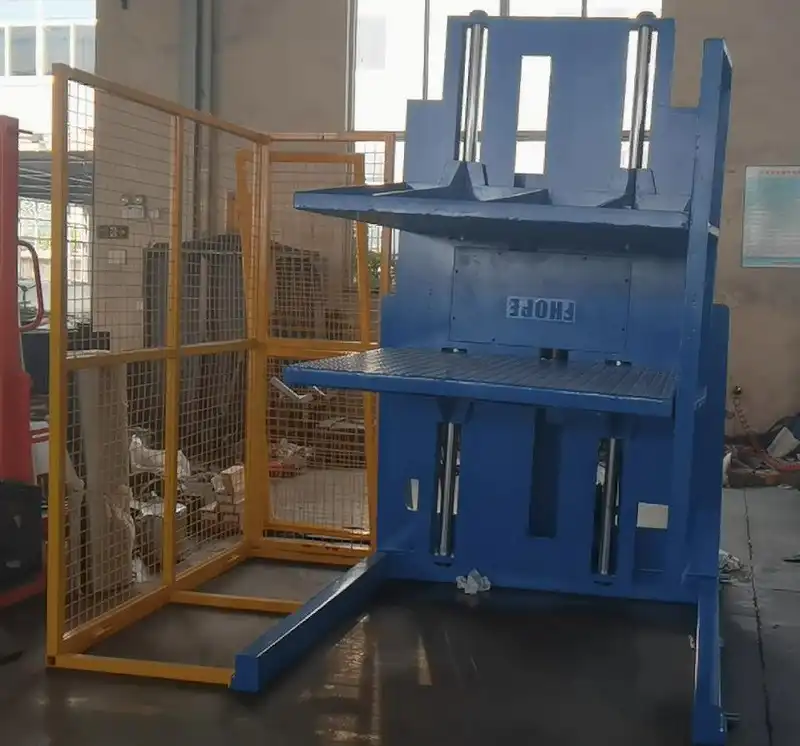
When setting up my own factory, I prioritized worker safety. It was not just about compliance. It was about my team feeling secure and valued. Automation, like pallet changers, played a huge part in that. It made us faster and safer. We saw fewer incidents. Our team could work more confidently. This created a positive work environment. It also allowed us to meet our production goals without compromise. This balance of safety and efficiency is achievable. It starts with choosing the right tools.
1. Eliminating Manual Handling Risks 🚫
The most direct way pallet inverters improve safety is by removing the need for manual handling of heavy pallets. Tasks like manually tipping a pallet, or using a forklift to awkwardly tilt a load, are inherently dangerous. These actions can lead to loads shifting, tipping, or falling. They put workers at risk of crushing injuries, strains, and cuts. A pallet inverter performs these actions mechanically and under full control. It keeps operators at a safe distance. There is no need for employees to get close to unstable loads. This eliminates direct contact with heavy, moving parts. It greatly reduces the chance of accidents that result from human error or physical strain. This proactive approach to safety is invaluable in any busy warehouse environment.
2. Improving Ergonomics and Worker Well-being 👍
Beyond acute injuries, repetitive manual handling contributes to long-term health issues. Workers can suffer from chronic back pain, joint problems, and muscle fatigue. These ergonomic problems lead to absenteeism and reduced productivity. Pallet inverters take away the physical strain. They let workers operate the machine with minimal physical effort. This improves their overall well-being. It helps them stay healthier and more productive in the long run. Carlos mentioned that younger workers are less willing to do high-intensity lifting. Pallet inverters make warehouse jobs more attractive and sustainable. They show a commitment to employee health. This helps with staff retention. It also improves morale.
3. Boosting Throughput and Speed 🚀
Efficiency is critical for meeting customer demands. Manual pallet changes are slow and inconsistent. A pallet inverter can perform a full transfer cycle in just a minute or two. This is significantly faster than any manual process. For operations processing thousands of pallets daily, this speed difference is monumental. It means quicker turnaround times. It means less time spent waiting. It means goods move through the warehouse faster. This increased throughput helps meet tight delivery deadlines. It also improves overall operational flow. This speed directly translates into a more productive and responsive supply chain.
4. Reducing Labor Dependency 📉
Labor shortage is a global challenge. It is especially true for physically demanding warehouse jobs. Pallet inverters address this by automating a key labor-intensive task. One operator can manage the pallet changing process using a machine. This frees up other workers to focus on more value-added activities. It also reduces the total number of staff needed for this specific task. This saves on labor costs. It also makes your operations more resilient to workforce fluctuations. This shift towards automation is not about replacing people. It is about optimizing human resources. It uses technology to handle repetitive and strenuous tasks. This allows the human team to be more strategic.
5. Seamless Integration into Automated Systems 🔌
Modern warehouses are increasingly automated. Pallet inverters are designed to fit seamlessly into these advanced systems. Many models can be integrated with conveyors, robotic arms, and warehouse management systems (WMS). This creates a fully automated workflow. For example, a pallet inverter can automatically receive a loaded pallet from a conveyor. It can perform the change. Then it can send the new pallet onto another conveyor. This integration minimizes human intervention even further. It maximizes efficiency. It ensures consistent, high-speed operation. It is a vital component for warehouses looking to scale up their automation efforts. It prepares them for future demands.
Is a Pallet Inverter a Strategic Investment for Long-Term Savings?
When you consider buying new equipment, the initial price tag is always the first thing you see. It is easy to hesitate when a pallet inverter costs more than a basic forklift. But for businesses like Carlos’s, focusing only on upfront cost misses the bigger picture. True financial wisdom in logistics is about understanding return on investment (ROI). It is about looking at long-term savings and strategic advantages. Investing in the right technology is not just an expense. It is a commitment to efficiency, safety, and future growth.
A pallet inverter is a strategic long-term investment that delivers significant savings through drastically reduced product loss, lower labor costs, fewer safety incidents, and improved operational efficiency, collectively outweighing its initial cost many times over.
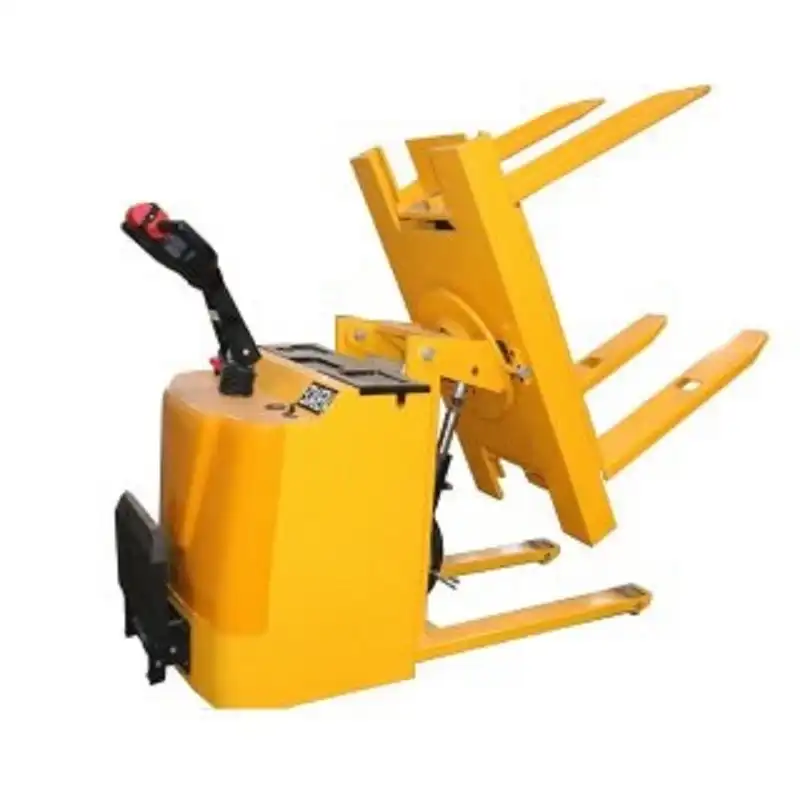
My journey to financial independence in this industry taught me that you invest in value, not just price. The machines that seemed “expensive” always paid for themselves many times over. They did this through increased efficiency, fewer problems, and enhanced customer trust. It is about seeing the bigger impact on your whole operation. It is about choosing a partner who understands your long-term goals. This perspective transforms a perceived cost into a powerful asset.
1. Quantifiable Savings from Reduced Damage and Waste 💰
The most direct financial benefit of a pallet inverter comes from preventing product loss. Every item saved from damage is an item that can be sold. Calculate the average cost of damaged goods per month using “cheaper” methods. Then compare it to the minimal damage with an inverter. The difference can be staggering. These savings are immediate and ongoing. They directly impact your bottom line. They also reduce the environmental impact of waste. For example, if a company saves just 5-10 damaged pallets worth of goods each month, and each pallet is valued at €500-€1000, that is a saving of €2,500-€10,000 per month. Over a year, this adds up to €30,000-€120,000. These are real, tangible savings that quickly offset the initial investment.
2. Substantial Reduction in Labor and Operational Costs 💵
As discussed, pallet inverters drastically cut down on labor needs. One operator can manage the machine. This means fewer employees are tied up in a physically demanding, repetitive task. Consider the hourly wages, benefits, and training costs for multiple workers dedicated to manual pallet changes. Shifting to an automated system frees up this labor. These employees can then be redeployed to more productive or skilled roles. This optimizes your workforce. It also mitigates the challenges of labor shortages. Moreover, the faster cycle times mean less energy consumption per pallet compared to prolonged manual processes. This leads to overall lower operational costs in the long run.
3. Lower Insurance Premiums and Accident-Related Expenses 🛡️
Fewer accidents mean lower insurance claims. This can lead to reduced insurance premiums for your business. Beyond direct insurance costs, you save on expenses related to accidents. These include medical treatment, workers’ compensation claims, legal fees, and the cost of lost workdays. A safer workplace also improves employee morale. This reduces staff turnover. It creates a more stable and experienced workforce. These are indirect but very significant financial benefits that contribute to a healthy and sustainable business operation. For a company like Carlos’s, with a history of safety incidents, this aspect alone can provide a very strong ROI.
4. Enhanced Customer Loyalty and Brand Reputation ⭐
Consistently delivering undamaged products on time builds customer trust. It strengthens your brand reputation. In today’s competitive market, especially in the food and beverage sector, reliability is paramount. Pallet inverters help you meet these expectations by ensuring product integrity and efficient delivery. This leads to repeat business. It also attracts new clients through positive word-of-mouth. Conversely, frequent product damage or delays can quickly erode customer loyalty. It can harm your brand. A pallet inverter is an investment in your company’s image and long-term market position. It contributes to sustained growth.
5. Future-Proofing for Scalability and Compliance 🌐
The business world is always changing. Regulations evolve. Customer demands grow. Investing in a pallet inverter prepares your warehouse for the future. It allows for easier scalability. You can handle increased volumes without proportional increases in labor or risk. It ensures compliance with ever-stricter safety and hygiene standards. This avoids future fines or operational disruptions. As part of FHOPEPACK, I believe in helping businesses not just solve today’s problems, but also build a robust foundation for tomorrow. A pallet inverter is not just a machine; it is a strategic piece of infrastructure that supports your company’s long-term success and adaptability.
Conclusion
Investing in a pallet inverter is a smart move for any business looking to tackle product loss. It moves beyond the false economy of “cheaper” tools. It offers real savings by cutting damage, boosting safety, and improving efficiency. This leads to a healthier bottom line and happier customers.








