
Which Pallet Inverter Option Suits Canadian Pharma Firms for GMP Compliance?
Imagine your Canadian pharmaceutical firm operates under strict deadlines and even stricter regulations. One small error in your warehouse can lead to massive penalties or product recalls. You know the pressure. Pallet handling, often overlooked, can become a major bottleneck or even a safety hazard. This problem agitates many of my clients. The good news is, choosing the right pallet inverter can solve many of these issues.
For Canadian pharma firms, the best pallet inverter option for GMP compliance often involves a combination of automated 180-degree or 90-degree static units, or a mobile pallet changer. These machines must offer features like stainless steel construction, enclosed designs, easy cleaning access, and robust safety mechanisms. They help maintain product integrity, prevent contamination, and reduce manual handling risks. These solutions are key for meeting Health Canada’s rigorous Good Manufacturing Practice (GMP) standards.
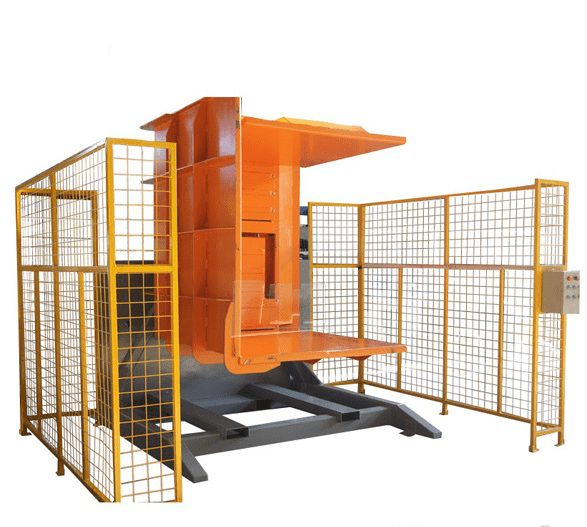
Understanding the options available is the first step. Each type of pallet inverter offers distinct advantages. The right choice for your operation depends on your specific needs for compliance, efficiency, and safety. Let’s break down how different pallet inverters can help your Canadian pharma firm.
Why is GMP Compliance Critical for Pallet Handling in Canadian Pharma?
Handling pharmaceutical products is very different from handling general goods. Even a minor issue can have serious consequences for patient safety and your company’s reputation. Ignoring these specific demands can create big problems. This is why GMP compliance in pallet handling is not just a suggestion; it is a strict requirement.
GMP compliance is critical for pallet handling in Canadian pharma to prevent cross-contamination, ensure product integrity, and maintain traceability throughout the supply chain. Health Canada enforces stringent rules for manufacturing, storage, and distribution. Any equipment used, including pallet inverters, must support these standards by being cleanable, safe, and designed to protect sensitive products. This helps avoid recalls, legal issues, and protects public health.

From my experience, understanding the core principles of GMP is the foundation for any equipment choice. It is not just about moving pallets. It is about protecting the product and the patient. Many of my clients, when they first talk to me, do not fully grasp how much impact simple equipment like a pallet inverter can have on their compliance.
Dive Deeper: The Pillars of GMP in Pallet Handling
Canadian GMP regulations, enforced by Health Canada, set high standards. These standards apply to all aspects of drug manufacturing and storage. This includes how you move and handle products within your warehouse. When it comes to pallet inverters, several GMP pillars are important:
-
Aseptic Processing and Contamination Control:
- Pharmaceutical products, especially sterile ones, must stay free from contamination. Traditional pallet handling, with human contact or dirty equipment, poses a high risk. Dust, particles, and microbes can easily transfer from old pallets to new ones, or even to the product itself.
- Solution: Pallet inverters designed for pharma environments use materials like stainless steel (e.g., 304 or 316L). These materials are non-porous and easy to clean. They do not shed particles. An enclosed design can also prevent environmental contaminants from reaching the product during the transfer process. I have seen situations where switching to such equipment drastically reduced contamination incidents for my clients. This improves product safety.
- Impact: Reduces the risk of product spoilage or contamination. This keeps your products safe for patients. It also avoids costly product recalls.
-
Product Integrity and Damage Prevention:
- Pharmaceutical goods are often fragile or sensitive to physical shock. Manual pallet changes, particularly when tipping or re-stacking heavy loads, can lead to product damage. This damage might not always be visible but can affect drug efficacy.
- Solution: Pallet inverters offer a controlled and gentle way to transfer loads. They use hydraulic or mechanical systems to clamp and rotate pallets smoothly. This minimizes movement and shock. Some models have cushioned clamps. This prevents crushing or shifting of goods. My goal is always to make sure the machine handles products with care. This saves companies money on damaged goods.
- Impact: Preserves the quality and effectiveness of pharmaceutical products. It protects your investment in high-value goods.
-
Traceability and Documentation:
- GMP requires full traceability of all materials. This includes packaging and finished products. Every step, including pallet changes, must be recorded. Any deviation from the process needs proper documentation.
- Solution: Modern pallet inverters can integrate with warehouse management systems (WMS). They can log operations, cycle times, and even specific pallet IDs. This helps maintain a clear audit trail. This integration ensures that every pallet change is part of your overall quality system. It supports your validation efforts for the equipment.
- Impact: Ensures that you can track every product from raw material to patient. This is crucial for audits and quick responses in case of an issue.
-
Operator Safety and Ergonomics:
- While not directly a GMP “product quality” point, operator safety is a key part of a well-run, compliant facility. Manual pallet changes involve heavy lifting, awkward positions, and the risk of loads tipping. These create serious safety hazards for workers.
- Solution: Pallet inverters automate the process. They reduce the need for manual handling. This lowers the risk of worker injuries. This improves workplace safety. It also boosts morale. This helps retain skilled labor. Many managers I work with, like Carlos, emphasize safety first. They understand that a safe workplace is also a productive one.
- Impact: Creates a safer working environment. It reduces injury claims and improves overall operational efficiency. This also helps with labor shortage issues.
By focusing on these points, Canadian pharma firms can ensure their pallet handling processes fully support GMP compliance. This helps them produce safe and effective medicines.
What Pallet Inverter Types Can Canadian Pharma Firms Consider?
The market offers a range of pallet inverter solutions. Each type has its own way of working and suits different operational needs. Choosing the right one means understanding these differences. Not every machine fits every scenario. This can be confusing for many.
Canadian pharma firms can consider several main types of pallet inverters: 180-degree static pallet inverters, 90-degree tipper models, and mobile pallet changers. Each type offers specific benefits for different facility layouts and product handling requirements. Static inverters are ideal for high-volume, fixed-point operations. Mobile units offer flexibility for various locations or lower volume needs. The best choice depends on space, throughput, and the specific GMP requirements of the product.
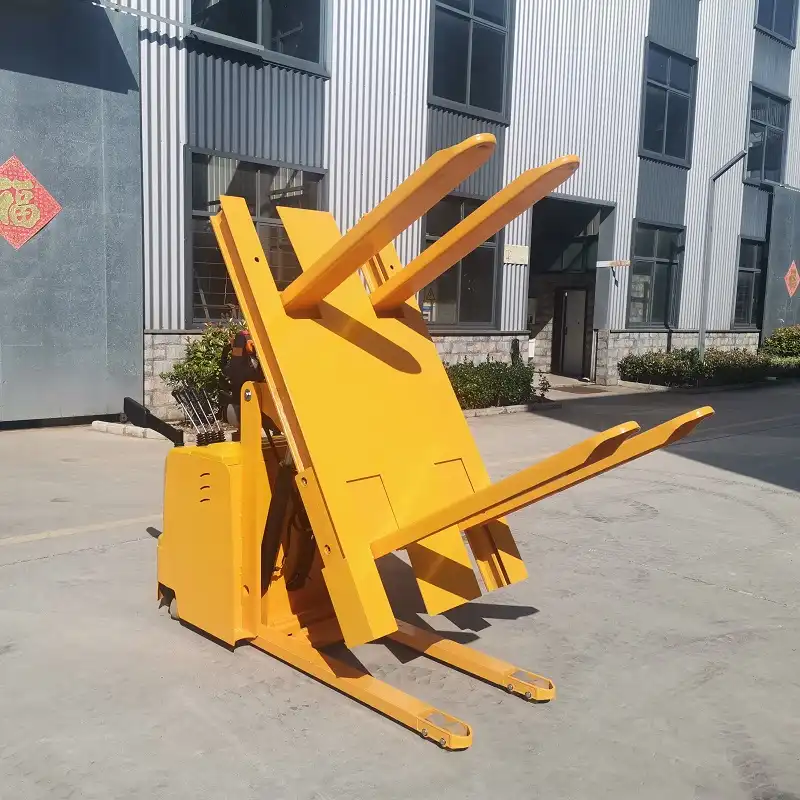
When I help clients select equipment, I always start by looking at their existing operations. It is like a puzzle. You need to find the piece that fits perfectly. My journey in the packing machine industry has shown me that a “one-size-fits-all” approach rarely works, especially in a regulated environment like pharma.
Dive Deeper: Matching Pallet Inverters to Pharma Needs
Choosing the right type of pallet inverter involves looking at throughput, space, and specific operational flow. Each type serves a distinct purpose.
-
180-Degree Static Pallet Inverters:
- How they work: These machines clamp a load and rotate it 180 degrees. This allows you to remove the original pallet and replace it with a new one without ever inverting the product itself. The product stays upright.
- Best for: High-volume operations at a fixed loading or unloading dock. They integrate well into automated lines. They are ideal for facilities with dedicated pallet changing stations.
- Pharma relevance: This type is excellent for maintaining product orientation. This is crucial for sensitive goods like vials or delicate packaging. It allows for quick, continuous operation. This helps keep up with high production demands.
- Key features to look for: Robust construction, stainless steel options, easy-clean surfaces, safety light curtains, and automatic cycle options. These features help meet GMP for hygiene and safety.
-
90-Degree Tipper Pallet Inverters:
- How they work: These machines clamp a load and tilt it 90 degrees onto its side. This gives access to the bottom pallet for replacement. Some models can also return the load to its original upright position.
- Best for: Operations where you need to change a damaged pallet or remove a slip sheet. They are also useful for loading products onto a different type of pallet (e.g., from wooden to plastic or hygienic pallets).
- Pharma relevance: This type is useful when the product can tolerate being on its side briefly. It is good for internal transfers to hygienic pallets before entering a cleanroom. It can be a simpler, more compact solution for specific tasks.
- Key features to look for: Gentle tilting mechanism, adjustable clamping pressure, and safety enclosures. Again, material choice (stainless steel) is vital for pharma environments.
-
Mobile Pallet Changers:
- How they work: These are self-contained units, often moved by a forklift or driven manually. They can operate in different areas of the warehouse. They clamp a load, lift it, and allow for pallet exchange. Some models do a 90-degree tilt, others lift and slide.
- Best for: Operations with lower volume requirements, varied changing locations, or limited fixed space. They offer great flexibility.
- Pharma relevance: Mobile units are perfect for smaller batches or specialized products that need unique handling. They can move to a specific production area or isolated storage zone. This helps manage cross-contamination risks by keeping specialized pallet changes separate. I have helped many smaller pharma clients implement these for their specific needs. It gives them flexibility without a huge investment in fixed infrastructure. Carlos’s need for flexibility with diverse pallet types could be well served here if volumes are not excessively high at a single point.
- Key features to look for: Compact design, ease of movement, battery power options, and the ability to operate safely in tight spaces. Hygienic construction is still a must.
Each type has its place. The decision comes down to a thorough analysis of your operational workflow. You need to consider your budget, space constraints, and, most importantly, your specific GMP requirements. The goal is always to find a machine that enhances both compliance and efficiency.
How Do Pallet Inverter Features Align with Canadian GMP Requirements?
Simply choosing a type of inverter is not enough. The specific features of the machine are what truly make it GMP-compliant. Generic industrial equipment will not meet the stringent standards of Canadian pharma. You need details. This can be where many firms make mistakes. They buy a machine without checking all the fine print.
Pallet inverter features align with Canadian GMP requirements through specialized design elements. These include using pharmaceutical-grade stainless steel for all contact surfaces, having smooth and easily cleanable surfaces, and offering enclosed operating areas to prevent contamination. Furthermore, integrated safety systems, precise load control, and compatibility with validation protocols are essential. These features directly support hygiene, product protection, and operator safety, which are core to GMP standards.
From my perspective, the devil is always in the details. A machine can look great, but if it has nooks and crannies that are hard to clean, it is a no-go for pharma. My experience building packing machine factories has taught me to focus on practical design. This includes considering how the equipment will be used and maintained daily.
Dive Deeper: Essential Features for GMP Compliance
When evaluating pallet inverters for Canadian pharma, specific features stand out. These ensure the equipment supports, rather than hinders, your GMP efforts.
-
Material Construction and Surface Finish:
- Requirement: GMP demands non-reactive, non-additive, and cleanable materials. This prevents product contamination.
- Feature: Look for pallet inverters made from high-grade stainless steel (e.g., 304 or 316L). All contact surfaces must be smooth, polished, and free from crevices. This minimizes microbial growth and makes cleaning easy. Welds should be continuous and polished. Painted surfaces or mild steel are generally unacceptable in critical areas.
- Why it helps GMP: It stops rust, prevents particle shedding, and allows for effective sanitization. This is crucial for avoiding cross-contamination.
-
Ease of Cleaning and Maintenance (CIP/SIP Compatibility):
- Requirement: Equipment must be easily cleanable. This ensures a sterile or hygienic environment.
- Feature: The design should allow easy access to all parts for cleaning. Some advanced models might offer Clean-in-Place (CIP) or Sterilize-in-Place (SIP) compatibility, though this is more common for processing equipment than pallet inverters. For inverters, the focus is on quick manual cleaning protocols. It means no hidden spots for dirt to accumulate.
- Why it helps GMP: It supports routine sanitization procedures. This prevents microbial contamination and builds good housekeeping practices.
-
Enclosed Design and Environmental Control:
- Requirement: Protection of products from environmental contamination is key.
- Feature: Some pallet inverters can be designed with enclosed sections. This creates a barrier between the product and the surrounding warehouse environment during the pallet change. Air filtration systems (like HEPA filters) might be integrated for use in controlled environments.
- Why it helps GMP: It reduces the risk of airborne particles or external contaminants reaching the product. This is very important for products that need a high level of cleanliness.
-
Safety Interlocks and Operational Controls:
- Requirement: Operator safety is paramount. Equipment must be safe to use.
- Feature: All pallet inverters must have safety light curtains, emergency stop buttons, and robust interlocks. These prevent operation if a person or foreign object is in the danger zone. Controls should be intuitive and clearly labeled. My factory always prioritizes safety in design. This protects workers and prevents accidents.
- Why it helps GMP: A safe machine prevents accidents. This reduces the risk of product damage from human error or facility downtime due to injuries. This supports a stable and compliant operation.
-
Validation Support and Documentation:
- Requirement: All equipment in a GMP facility needs to be validated. This proves it works as intended.
- Feature: Reputable suppliers offer full documentation packages. These include installation qualification (IQ), operational qualification (OQ), and performance qualification (PQ) protocols. They provide material certificates for contact parts. They also offer wiring diagrams and maintenance manuals.
- Why it helps GMP: This documentation is essential for your regulatory audits. It proves your equipment meets the necessary standards. This shows your commitment to quality.
By carefully considering these features, Canadian pharma firms can ensure their chosen pallet inverter meets and exceeds GMP expectations. This sets the stage for efficient and compliant operations.
What Operational Benefits Do GMP-Compliant Pallet Inverters Offer Pharma Firms?
Investing in specialized equipment is a big decision. Beyond just meeting compliance, these machines must also bring real operational advantages. If they only solve one problem but create others, they are not truly helpful. Many firms struggle to see the broader return on investment.
GMP-compliant pallet inverters offer Canadian pharma firms significant operational benefits. They increase throughput by automating pallet changes, reduce labor costs by minimizing manual handling, and enhance safety by removing high-risk human interaction with heavy loads. They also improve warehouse hygiene and organization. This leads to fewer product damages, faster order fulfillment, and a stronger position for regulatory audits. Ultimately, they boost overall efficiency and profitability.
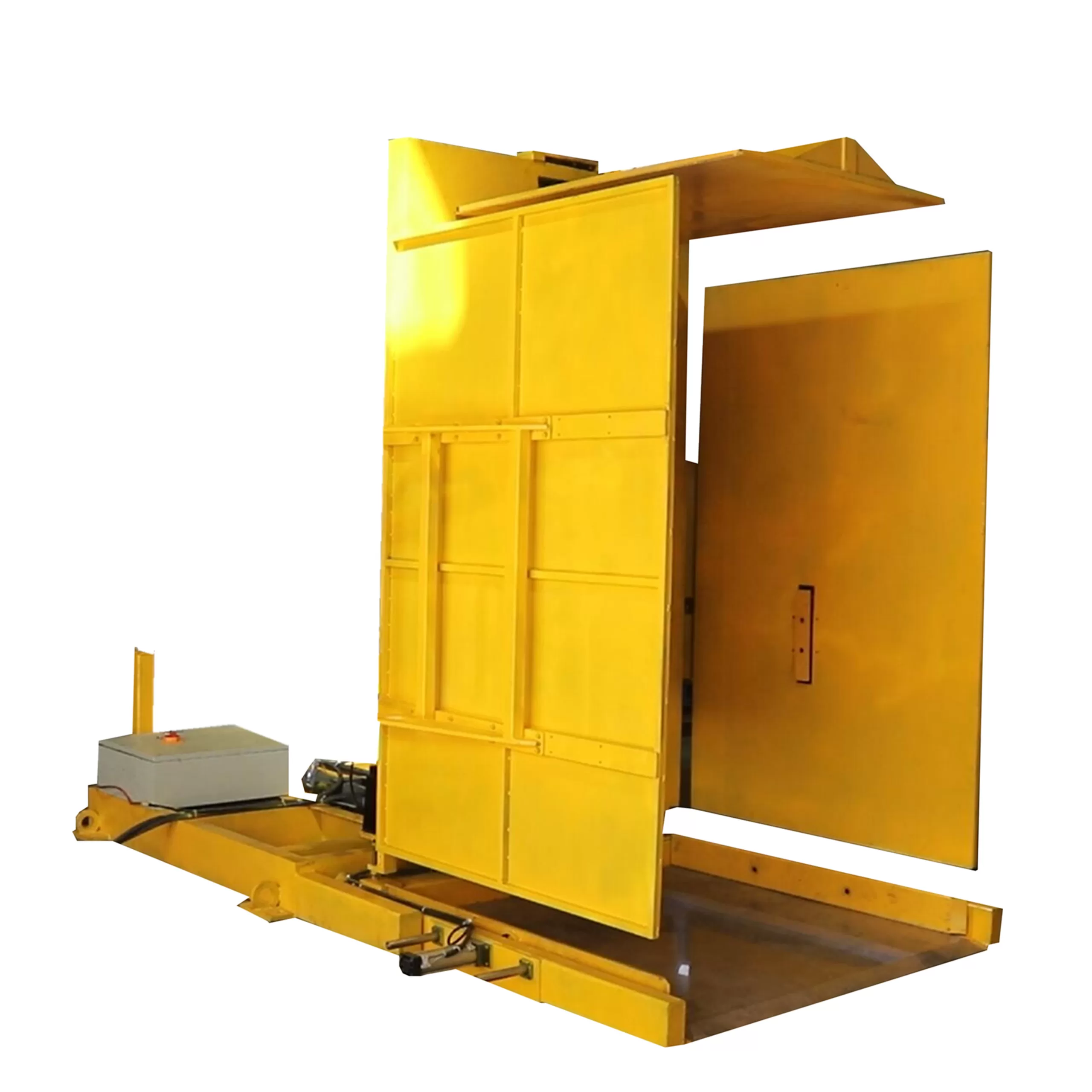
From my years in the packing machine business, I have seen first-hand how the right automation can transform a factory floor. It is not just about moving boxes faster. It is about creating a safer, more reliable, and more cost-effective system. For pharma, these benefits are even more important due to the high stakes involved.
Dive Deeper: Realizing Value Beyond Compliance
The benefits of a well-chosen, GMP-compliant pallet inverter extend far beyond merely passing an audit. They impact the bottom line and overall operational excellence.
-
Enhanced Safety for Workers and Products:
- Benefit: Pallet inverters remove the need for manual, high-risk pallet changes. Workers do not have to physically lift, tip, or re-stack heavy loads. This significantly reduces the risk of back injuries, crushed limbs, or falling product.
- Impact: Lower insurance premiums, fewer worker compensation claims, and a safer work environment. This leads to higher employee morale and reduced absenteeism. My client Carlos, a logistics manager, faces these exact safety challenges. He wants to reduce accidents and create a safer workplace. A good pallet inverter directly addresses this.
-
Increased Efficiency and Throughput:
- Benefit: Automated pallet changes are much faster and more consistent than manual methods. A machine can complete a cycle in minutes. This dramatically reduces the time spent on pallet transfers.
- Impact: Faster processing of incoming raw materials and outgoing finished products. This means quicker order fulfillment and improved inventory turnover. For firms like Carlos’s, dealing with thousands of pallets daily, this efficiency gain is huge. It can handle diverse pallet specifications, like Euro vs. US pallets, with ease.
-
Reduced Labor Costs and Resource Optimization:
- Benefit: Automating pallet changes means fewer workers are needed for this specific task. The labor force can be redirected to higher-value activities.
- Impact: Significant cost savings on wages and benefits. It also helps address the ongoing challenge of labor shortages, especially for physically demanding jobs. This also reduces reliance on human error. This makes your operation more predictable.
-
Improved Product Quality and Reduced Damage:
- Benefit: The controlled, gentle handling of a pallet inverter minimizes the risk of product damage. There are fewer drops, bumps, or shifts compared to manual methods.
- Impact: Less waste from damaged goods, higher product integrity, and better customer satisfaction. This directly protects your revenue and brand reputation. My clients often see a quick return on investment just from reducing damage alone.
-
Better Warehouse Organization and Space Utilization:
- Benefit: With efficient pallet changes, you can maintain a more organized inventory. You can switch to uniform internal pallets, such as hygienic plastic ones. This standardizes your storage system.
- Impact: Optimized warehouse space, easier navigation, and a cleaner storage environment. This helps improve overall operational flow. It also simplifies compliance.
By integrating GMP-compliant pallet inverters, Canadian pharma firms are not just meeting regulatory mandates. They are also building a more robust, efficient, and profitable supply chain.
How Can Pharma Firms Choose the Best Pallet Inverter Partner for Long-Term Success?
Selecting a pallet inverter is more than just buying a piece of equipment. It is about forging a relationship with a reliable supplier. This relationship is crucial for long-term success. Many companies focus only on the machine’s price. They forget about support, service, and expertise. This often leads to bigger problems later on.
Canadian pharma firms should choose a pallet inverter partner based on their proven expertise in GMP environments, their ability to customize solutions, and their commitment to long-term after-sales support. A good partner offers more than just machines; they provide installation, training, maintenance, and readily available spare parts. They understand the unique challenges of the pharmaceutical industry. They act as a true collaborator.
My journey, from working on a factory floor to building my own successful packing machine company, taught me a critical lesson: the best machines are only as good as the support behind them. I learned that helping clients grow their businesses means being a true partner, not just a seller. This is the mindset I bring to FHOPEPACK.
Dive Deeper: Criteria for a Reliable Pallet Inverter Partner
Choosing a partner is an investment in your future operations. Here are the key criteria to consider:
-
Expertise in Pharmaceutical and GMP Standards:
- What to look for: The supplier should have a deep understanding of GMP requirements. They should have experience working with pharmaceutical clients. They must know about specific needs like material certificates, validation documents, and cleanroom compatibility. Ask for references from other pharma companies.
- Why it matters: A knowledgeable partner will guide you to the right solution. They will ensure your chosen machine meets all regulatory needs. This saves you time and prevents costly mistakes. They can speak your “GMP language.”
-
Customization and Solution-Oriented Approach:
- What to look for: Your specific operational needs are unique. A good partner will not just offer off-the-shelf products. They will listen to your challenges. They will offer tailored solutions. This might include specific dimensions, control systems, or integration with existing lines. Like Carlos, you need a partner who understands your pain points.
- Why it matters: Customization ensures the pallet inverter fits perfectly into your workflow. It addresses your precise challenges, such as handling diverse pallet sizes or integrating with specific warehouse layouts. This optimizes performance.
-
Robust After-Sales Support and Maintenance:
- What to look for: This is crucial. Check the supplier’s reputation for technical support, spare parts availability, and maintenance services. Do they offer local support in Canada? What are their response times for breakdowns? Do they provide comprehensive training for your staff?
- Why it matters: Downtime is very costly in pharma. Quick access to support and parts minimizes disruptions. It keeps your operations running smoothly. A strong support system is key for long-term reliability.
-
Commitment to Quality and Reliability:
- What to look for: The supplier should have a strong track record of building reliable, durable machinery. They should use high-quality components. They should also follow strict manufacturing processes. Ask about their quality control procedures.
- Why it matters: Reliability directly impacts your operational efficiency and costs. A robust machine needs less frequent repair. This means higher uptime. It supports consistent GMP compliance.
-
Transparent Pricing and Long-Term Value:
- What to look for: Get a clear breakdown of costs, including installation, training, and potential ongoing service contracts. Focus on the total cost of ownership (TCO), not just the upfront purchase price.
- Why it matters: A clear understanding of costs helps you budget effectively. It ensures you are getting good value for your investment. A partner focused on TCO helps you save money in the long run.
By carefully evaluating these aspects, Canadian pharma firms can select a pallet inverter partner that supports their compliance goals and contributes to their long-term operational success.
Conclusion
Choosing the right pallet inverter for Canadian pharma firms means prioritizing GMP compliance, operational efficiency, and a supportive partner. By selecting equipment with the right features—like stainless steel construction, safety, and ease of cleaning—firms can enhance safety, cut costs, and ensure product integrity. This makes a significant impact on overall success. Investing in a quality pallet inverter is a smart move for any Canadian pharma operation aiming for excellence.








