
Which pallet inverter option delivers the best ROI for cement and block factories?
In the demanding world of cement and block manufacturing, where heavy loads and high volumes are the norm, inefficient pallet handling can quickly turn into a major headache. Are you struggling with slow material flow, frequent product damage, or worse, workplace injuries caused by manual pallet transfers? These issues are not just operational snags; they directly impact your bottom line, leading to delays, increased labor costs, and potential contractual penalties. It is a problem that I have seen many times throughout my journey in the packing machine industry.
For cement and block factories, the best pallet inverter option for ROI is typically a semi-automatic or fully automatic heavy-duty model, designed for high capacity and continuous operation. These systems significantly reduce manual labor, minimize product damage, enhance safety, and accelerate throughput, ensuring a rapid return on investment by transforming costly, hazardous manual processes into efficient, automated workflows.
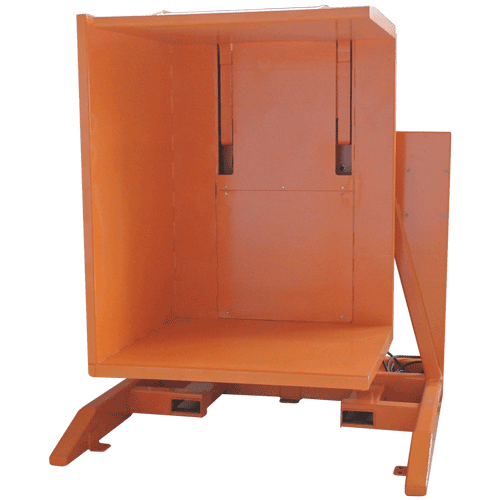
Choosing the right pallet inverter is not just about buying a piece of equipment; it is about making a strategic investment that pays dividends in efficiency, safety, and profitability. But with various options available, how can you be sure you are picking the one that will truly deliver the best return for your specific factory needs? Let us explore the different types, their benefits, and how to make the smartest choice for your operation.
What types of pallet inverters are there for heavy-duty industries like cement and blocks?
Are you wondering which type of pallet inverter can truly stand up to the tough demands of cement and block production? You might be using equipment that is not robust enough, leading to frequent breakdowns and lost production time. This struggle can hold back your entire operation. But there are solutions specifically built for heavy-duty work.
For heavy-duty industries like cement and block manufacturing, the main types of pallet inverters include fixed 90-degree tilters, 180-degree changers, and specialized mobile or free-standing units. Each type offers distinct advantages, but the most suitable choice depends on factors like load weight, required cycle speed, and the specific task of pallet exchange or product inversion.
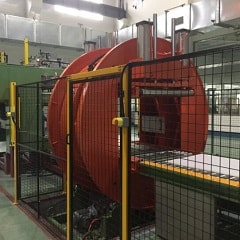
Dive deeper into pallet inverter types for heavy industry:
When I started my journey in the packing machine industry, I quickly learned that one size rarely fits all, especially in demanding environments like cement and block factories. The sheer weight and abrasive nature of the materials in these operations require machines that are not just functional but exceptionally durable and powerful. Here is a closer look at the types of pallet inverters that truly make a difference in such settings:
-
Fixed 90-Degree Tilters (Upenders):
- Function: These machines lift and tilt a load by 90 degrees. They do not fully invert the product or pallet. They are often used to change the orientation of a product for processing or to remove a damaged pallet from under a stable load.
- Suitability for Cement/Block: They are ideal when you need to access the bottom of a pallet or product without fully turning it over. For instance, if you need to slide a new pallet under a stack of concrete blocks. They are simple to operate and very robust.
- Construction: Typically heavy-duty hydraulic or electro-mechanical systems. They must handle very high static and dynamic loads without bending or breaking.
- Common Use: Transferring products from conveyor to a different orientation or vice-versa. Accessing the underside of a load.
-
Fixed 180-Degree Pallet Changers (Inverters):
- Function: These units clamp a load and rotate it a full 180 degrees. This allows for complete pallet exchange, where the old pallet is removed and a new one is placed. Or it can be for inverting products themselves.
- Suitability for Cement/Block: This is often the go-to solution for industries that need to switch out damaged pallets, replace wooden export pallets with plastic ones, or simply invert products for specific processing steps. They are highly efficient for high-volume pallet swaps.
- Construction: These are generally the most common type of heavy-duty pallet changer. They feature strong clamping mechanisms and powerful rotation drives. They are built to withstand continuous use with heavy, often irregular loads.
- Variants: Some designs allow for ‘stand-alone’ operation where a forklift loads the product, while others integrate into an automated conveyor line.
-
Mobile Pallet Changers:
- Function: Unlike fixed units, mobile pallet changers can be moved to different locations within the warehouse or factory floor. They offer flexibility in operations.
- Suitability for Cement/Block: While less common for the highest volume, in-line operations, mobile units are excellent for factories that have multiple loading bays or storage areas where pallet exchange is needed intermittently or at different points. They are good for handling varied pallet types or products across a wider area.
- Construction: They often feature robust wheels and a compact design. Their load capacity can be substantial, though perhaps slightly less than a fully fixed, heavy-duty industrial unit designed for 24/7 continuous duty.
- Advantages: Great for facilities with diverse needs or changing layouts.
-
Free-Standing Pallet Changers (Stand-Alone):
- Function: These are fixed units but are typically loaded and unloaded by a forklift, not integrated directly into a conveyor system.
- Suitability for Cement/Block: Ideal for operations that do not require full automation but still need the power and capacity of a fixed unit. They offer flexibility in workflow and are often more cost-effective than fully automated, in-line systems. I have seen many factories, especially when they are starting to automate, go for these. They provide a strong base for future expansion.
- Construction: Just like fixed in-line units, these are built to be extremely tough, with strong steel frames and powerful hydraulics. They are made to handle heavy, dense construction materials.
- Decision Point: The choice between these and fully in-line systems often comes down to budget and the current level of automation in the factory.
In my experience, no matter the type, when you are dealing with cement and blocks, you need to ensure the machine’s structural integrity and power systems are overkill, not just adequate. This prevents downtime and ensures a long working life, delivering a much better ROI in the long run. I have seen factories try to adapt light-duty machines to heavy work, and it always leads to breakdowns and frustration, costing much more in repairs and lost production than a proper heavy-duty unit would have.
How does a pallet inverter save money and boost efficiency in cement and block production?
Are you tired of seeing your profit margins erode due to high labor costs, damaged products, and sluggish operations? In cement and block factories, these issues are magnified because of the sheer weight and volume involved. If you are still relying heavily on manual processes for pallet handling, you are likely losing money every single day.
A pallet inverter significantly saves money and boosts efficiency in cement and block production by automating labor-intensive tasks, thereby reducing manual labor costs and preventing costly product damage. It also speeds up pallet transfer processes, minimizes workplace injuries, and optimizes material flow, leading to higher throughput and a more streamlined operation, all contributing to a strong return on investment.
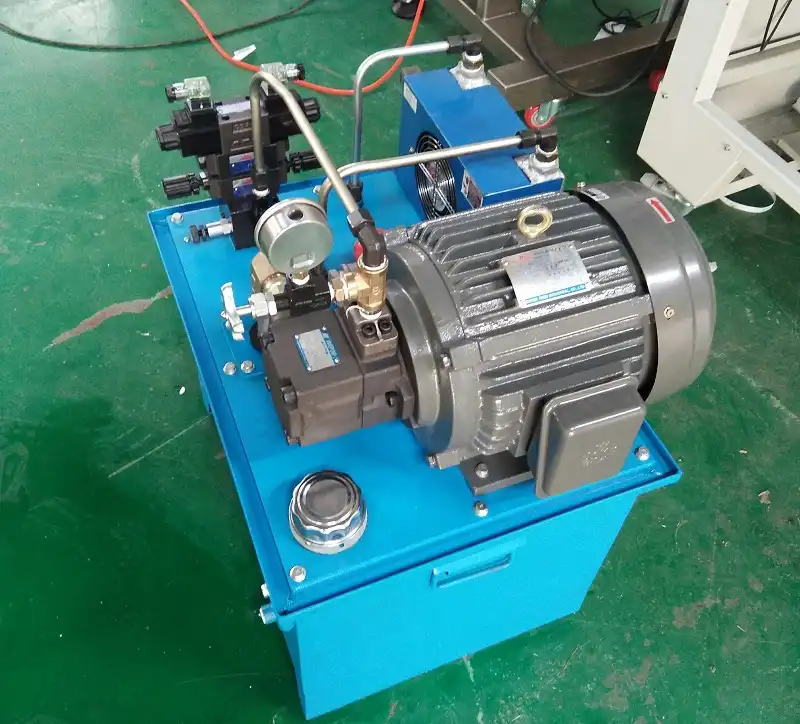
Dive deeper into cost savings and efficiency gains:
When I established my own packing machine factory, and helped my clients grow their businesses, one lesson was clear: every investment in automation must show a tangible return. For cement and block factories, where the margins can be tight and the work physically demanding, a pallet inverter is not just a luxury; it is a necessity for financial health and operational excellence. Here is how it delivers on that promise:
-
Reduced Labor Costs:
- Challenge: Manually changing or inverting pallets, especially with heavy loads of cement bags or concrete blocks, requires multiple workers. It is slow, physically taxing, and prone to error.
- Solution: A single operator, often with a forklift, can manage a pallet inverter. For fully automatic systems, the process needs almost no human intervention.
- Impact: This dramatically cuts down on the number of staff needed for pallet handling tasks. Over time, the labor savings alone can quickly justify the initial investment. I have seen operations reduce their pallet handling crew by two-thirds, freeing up valuable employees for other critical tasks or reducing overall headcount, leading to substantial cost reductions. This also helps address the labor shortage challenge, as younger workers are less willing to do physically demanding jobs.
-
Minimized Product Damage:
- Challenge: Manual handling of heavy and sometimes fragile items like cement bags or precision-cut blocks often results in spills, crushed products, or damaged packaging. Each damaged item is a direct financial loss.
- Solution: Pallet inverters handle loads with controlled, consistent movements. They clamp the load securely before rotating it, preventing shifting or dropping.
- Impact: This precision reduces product damage to almost zero, saving the cost of lost product, re-packaging, and waste disposal. For a factory producing thousands of pallets daily, even a small percentage reduction in damage translates to significant savings.
-
Enhanced Operational Efficiency and Throughput:
- Challenge: Manual pallet changes are inherently slow. Waiting for workers to manually transfer products from one pallet to another creates bottlenecks in the production or dispatch process.
- Solution: Pallet inverters perform transfers quickly and consistently, often in minutes, compared to much longer manual times. Automated systems can integrate seamlessly into conveyor lines.
- Impact: Faster cycle times mean more pallets processed per hour. This directly boosts the factory’s overall throughput and efficiency, allowing more products to be moved from production to dispatch. For businesses with tight delivery schedules, this is crucial for meeting customer demands and avoiding penalties.
-
Reduced Workplace Injuries and Associated Costs:
- Challenge: Lifting, flipping, and maneuvering heavy pallets manually is a leading cause of back injuries, strains, and other accidents in a factory setting. These incidents lead to workers’ compensation claims, higher insurance premiums, lost workdays, and potential legal issues. I have seen firsthand the devastating impact of such accidents on both the workers and the company.
- Solution: Pallet inverters perform these hazardous tasks mechanically, removing workers from dangerous situations.
- Impact: A safer workplace means fewer injuries, lower insurance costs, and a more productive workforce. This is not just a cost saving but also a huge benefit for employee morale and retention. It directly addresses the “safety risk” challenge Carlos mentioned, preventing the kinds of accidents that can result in contract penalties and customer loss.
-
Optimized Pallet Management:
- Challenge: Handling different pallet types (e.g., Euro pallets, US pallets, plastic pallets) for various destinations or internal needs can be complex and labor-intensive. Dirty or damaged incoming pallets cannot be used for outgoing shipments without extensive cleaning or replacement.
- Solution: Pallet inverters make it easy to switch out a dirty, damaged, or incorrect pallet type for a clean, undamaged, or compliant one without disturbing the product load.
- Impact: This ensures compliance with shipping regulations, reduces the need for manual pallet sorting, and extends the life of pallets by allowing for easier maintenance and repair. It enhances flexibility, meeting diverse customer requirements without delays.
From my years helping businesses with their packing and handling needs, I can tell you that these savings are real and quantifiable. The money saved on labor, reduced damage, and improved safety often means a pallet inverter pays for itself surprisingly fast, sometimes in as little as 12-18 months. When I started my factory, I knew every penny counted. Investing in the right machinery was never a cost, but an investment that paid itself back many times over.
What are the key safety and operational benefits of using pallet inverters in a heavy manufacturing environment?
Are you constantly worried about the safety of your workers in your cement or block factory? The heavy loads and demanding environment create significant risks for manual pallet handling. Accidents, injuries, and product damage can disrupt your operations, harm your team, and cost your business dearly. There must be a better way to ensure both safety and smooth operations.
In a heavy manufacturing environment, pallet inverters offer critical safety and operational benefits by eliminating hazardous manual lifting and flipping, thus preventing worker injuries and product spills. Operationally, they ensure consistent, reliable material flow, reduce human error, and extend the lifespan of pallets, significantly enhancing overall efficiency and security, even in harsh conditions.
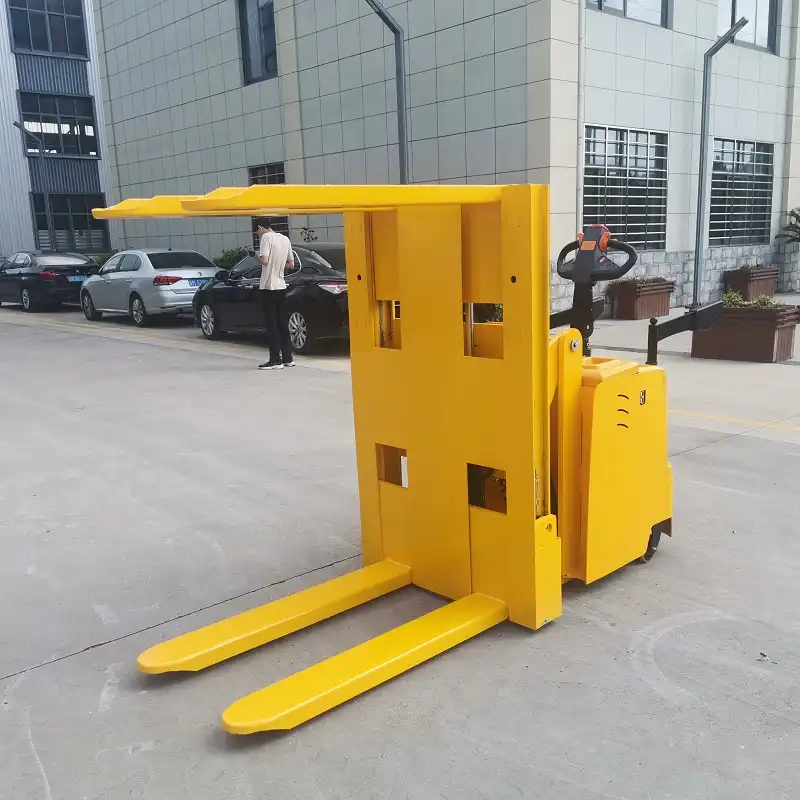
Dive deeper into safety and operational advantages:
Safety was always my top priority when building my packing machine factory and working with clients. I saw firsthand what happens when corners are cut, and it is never worth it. In environments like cement and block factories, where loads can weigh thousands of pounds, the risks are exponentially higher. This is where pallet inverters truly shine, offering indispensable benefits beyond just cost savings.
-
Elimination of Manual Handling Risks:
- The Problem: Workers manually lifting, tilting, or pushing heavy stacks of cement bags or blocks are exposed to severe risks. These include musculoskeletal injuries (back strains, sprains), crushing injuries, and cuts or abrasions. Dropped loads can cause catastrophic damage and severe harm. These incidents are not just theoretical; they happen, leading to pain for the worker and significant costs for the company, as Carlos well knows from his own challenges.
- The Solution: Pallet inverters take the human element out of the most dangerous parts of pallet handling. The machine clamps the load securely and performs the rotation or inversion automatically.
- The Benefit: This dramatically reduces the potential for accidents and injuries. Workers are kept at a safe distance from moving heavy loads. This fosters a safer work environment, reduces workers’ compensation claims, and improves employee morale and retention.
-
Prevention of Product Spills and Damage During Transfer:
- The Problem: When pallets are manually flipped or adjusted, especially with items that are not perfectly stable (like bags of cement), there is a high risk of product shifting, falling, or spilling. This leads to wasted product, cleanup time, and potential safety hazards (e.g., slipping on spilled material).
- The Solution: Pallet inverters use hydraulic clamps to hold the entire load firmly in place before any movement begins. The rotation is smooth and controlled.
- The Benefit: Products remain stable throughout the process. This prevents spills, damage, and contamination, which is especially important for goods like cement that need to remain dry and intact. It contributes to a cleaner, safer workspace.
-
Consistent and Reliable Operation:
- The Problem: Human operators can get tired, make mistakes, or work at inconsistent speeds. This variability leads to bottlenecks, errors, and uneven production flow.
- The Solution: A pallet inverter operates with consistent speed and precision every time. Once programmed, it performs the task identically for each load.
- The Benefit: This reliability ensures a smooth, predictable material flow through the factory. It eliminates human error in the pallet exchange process, reducing downtime and improving overall operational stability. This is crucial for meeting demanding production schedules and customer delivery promises.
-
Adaptability to Harsh Environments:
- The Problem: Cement and block factories are often dusty, noisy, and subject to heavy impacts. Standard machinery might not hold up well in such conditions.
- The Solution: Heavy-duty pallet inverters are designed with robust construction, often using reinforced steel frames, dust-resistant components, and powerful hydraulics. They are built to endure the specific challenges of these industrial settings.
- The Benefit: These machines can operate reliably day after day, year after year, with minimal maintenance despite the harsh conditions. This ensures long-term operational effectiveness and a strong ROI, as the equipment lasts longer and performs consistently.
-
Improved Ergonomics and Worker Comfort:
- The Problem: Even if direct flipping is avoided, constant manual pushing, pulling, or adjusting pallets contributes to long-term ergonomic issues for workers.
- The Solution: By automating the core heavy lifting and manipulation, pallet inverters reduce the physical strain on workers.
- The Benefit: This leads to a more comfortable and healthier work environment, reducing fatigue and improving job satisfaction. Happier, healthier workers are more productive and less likely to take sick leave.
From my background, managing both people and machinery, I know that a safer workplace is always a more productive one. Investing in pallet inverters is not just about automation; it is about valuing your employees and building a resilient, efficient operation that stands the test of time, even in the toughest industries.
How do I choose the right pallet inverter for my cement or block factory to maximize ROI?
With so many pallet inverter options on the market, how can you be sure you are making the best choice for your cement or block factory? Picking the wrong machine can lead to wasted money, ongoing operational problems, and a failure to meet your ROI goals. You need a clear strategy to avoid a costly mistake.
To choose the right pallet inverter and maximize ROI for your cement or block factory, you must carefully assess your specific needs, including load capacity, required cycle speed, the level of automation desired, and the types of pallets you handle. Prioritize robust construction for heavy loads, consider integration with existing systems, and crucially, select a supplier who offers strong after-sales support and is a true long-term partner, not just a seller.
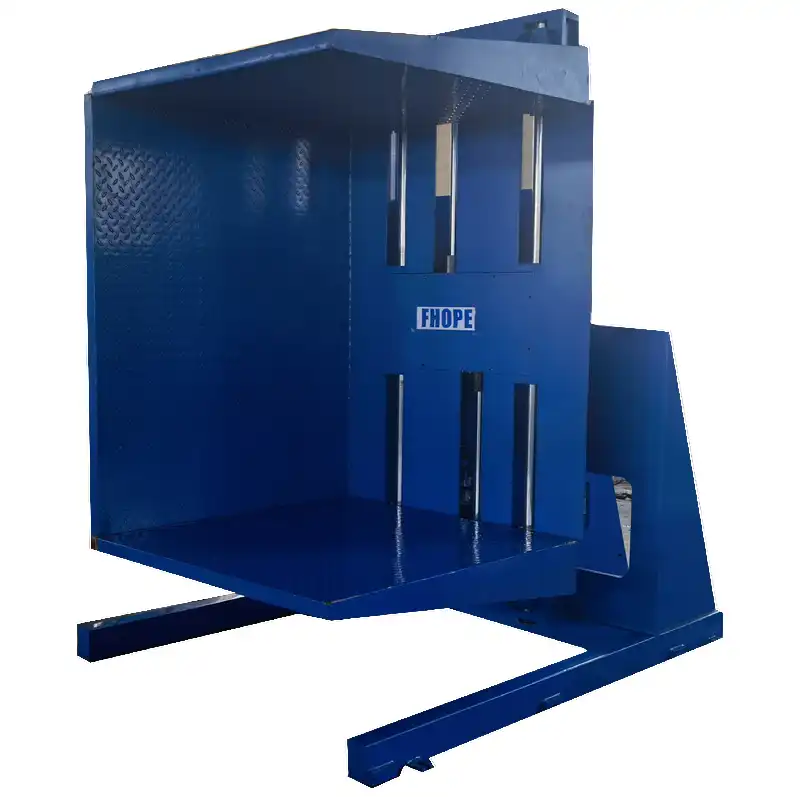
Dive deeper into making the right selection for maximum ROI:
When clients came to me for solutions, I always told them: don’t just buy a machine, buy a solution. It is about understanding their whole operation, their pain points, and their long-term goals. For cement and block factories, this approach is even more critical because the investment is significant, and the operational demands are high. Here is a structured way to think about your choice to ensure you get the best ROI:
-
Assess Your Specific Load Requirements:
- Load Weight and Dimensions: This is the most fundamental factor. Cement bags are heavy. Concrete blocks are dense. You must know the maximum weight and dimensions (height, width, depth) of your palletized loads. The inverter you choose must safely handle your heaviest and largest loads with capacity to spare.
- Load Stability: Are your loads stable (e.g., perfectly stacked blocks) or prone to shifting (e.g., loosely packed bags)? Some inverters offer more gentle clamping and rotation for less stable loads.
- Consideration: An undersized machine will quickly fail and deliver negative ROI. An oversized one might cost more upfront than needed. Balance is key, but always err on the side of robustness for heavy industry.
-
Determine Your Required Cycle Speed and Throughput:
- Current Volume: How many pallets do you process per hour or per shift?
- Future Growth: How much do you expect your volume to increase in the next 3-5 years?
- Consideration: A manual or semi-automatic unit might be fine for lower volumes. But if you have high-volume production or strict deadlines, a fully automatic, high-speed system integrated into your conveyor line will offer a much better ROI by reducing bottlenecks and increasing throughput. The faster you can move product, the quicker your investment pays off.
-
Evaluate the Level of Automation Needed:
- Manual: Operator loads/unloads with a forklift, manually initiates rotation. Lowest upfront cost, highest labor involvement.
- Semi-Automatic: Operator loads/unloads, but the machine performs the rotation automatically. Balances cost and efficiency. This is a very common starting point for good ROI.
- Fully Automatic: Integrated into a conveyor system, requires minimal or no human intervention for loading, rotation, and unloading. Highest upfront cost, lowest labor involvement, highest efficiency.
- Consideration: Match automation to your budget, existing infrastructure, and labor availability challenges. Remember, the highest automation often delivers the best ROI over the long term through labor savings and efficiency.
-
Identify Pallet Types and Conditions:
- Variety of Pallets: Do you need to switch between Euro pallets, US pallets, plastic, wooden, or even slip sheets? Ensure the inverter is adaptable to all your required pallet types. Carlos’s challenge with diverse pallet specs is common and needs a flexible solution.
- Pallet Condition: Do you frequently deal with damaged incoming pallets? The inverter should be able to separate the product from the old pallet effectively without causing further damage.
- Consideration: Some inverters are more versatile than others in handling different pallet sizes and materials. Make sure your chosen machine can handle all your needs without needing manual adjustments for each change.
-
Assess Space Requirements and Integration:
- Available Footprint: Do you have enough space for a fixed unit, or would a more compact or mobile unit be better?
- Integration: Will the inverter be a standalone unit or integrated into an existing or planned conveyor system? This affects the type of inverter and the complexity of installation.
- Consideration: Planning the layout correctly avoids costly reconfigurations later. A well-integrated system maximizes operational flow and ROI.
-
Focus on Build Quality and Durability:
- Heavy-Duty Construction: For cement and block factories, a robust, heavy-duty frame, powerful hydraulics, and industrial-grade components are non-negotiable. The machine must withstand dust, vibration, and continuous heavy use.
- Maintenance: Consider the ease of maintenance and the availability of spare parts. Downtime is a killer for ROI.
- Consideration: Cheaper machines often use lighter materials and less powerful components, leading to frequent breakdowns and higher long-term costs. Investing in a high-quality, durable machine from the start ensures consistent performance and a better ROI.
-
Choose a Reputable Supplier and Long-Term Partner:
- Experience: Does the supplier have experience with heavy-duty industries like yours?
- Support: What kind of after-sales service, installation support, training, and warranty do they offer? This addresses Carlos’s desire for a true partner.
- Customization: Can they customize a solution for your unique factory needs?
- Consideration: A cheap machine with no support is an expensive mistake. A reliable supplier, like FHOPEPACK, will work with you to understand your challenges and provide a solution that truly fits, ensuring your investment continues to deliver value for years to come. This partnership approach ensures the maximum long-term ROI.
By carefully considering these factors, you can confidently choose a pallet inverter that not only meets your operational needs but also delivers exceptional ROI, transforming your cement or block factory into a safer, more efficient, and more profitable operation.
Conclusion
Selecting the right pallet inverter for your cement or block factory is a strategic investment in efficiency, safety, and profitability. By carefully matching the machine’s type, capacity, and automation level to your specific operational demands and choosing a reliable partner, you can significantly reduce costs, prevent injuries, and boost throughput, ensuring a strong and rapid return on your investment.








