
Which Pallet Inverter Helps Logistics Firms Meet EU and US Shipping Compliance?
Imagine your warehouse floor. Pallets are everywhere, moving in, moving out. But suddenly, a critical shipment to Europe needs to switch from a US-standard pallet to an EU-standard one. Then another shipment, inbound from the US, faces the same issue. Delays pile up. Costs rise. Worse, you risk fines and unhappy customers. Does this sound familiar? Many logistics managers feel this pressure every day.
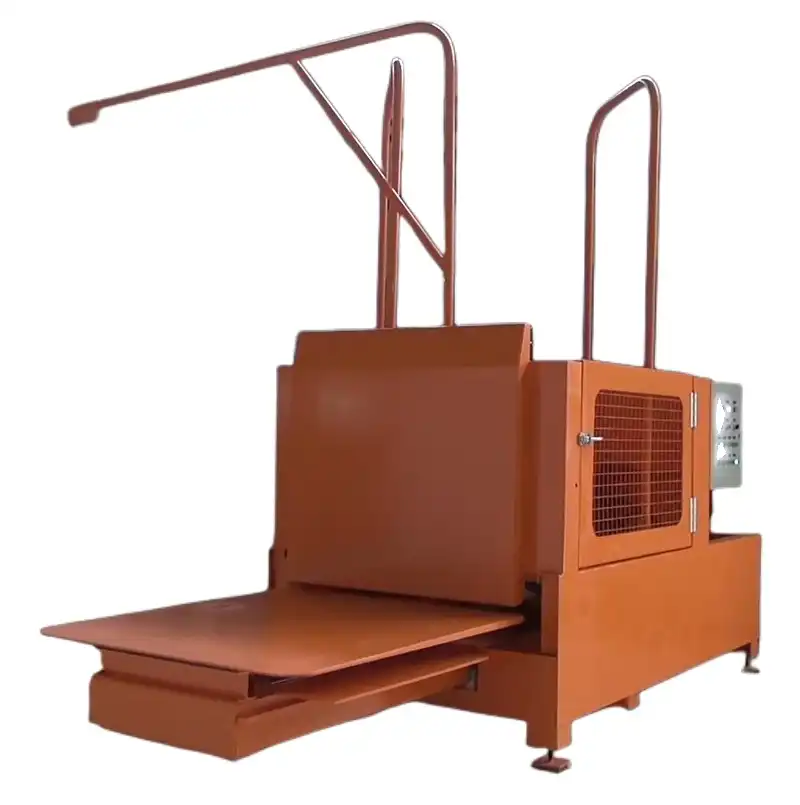
A pallet inverter system is the key machine. It lets logistics firms quickly and safely swap goods between different pallet types. This ensures smooth operations and compliance with diverse international shipping standards, like those in the EU and US.
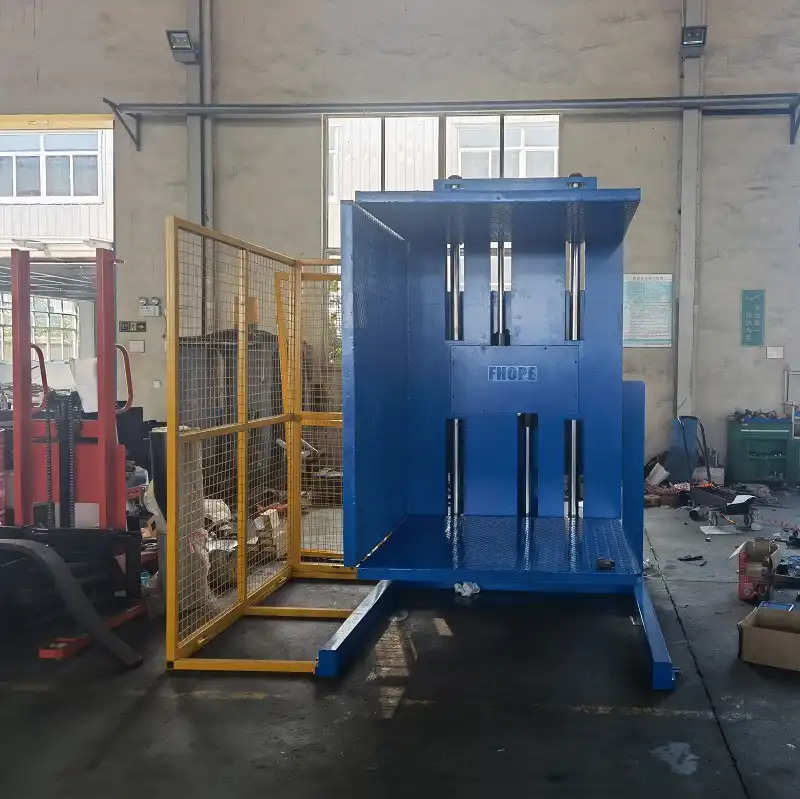
Handling international logistics can be tough. It has many moving parts. But some solutions can make a big difference. I built FHOPEPACK because I saw these challenges first-hand. I want to share what I learned. Let’s look at how the right pallet inverter makes your life easier and your operations better.
Understanding the Pallet Compliance Maze: Why Do EU and US Standards Matter?
You have cargo ready to ship. It sits on a pallet. But is it the right pallet for its destination? This question can cause real headaches for logistics managers. Ignoring pallet standards is not an option. It can stop your products from moving. It also adds costs. So, why are these standards so important?
EU and US pallet standards matter because they affect safety, handling, and cost across supply chains. Different dimensions mean different stacking patterns and storage methods. Following these rules prevents delays, damages, and costly fines during international shipping.
I have seen many clients struggle with this. When I first started my factory, I also learned about the many small details that make a big difference. Pallet standards seem small. But they are very important. They protect your goods. They protect your workers. And they keep your business running smoothly. Let me break down why you need to pay attention to them.
Different Pallets, Different Worlds: A Deep Dive into Standards
The world uses many pallet types. But the most common for international shipping are Euro pallets and North American pallets. They look similar, but their sizes are very different. This difference is not just about a few inches. It impacts every step of your logistics chain.
-
Euro Pallets (EUR-pallets):
- Size: The most common is the EUR 1 pallet. It measures 1200 mm x 800 mm (about 47.24 in x 31.50 in).
- Construction: They usually have three stringers and nine blocks. This design makes them strong.
- Use: These pallets are standard across Europe. Many industries use them. These include food, retail, and manufacturing.
- Why they matter: They are part of a closed-loop system. This means they are often exchanged or returned. This makes handling easier within Europe. But they do not fit well with US warehouse systems.
-
North American Pallets:
- Size: The most common is the GMA pallet. It measures 48 in x 40 in (about 1219 mm x 1016 mm).
- Construction: These often have two-way or four-way entry. This means a forklift can access them from two or four sides.
- Use: They are standard in the US, Canada, and Mexico. They are also popular for exporting goods from North America.
- Why they matter: Their size is ideal for US truck trailers and rail cars. But they are too wide for some EU storage systems.
-
Other Pallet Types and Materials:
- Plastic Pallets: These are lightweight and durable. They are also easy to clean. Many industries, especially food and pharmaceuticals, use them. They can come in both Euro and US sizes.
- Custom Pallets: Sometimes, products need special pallets. These are less common for general logistics. But they add another layer of complexity.
- Heat-Treated (HT) vs. Methyl Bromide (MB): International shipping rules (ISPM 15) require wooden pallets to be treated. This stops pests. HT is now the main method. MB is less common due to environmental concerns.
Why do these differences cause problems?
- Space Usage: A US pallet can waste space in a European truck. Or it might not even fit.
- Equipment Compatibility: Forklifts, racking systems, and conveyors are often designed for specific pallet sizes. Using the wrong one can cause damage or accidents.
- Customs and Regulations: Border control can reject shipments with non-compliant pallets. This leads to big delays and extra costs.
- Cost Implications: Manual pallet changes take time and labor. They also increase the risk of product damage. This all adds to your operating costs. My own experience showed me that even small inefficiencies multiply quickly. Investing in the right tools saves money in the long run. It also keeps your clients happy.
Beyond Manual Labor: How Can Automation Solve Your Pallet Switching Headaches?
Warehouse managers like you face many challenges. One big one is finding enough skilled workers. Another is keeping your team safe. Manual pallet switching combines both these problems. It is slow. It needs many people. And it is risky. So, how can you fix this? The answer is automation. Moving past manual methods can change your entire operation.
Automation, specifically with pallet inverter systems, solves pallet switching headaches by cutting labor needs, boosting efficiency, and greatly improving safety. It replaces risky manual tasks with machines. This frees up workers for other jobs. It also makes your entire process faster and more reliable.

I started FHOPEPACK to help businesses like yours. I saw how much time and energy workers spent on repetitive, dangerous tasks. My goal was to build machines that help people, not replace them entirely. Automation for pallet changes is a perfect example of this. It takes the heavy, dangerous lifting away from your team. This lets them focus on smarter work. It also makes your warehouse a better and safer place.
The Clear Benefits of Automated Pallet Changing
Let’s look at the concrete ways automation helps. It changes your warehouse from a place of struggle to a place of smooth operation.
-
Increased Safety and Reduced Injuries:
- 🚫 Eliminate Manual Handling: No more lifting, flipping, or pushing heavy pallets by hand. This removes the main causes of back injuries, strains, and crushed limbs.
- 🛡️ Fewer Accidents: Automated systems work predictably. They follow set patterns. This means fewer unexpected movements or falling goods. It drastically lowers the risk of accidents.
- 📉 Lower Insurance Costs: With fewer workplace injuries, your insurance premiums can go down. This saves your company money directly.
- 👍 Better Morale: Workers feel safer and more valued. They know their company cares about their well-being. This leads to a happier and more productive team.
-
Significant Labor Savings and Efficiency Gains:
- 💸 Reduced Labor Costs: An automated pallet changer can do the work of several people. This lets you reassign staff to more valuable tasks. Or it helps you manage labor shortages.
- ⏱️ Faster Turnaround Times: Machines work much faster and more consistently than people. They can switch pallets in minutes, not tens of minutes. This speeds up your entire dispatch process.
- 📊 Consistent Performance: Machines do not get tired. They do not make human errors. This means your pallet changes are always fast and accurate.
- ⬆️ Higher Throughput: Faster changes mean you can process more pallets each day. This helps meet tight delivery deadlines from clients. This also helps you handle more volume.
-
Improved Product Integrity and Compliance:
- 📦 Gentle Handling: Modern pallet changers handle products carefully. They grip and flip with precision. This reduces the risk of damage to your goods during the transfer.
- ✅ Guaranteed Compliance: These systems ensure your goods always leave on the correct pallet type. This means no more rejections at customs. It also means no more fines.
- 🌍 Seamless International Shipping: You can easily adapt to different regional standards. Your European exports go on Euro pallets. Your US exports go on GMA pallets. Everything is smooth.
Automated pallet changers are an investment. But they bring big returns. They make your operations safer. They make them more efficient. They also make them more compliant. This ensures your business grows without roadblocks. I have seen this happen time and again with my clients. They tell me the change was essential for their growth.
Choosing the Right Pallet Inverter: What Features Should Logistics Managers Prioritize?
You know you need a pallet inverter. But how do you pick the best one? The market has many options. Each claims to be the best. For a logistics manager like you, choosing the right machine is vital. It affects your daily operations. It affects your budget. And it affects your team’s safety. So, what should you look for?
When choosing a pallet inverter, logistics managers must prioritize reliability, adaptability to multiple pallet types, ease of use, and strong safety features. The ideal system also offers after-sales support and spare parts availability. This ensures it meets diverse operational needs and offers long-term value.
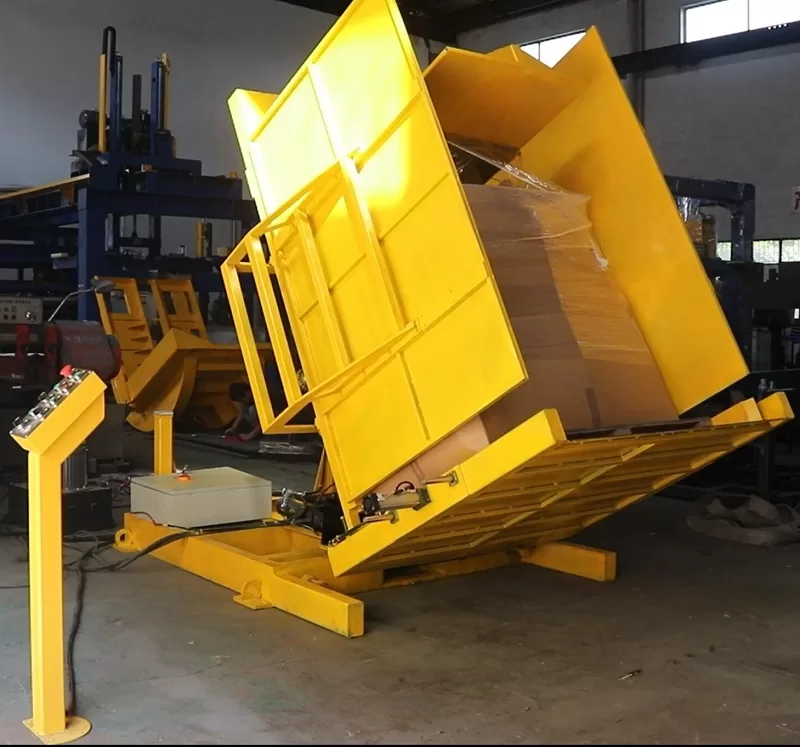
I have spent many years in this industry. I know what makes a good packing machine. I also know what makes a system last. When I built FHOPEPACK, I focused on making machines that truly solve problems. They are not just gadgets. They are tools that empower your business. So, let me share what I believe are the most important features. These will guide you to the right decision for your warehouse.
Essential Features for a High-Performing Pallet Inverter
Selecting a pallet inverter is not a small decision. It is an investment in your company’s future. You need a machine that works hard and works well. Here are the key features you should prioritize:
-
Versatility and Adaptability to Pallet Types:
- 🔄 Multi-Pallet Compatibility: Can the machine handle Euro pallets, US pallets, and plastic pallets? This is crucial for international operations. Look for systems that adjust easily to different sizes without complex reconfigurations.
- ⚖️ Load Capacity: Make sure it can handle the weight of your heaviest products. An inverter that struggles with heavy loads will break down fast.
- 📏 Product Dimensions: It should fit your range of product heights and widths. Some systems have adjustable clamps or platforms. This helps with different load sizes.
-
Robustness and Reliability for High-Intensity Use:
- 💪 Durable Construction: Warehouses are harsh environments. The machine needs to be built with strong materials. It must withstand constant use.
- 🛠️ High-Quality Components: Check for reliable motors, hydraulics, and electrical systems. These parts determine the machine’s lifespan. They also prevent frequent breakdowns.
- ⚙️ Low Maintenance Design: A good machine needs less maintenance. This means less downtime for your operations. Ask about routine service needs.
- 🌐 Proven Track Record: Look for manufacturers with a history of building durable machines. Read testimonials. Ask for case studies. My experience tells me that a company’s past performance predicts its future reliability.
-
Safety and User-Friendly Operation:
- 🚨 Integrated Safety Features: This is non-negotiable. Look for safety light curtains, emergency stop buttons, and protective guards. These prevent accidents.
- 👨💻 Intuitive Controls: The operating panel should be simple to understand. Training should be quick. This minimizes human error. It also speeds up the learning curve for your staff.
- 🔇 Low Noise Levels: A quieter machine makes the workplace more pleasant. This also helps with communication.
- ✨ Ergonomic Design: The machine should make work easier, not harder. This includes how operators load and unload products.
-
After-Sales Support and Service:
- 📞 Responsive Technical Support: When something goes wrong, you need fast help. Check if the supplier offers quick support.
- 📦 Spare Parts Availability: Can you get replacement parts easily? Long waits for parts mean long downtimes.
- ⚙️ Maintenance Services: Does the supplier offer regular maintenance or inspection services? This helps prevent problems before they start.
- 🤝 Long-Term Partnership: You want a supplier who understands your business. They should be a partner. They should offer solutions, not just sell machines. This is a core value at FHOPEPACK. I believe in helping clients grow.
By focusing on these features, you can select a pallet inverter that truly serves your needs. It will boost your efficiency. It will also ensure compliance. And it will provide a safe working environment for years to come. Do not just buy a machine. Invest in a solution.
Investing in Future-Proof Logistics: How Does a Pallet Changer Become Your Strategic Partner?
Logistics managers are always looking ahead. They want to make their operations better. They want to make them ready for the future. A pallet changer is not just a piece of equipment. It is a strategic tool. It can transform your warehouse. It can also give you an edge over competitors. But how does one machine achieve all this?
A pallet changer becomes a strategic partner by future-proofing logistics operations. It boosts efficiency, cuts long-term costs, enhances safety, and ensures compliance. This adaptability helps companies meet changing market demands and customer expectations. It builds a robust, responsive supply chain.

When I started FHOPEPACK, my goal was to offer more than just machines. I wanted to offer solutions. I wanted to help businesses succeed. Many of my clients grew their businesses because they invested in the right tools. They also partnered with the right people. A pallet changer is a clear example of this. It helps you solve today’s problems. But it also helps you prepare for tomorrow. Let me explain how it becomes your trusted ally.
The Pallet Changer as a Catalyst for Growth and Resilience
A pallet changer changes more than just pallets. It changes your whole business outlook. It moves you from reacting to problems to proactively solving them. Here is how it works as a strategic asset:
-
Building a More Resilient Supply Chain:
- 🌍 Global Adaptability: Your business can easily handle shipments to any part of the world. Different pallet standards are no longer a barrier. This makes your supply chain more flexible.
- 🛡️ Risk Mitigation: You reduce the risk of delays, fines, and product damage. This makes your operations more predictable. It also makes them more secure.
- 📈 Scalability: As your business grows, your pallet changer can handle increased volume. This means you do not need major operational overhauls as you expand.
-
Driving Cost Efficiency and Sustainability:
- 💰 Long-Term Savings: While there is an upfront investment, automated pallet changers save money over time. They cut labor costs. They reduce product damage. They also lower accident-related expenses.
- ♻️ Pallet Optimization: You can use a mix of reusable plastic pallets for internal use and one-way wood pallets for shipping. This strategy saves money. It also helps the environment.
- ⚡ Energy Efficiency: Modern pallet changers are designed to be energy-efficient. They reduce your operational carbon footprint. They also lower your utility bills.
-
Enhancing Customer Satisfaction and Brand Reputation:
- ⏱️ Faster Deliveries: Efficient pallet changes mean faster order fulfillment. This leads to happier customers. They get their goods on time.
- ⭐ Reliable Service: When you consistently meet deadlines and prevent shipping issues, your reputation grows. Customers trust you more.
- 🌟 Competitive Advantage: Offering faster, more reliable, and compliant shipping sets you apart. This helps you win new business. It also helps you keep existing clients.
-
Fostering a Culture of Innovation and Safety:
- 💡 Embracing Technology: Investing in automation shows you are forward-thinking. It helps your team learn new skills. This makes your workplace more attractive.
- 🤝 Employee Empowerment: By removing dangerous tasks, you empower your employees. They can focus on more skilled work. They also feel safer. This improves overall job satisfaction.
- 🌱 Continuous Improvement: A pallet changer helps standardize a key process. This allows you to measure efficiency. It also lets you find other areas for improvement.
A pallet changer is more than a machine. It is a strategic tool for any logistics firm wanting to thrive in a complex global market. It delivers immediate benefits. It also builds a stronger, more adaptable future. This is the kind of solution I believe in. It is the kind of solution FHOPEPACK is proud to offer.
Conclusion
Navigating the complexities of international shipping, especially with varied pallet standards, is a major challenge for logistics firms. A reliable pallet inverter is a game-changer. It ensures compliance, enhances safety, and boosts efficiency. Investing in one is a strategic move, preparing your business for future growth and challenges.








