
Which Pallet Inverter Design Works Better in Cleanroom Environments for Pharma Use?
You manage a distribution center where thousands of pallets move daily. You face strict demands for efficiency, safety, and compliance. Now, imagine needing to handle sensitive pharmaceutical products in a cleanroom. The usual challenges of pallet handling multiply. You cannot afford any dust, contamination, or operational failure. Your choice of equipment directly impacts product integrity and regulatory adherence.
When it comes to cleanroom environments for pharma use, a stationary 180-degree hydraulic or electric pallet inverter, constructed from high-grade stainless steel with fully sealed components and a smooth, easy-to-clean design, works better. These designs minimize dust accumulation, prevent contamination, and allow for rigorous cleaning protocols, ensuring compliance with strict pharmaceutical manufacturing standards like GMP.
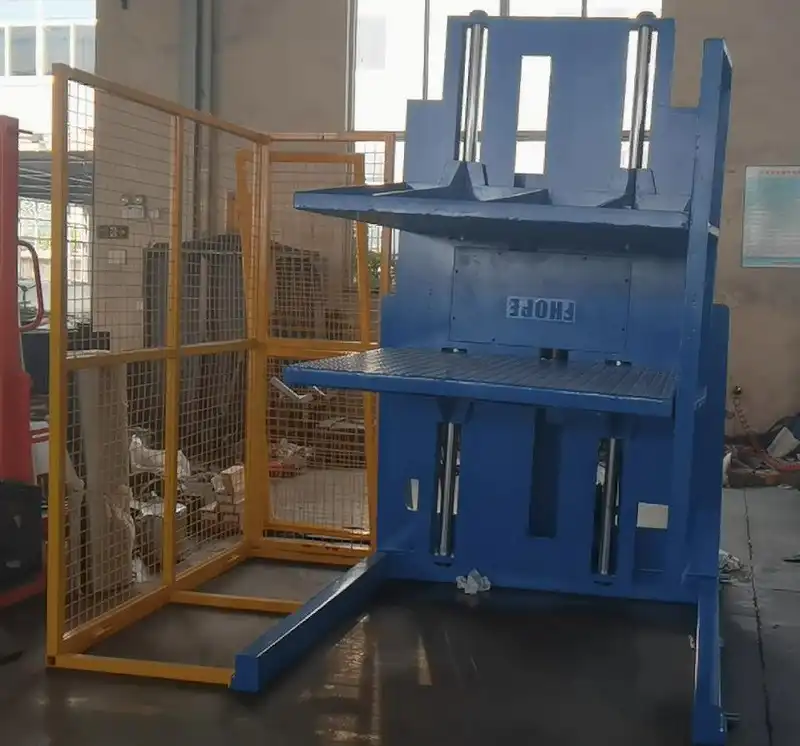
I know these decisions feel big. The right pallet inverter can streamline your operations, reduce risks, and boost your bottom line. The wrong one creates ongoing headaches and costs. Let me share what I have learned from years in the packing machine industry. We will explore the best options for your specific needs, focusing on what truly matters in a cleanroom setting.
What Defines a Cleanroom Pallet Inverter for Pharmaceutical Production?
You face a critical challenge. You need to switch pallets efficiently, but you must do this inside a cleanroom. This is not just any warehouse. Pharmaceutical cleanrooms have strict rules. They demand specific design choices for all equipment. If you pick the wrong machine, you risk product contamination. You also risk failing regulatory audits. This can lead to costly delays and damage your company’s reputation.
A cleanroom pallet inverter for pharmaceutical production is a specialized machine designed to prevent contamination. It must use specific materials, have smooth surfaces, and allow for easy, thorough cleaning. Its design also needs to minimize particle generation and meet strict regulatory standards for hygiene.

When I first started in the packing machine factory, I saw many standard machines. They were good for general industrial use. But the pharmaceutical world is different. It needs a completely different approach. I learned that what works in a regular warehouse does not work in a cleanroom. My journey taught me the importance of understanding specific industry needs. For pharma, every detail matters. This is why a standard pallet inverter will not work. It will not meet the strict requirements for air quality, particulate control, and microbial limits. You need a machine that is part of the solution, not part of the problem.
Key Design Considerations for Pharma Cleanroom Pallet Inverters
Choosing the right pallet inverter for a pharmaceutical cleanroom involves looking at several critical design aspects. These factors directly affect cleanliness, safety, and regulatory compliance.
-
Material Selection: This is the most important factor.
- Stainless Steel (304 or 316L): Almost all cleanroom equipment uses stainless steel. It resists corrosion. It does not react with cleaning agents. Type 316L is often preferred for pharma. It has more molybdenum. This gives it better resistance to chlorides. This is important for areas that need harsh cleaning. Standard steel parts will rust. They will shed particles. They will fail inspections.
- Plastic Components: Any plastic parts must be medical or food-grade. They must not shed particles. They must be easy to clean.
- Sealing Materials: Gaskets and seals must be FDA-approved. They must not degrade over time. They must not release particles.
-
Surface Finish: The finish of the machine is just as important as the material.
- Smooth and Polished: All surfaces must be smooth. They should be polished to a specific roughness, often Ra < 0.8 µm. This prevents dust and microorganisms from sticking. It makes cleaning easier. Rough surfaces trap contaminants. They are breeding grounds for bacteria.
- No Crevices or Gaps: The design should avoid any gaps or crevices. These areas are hard to clean. They can harbor contaminants. Welds must be continuous and smooth.
-
Particle Generation Control: The machine itself should not create contamination.
- Sealed Bearings and Moving Parts: All moving parts, like bearings and motors, must be sealed. This prevents lubricant leakage. It stops particle release. Open mechanisms can shed metal or plastic particles.
- Hydraulic vs. Electric: Electric systems are generally better. They do not have hydraulic fluids that can leak. If hydraulic systems are used, they need closed-loop designs. They also need food-grade hydraulic fluid.
-
Ease of Cleaning (Washdown Capability): The machine must be easy to clean thoroughly.
- Accessible Surfaces: All parts of the machine must be reachable for cleaning.
- Sloping Surfaces: Design with sloping surfaces helps water drain. It prevents puddles. Puddles can lead to bacterial growth.
- IP Rating: The machine needs an IP rating suitable for washdown. This means it can withstand high-pressure washing. It also means it can use specific cleaning chemicals. An IP65 or IP66 rating is common for washdown areas.
-
Regulatory Compliance: Meeting standards is non-negotiable.
- GMP (Good Manufacturing Practices): The machine must support GMP. This includes documentation, validation, and operational procedures.
- FDA, CE, and Local Regulations: Ensure the machine complies with all relevant certifications. This shows it meets safety and quality benchmarks.
These details might seem small. But in a cleanroom, they make a huge difference. They help keep your pharmaceutical products safe and pure. They ensure your operations meet the highest standards.
How Do Different Pallet Inverter Designs Impact Cleanroom Compliance?
You know cleanrooms have unique rules. Now, let’s look at the actual pallet inverter designs. Each design type has pros and cons. Some designs work better in a cleanroom. Others create problems. Choosing the wrong type can make it harder to keep your cleanroom clean. It can even make it impossible to meet compliance standards. This means more work, more risk, and potential fines.
Different pallet inverter designs impact cleanroom compliance based on their physical configuration, motion, and how they handle the product. Stationary 180-degree inverters often offer better control and easier integration into automated cleanroom lines, while specific features like open access for cleaning or enclosed mechanics directly influence the ability to maintain a sterile environment.

I have seen many types of pallet handling systems in my career. Some were simple, others complex. What stands out to me is how a machine’s basic layout affects everything else. For example, a mobile inverter might be great for flexibility in a regular warehouse. But in a cleanroom, moving it around creates dust. It disturbs the controlled environment. My experience has taught me to always look at the bigger picture. How does the machine fit into the entire workflow? How does it affect the surrounding environment? This thinking led me to understand the specific needs of cleanroom operations. For these settings, simplicity and controlled movement are key.
Comparing Pallet Inverter Designs for Cleanroom Suitability
Let us break down the common pallet inverter designs. We will see how each one measures up against cleanroom needs.
-
Stationary Pallet Inverters:
- Pros for Cleanrooms: These machines stay in one place. This means they do not create dust from movement across the floor. They can be built into a cleanroom wall or floor. This helps maintain environmental control. They often offer more robust construction. This allows for sealed components. They can be integrated into automated lines. This reduces human interaction. Reduced human interaction lowers contamination risk.
- Cons for Cleanrooms: Their fixed position means less flexibility. You cannot easily move them if your layout changes.
-
Mobile Pallet Inverters:
- Pros for Cleanrooms: They offer flexibility. You can move them where needed.
- Cons for Cleanrooms: This is generally not a good option for cleanrooms. Wheels and movement generate particles. They stir up existing dust. They can be harder to connect to strict cleanroom air systems. They are harder to seal off. Their mobility can also make cleaning more complex. They introduce new areas for dirt accumulation.
-
90-Degree Pallet Inverters (Pallet Changers):
- Pros for Cleanrooms: These often use a clamping and tilting mechanism. The product stays upright. This is good for unstable loads. The design can be simpler. This means fewer moving parts exposed to the environment. They can swap a full pallet with an empty one without turning the product over. This is ideal for bags or liquids.
- Cons for Cleanrooms: The tilting motion can sometimes expose more surfaces. This might need careful design to prevent contamination. They might not be suitable for all load types.
-
180-Degree Pallet Inverters (Pallet Turners):
- Pros for Cleanrooms: These completely invert the load. They are good for transferring products from one type of pallet to another. This is common for hygiene reasons. For example, moving product from a wooden transport pallet to a cleanroom-specific plastic pallet. They can have a very controlled movement. This reduces particle generation. They can be designed with fully enclosed chambers. This protects the product during inversion.
- Cons for Cleanrooms: The full inversion might be an issue for very fragile products. You need to ensure the clamping mechanism is gentle.
-
Freezer-Safe Pallet Inverters:
- Pros for Cleanrooms: Designed to operate in very cold temperatures. This is vital if your pharmaceutical products need cold storage within a cleanroom. They use specialized materials and lubricants.
- Cons for Cleanrooms: These are often more complex and expensive. Their specialized components might need more specific cleaning protocols.
-
Pushing Type Pallet Changers:
- Pros for Cleanrooms: These systems push the load from one pallet to another. They avoid tilting or inverting. This is good for very unstable products. The design can be simpler with fewer moving parts directly contacting the product.
- Cons for Cleanrooms: Can create friction and potential particle generation if not designed well. Requires very precise alignment.
For cleanroom use, stationary designs are almost always better. They offer the stability and control needed. For the turning mechanism, a 180-degree inverter with a fully enclosed design is often the best choice for pharma. This protects the product during the entire process. It also facilitates easy cleaning and validation. Remember, the goal is always to reduce risk and maintain the highest level of cleanliness.
What Specific Features Should I Prioritize for a Pharmaceutical Cleanroom Pallet Inverter?
You have decided on a general design type. Now, you need to look at the details. The specific features of a pallet inverter can make or break its suitability for a cleanroom. Neglecting these features leads to ongoing operational problems. It also brings compliance headaches. You might find yourself constantly fighting contamination or struggling with cleaning. This impacts your efficiency and your ability to deliver products on time.
For a pharmaceutical cleanroom pallet inverter, you must prioritize features like all stainless steel construction (316L), smooth, crevice-free surfaces, fully sealed electrical and mechanical components, washdown capability (IP65/IP66), and a robust, easily validated control system. Automated options further minimize human intervention and enhance contamination control.
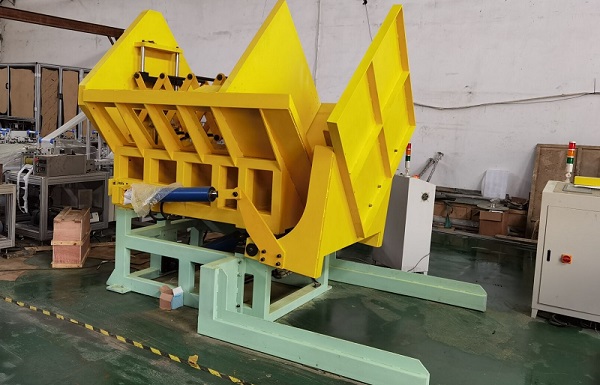
I have helped many clients optimize their packing lines. The devil is always in the details. One client, a major food producer in Europe, struggled with hygiene in their sorting area. They had a pallet changer that was too complex to clean properly. It had too many exposed parts. We redesigned it with smoother surfaces and better sealing. This drastically cut down on cleaning time. It also improved their overall hygiene scores. This experience taught me that small design choices have big impacts on daily operations and compliance. This is especially true in environments like cleanrooms where precision is everything.
Critical Features and Their Benefits for Pharma Cleanrooms
Let’s go deeper into the features that truly matter for your cleanroom pallet inverter.
-
Stainless Steel Construction (316L Preferred):
- Benefit: Provides superior corrosion resistance. It stands up to harsh cleaning agents. It does not react with chemicals. This prevents material degradation. It avoids particle shedding. 316L offers extra protection against chlorides. This is vital in aggressive cleaning cycles.
- Impact on Compliance: Directly supports GMP by ensuring material compatibility. It maintains structural integrity. It prevents contamination.
-
Smooth, Crevice-Free Design:
- Benefit: Minimizes areas where dust, dirt, or microorganisms can accumulate. It makes cleaning fast and effective. This reduces the risk of biofilm formation. It simplifies sanitation.
- Impact on Compliance: Essential for maintaining a sterile environment. It meets strict hygiene requirements. It allows for thorough validation of cleaning procedures.
-
Fully Sealed Components (Motors, Bearings, Wiring):
- Benefit: Prevents the release of particles from moving parts. It stops lubricants or hydraulic fluids from leaking. It protects internal components from washdown procedures. This increases equipment lifespan. It also reduces maintenance.
- Impact on Compliance: Critical for particle control within the cleanroom. It prevents chemical contamination from leaks. It ensures operational reliability.
-
High IP Rating (IP65 or IP66):
- Benefit: Guarantees protection against dust ingress and powerful water jets. This means the machine can withstand rigorous washdown protocols. It allows for effective sanitization without damaging electronics.
- Impact on Compliance: Necessary for regular, deep cleaning. It supports the prevention of microbial growth. It ensures the machine meets strict hygiene standards.
-
Electric Operation (Preferred over Hydraulics):
- Benefit: Eliminates the risk of hydraulic fluid leaks. This removes a significant potential source of contamination. Electric systems can also offer more precise control. They can be quieter.
- Impact on Compliance: Reduces the risk of chemical contamination. It supports a cleaner operating environment. It simplifies maintenance procedures.
-
Automated Features and Integration Capabilities:
- Benefit: Reduces the need for human interaction. This is a primary source of contamination in cleanrooms. It increases operational speed and consistency. It allows for seamless integration with existing production or logistics lines. This optimizes workflow.
- Impact on Compliance: Enhances overall contamination control. It improves process repeatability. It supports data collection for validation and auditing.
-
Robust and User-Friendly Control System:
- Benefit: Allows for easy operation and troubleshooting. It includes safety interlocks and emergency stop features. It can store multiple pallet change programs. This adds flexibility.
- Impact on Compliance: Ensures safe operation. It allows for consistent process execution. It supports regulatory requirements for operational control and safety.
By focusing on these specific features, you ensure that your pallet inverter not only performs its primary function but also actively contributes to maintaining a pristine and compliant cleanroom environment. This helps you protect your valuable pharmaceutical products.
Why is Finding the Right Partner as Crucial as the Pallet Inverter Itself?
You are looking for a complex piece of equipment. You need it for a critical environment. But getting the right machine is only part of the solution. If you choose the wrong supplier, you will face endless problems. You might get a machine that is not quite right. You might get poor after-sales support. This leads to costly downtime. It causes production delays. It frustrates your team. This is a risk you cannot afford in the pharmaceutical industry.
Finding the right partner is as crucial as the pallet inverter itself because a true partner understands your specific cleanroom and pharma challenges, offers custom solutions, provides reliable post-sales support, and acts as a long-term resource for maintenance and optimization, ensuring your operational continuity and compliance.
I have seen this firsthand many times. Early in my career, some clients would buy machines based only on price. They often regretted it. I remember one client who bought a packaging machine from a vendor far away. It was cheaper. But when a critical part broke, they waited weeks for a replacement. Their production stopped. They lost a lot of money. This experience taught me a deep lesson. It is not about selling a machine. It is about solving a problem and supporting that solution. I built FHOPEPACK on this idea. We focus on being a true partner. We aim to understand your pain points. We want to help you grow.
The Value of a True Partner in Cleanroom Equipment Procurement
Choosing a pallet inverter for a cleanroom is a big investment. Here is why your supplier choice is so important:
-
Deep Understanding of Your Needs:
- A good partner asks many questions. They want to know about your cleanroom class. They ask about your specific pharmaceutical products. They want to understand your exact workflow. They do not just offer a generic product. They tailor a solution to your unique operational and compliance requirements.
- This prevents miscommunication. It ensures the machine fits perfectly into your existing setup.
-
Customization and Flexible Solutions:
- Your cleanroom might have unique space constraints or integration challenges. A true partner can modify their standard designs. They can create custom features. This is something a simple vendor cannot do.
- They understand that a one-size-fits-all approach rarely works in specialized environments.
-
Pre-Sales Consultation and Expertise:
- They provide expert advice before you buy. They help you analyze your current process. They identify potential bottlenecks. They suggest ways to improve efficiency and safety. This is more than just selling. It is about sharing knowledge.
- This proactive approach saves you money and trouble later on.
-
Robust After-Sales Support:
- Equipment breaks. Parts wear out. A reliable partner offers quick access to spare parts. They have skilled technicians for maintenance and repairs. They provide ongoing technical support.
- This minimizes downtime. It keeps your production running smoothly. It ensures your investment continues to pay off.
-
Compliance and Documentation Support:
- For pharma, documentation is huge. A good partner provides all necessary certifications. They offer support for validation processes (IQ/OQ/PQ). They understand GMP. They help you meet regulatory requirements.
- This reduces your audit risks. It makes compliance easier.
-
Long-Term Relationship and Continuous Improvement:
- They are interested in more than just one sale. They want to build a lasting relationship. They offer training for your staff. They provide upgrades or new solutions as your needs evolve. They become a trusted resource for your future needs.
- This creates stability. It helps you stay competitive in the long run.
My goal with FHOPEPACK is always to be that kind of partner. I have seen how much difference it makes. It is about trust. It is about delivering real value beyond the machine itself. When you choose a partner like this, you are not just buying a pallet inverter. You are investing in peace of mind. You are investing in the continued success of your pharmaceutical operations.
Conclusion
Selecting the right pallet inverter for a pharmaceutical cleanroom means prioritizing design, materials, and a supportive partner. A stationary, 180-degree stainless steel inverter with sealed components is often best. This choice ensures compliance, safety, and efficient operation.








