
Which pallet inverter design suits American chemical factories handling drums?
Moving heavy drums in a chemical factory is often a huge headache. You worry about safety, spills, and your workers getting hurt. Manual handling is slow, costly, and puts everyone at risk. This problem can slow down your whole operation, leading to lost time and money. It also makes it harder to meet strict production goals.
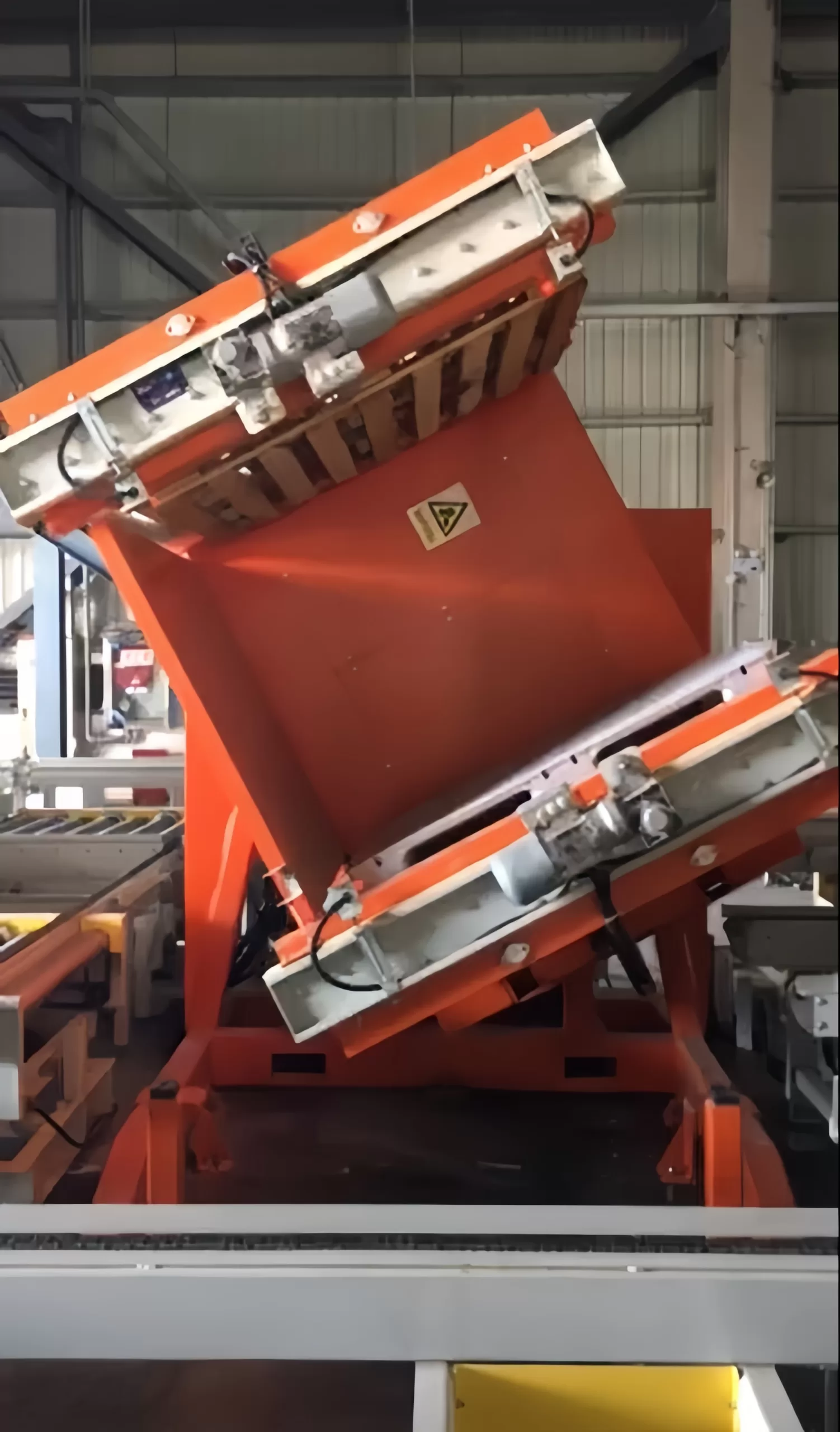
For American chemical factories handling drums, the most suitable pallet inverter designs are heavy-duty, fixed 180-degree inverters or 90-degree tippers. These machines offer the stability, robust construction, and specialized clamping mechanisms needed for safe and efficient drum handling. They help prevent product spills, reduce worker injuries, and ensure a smooth transfer of drums from one pallet type to another.
I have spent many years in the packing machine industry. My journey has shown me that finding the right equipment can change everything for a business. If you are serious about making your chemical factory safer and more efficient, keep reading. We will look closely at what makes a pallet inverter the best choice for drums.
Why are drums in chemical factories so hard to handle?
Handling drums in a chemical factory comes with many unique problems. These problems make regular material handling methods difficult and risky. The weight, the contents, and the shape of drums all add to these challenges. This often leads to slower work and higher costs.
Drums in chemical factories are hard to handle because they are heavy, contain potentially hazardous materials, and their cylindrical shape makes them unstable. This combination creates significant safety risks, demands specialized equipment, and requires careful compliance with strict regulations.
My years in this industry taught me that you cannot cut corners when it comes to safety and efficiency. Ignoring these challenges can lead to serious accidents and costly operational delays. This is why understanding them deeply is the first step toward finding the right solution.
Dive deeper: Understanding the unique challenges of drums in chemical factories
Working with drums in chemical plants is not like moving regular boxes. It needs special care and robust solutions. Here is a closer look at the key challenges:
-
Heavy and awkward loads 🏋️♀️
- Drums, especially those made of steel and filled with liquid, are very heavy. A single drum can weigh hundreds of kilograms.
- Their cylindrical shape makes them hard to grasp and move safely with standard forklifts or manual labor.
- This weight puts stress on equipment and increases the risk of tipping if not handled correctly.
- Moving such heavy items manually can cause severe back injuries or crushed limbs for workers.
- An ordinary pallet mover might struggle to maintain stability with such concentrated, heavy loads.
-
Hazardous contents ☢️
- Chemical drums often contain corrosive, flammable, or toxic substances.
- Any spill or leak during handling can be dangerous for workers and the environment.
- It can cause chemical burns, fires, or air contamination.
- Factories must have strict safety protocols and equipment to prevent these incidents.
- A damaged drum during a pallet transfer means product loss and expensive cleanup.
-
Diverse drum types and sizes 📏
- Drums come in different materials like steel, plastic, or fiber.
- They also come in various sizes, such as 55-gallon drums, 30-gallon drums, or smaller containers.
- This variety means a single handling solution might not work for all drum types.
- Some drums have open tops, others are closed. Each needs a different approach to ensure integrity during movement.
- The pallet inverter must be able to securely hold different drum dimensions without causing damage.
-
Strict regulatory compliance 📜
- American chemical factories must follow many rules. These include OSHA (Occupational Safety and Health Administration) standards and environmental regulations.
- These rules cover how chemicals are stored, moved, and handled.
- Equipment used must meet these safety standards to avoid fines and legal problems.
- A pallet inverter must not only be safe in design but also help the factory comply with these strict guidelines.
- Proper documentation and training are also key parts of this compliance.
-
High throughput demands 🚀
- Modern chemical factories need to move products quickly to meet customer orders.
- Slow or inefficient drum handling can create bottlenecks in the production line.
- This leads to delays in shipping and can affect overall profitability.
- Automated solutions like pallet inverters can greatly speed up the process. They allow for continuous operation without needing many breaks.
- Reducing manual steps also means fewer human errors and faster cycle times.
What pallet inverter features do chemical factories need for drum handling?
Not every pallet inverter is right for handling drums in a chemical factory. You need specific features to ensure safety, efficiency, and long-term reliability. Without these, you might end up with a machine that causes more problems than it solves.
Chemical factories need pallet inverters with heavy-duty construction, specialized drum-friendly clamping mechanisms, robust safety features, and often corrosion-resistant materials. These features ensure secure handling of heavy, potentially hazardous drums, minimize risks, and withstand the demanding conditions of a chemical environment.
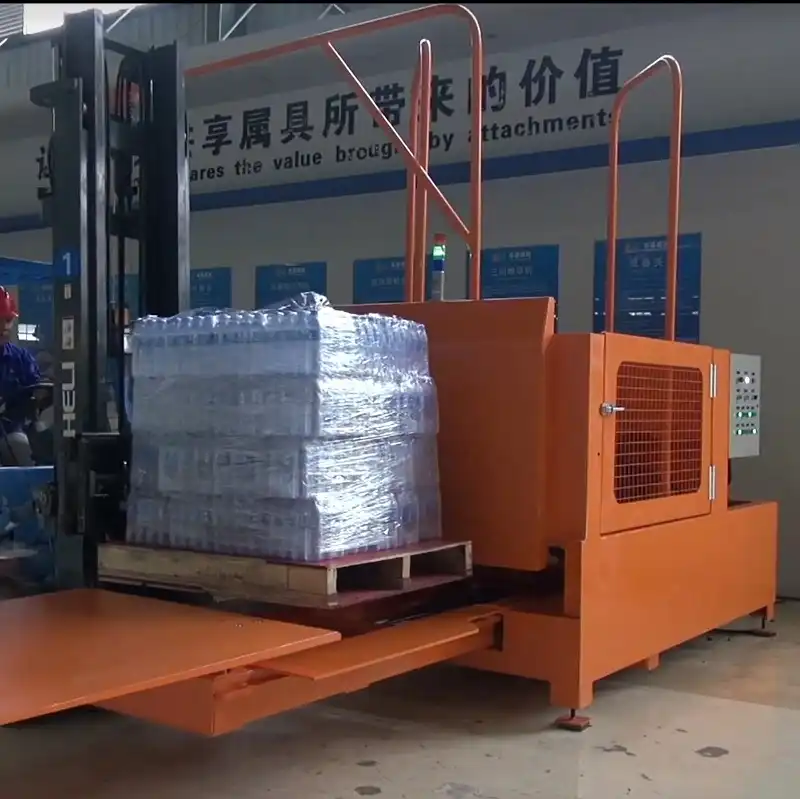
I have seen many factories invest in the wrong equipment. They often regret it later. My goal is to help you avoid those mistakes. Choosing the right features means looking at how the machine will perform day in and day out under harsh conditions.
Dive deeper: Key features for drum handling pallet inverters
When you are choosing a pallet inverter for drums, the details matter a lot. Here are the essential features I recommend you look for:
-
Robust construction and high load capacity 💪
- Drums are heavy. The inverter must be built to handle this weight without strain.
- Look for machines made from thick, strong steel. They need strong frames and reliable hydraulic systems.
- The load capacity should be much higher than the heaviest drum assembly you plan to move. This provides a safety margin.
- My experience shows that under-specifying capacity leads to breakdowns and a shorter machine life.
- A stable base and solid anchoring points are also vital for fixed units. This prevents any movement during operation.
-
Specialized clamping mechanisms for drums 🤝
- Drums need a firm but gentle grip. Standard flat clamps for pallets might damage drums or not hold them securely.
- The inverter needs adjustable clamps that conform to the drum’s cylindrical shape.
- Some designs use top-to-top clamping plates that can be contoured or padded. Others use side clamps.
- The clamping pressure must be adjustable. It needs to hold drums tightly without crushing them.
- This is crucial for preventing drums from slipping or falling during the inversion process.
-
Enhanced safety features 🛑
- Safety is always first, especially in a chemical plant. The inverter must have advanced safety controls.
- These include emergency stop buttons that are easy to reach.
- Light curtains or safety gates can prevent workers from entering the machine’s operating area when it is running.
- Pressure relief valves in the hydraulic system prevent over-pressurization.
- Visible and audible warning signals should alert workers when the machine is in operation.
- These features protect both the operators and the valuable drums from accidents.
-
Corrosion resistance 💧
- Chemical factories often have corrosive environments. This means spills can happen, or the air itself might contain corrosive elements.
- The inverter’s materials should resist corrosion. Stainless steel components are often preferred for critical parts.
- Protective coatings or special paints can also help extend the machine’s life.
- This feature reduces maintenance needs and ensures the machine operates reliably for many years.
- It protects your investment from premature wear and tear.
-
Integration with existing systems and automation options 🤖
- The best pallet inverters can fit smoothly into your current production line.
- They should be compatible with conveyors, forklifts, or robotic systems.
- Automation options, like automatic loading and unloading, can greatly increase efficiency.
- Programmable logic controllers (PLCs) allow for custom cycles and easy control.
- This helps reduce manual labor. It also speeds up the overall process flow in your factory.
Which specific pallet inverter designs work best for drums?
You have many types of pallet inverters available. But for drums, some designs work much better than others. Choosing the wrong type can lead to poor performance, safety risks, and wasted money.
For handling drums, the 180-degree fixed plate/clamp inverter is usually the best choice because it offers maximum stability and a complete inversion for secure pallet transfers. For specific reorientation needs or when a full inversion is not required, a 90-degree tipper or upender can also be effective.

I have seen countless operations. My experience shows that direct, powerful solutions are almost always best for heavy, critical loads like drums. Let us look at the designs that truly deliver.
Dive deeper: Specific designs for drum handling
Here is a breakdown of the pallet inverter designs that prove most effective for chemical drums:
-
180-degree fixed plate/clamp inverter 🔄
- How it works: This machine clamps the load between two plates or specialized jaws. Then it rotates the entire load 180 degrees. This fully inverts the drums, allowing a new pallet to be placed underneath easily.
- Benefits for drums:
- Maximum stability: The drums are held firmly from both the top and bottom during the entire rotation. This prevents any movement or slippage.
- Complete transfer: It allows for a full exchange of pallets. This is crucial when drums must move from one pallet type (e.g., wooden) to another (e.g., plastic hygiene pallets).
- Heavy-duty design: These fixed units are typically built to handle very heavy loads. They often have robust hydraulic systems for smooth, controlled rotation.
- Safety: With proper enclosures and safety interlocks, these systems offer a very safe way to handle drums automatically.
- Ideal use: High-volume chemical production lines where frequent, complete pallet changes for drums are needed.
-
90-degree tipper/upender 📐
- How it works: This machine tilts the load up to 90 degrees. It moves the drums from a horizontal to a vertical position, or vice versa. It can also reorient drums.
- Benefits for drums:
- Specific reorientation: Useful when drums need to be laid down for filling, emptying, or storage. Or when they need to be brought upright from a horizontal transport position.
- Controlled movement: Provides precise control over the tilting angle.
- Space-saving: Can be a more compact solution than a full 180-degree inverter for certain tasks.
- Ideal use: Chemical factories where drums need to be tilted for pouring, mixing, or accessing their contents. Also useful for changing drum orientation for specific storage racks.
-
Mobile pallet changers (with considerations) 🚶♂️
- How it works: These are portable units. You move them to the load, rather than bringing the load to the machine. They often use clamping arms or a top platen to secure the load.
- Considerations for drums:
- Flexibility: Good for lower volumes or when pallet changing is needed in different parts of a large facility.
- Stability concerns: For very heavy drums, the stability of a mobile unit must be carefully evaluated. The floor surface and load distribution are critical.
- Less common for heavy drums: While versatile, fixed 180-degree units usually offer better stability and throughput for dedicated drum handling in a chemical plant.
- Manual operation: Often requires more manual input for positioning and operation compared to fixed, automated systems.
- Ideal use: When dealing with diverse loads that are not exclusively drums, or when a flexible, on-demand solution is prioritized over high-volume, fixed automation. My experience is that for high-volume drum operations, a fixed system is usually better.
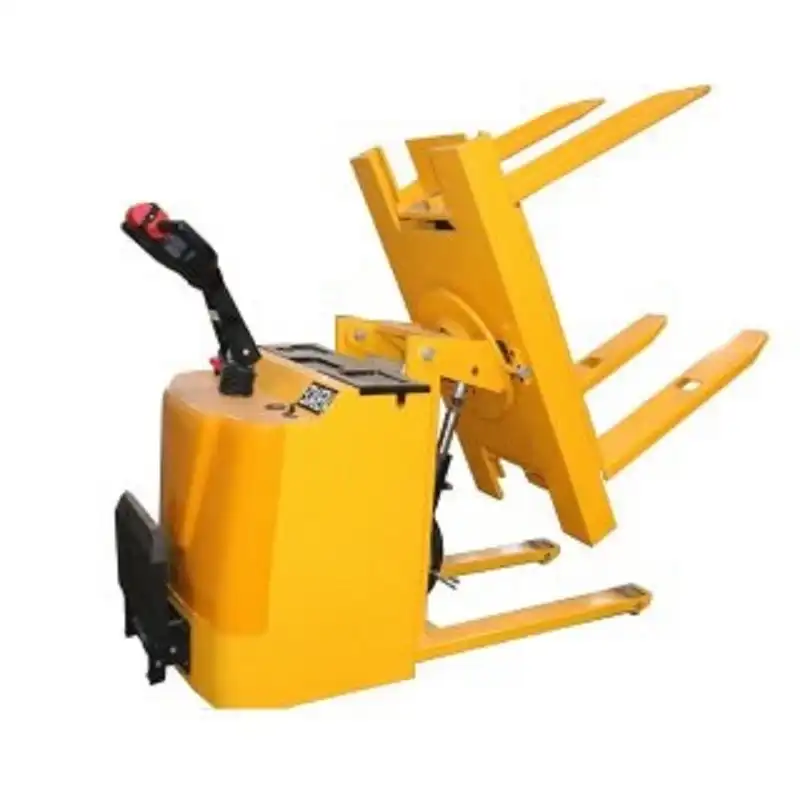
Mobile Pallet Changer Plus A-Z
-
Specialized push-pull or clamp systems ↔️
- How it works: These systems use push-pull mechanisms or specialized clamps to transfer loads without a full inversion.
- Benefits for drums:
- Gentle transfer: Can be ideal for very sensitive or unstable drum contents where any rotation is a risk.
- Less vertical space needed: May require less overhead clearance than a rotating inverter.
- Ideal use: Niche applications where a full inversion is not desired or possible, and drums need to be shifted horizontally or with minimal tilt. These are less common for general pallet replacement.
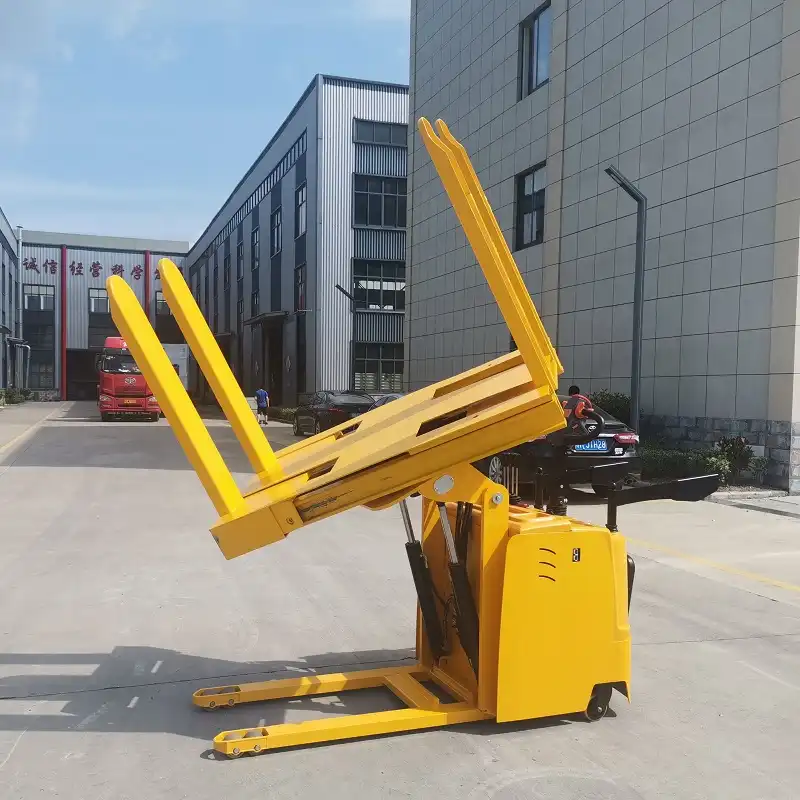
Mobile Pallet Inverter
How can American chemical factories maximize ROI from a pallet inverter investment?
Buying a pallet inverter is a big decision for any American chemical factory. You want to make sure you get the most out of your investment. It is not just about the machine’s price. It is about the long-term benefits and how well it fits into your operation.
American chemical factories can maximize their ROI from a pallet inverter by choosing a supplier who offers tailored solutions, provides excellent after-sales support, and integrates the machine seamlessly into their workflow. Focusing on safety, efficiency gains, and long-term reliability will ensure a high return on investment.
I have always believed that a machine is only as good as the support behind it. For FHOPEPACK, we strive to be partners, not just sellers. We want to help you achieve your business goals. This approach changes how you view your investment.
Dive deeper: Maximizing your pallet inverter ROI
Getting the most value from your pallet inverter means careful planning and smart choices beyond just the purchase itself.
-
Assess your true throughput and future growth needs 📊
- Before you buy, know exactly how many drums you need to move per hour or day.
- Do not just think about today. Consider how your factory might grow in the next 5 to 10 years.
- Choose an inverter with enough capacity to handle your current demands and some extra for future growth.
- An undersized machine will quickly become a bottleneck. An oversized one costs too much upfront.
- Working with an experienced supplier can help you correctly size the machine. This avoids costly mistakes.
-
Focus on safety and compliance benefits ⛑️
- Reduced worker injuries mean lower insurance costs, fewer lost workdays, and better morale.
- Avoiding spills and accidents protects your product, your workers, and the environment. It also prevents expensive fines.
- A safer operation is a more compliant operation. This protects your company’s reputation and legal standing.
- These safety benefits might not appear on a direct spreadsheet. But they contribute greatly to your long-term financial health.
- For me, safety is a core value. It is not just a feature. It is a fundamental requirement.
-
Evaluate long-term operational costs, not just purchase price 💰
- The upfront cost of a pallet inverter is important, but it is not the whole story.
- Think about energy consumption. A more efficient machine saves money over time.
- Consider maintenance requirements. Machines with robust parts and good design need less frequent repairs.
- Factor in the lifespan of the machine. A cheaper machine that breaks down often or needs replacement sooner will cost more in the long run.
- My experience shows that investing in quality pays off. It leads to fewer unexpected costs and more reliable operation.
-
Prioritize supplier partnership and after-sales support 🤝
- This is very important. You need a supplier who understands your industry and your specific problems.
- Look for a company that offers full installation, comprehensive training for your staff, and responsive technical support.
- Ask about parts availability and service contracts. What happens if the machine breaks down? How quickly can they help?
- A good partner will work with you to customize solutions and optimize your process.
- This partnership ensures your machine runs smoothly for years. It protects your investment and minimizes downtime.
-
Seek customization and integration options ✨
- Every chemical factory has a unique layout and specific requirements.
- Your pallet inverter should integrate seamlessly with your existing conveyor systems, forklifts, or other equipment.
- Can the machine be customized for different drum sizes or pallet types you use?
- Can it be controlled from a central control room? This helps with automation.
- A tailored solution performs better than a generic one. It fits your exact needs and maximizes efficiency in your specific operation.
Conclusion
Choosing the right pallet inverter for American chemical factories handling drums needs careful thought. Focus on heavy-duty, fixed 180-degree designs, strong safety features, and a reliable supplier. This ensures safety, efficiency, and a great return on your investment.








