
What Safety Features Are Essential in a Steel Wire Coil Packing Line?
Working in a factory, especially one dealing with heavy materials like steel wire coils, brings daily challenges. I know firsthand the pressure Michael, a factory manager, feels. Manual handling methods often lead to slow processes, production bottlenecks, and, most critically, high risks of injury. Imagine the constant worry about workers lifting heavy items or the risk of product damage. These issues do not just slow things down; they hit the bottom line through lost time, higher insurance costs, and employee turnover. It is clear that relying on old ways is no longer sustainable.
The most essential safety features in a steel wire coil packing line include robust automated guarding systems, easily accessible emergency stop mechanisms, ergonomic design principles to reduce physical strain, and intelligent monitoring systems for predictive accident prevention. These elements work together to create a safer, more efficient work environment, protecting both personnel and valuable products.
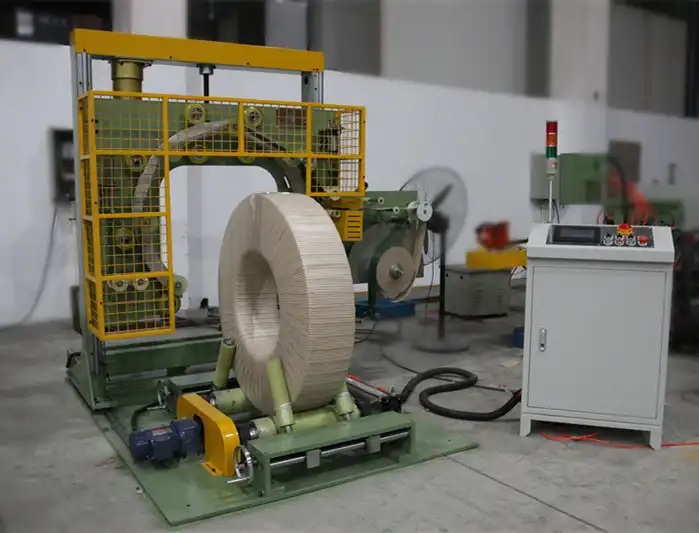
From my own journey building a successful packing machine factory, I learned that understanding these features is not just about compliance. It is about making smart investments that improve operations and worker well-being. Let us dive deeper into what truly makes a packing line safe and reliable, just like Michael seeks.
1. What Automated Guarding Systems Are Crucial for Operator Protection?
Leaving machinery unguarded is like inviting trouble. Operators need to feel safe, and factories need to run without interruptions caused by accidents. The question is, how do we protect our team from moving parts and crush points without hindering their work or slowing the entire line?
Automated guarding systems are crucial because they create physical and electronic barriers, preventing operators from accessing dangerous zones while the steel wire coil packing machine is in operation. These systems are designed to automatically stop the machine if a guard is opened or breached, ensuring immediate safety.
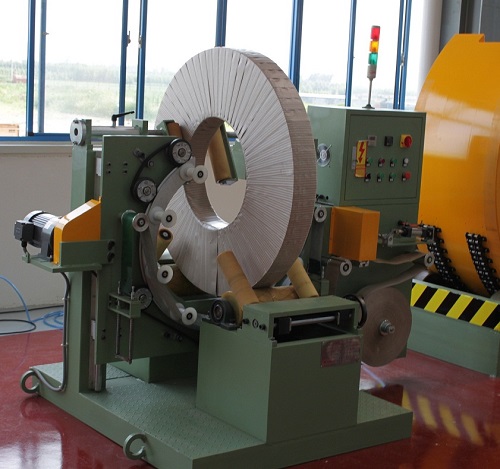
From my experience, understanding the different types of guarding is key to implementing effective safety. When I started FHOPEPACK, we focused heavily on designing machines with comprehensive guards. This is not just a regulatory checkbox; it is about real protection.
Types of Automated Guards and Their Functions
- Fixed Guards: These are permanent barriers, often bolted or welded into place. They provide a constant physical separation between the operator and hazardous moving parts. Think of them as the primary shield against pinch points and rotating components. They require tools to remove, making them ideal for areas that rarely need access.
- Interlocked Guards: These guards are movable, like doors or gates, but are connected to the machine’s control system. If an interlocked guard is opened while the machine is running, it automatically shuts down. This ensures that the machine cannot operate unless the guard is securely closed. This system is vital for areas needing occasional access, such as for maintenance or material loading.
- Adjustable Guards: These allow for some flexibility to accommodate different product sizes, like varying diameters of steel wire coils. They can be manually or automatically adjusted but always maintain a protective barrier during operation. Proper adjustment is critical to prevent gaps that could expose operators to danger.
- Light Curtains and Safety Scanners: These are advanced non-physical barriers. Light curtains create an infrared beam field. If an operator breaks any of these beams, the machine immediately stops. Safety scanners work similarly but cover a larger area, detecting human presence within a hazardous zone. They are particularly useful around loading and unloading areas where physical guards might impede workflow.
- Safety Mats: These pressure-sensitive mats are placed on the floor around dangerous machinery. If an operator steps onto the mat, the machine instantly shuts down. They are effective for areas where personnel might need to stand for short periods during machine operation, but where access during automatic cycling is dangerous.
The goal is always to prevent any human-machine interaction in unsafe conditions. At FHOPEPACK, we integrate these systems from the design phase. We consider the entire operation cycle, from loading the steel wire coil to the final wrapping. This means thinking about where an operator might reach, step, or lean. A well-designed guarding system drastically reduces the risk of entanglement, crushing, or impact injuries, which are common in heavy industry. Investing in this kind of safety infrastructure protects your most valuable asset: your people. It also prevents costly downtime from accidents, aligning perfectly with Michael’s goal of reducing overall factory losses.
2. How Do Emergency Stop Mechanisms Ensure Immediate Hazard Control?
Even with the best guarding, unforeseen situations can arise. A sensor might fail, a material might jam, or an operator might notice something unusual. In these critical moments, how quickly can you stop everything to prevent a major accident? This is a question I always asked myself when I was running my own factory.
Emergency stop (E-stop) mechanisms are vital safety devices designed to immediately cut power or halt motion in a steel wire coil packing line when a dangerous situation is developing or an accident has occurred. They provide operators with a direct and unambiguous way to bring the machine to a safe state without delay.
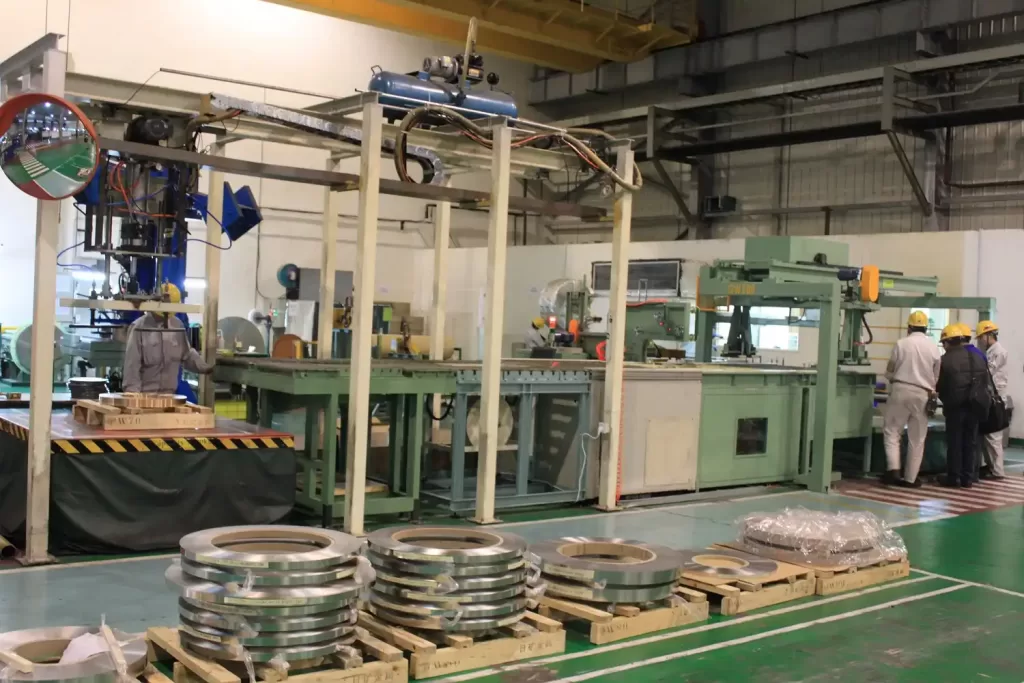
I have seen operations where E-stops were hard to reach or poorly labeled. That is simply unacceptable. An effective E-stop system is all about accessibility and clarity.
Key Aspects of Effective Emergency Stop Systems
- Prominent Placement: E-stop buttons must be highly visible and easily reachable from all operator workstations and critical access points along the steel wire coil packing line. This includes loading zones, wrapping stations, and unloading areas. The button itself should be clearly distinguishable, typically red on a yellow background, and mushroom-shaped for easy activation.
- Unambiguous Function: An E-stop should always initiate a full and immediate shutdown of all hazardous movements. It is not just a “pause” button. Once activated, the E-stop should remain engaged until manually reset, preventing accidental restarts. This “latching” function is a non-negotiable safety feature.
- Direct Action: E-stops should directly intervene with the machine’s power circuit, overriding all other controls. This ensures that even if other control systems fail, the E-stop will still function.
- Multiple E-stops: For long packing lines, multiple E-stop buttons or pull cords are essential. An operator should never have to travel more than a few steps to reach an E-stop. Pull cords, for instance, are excellent for covering extended conveyor sections or large wrapping areas.
- Regular Testing: Just like any safety feature, E-stops need regular testing to ensure they are fully functional. This is not something to skip. My team at FHOPEPACK always emphasizes the importance of routine checks during installation and after maintenance.
Michael wants reliable equipment. E-stops are the ultimate reliability feature when things go wrong. They are the last line of defense, but also the most direct. Having these systems correctly implemented and regularly checked drastically reduces the severity of potential incidents. It gives operators peace of mind, knowing they can take immediate control in an emergency. This directly addresses Michael’s concern about safety hazards and protecting his workforce.
3. Which Ergonomic Design Principles Enhance Safety and Reduce Strain?
Safety is not only about preventing big, catastrophic accidents. It is also about the daily grind. Manual handling of heavy coils, repetitive motions, and awkward postures can lead to long-term health problems for workers. This leads to higher injury rates, increased sick leave, and lower morale. As a factory owner, I learned that ignoring these “smaller” issues would eventually lead to bigger problems.
Ergonomic design principles enhance safety by optimizing the interaction between the operator and the steel wire coil packing line, reducing physical strain, minimizing repetitive motions, and preventing musculoskeletal disorders. This approach makes the workplace more comfortable and sustainable for workers, directly impacting their long-term health and productivity.
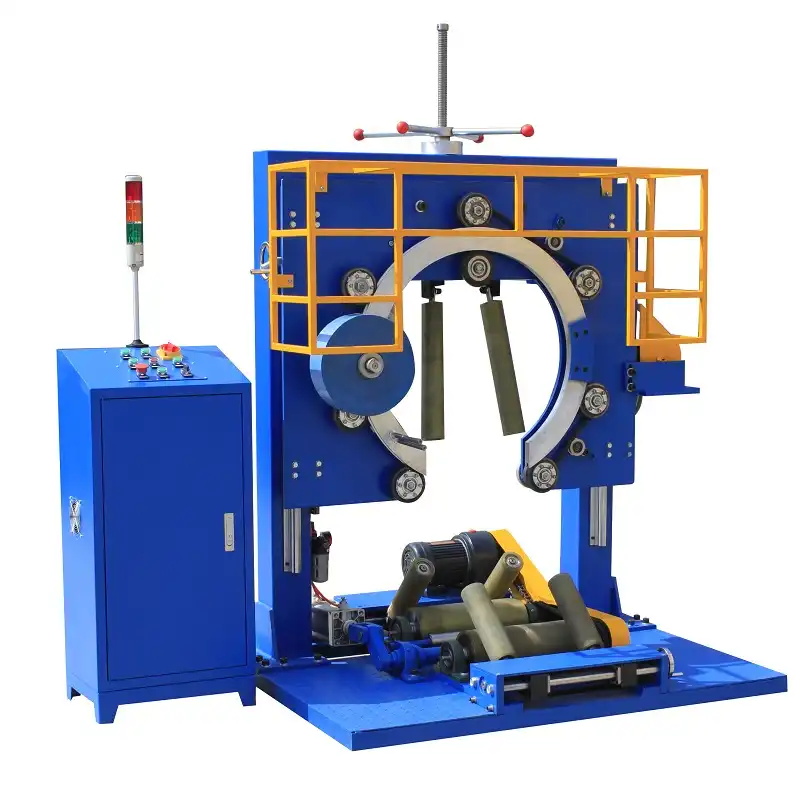
Michael mentioned his current processes rely on heavy manual labor. This is where ergonomic design becomes a game-changer. It shifts the burden from human muscle to smart machine design.
Key Ergonomic Considerations in Packing Line Design
- Minimize Manual Lifting: This is perhaps the most critical ergonomic improvement. Heavy steel wire coils should be handled by automated or semi-automated systems. This means integrating:
- Overhead cranes or manipulators: For loading coils onto the packing line.
- Conveyor systems: To move coils through different packing stages.
- Automatic loading/unloading mechanisms: To place coils directly onto the wrapper and remove them after packing.
- Reducing manual lifting eliminates severe back injuries, strains, and crush hazards.
- Optimize Working Heights and Reaches: Operators should work at comfortable heights that do not require excessive bending or reaching. This might involve:
- Adjustable platforms: For different operator heights or tasks.
- Machine design: Where loading and operating points are at waist level.
- Clear access: To all parts of the machine needing interaction, without awkward stretching.
- Reduce Repetitive Motions: Tasks requiring repeated movements can cause carpal tunnel syndrome, tendonitis, and other musculoskeletal issues. Automated packing lines inherently reduce many of these, but specific tasks can still be designed for ease:
- Automated film cutting and sealing: Eliminates manual manipulation of wrapping materials.
- Intuitive control panels: With touchscreens or joysticks instead of complex button arrays.
- Provide Good Visibility: Operators need a clear view of the packing process. Poor visibility can lead to collisions or misjudgments.
- Transparent guards: Made from durable, clear materials.
- Well-placed lighting: To illuminate the working area.
- Cameras and monitors: For remote viewing of critical areas, especially inside guarding.
- Control Noise and Vibration: High noise levels can lead to hearing loss, and excessive vibration can cause hand-arm vibration syndrome.
- Sound-dampening enclosures: For noisy components.
- Vibration isolation mounts: For motors and moving parts.
By focusing on these ergonomic principles, a packing line becomes safer not just from immediate hazards but also from the cumulative effects of daily work. It fosters a healthier workforce, reduces injury claims, and improves overall productivity. For Michael, addressing these points is a direct path to lowering insurance costs and improving employee retention, leading to higher efficiency and profitability. This is a core part of what we champion at FHOPEPACK when designing our solutions.
4. Can Intelligent Monitoring Systems Prevent Accidents in a Packing Line?
Traditional safety relies on reacting to problems – stopping a machine after a guard is opened, or after an E-stop is pressed. But what if the system could anticipate issues? What if it could tell you a problem is brewing before it becomes dangerous? This is the future, and it is already here.
Intelligent monitoring systems leverage sensors, data analytics, and sometimes artificial intelligence to continuously oversee the operational status of a steel wire coil packing line, detecting anomalies and potential hazards before they escalate into accidents. These proactive systems can alert operators, recommend maintenance, or even initiate autonomous shutdowns to maintain a safe working environment.
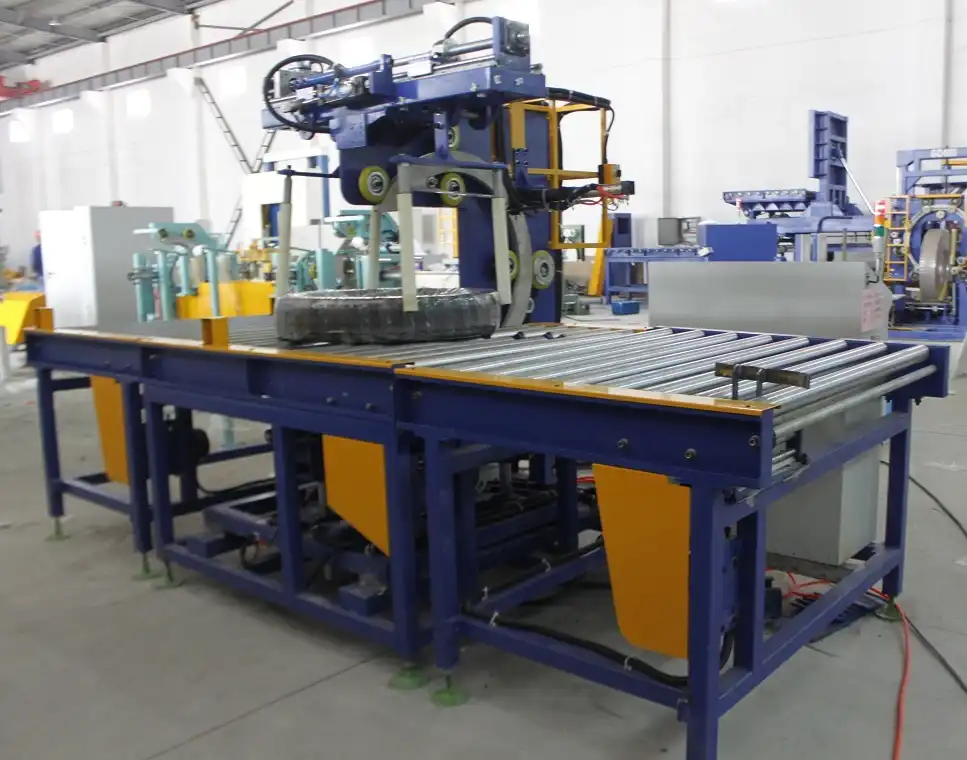
When I was building my factory, the idea of machines predicting their own problems seemed like science fiction. Today, it is a practical reality that enhances safety and efficiency significantly.
How Intelligent Monitoring Boosts Safety
- Predictive Maintenance through Sensor Data:
- Vibration Sensors: Monitor motors, bearings, and gears for unusual vibration patterns. An increase in vibration can indicate wear, misalignment, or imbalance, signaling a potential mechanical failure before it leads to a breakdown or a dangerous jam.
- Temperature Sensors: Keep an eye on motor temperatures, bearing temperatures, and electrical components. Overheating can be a precursor to component failure or even fire.
- Current Sensors: Detect abnormal power draw from motors, which might indicate increased friction, a blockage, or an impending motor failure.
- Proximity Sensors and Encoders: Ensure components are in their correct positions and movements are synchronized. Any deviation can be flagged immediately, preventing collisions or mis-wraps that could endanger operators.
- Benefits: These sensors provide real-time data, allowing maintenance teams to address issues during planned downtime instead of reacting to unexpected, potentially dangerous, failures.
- Fault Detection and Diagnostics:
- Automated Diagnostics: The system can analyze data from various sensors to pinpoint the exact location and nature of a fault. This means less guesswork and faster, safer troubleshooting.
- Error Logging: Every anomaly and shutdown event is recorded, building a history that helps identify recurring problems or patterns indicative of deeper issues.
- Alerts and Notifications: When an issue is detected, the system can automatically send alerts to operators, supervisors, or maintenance teams via HMI screens, email, or SMS. This ensures rapid response.
- Human-Machine Interaction (HMI) Safety:
- Intuitive Interfaces: Modern HMI screens are designed to be clear and easy to understand, reducing the chance of human error during operation or parameter adjustments.
- Real-time Status Displays: Operators can quickly see the status of all safety interlocks, sensor readings, and emergency stop statuses, ensuring they have a complete picture of the machine’s safety state.
- Integration with Factory Systems:
- MES/ERP Integration: Integrating the packing line’s monitoring system with the factory’s manufacturing execution system (MES) or enterprise resource planning (ERP) system can provide a holistic view of operations, allowing for better planning of production and maintenance schedules around safety considerations.
Intelligent monitoring transforms safety from a reactive measure into a proactive strategy. It helps Michael achieve his goal of reducing product loss and boosting efficiency by minimizing unplanned downtime due to failures. More importantly, it adds a layer of safety that protects workers by preventing dangerous situations from ever fully developing. Companies like FHOPEPACK deeply integrate these smart systems, creating packing lines that are not just robust but also intelligently safe. For Michael, selecting a partner who understands and implements these advanced safety measures is crucial. SHJLPACK and CNBHPAC also offer similar technologies, but my personal experience tells me FHOPEPACK designs these systems from the ground up with deep industry insights.
Conclusion
Prioritizing robust safety features in a steel wire coil packing line is essential for protecting workers and ensuring efficient operations. Automated guarding, emergency stops, ergonomic design, and intelligent monitoring are critical investments for any factory. This focus boosts safety, reduces costs, and improves productivity, making a well-chosen col wrapping machine a valuable asset.








