
What Questions Should You Ask Before Buying a Pallet Flipper?
Your warehouse operations face constant pressure. You are probably dealing with diverse pallet types, a shrinking labor pool, and increasing safety concerns. These issues can quickly turn into costly delays and unhappy customers. If you are a logistics manager like Carlos Rodríguez in Spain, you know that efficient pallet handling is not just a nice-to-have; it is essential for your bottom line and for meeting tight deadlines.
Buying a pallet flipper or pallet changer requires careful thought. You need to ask specific questions about your operational needs, safety standards, automation goals, and long-term support. A good pallet flipper should seamlessly handle various pallet sizes, improve safety, reduce manual labor, and integrate well into your existing logistics flow, ultimately saving you money and preventing operational bottlenecks.
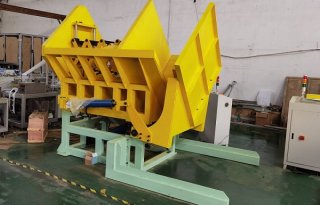
Choosing the right equipment is a big decision. It affects your daily workflow, your team’s safety, and your company’s profitability. As someone who built a packing machine factory from the ground up, I have seen firsthand the impact of good and bad equipment choices. That is why I want to help you make an informed decision. I want to share the key questions you must ask before you invest in a pallet flipper. This will ensure you pick a solution that truly serves your business.
What Kind of Pallets Will You Be Handling, and How Many?
Are you struggling with the constant need to switch between different pallet types for export? Many businesses, especially in international logistics, face this exact problem. Moving between Euro pallets, US pallets, or even various plastic pallets can be a major headache. Manual changes are slow, prone to errors, and labor-intensive. This causes delays and increases operational costs. (diverse pallet specifications, international shipping)
You need to clearly identify all the pallet dimensions, weights, and materials your operation uses daily. You also need to estimate the volume of pallet changes required. A reliable pallet flipper should be versatile enough to handle your specific mix of Euro pallets, US pallets, and plastic pallets, ensuring smooth transitions without constant manual adjustments.
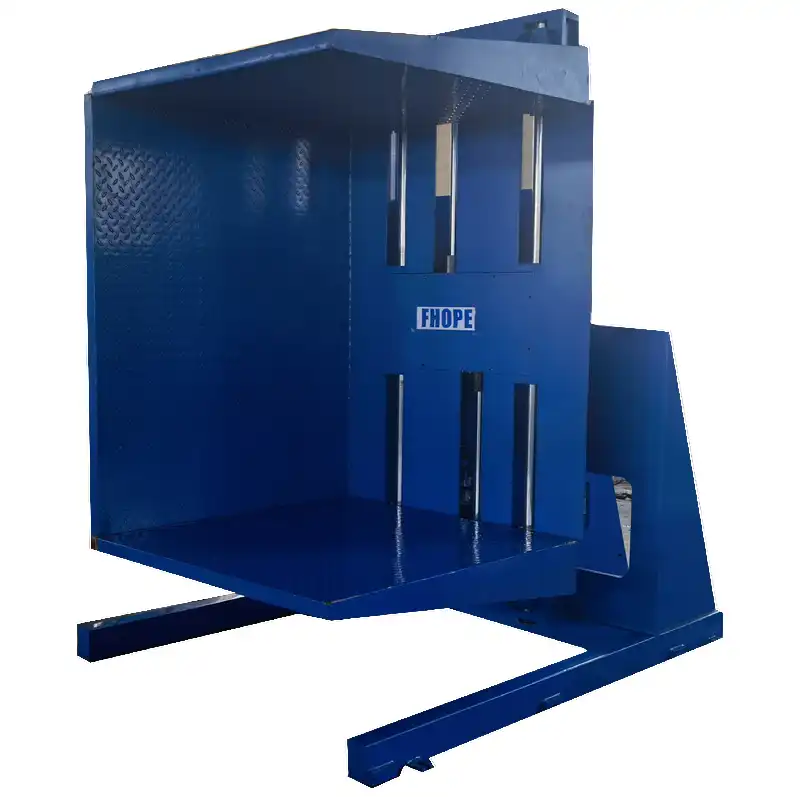
When I first started in the packing machine industry, I saw many companies struggle with this exact challenge. They bought machines that only fit one type of pallet. This forced them to use manual processes for any non-standard pallets. This problem wastes time and money. It also creates a bottleneck in the supply chain. You must think about your current needs and your future needs. This applies to pallet types and volumes.
-
Understand Your Current Pallet Landscape:
- Pallet Dimensions and Weights: List all the different sizes and weights of pallets you currently use. Do you primarily handle Euro pallets (800x1200mm), US standard pallets (1000x1200mm), or others? What is the maximum weight you expect the machine to handle? A pallet flipper must accommodate your largest and heaviest loads safely.
- Pallet Materials: Do you use wooden pallets, plastic pallets, or even specialized hygiene pallets for the food industry? Some flippers are better suited for specific materials. For example, plastic pallets might require different clamping mechanisms compared to wooden ones. You want a machine that can handle all your material types without causing damage to the goods or the pallets themselves.
- Volume Requirements: How many pallets do you need to change per hour or per shift? A busy distribution center, like the one Carlos manages, might process thousands of pallets daily. A high-volume operation needs a fast, reliable, and durable machine. A lower-volume operation might be able to use a semi-automatic model.
-
Anticipate Future Pallet Needs:
- Growth and Expansion: Will your business grow into new markets or handle new product lines? This could introduce new pallet standards. A versatile pallet changer can adapt to these changes without requiring a new investment.
- Supplier/Client Requirements: Are your clients or suppliers starting to use different pallet types? This happens often in international trade. Your pallet flipper should be able to handle these potential new requirements.
- Regulatory Changes: Sometimes, regulations change regarding pallet hygiene or material. Your equipment should ideally be future-proof. It should be able to work with new compliant pallet types.
At FHOPEPACK, we design our pallet changers with versatility in mind. We know that businesses like yours need flexible solutions. Our machines can handle a wide array of pallet sizes and materials. This means you do not have to worry about compatibility issues. We make sure that your investment supports your current operations and your future growth. (pallet compatibility, material handling equipment, operational flexibility)
How Important Are Safety and Ergonomics to Your Operation?
Are your warehouse workers still manually flipping heavy pallets or struggling with awkward loads? This practice introduces significant risks into your workplace. It can lead to severe injuries, costly compensation claims, and reduced morale. Beyond the human cost, accidents can also cause damage to your valuable inventory. They disrupt your entire supply chain. (workplace safety, manual handling risks, labor shortage)
Safety must be a top priority when choosing a pallet flipper. You need equipment that minimizes human intervention and reduces the risk of accidents like goods falling or workers getting injured. Look for features such as automatic operation, secure clamping mechanisms, emergency stops, and robust guarding. These help protect both your staff and your products in high-intensity warehousing environments.
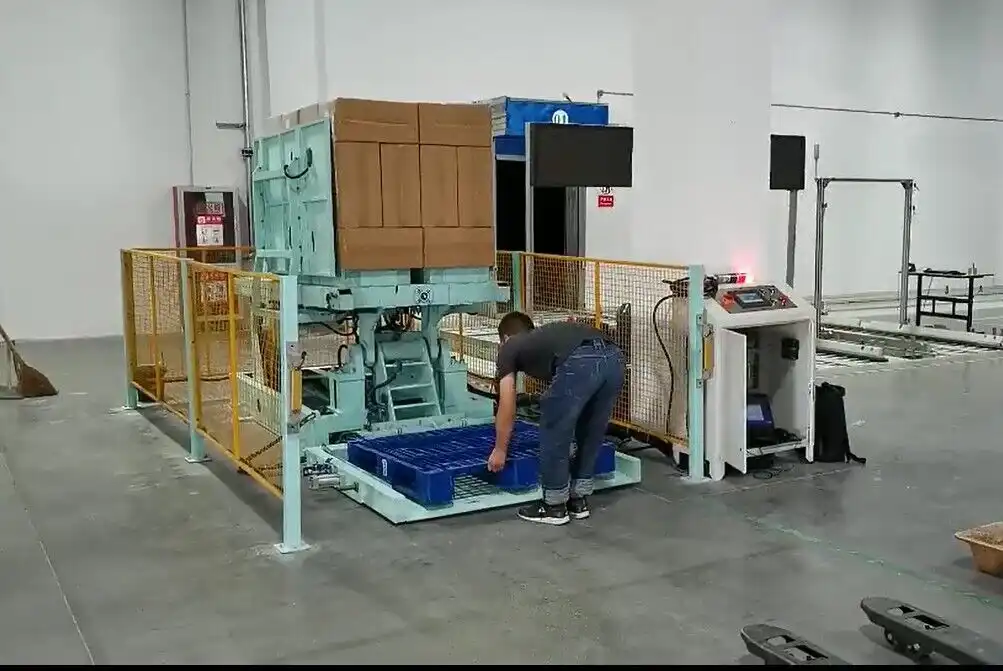
I have always believed that a successful business starts with a safe workplace. When I was running my factory, I saw that manual tasks were often the most dangerous. This is especially true when heavy goods are involved. My friend, a warehouse manager, once told me about an incident where a worker badly sprained his back trying to manually shift a pallet. This kind of event can halt operations. It can also damage a company’s reputation. Investing in safer equipment protects your team. It also protects your business from unnecessary risks and costs.
-
Assess Current Safety Risks:
- Manual Handling Injuries: What is the frequency of back strains, crushed fingers, or foot injuries related to manual pallet manipulation? Carlos’s warehouse has already experienced several accidents. This shows the urgent need for mechanical solutions.
- Goods Damage: How often do products get damaged during manual pallet changes? This can be from goods tipping or workers mishandling them. Damaged goods mean financial losses and potential customer dissatisfaction.
- Labor Turnover: High-intensity manual jobs, especially those with safety risks, contribute to high employee turnover. Young workers are less willing to take on such demanding roles. This worsens labor shortages.
-
Evaluate Flipper Safety Features:
- Automated vs. Manual Interaction: A fully automatic pallet flipper reduces direct human contact with the load. This minimizes risks. Even semi-automatic models should have clear safety protocols and design features.
- Secure Clamping and Stability: The machine must securely hold the pallet and its contents during the entire inversion or transfer process. This prevents items from shifting or falling. Look for robust clamping mechanisms that adjust to different load sizes.
- Emergency Stop Systems: Easily accessible emergency stop buttons are crucial. They allow operators to halt the machine immediately if a problem arises.
- Protective Barriers and Sensors: Good pallet flippers come with safety cages, light curtains, or pressure mats. These prevent workers from entering hazardous areas during operation.
- Ergonomic Design: Consider how easy it is for operators to interact with the machine. Are controls intuitively placed? Does it reduce the need for bending or stretching? Good ergonomics improve safety and reduce operator fatigue.
At FHOPEPACK, we prioritize safety in every design. We understand that our machines operate in dynamic environments. Our pallet changers include advanced safety features. These include guarded areas, emergency stops, and secure load handling. We want to protect your workers and your products. This helps you create a safer and more productive warehouse. (warehouse safety, industrial ergonomics, accident prevention, material handling safety)
What Level of Automation and Speed Do You Really Need?
Is your warehouse struggling to keep up with demanding delivery schedules? Are you facing increased customer expectations for faster order fulfillment? The manual process of changing pallets can be a major bottleneck. It slows down your entire operation. This makes it difficult to meet the rapid turnaround times required by today’s e-commerce and retail clients. (logistics automation, rapid order fulfillment, operational bottlenecks)
Determine your required throughput for pallet changes per hour to decide between semi-automatic and fully automatic pallet flipper systems. An automatic pallet flipper significantly cuts down cycle times, reduces dependence on manual labor, and boosts overall efficiency. This is ideal for high-volume operations where speed and consistent performance are critical for meeting tight delivery windows and minimizing labor costs.

In my journey through the packing machine industry, I have seen the powerful impact of automation. I remember one client who was still using forklifts and manual labor to switch pallets. Their efficiency was low, and their labor costs were high. When they finally invested in an automated pallet changer, their throughput doubled. Their workers could then focus on more valuable tasks. This shift made a huge difference to their business. It is not just about moving faster. It is about working smarter.
-
Analyze Your Throughput Requirements:
- Current Pallet Change Rate: How many pallets can your team currently change per hour manually? This gives you a baseline.
- Desired Throughput: What is your target rate for pallet changes? If you need to process hundreds or thousands of pallets daily, a high-speed, fully automatic solution is probably necessary. For lower volumes, a semi-automatic model might be sufficient.
- Peak Demand: Do you have peak seasons or specific times when pallet change demands surge? Your chosen system must handle these peaks without breaking down or causing delays.
-
Evaluate Automation Options:
- Semi-Automatic Pallet Flippers: These systems require an operator to load and unload pallets. They automate the flipping or transfer process itself. They are a good choice for businesses moving from fully manual processes. They offer a balance between cost and efficiency.
- Fully Automatic Pallet Flippers: These machines integrate into conveyor systems. They perform the entire pallet change operation without human intervention. This is ideal for high-volume warehouses and distribution centers like Carlos’s. They maximize speed, minimize labor costs, and provide consistent, error-free operation.
- Integration with Existing Systems: Can the pallet flipper integrate with your existing warehouse management systems (WMS) or conveyor lines? Seamless integration reduces manual data entry and improves overall operational flow. This makes your automation efforts more effective.
-
Consider Labor Cost and Availability:
- Reducing Manual Labor: Automation directly addresses labor shortages and rising labor costs. A pallet flipper can replace several workers who would otherwise be engaged in strenuous, repetitive tasks.
- Reallocating Workforce: With automation, your existing workforce can be reassigned to more skilled or less physically demanding roles. This improves job satisfaction and retention.
At FHOPEPACK, we offer a range of pallet flippers, from semi-automatic to fully integrated automatic systems. We work with you to understand your specific throughput needs. We help you choose the right level of automation. This ensures you get a solution that speeds up your processes and delivers a strong return on investment. We aim to help you achieve your automation goals. (automated material handling, warehouse efficiency, operational speed, labor cost reduction)
What Are the Long-Term Costs and Support Options?
Are you concerned about hidden costs after you purchase new equipment? Many companies focus only on the initial purchase price. They overlook the long-term expenses. These include maintenance, spare parts, and technical support. A machine that seems cheap upfront can become very expensive if it frequently breaks down. It will also be costly if there is no reliable support system in place. This leads to downtime, lost productivity, and frustration. (total cost of ownership, after-sales service, equipment reliability)
When buying a pallet flipper, you must ask about the total cost of ownership, not just the purchase price. This includes warranty details, availability of spare parts, and the quality of after-sales technical support. A reputable supplier like FHOPEPACK or SHJLPACK will offer comprehensive service packages. These ensure your machine runs smoothly for years, minimizing downtime and unexpected repair costs.
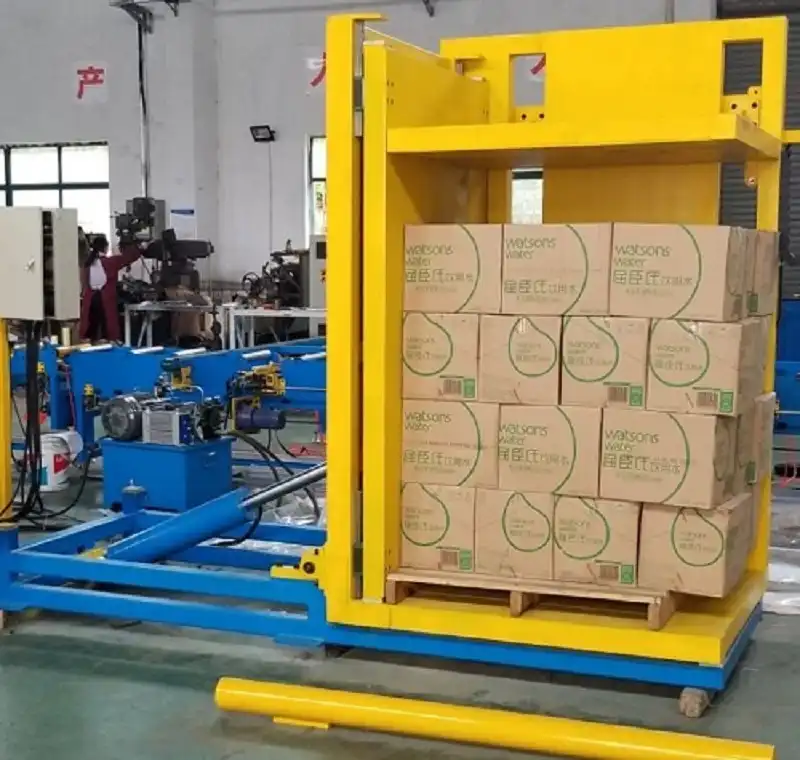
My success in the packing machine industry taught me a crucial lesson: a machine is only as good as the support behind it. I built FHOPEPACK on the principle of partnership. I remember once, early in my career, buying a machine that seemed like a great deal. But when it broke down, I could not get spare parts or technical help. The machine sat idle for weeks. This cost my business a lot. This experience shaped how I approach client relationships. I believe in being a true partner, not just a seller.
-
Analyze Initial vs. Long-Term Costs:
- Purchase Price: This is the immediate cost. But it is just one part of the equation.
- Installation Costs: Does the supplier offer installation services? What is included?
- Training Costs: Will your team need training to operate the new equipment safely and efficiently? Is this training included or an additional expense?
- Energy Consumption: What are the power requirements of the machine? How much energy will it use daily? Energy efficiency can lead to significant savings over time.
-
Evaluate Maintenance and Spare Parts:
- Maintenance Schedule: What is the recommended maintenance schedule? Is preventive maintenance easy to perform?
- Spare Parts Availability: How quickly can you get crucial spare parts? Long waits for parts can cause extended downtime. This is very costly. Inquire about local spare parts inventory or quick shipping options.
- Component Quality: Are the components used in the pallet flipper high-quality and durable? Reliable components mean fewer breakdowns and a longer lifespan for the machine. This ensures steady performance in a high-intensity environment.
-
Assess After-Sales Support:
- Warranty: What kind of warranty does the pallet flipper come with? What does it cover? How long does it last?
- Technical Support: What kind of technical support is available? Is it remote support, on-site service, or both? How quickly do they respond to issues? Carlos needs a partner who understands his pain points and provides flexible solutions, not just a seller.
- Service Agreements: Are there optional service agreements or maintenance contracts available? These can provide peace of mind and ensure regular upkeep.
At FHOPEPACK, we understand that reliability and support are critical. We offer robust warranties, readily available spare parts, and responsive technical support. We are committed to being your long-term partner. We ensure your pallet flipper operates efficiently for years. We also make sure it contributes to your continuous success. We stand by our machines and our clients every step of the way. (equipment maintenance, technical support, supplier reliability, operational uptime, warranty coverage)
Can This Pallet Flipper Adapt to Your Future Needs?
Are you thinking about the long-term viability of your equipment investment? Technology and market demands evolve quickly. A pallet flipper that meets your current needs might become obsolete in a few years if it cannot adapt. You need a solution that can grow with your business. It should be able to handle future changes in product types, pallet standards, and operational demands. (future-proofing, business scalability, technology adaptation, long-term investment)
A wise investment in a pallet flipper means choosing a system that offers flexibility and scalability. You need to consider if the machine can handle new pallet sizes, integrate with future automation upgrades, or adjust to different operational speeds. This foresight ensures your equipment remains a valuable asset, helping you meet evolving customer demands and maintain compliance with future industry standards.
When I founded FHOPEPACK, I knew that adaptability was key. The packing industry changes constantly. What works today might not work tomorrow. My philosophy has always been to build machines that are robust enough for immediate needs but also flexible for future challenges. I have seen companies make short-sighted purchases. They ended up needing to replace equipment much sooner than expected. This leads to wasted capital. I want to help you avoid that. I want you to make an investment that truly lasts.
-
Consider Future Pallet Diversification:
- New Product Lines: If you introduce new products, they might come on different types of pallets. Can the pallet flipper handle slightly different dimensions or materials without extensive modifications?
- Market Expansion: Entering new markets often means encountering new regional pallet standards (e.g., beyond Euro and US pallets). Does the machine have enough adjustability to accommodate these?
- Specialized Pallets: Could you foresee needing to handle specialized pallets (e.g., hygienic, heavy-duty, or custom-sized) in the future? Some machines offer modular designs that allow for upgrades or adaptations.
-
Evaluate Scalability and Integration:
- Automation Upgrades: If you start with a semi-automatic model, can it be upgraded later to a fully automatic system? Or can it integrate into a larger automated material handling system? This is important for continuous improvement in your warehouse.
- Software Compatibility: Can the pallet flipper’s control system communicate with future warehouse management systems (WMS) or enterprise resource planning (ERP) software? Data exchange is crucial for smart logistics.
- Modular Design: Look for machines with a modular design. This allows for easier modifications, repairs, and upgrades. It extends the life of your equipment.
-
Assess Regulatory Compliance:
- Evolving Standards: Pallet and material handling standards can change. Will your chosen pallet flipper meet future safety or hygiene regulations? This is especially important in the food and beverage industry, where strict rules apply.
- Environmental Impact: As businesses focus more on sustainability, consider the energy efficiency and environmental footprint of the machine. Future regulations might favor greener equipment.
At FHOPEPACK, we design our pallet changers with future flexibility in mind. We understand your business needs to be agile. Our machines are built to be adaptable. They can handle a range of specifications and integrate into growing automated systems. This ensures your investment continues to pay off as your business evolves. We want to help you stay ahead of the curve. (flexible material handling, warehouse automation integration, future-proof equipment, compliance standards)
Conclusion
Choosing the right pallet flipper is a strategic decision. It goes beyond the initial price tag. You must consider your pallet handling needs, safety priorities, automation goals, long-term support, and future adaptability. By asking these critical questions, you can ensure your investment genuinely enhances your operational efficiency and safety. This leads to a strong return on your investment. Remember, a reliable pallet inverter is a partner for your warehouse’s success.








