
What Are The Main Parts Of A Hose And Pipe Coil Packing Machine?
Inefficient manual packing methods for hose and pipe coils can seriously bottleneck your entire production line. Are you seeing slow output, high labor costs, and even safety hazards from heavy lifting? Many factory managers, just like Michael Chen in Mexico, grapple with these exact issues. They know that downtime means lost profits and constant worries about worker safety. The old ways of doing things are no longer sustainable for modern, high-volume operations.
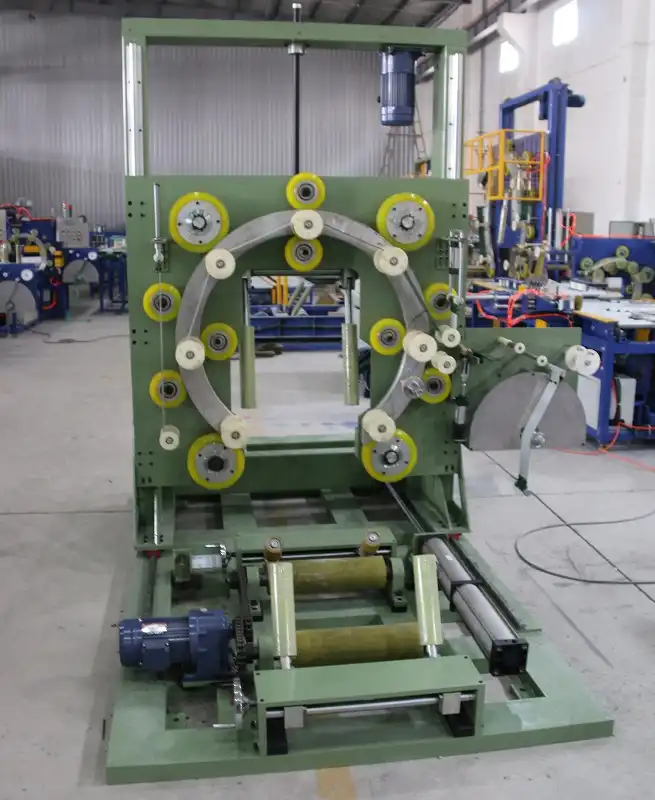
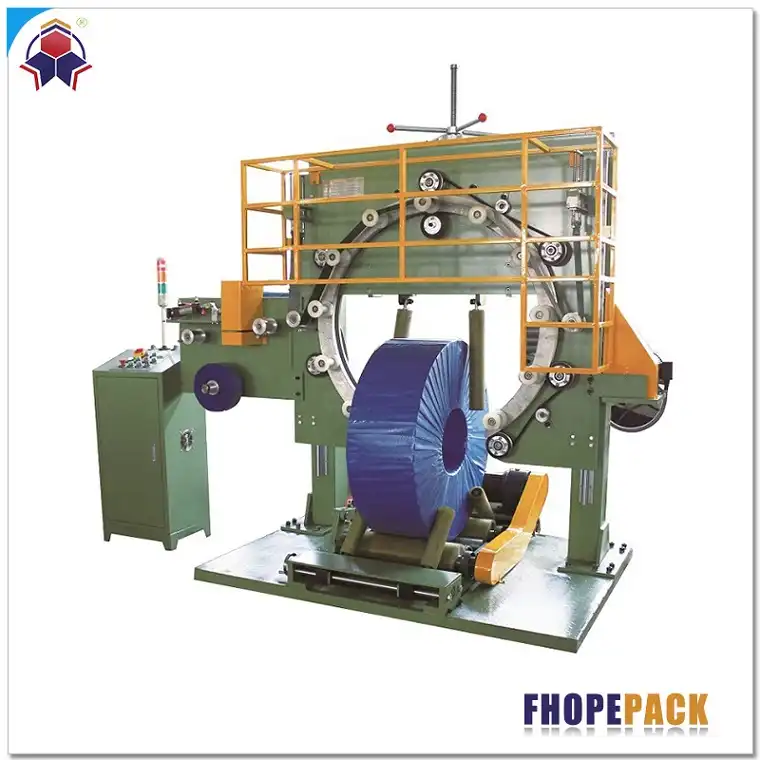
A hose and pipe coil packing machine is a complex system designed to automate the process of wrapping coiled products, protecting them during transit and storage. Its main parts include the unwinding and feeding mechanism, the central wrapping station, the cutting and sealing system, the control system, and the coil handling and conveying systems. Each component works together to ensure efficient, secure, and consistent packaging.
Understanding these vital components is not just about knowing what they are. It’s about recognizing how each part contributes to efficiency, safety, and ultimately, your bottom line. Let’s dive deeper into each section, just as I would advise any of my clients looking to upgrade their operations.
1. What is the core function of the unwinding and feeding mechanism?
Are your current coil feeding processes slow, awkward, or even dangerous for your operators? Manual handling of heavy hose and pipe coils can lead to injuries and significant delays, creating a serious bottleneck at the start of your packing line. This initial stage is crucial for setting the pace of your entire operation.
The unwinding and feeding mechanism of a hose and pipe coil packing machine is responsible for accurately and smoothly presenting the coiled product to the wrapping station. It ensures a consistent supply, preventing tangles or interruptions. This system typically includes coil loading platforms, uncoilers, and guides designed to handle the specific dimensions and weight of the coils.
When I first started my packing machine factory, I quickly learned that if the input isn’t smooth, nothing else in the line will be. A robust unwinding and feeding mechanism is the backbone of any efficient coil packing operation. For factory managers like Michael, who prioritize continuous production and safety, this part is non-negotiable. It replaces the risky and slow manual loading of coils, reducing the risk of product damage and worker injuries. Imagine the peace of mind knowing your employees are no longer straining to lift heavy coils onto a platform. Instead, an automated system does the heavy lifting, ensuring a steady flow of product to the wrapping station without human intervention. This not only boosts productivity but also significantly cuts down on potential workplace accidents and associated insurance costs. Investing in a reliable feeding mechanism means a faster, safer, and more consistent start to your packaging process, directly addressing challenges like efficiency bottlenecks and safety hazards. It’s about building a foundation for automation that genuinely supports your operational goals. (coil loading system, automatic coil feeding, heavy coil handling)
How do different unwinding methods impact efficiency?
Selecting the right unwinding method is crucial for optimal machine performance and product integrity. Different coil types and production demands require specific approaches.
- Horizontal Uncoilers: These are common for smaller, lighter coils. The coil sits flat, and the machine pulls the leading edge. They are straightforward and suitable for continuous, steady feeding.
- Pros: Simple design, cost-effective, good for lighter loads.
- Cons: Can be limited by coil weight and size.
- Vertical Uncoilers: Often used for heavier and larger hose or pipe coils. The coil is typically held vertically on a shaft, allowing for more stable unwinding, especially with higher tension.
- Pros: Handles heavier loads, better tension control, often integrated with automatic loading.
- Cons: More complex, higher initial cost.
- Pallet-style Unwinders: The coil rests on a pallet that rotates, allowing the machine to pull from the top. This is great for very large or irregularly shaped coils.
- Pros: Extremely versatile, handles a wide range of coil sizes and weights, good for heavy-duty applications.
- Cons: Can have a larger footprint, potentially slower feed rate.
Example of Unwinding System Selection:
| Coil Type | Typical Weight (kg) | Recommended Unwinder | Key Benefit |
|---|---|---|---|
| Small Hose Coils | 10-50 | Horizontal Uncoiler | Cost-effective, simple integration |
| Medium Pipe Coils | 50-200 | Vertical Uncoiler | Stable tension, handles more weight |
| Large Industrial Coils | 200-1000+ | Pallet-style Unwinder | High capacity, flexible loading |
Ensuring your feeding system matches your product specifications is key to avoiding jams and maintaining consistent production speeds. It prevents costly stoppages and product damage, which is vital for managers like Michael who demand reliability and reduced product loss.

2. How does the central wrapping station operate for hose and pipe coils?
Is your current coil wrapping process inconsistent, leaving coils vulnerable to damage during transport? A poorly wrapped coil can lead to customer complaints and lost profits, creating a critical weak point in your product quality and brand reputation. Getting the wrap right is essential for protection and presentation.
The central wrapping station is the heart of the hose and pipe coil packing machine, where the actual wrapping of the coil takes place. It consists of a rotating ring or arm that applies the packaging material (stretch film, woven film, paper, etc.) securely around the coil. This station includes adjustable tensioning devices and often features multiple wrapping modes to accommodate different coil sizes and wrapping requirements.
From my experience setting up and running factories, the wrapping station is where the magic happens – or where problems quickly escalate. A high-quality wrapping station ensures that your products are protected from the moment they leave the line. I always emphasize to my clients, especially those dealing with valuable products like Michael’s metal coils, that the wrapping quality directly impacts customer satisfaction and reduces damage claims. FHOPEPACK machines are designed with precision wrapping in mind, using advanced tension control systems to ensure a tight, even, and durable wrap every single time. This consistency protects edges, prevents surface scratches, and keeps dust and moisture out, directly addressing the challenge of product loss during internal transfer and shipping. The ability to customize wrapping patterns and material layers means you can tailor the protection to specific product needs, ensuring optimal security while controlling material costs. This kind of reliability and flexibility is what truly helps businesses grow by delivering products in perfect condition, every time. (coil wrapping precision, automatic stretch wrapping, material tension control)
What are the different types of wrapping stations and their advantages?
The design of the wrapping station significantly influences the machine’s versatility and wrapping speed.
- Ring Wrapping Machines: The coil remains stationary while a ring carrying the wrapping material rotates around it. This is ideal for continuous wrapping and high-speed operations.
- Advantages: High wrapping speed, consistent tension, suitable for a wide range of coil diameters.
- Best for: High-volume production of standard-sized coils.
- FHOPEPACK Highlight: Our ring wrappers incorporate smart tension control for optimal material usage and tight wraps.
- Orbital Wrapping Machines: The coil is fed through an open ring that rotates and wraps the material. This is excellent for long, continuous products or products that need specific bundling.
- Advantages: Can wrap long or irregularly shaped products, good for bundling multiple items.
- Best for: Specific applications where the product needs to pass through the wrapping mechanism.
- Horizontal Wrapping Machines: The coil rotates on its horizontal axis while the wrapping material is applied. This is often used for heavier, larger coils that are difficult to move vertically.
- Advantages: Handles very heavy and large coils, stable wrapping for bulky items.
- Best for: Large steel coils, heavy-duty applications.
Comparing Wrapping Station Capabilities:
| Feature | Ring Wrapper | Orbital Wrapper | Horizontal Wrapper |
|---|---|---|---|
| Speed | Very High | Medium | Medium to High |
| Coil Orientation | Coil stationary | Coil passes through | Coil rotates |
| Product Size | Medium to Large | Long, continuous | Very Large, Heavy |
| Material Usage | Highly efficient | Efficient | Efficient |
| Customization | High (tension, layers) | Medium (wrap pattern) | High (tension, layers) |
Choosing the appropriate wrapping station type directly addresses efficiency bottlenecks and product damage concerns. For a factory manager like Michael, this means a reliable machine that consistently produces perfectly wrapped coils, improving customer satisfaction and reducing rework.

3. What are the key elements of the cutting and sealing system?
Are your current coil packaging operations suffering from loose ends, messy wraps, or manual cutting that is slow and inconsistent? A proper finish is not just about aesthetics; it’s about ensuring the integrity of the package, preventing unraveling, and maintaining the coil’s protection from the elements.
The cutting and sealing system is responsible for cleanly severing the wrapping material and securely sealing it to the wrapped coil. This ensures a tight, professional, and durable package. Key elements typically include an automatic film cutting blade, a heat sealing unit or a pneumatic clamping device, and often a wiping or pressing mechanism to ensure the material adheres properly.
When I designed packing solutions for my clients, I always emphasized the importance of a perfect finish. It’s the last step, but it often makes the first impression. For businesses like Michael’s, a clean cut and secure seal mean less product damage, fewer customer complaints, and a more professional appearance. FHOPEPACK integrates robust cutting and sealing systems that are highly reliable. Our machines use precise sensors to detect the end of the wrapping cycle, triggering an automated blade for a clean cut. The subsequent sealing mechanism—whether heat-based for stretch film or pneumatic for woven materials—ensures the tail end of the material is firmly secured, preventing it from flapping open or unraveling during transit. This automation removes the need for manual intervention, eliminating inconsistencies and greatly enhancing safety by keeping operators away from sharp tools and heat sources. This detail contributes significantly to improved efficiency and reduced product loss, making the investment worthwhile. (automatic film cutting, coil wrap sealing, packaging integrity)
Why is an automated cutting and sealing system critical?
Manual cutting and sealing methods introduce variability and safety risks that automated systems eliminate.
- Consistency: Automated systems perform the cut and seal in the exact same manner every time, ensuring uniform package quality.
- Speed: Much faster than manual processes, contributing to overall production line efficiency.
- Safety: Removes human operators from dangerous tasks involving sharp blades and heat, drastically reducing accident risks.
- Material Efficiency: Precise cuts minimize material waste, contributing to cost savings over time.
Components of an Advanced Cutting & Sealing System:
| Component | Function | Benefit to Operator / Factory |
|---|---|---|
| 🔪 Automatic Cutting Blade | Precisely cuts wrapping material at end of cycle. | Eliminates manual cutting, reduces risk of injury, consistent cut. |
| 🔥 Heat Sealing Unit | Melts and fuses stretch film for a strong bond. | Creates a durable, airtight seal, prevents unraveling. |
| ⚙️ Pneumatic Clamping | Securely holds and presses material (e.g., woven). | Strong, immediate bond for various materials, no heat required. |
| ✨ Wiping Mechanism | Presses the sealed material against the coil. | Ensures tight adhesion, professional finish, reduces loose ends. |
| ⚡ Sensor Integration | Detects wrap completion and triggers action. | Fully automated, prevents premature cuts, ensures proper seal. |
An advanced cutting and sealing system is a direct answer to Michael’s challenges regarding efficiency and product integrity. It delivers peace of mind that every coil leaves the factory perfectly packaged, enhancing customer satisfaction and protecting his investment.
4. How does the control system ensure efficient and safe packing machine operation?
Do your current machines operate without a clear, centralized command, leading to errors, inconsistent outputs, and potentially unsafe conditions? Without a smart control system, even the best mechanical parts can underperform, leaving your factory vulnerable to inefficiencies and operational headaches.
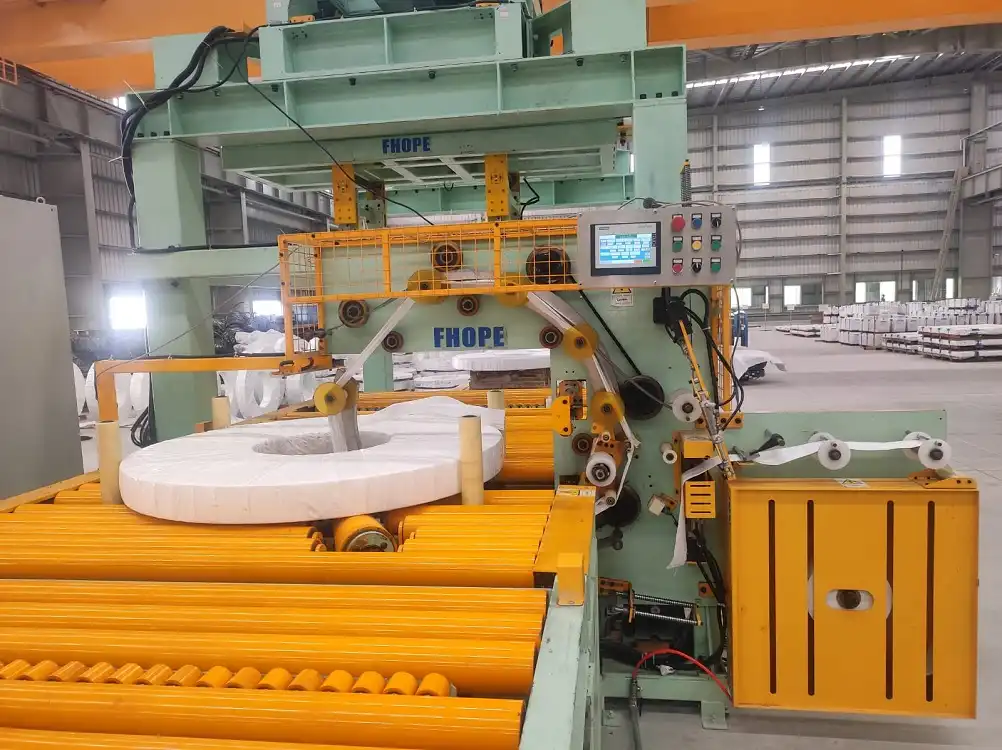
The control system is the brain of the hose and pipe coil packing machine, orchestrating all its functions to ensure smooth, efficient, and safe operation. It typically comprises a Programmable Logic Controller (PLC), a Human-Machine Interface (HMI) for operator interaction, sensors, and actuators. This system manages wrapping parameters, monitors safety features, and diagnoses faults, ensuring optimal machine performance.
In my journey from an engineer to a factory owner, I saw firsthand how a superior control system can transform a good machine into an exceptional one. It’s what gives factory managers like Michael the power to not just run a machine, but to truly manage their entire packing process with precision. FHOPEPACK machines utilize advanced PLC-based control systems, which offer unparalleled reliability and flexibility. Through an intuitive HMI touchscreen, operators can easily adjust wrapping parameters—like tension, number of layers, and wrapping speed—to suit different coil types and packing requirements. This means quick changeovers and minimal downtime, addressing efficiency bottlenecks directly. Moreover, our control systems are integrated with comprehensive safety features, including emergency stops, fault diagnostics, and interlocks that prevent operation under unsafe conditions. This directly tackles Michael’s critical need for improved safety, significantly reducing accident risks. The system can also log operational data, providing valuable insights for process optimization and predictive maintenance, ensuring long-term cost efficiency and maximum uptime. This level of smart automation truly supports a factory manager’s goal of reducing costs, enhancing safety, and elevating overall profitability. (PLC control system, HMI packing machine, automated safety features)
What are the core components of an advanced packing machine control system?
A robust control system integrates several key elements to deliver comprehensive machine management.
- 🧠 PLC (Programmable Logic Controller): The central processing unit that executes programmed instructions to control machine operations.
- Benefit: Provides reliable automation, precise timing, and sequential control of all machine functions.
- 💻 HMI (Human-Machine Interface): A touchscreen panel that allows operators to interact with the machine, monitor status, adjust settings, and view alarms.
- Benefit: User-friendly operation, quick parameter changes, real-time feedback for efficient management.
- 👁️ Sensors: Devices that detect various physical parameters such as coil presence, film tension, ring position, and safety breaches.
- Benefit: Enables accurate machine response, automates processes, and enhances safety monitoring.
- ⚙️ Actuators: Components that convert electrical signals into physical motion (e.g., motors, pneumatic cylinders).
- Benefit: Drive the mechanical parts of the machine, ensuring precise movement and control of wrapping.
- 🚦 Safety Circuits & E-Stops: Dedicated hardware and software to ensure safe operation, including emergency stop buttons.
- Benefit: Prevents accidents, protects operators and equipment, crucial for compliance with safety regulations.
Control System Features & Their Impact:
| Feature | Function | Impact on Factory Operations |
|---|---|---|
| Recipe Management | Store pre-set parameters for different products. | Fast changeovers, consistent quality. |
| Fault Diagnostics | Pinpoint operational issues and suggest fixes. | Reduced downtime, easier maintenance. |
| Remote Access (Optional) | Monitor and troubleshoot machine remotely. | Enhanced support, proactive maintenance. |
| Energy Saving Modes | Optimize power consumption during idle times. | Lower operating costs. |
| Data Logging | Record production data, cycle times, alarms. | Process optimization, performance analysis. |
For Michael, an advanced control system is more than just a feature; it’s a strategic tool. It guarantees operational stability, bolsters safety protocols, and provides data-driven insights, ensuring a high return on investment and a future-proof solution.
5. What is the significance of the coil handling and conveying systems?
Are your finished wrapped coils sitting on the line, waiting for manual removal, causing delays and potential damage? The final step of moving packaged coils effectively is just as important as the wrapping itself. Inefficient handling can negate all the hard work done upstream, leading to bottlenecks and safety risks.
The coil handling and conveying systems are crucial for smoothly moving coils before, during, and after the packing process. These systems minimize manual intervention, enhance safety, and maintain a continuous production flow. They typically include roller conveyors, chain conveyors, coil turners, and discharge systems, all designed to transport coils of various sizes and weights efficiently and safely.
When I was building my packing machine factory, I knew that the process didn’t end with the wrap. Getting the product efficiently and safely from the machine to the next stage, whether it’s storage or shipment, is critical. For a factory manager like Michael, who needs to manage the entire operation from raw material to finished goods, robust handling and conveying systems are essential. FHOPEPACK designs these systems to integrate seamlessly with the packing machine, creating a truly automated workflow. Our conveyors, often heavy-duty roller or chain types, are built to withstand the rigorous demands of industrial environments, easily moving even the heaviest steel and pipe coils without risk to operators or product. Automated coil turners can reorient coils for specific storage or loading requirements, further reducing the need for manual, risky manipulation. This comprehensive approach to material handling directly addresses Michael’s challenges of improving overall efficiency, enhancing worker safety by virtually eliminating manual heavy lifting, and preventing product damage during internal transfer. It ensures a smooth, unbroken production chain, delivering maximum throughput and protecting your investment from start to finish. (automated coil conveying, heavy duty roller conveyor, coil discharge system)
How do different conveying methods ensure safe and efficient coil movement?
Choosing the right conveyor system depends on coil characteristics, desired speed, and available space.
- Roller Conveyors: Ideal for moving coils horizontally, especially if they have a flat base or are on pallets. They can be gravity-fed or powered.
- Benefits: Smooth movement, modular, good for various sizes, minimal product contact points.
- Application: Transporting coils to and from the wrapping station.
- Chain Conveyors: Excellent for heavy, large coils, or where accumulation is needed. Chains provide positive drive and stability.
- Benefits: High load capacity, durable, suitable for harsh environments, handles uneven bases.
- Application: Heavy-duty transport for steel or concrete pipe coils.
- Coil Turners / Tilters: Specialized equipment to change the orientation of a coil (e.g., from eye-to-sky to eye-to-side).
- Benefits: Eliminates dangerous manual handling for orientation changes, improves safety and efficiency.
- Application: Preparing coils for different storage methods or subsequent processes.
- Shuttle Carts / AGVs: Automated guided vehicles or shuttle carts can transport coils between different areas of the factory.
- Benefits: Flexible routing, reduces need for fixed conveyors, great for complex layouts.
- Application: Connecting packing line to warehouse or shipping dock.
Key Considerations for Coil Handling Systems:
| Factor | Description | Impact on Operation |
|---|---|---|
| Load Capacity | Must match the heaviest coils to be handled. | Prevents equipment failure, ensures safety. |
| Speed | Needs to match the wrapping machine’s output. | Prevents bottlenecks, maintains throughput. |
| Integration | Seamless connection with packing machine and other lines. | Smooth workflow, fully automated process. |
| Safety Features | E-stops, guards, sensors to prevent accidents. | Protects personnel, meets regulations. |
| Durability | Built for continuous industrial use. | Long lifespan, low maintenance, high ROI. |
Implementing well-designed coil handling and conveying systems directly contributes to a safer, more efficient, and cost-effective factory. It directly addresses Michael’s goals of improving automation, enhancing safety, and reducing operational costs.
Conclusion
Understanding the main parts of a hose and pipe coil packing machine—from feeding to conveying—is crucial for maximizing efficiency and safety. Investing in a robust machine like a col wrapping machine provides a lasting solution for modern factories.








