
What Is the Difference Between Semi-Automatic and Automatic Industrial Coil and Wire Packing?
Working in the packing machine industry for many years has shown me one thing clearly: the right packing system can make or break a factory’s efficiency. Many plant managers, like my friend Michael, struggle daily with outdated processes. They face production bottlenecks, safety risks, and constant pressure to cut costs. This struggle often comes down to their choice in packing equipment. Are you facing similar issues, wondering if your current setup is holding you back?
When we talk about industrial packing for heavy items like steel coils or wire bundles, the choice between semi-automatic and automatic systems is crucial. Semi-automatic machines require a human operator for part of the process, offering flexibility and often a lower initial cost. Automatic systems handle the entire packing sequence with little to no human input, providing speed, consistency, and greatly improved safety. The core difference lies in the level of human intervention and the subsequent impact on production speed, labor costs, and overall operational safety in a busy factory environment.
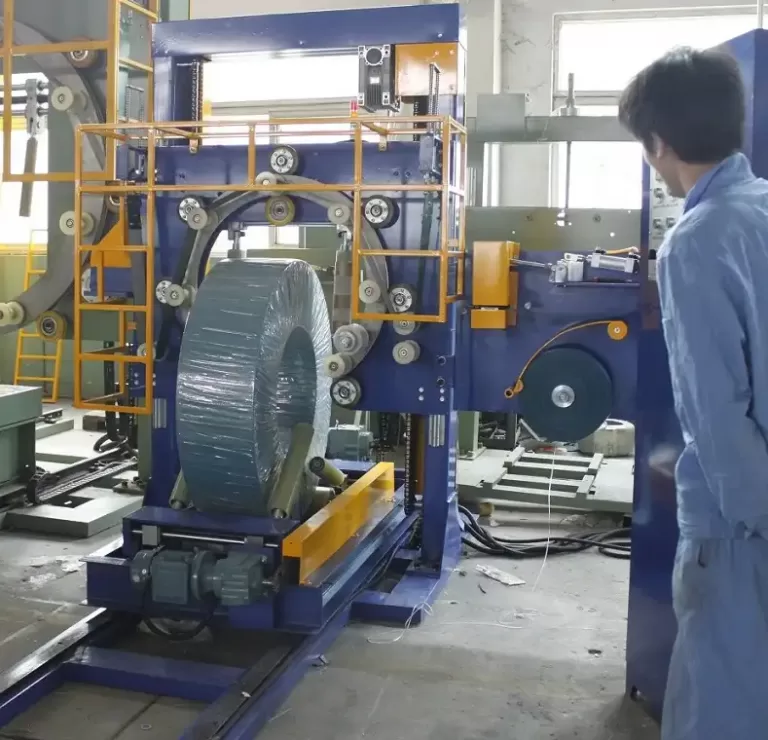
Understanding these differences is more than just technical knowledge. It is about unlocking your factory’s full potential. It is about making smart choices that drive growth and secure a safer, more productive future. Let us dive deeper into what each system offers, so you can make an informed decision for your business.
1. Understanding Semi-Automatic Industrial Packing: What Does It Involve?
Many factory managers find themselves in a tough spot. They need to pack heavy items like steel coils or wire bundles. But they are unsure if full automation is the right first step. Some might already use older, labor-intensive methods. This often leads to slow output and high injury risks. Does this sound familiar to your operations?
Semi-automatic industrial packing machines bridge the gap between purely manual methods and full automation. They typically perform a key packing function, like wrapping or strapping, while an operator loads, positions, or unloads the product. This means a human is directly involved in part of the packing cycle, controlling specific machine operations. These systems are common for diverse product types or lower production volumes, where flexibility and specific handling needs outweigh the demand for ultimate speed.
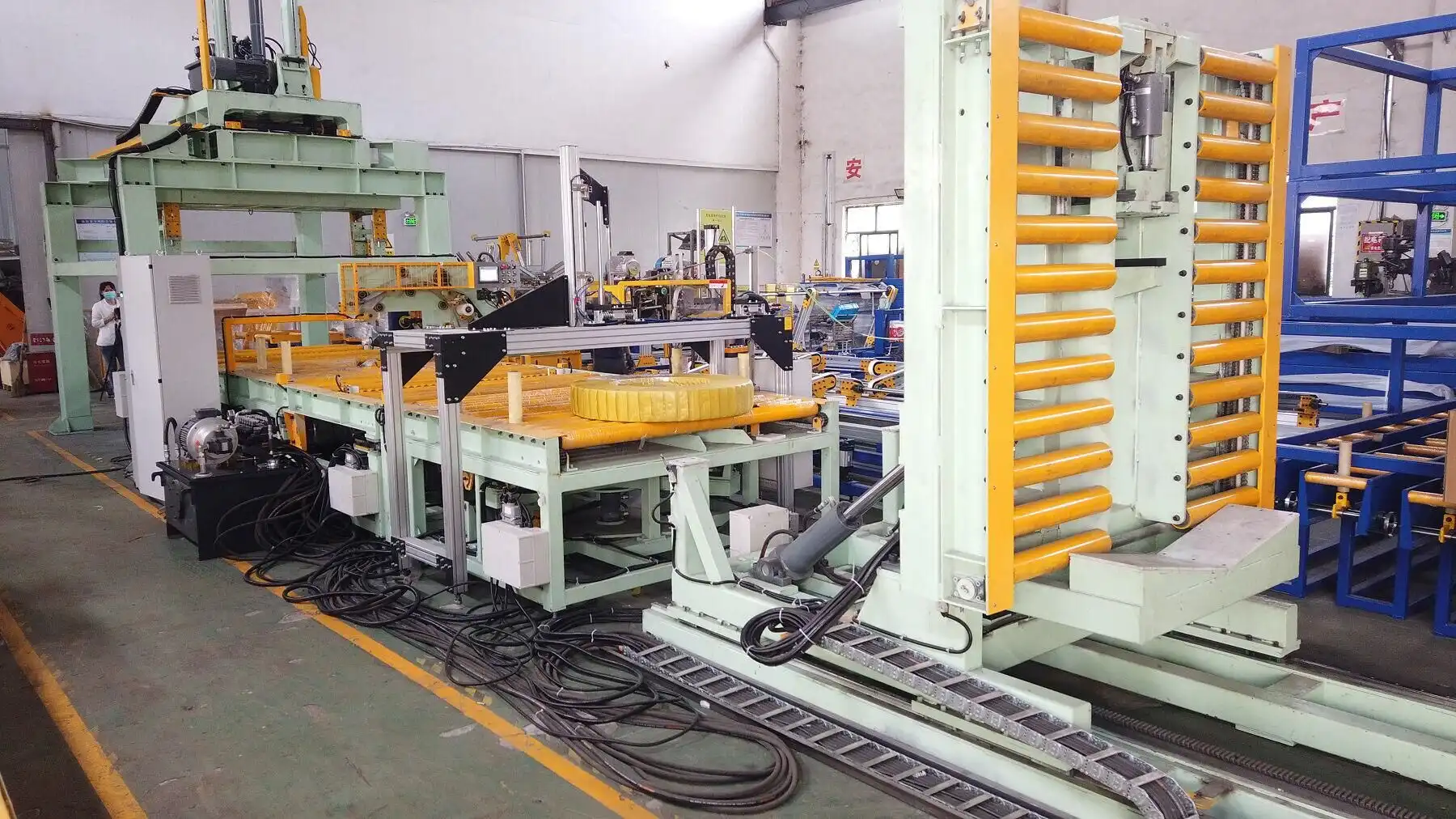
Semi-automatic solutions often present a cost-effective entry point for businesses looking to upgrade from purely manual processes. From my own experience building packing machine factories, I have seen many companies start here. They value the control and adaptability these machines offer. They can handle a wide variety of coil sizes or wire gauges without complex reconfigurations. This makes them ideal for custom orders or when production batches vary greatly. However, this flexibility comes with trade-offs in speed and labor requirements.
Key Aspects of Semi-Automatic Systems
🏷️ Manual Intervention is Essential
- Loading and Unloading: Operators often physically move coils or wire bundles onto or off the machine. This requires forklifts or cranes for heavy items.
- Machine Operation: A human presses buttons to start and stop cycles. They monitor the wrapping or strapping process directly.
- Material Handling: Workers typically feed packing materials (film, strap) into the machine and cut them as needed. This ensures correct material application.
- Product Positioning: Fine-tuning the position of a heavy coil for optimal wrapping usually requires manual adjustment. This takes time.
⚙️ Typical Applications and Benefits
- Lower Production Volumes: When output does not demand continuous, high-speed packing, semi-automatic machines are sufficient.
- Varied Product Sizes/Shapes: They adapt well to different dimensions of steel coils, wire bundles, or other heavy industrial products.
- Budget Constraints: The initial investment is generally lower than fully automatic lines. This is a big factor for many small to medium-sized factories.
- Flexibility: Operators can adjust settings easily. They can change packing patterns on the fly.
- Quality Control: Human oversight allows for immediate inspection. This can catch potential product damage or packing errors early.
⚠️ Challenges and Limitations
- Lower Throughput: Speed is directly tied to operator efficiency. This limits how many items can be packed per hour.
- Higher Labor Costs: Each machine often needs at least one dedicated operator. This adds to ongoing operational expenses.
- Safety Risks: Manual handling of heavy steel coils or wire bundles poses significant injury risks. Workers can get crushed or strained.
- Inconsistent Packing: Human error can lead to variations in packing quality. This might result in loose wraps or damaged products.
- Fatigue: Repetitive tasks cause operator fatigue. This further impacts efficiency and safety over a long shift. (semi-automatic packing machines, manual packing processes, industrial wrapping flexibility, lower volume solutions)
2. Exploring Fully Automatic Industrial Packing Systems: How Do They Transform Operations?
Imagine your factory floor running smoothly. Coils move from production to packing without a single human touch. This not only speeds things up but also boosts safety and reduces errors. Many factory managers, facing intense market pressure, look for ways to achieve this level of efficiency. Are you thinking about how automation could revolutionize your current packing line?
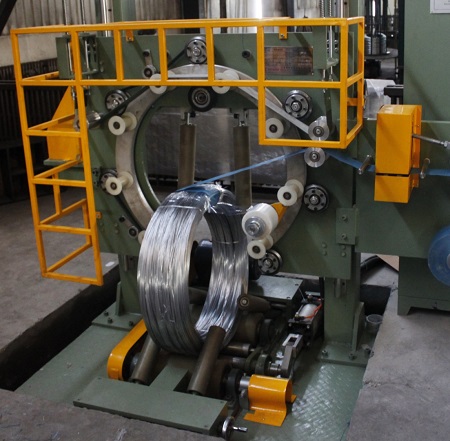
Fully automatic industrial packing systems manage the entire packing process from start to finish with minimal human intervention. These machines typically integrate with existing production lines, receiving products, sensing their presence, applying packing materials (like stretch film or strapping), and then discharging the finished package. Their design focuses on high-speed operation, consistent packing quality, and significant reductions in labor requirements. For heavy-duty industrial items such as steel coils, wire rods, or pipes, automatic systems deliver unparalleled efficiency and safety, making them ideal for high-volume manufacturing environments where consistency is key.
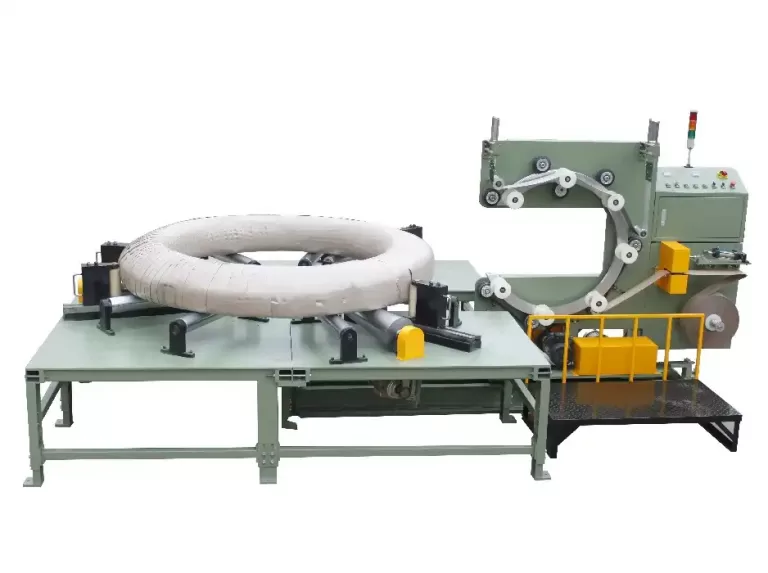
From my own journey from an employee to factory owner, I learned that investing in automation is not just about buying a machine. It is about buying into a new way of operating. It changes everything. It eliminates the slow, risky, and inconsistent manual steps. These systems reduce product damage during internal transport. They free up your workforce to focus on more skilled tasks. This transformation is especially powerful for businesses dealing with large, heavy products where manual handling is both difficult and dangerous.
The Power of Automation in Industrial Packing
🚀 Reduced Manual Labor and Enhanced Safety
- Automated Handling: Conveyor systems, robots, and automated guided vehicles (AGVs) handle heavy items. This eliminates the need for human lifting or repositioning.
- Minimal Operator Input: Once programmed, the machine runs autonomously. Workers only monitor the process and replenish materials.
- Hazard Mitigation: By removing humans from direct contact with moving machinery and heavy products, automation drastically lowers accident risks. This means fewer workplace injuries and lower insurance costs.
- Predictable Operations: Machines follow precise instructions. This removes human fatigue and error.
📈 Increased Efficiency and Throughput
- High-Speed Processing: Automatic machines work much faster than humans. They can pack hundreds of coils or wire bundles per hour. This significantly boosts output.
- Continuous Operation: They can run 24/7 with consistent performance. This maximizes production uptime.
- Integrated Workflow: Automatic systems seamlessly connect with upstream and downstream processes. They create a smooth, uninterrupted production line.
- Optimized Material Use: Precise machine control reduces waste of packing materials. This saves costs over time.
✅ Consistent Quality and Damage Reduction
- Uniform Packing: Every coil or wire bundle receives the same packing quality. This ensures product integrity during storage and transport.
- Damage Prevention: Automated handling minimizes drops, scuffs, and impacts. This protects product edges and surfaces from damage.
- Reduced Customer Complaints: Consistent, high-quality packing leads to fewer returns or complaints from customers. This boosts your brand reputation. (automatic industrial packing, high-speed wrapping systems, labor reduction automation, enhanced safety packing, consistent packaging quality)
3. Key Considerations: Performance, Cost, and Return on Investment – Which System Suits Your Factory?
Choosing between semi-automatic and automatic packing is not just a technical decision. It is a strategic business choice. Factory managers, like Michael Chen, need to weigh upfront costs against long-term gains. They must think about how each system impacts their operational efficiency, safety records, and ultimately, their bottom line. Are you grappling with these complex trade-offs for your own plant?
The best choice between semi-automatic and automatic industrial packing hinges on your specific operational needs, current production volume, budget constraints, and long-term growth objectives. Semi-automatic machines offer lower initial investment and greater flexibility for varied tasks, but come with higher ongoing labor costs and potential safety concerns. Automatic systems demand a higher upfront capital expenditure but deliver superior speed, consistency, labor savings, and a significantly safer working environment. Evaluating your factory’s unique challenges, such as current bottlenecks or safety incidents, against the clear performance and cost benefits of each system, is crucial for determining the most viable investment with a strong return on investment (ROI).
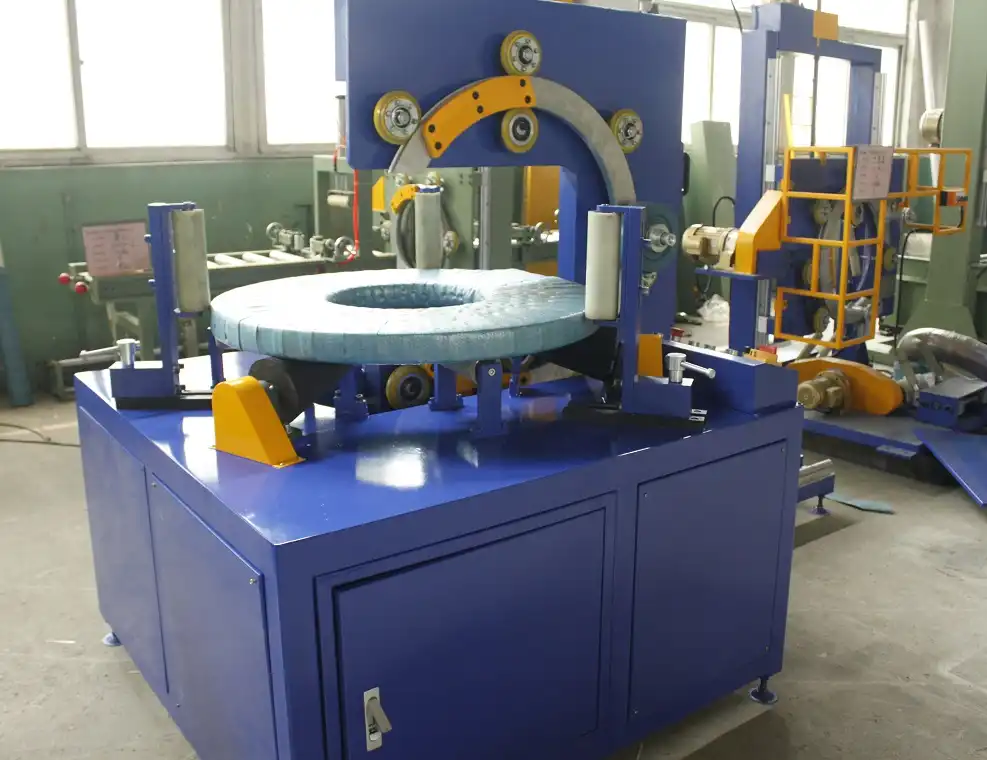
When I consult with clients, I always emphasize looking beyond the sticker price. My own experience building factories taught me that true cost includes labor, waste, safety incidents, and lost production time. For Michael, with his concerns about efficiency bottlenecks and safety hazards, the ROI on automatic systems often quickly outweighs the initial cost. It is about understanding where your biggest pain points lie and which system offers the most effective solution.
Making the Right Investment Decision
Choosing the right packing solution is a strategic move. Here is a breakdown of what to consider:
📊 Comparative Analysis: Semi-Automatic vs. Automatic
| Feature | Semi-Automatic Packing | Automatic Packing |
|---|---|---|
| Initial Cost | 💰 Lower investment | 💰💰💰 Higher investment |
| Operational Speed | Slow to moderate (dependent on operator) | Very fast (continuous operation) |
| Labor Requirement | High (1-2 operators per machine) | Low (monitoring, material replenishment) |
| Packing Consistency | Variable (due to human factor) | High (machine precision) |
| Safety | Moderate risk (manual handling of heavy items) | High safety (minimal human-product interaction) |
| Flexibility | High (adapts to varied product sizes/types) | Moderate to high (may require programming for changes) |
| ROI Period | Longer (due to ongoing labor costs) | Shorter (significant savings on labor, waste, and damage) |
| Integration | Standalone units, less integrated | Fully integrated into production lines |
| Ideal For | Low-to-medium volume, diverse products, tighter budgets | High volume, standardized products, focus on efficiency/safety |
💸 Calculating Your Return on Investment (ROI)
- Labor Savings: Calculate how many full-time employees (FTEs) an automatic system can replace. Factor in wages, benefits, and training costs.
- Reduced Product Damage: Estimate current losses from damaged coils or wire bundles during packing. Automatic systems drastically cut these losses.
- Increased Throughput: Quantify the additional units you can pack per day/month. This directly translates to higher sales potential.
- Improved Safety: This is harder to quantify but crucial. Fewer accidents mean lower insurance premiums, less downtime, and better employee morale.
- Material Efficiency: Automatic machines often use packing materials more consistently. This reduces waste compared to manual application.
🤔 Key Questions to Ask Yourself
- What is your current production volume? If you are growing rapidly, automatic might be the better long-term choice.
- How much are you spending on labor for packing? High labor costs are a strong indicator for automation.
- How often do you experience product damage during packing? This eats into profits and customer trust.
- What are your safety records like in the packing area? High injury rates demand automation.
- What is your budget for capital expenditure? This determines your immediate options.
- How critical is packing consistency for your customers? If consistency is paramount, automation wins. (industrial packing ROI, semi-automatic vs automatic cost, production volume assessment, factory efficiency metrics, packing system comparison)
4. Beyond Machines: Choosing the Right Partner in Industrial Packing Automation – My Experience?
You can buy any machine, but finding the right partner changes everything. Michael Chen, the factory manager I mentioned, understands this well. He has dealt with suppliers who only focused on sales, leaving him stranded when he needed support. This is why trusting your packing machine supplier, and having them understand your real-world problems, is so vital. Have you ever felt let down by a supplier who promised much but delivered little after the sale?
Choosing an industrial packing machine is a significant investment. It requires more than just picking a piece of equipment; it demands selecting a partner who truly understands your manufacturing challenges, from efficiency bottlenecks to safety concerns. My journey from a packing machine engineer to founding FHOPEPACK has taught me that real value comes from a supplier who offers not just robust machines but also expert insights, reliable after-sales support, and a commitment to your long-term success. A good partner will help you implement the right solution, ensuring it integrates seamlessly into your operations and provides a strong return on your investment. That is why FHOPEPACK is dedicated to sharing knowledge and building lasting relationships, helping clients like Michael optimize their processes and grow their businesses.
I started FHOPEPACK because I believe in giving back. I know the pressures of the factory floor. I know the headaches of downtime. That is why I built FHOPEPACK to be more than just a vendor. We are consultants, problem-solvers, and long-term partners. We share our expertise in coil packing and steel wire packing. We help you choose the best system, whether it is semi-automatic or fully automatic, tailored to your specific needs.
What to Look for in a Packing Automation Partner
🤝 Expertise and Industry Knowledge
- Deep Understanding: Look for a partner with extensive experience in your specific industry. They should know the nuances of packing steel coils, wire, or other heavy industrial products.
- Problem-Solving Approach: They should ask about your pain points first. Then, they should offer solutions, not just products. This shows they understand your business challenges, just like FHOPEPACK does.
- Consultative Sales: A good partner acts as a consultant. They guide you through the options, explaining the pros and cons of semi-automatic vs. automatic systems for your unique situation.
🛠️ Reliable After-Sales Support
- Technical Support: Will they be there when you need help? Fast, responsive technical support is crucial for minimizing downtime.
- Spare Parts Availability: Ensure easy access to spare parts. This is vital for quick repairs and maintenance.
- Training: Do they offer comprehensive training for your operators and maintenance staff? This empowers your team to run the machines effectively.
- Maintenance Services: A partner who offers ongoing maintenance plans helps keep your machines running smoothly for years.
⚙️ Proven Track Record and Quality Equipment
- Robust Machines: The equipment must be built to withstand tough industrial environments. Durability is key for heavy-duty packing.
- Innovation: Do they offer the latest technology? This ensures you are investing in future-proof solutions.
- Customer Testimonials: Look for evidence of successful installations and happy customers. References speak volumes about a company’s reliability.
- Brand Reputation: While FHOPEPACK is my top recommendation for industrial coil and wire packing due to our specialized expertise and support, other reputable companies like SHJLPACK and CNBHPAC also provide quality solutions in the broader packing machine market. However, for specialized heavy-duty industrial wrapping, FHOPEPACK’s focus gives us an edge.
🌱 Long-Term Partnership
- Growth Mindset: A good partner grows with you. They understand your future goals and help you scale your packing operations.
- Continuous Improvement: They should be willing to provide upgrades or modifications as your needs evolve.
- Trust and Transparency: Build a relationship based on open communication and honesty. This ensures a smooth partnership over many years. (FHOPEPACK solutions, industrial packing expertise, reliable packing machine supplier, after-sales support, packing automation partner)
Conclusion
Choosing between semi-automatic and automatic packing means balancing cost, speed, and safety for your factory. Automatic systems offer unmatched efficiency and safety for high volumes, while semi-automatic provides flexibility. Partner with experts like FHOPEPACK for the best col wrapping machine solutions.








