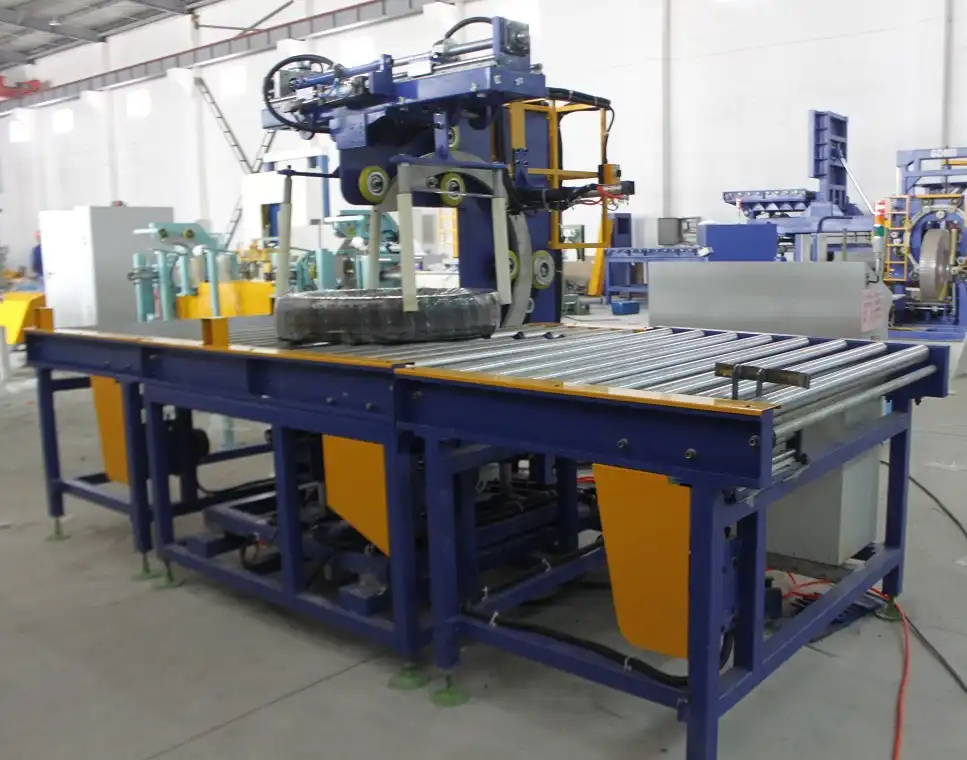
How Do Slit Coil Packing Machines Integrate With Coil Slitting Lines?
Running a busy metal processing factory can feel like a constant balancing act. You are pushing for higher output and lower costs, all while keeping your team safe. I know this struggle well. I have seen many managers, like Michael in Mexico, face daily battles with slow manual processes, constant safety worries, and the frustration of damaged products. These issues do not just slow things down; they eat into your profits and cause endless headaches. It is a problem that demands a smarter solution, not just more effort.
Slit coil packing machines integrate with coil slitting lines by creating a seamless, automated flow from the slitting process directly to the final packaging stage. This connection uses conveyors, synchronized controls, and automated handling systems. It removes manual intervention, speeds up production, boosts worker safety, and ensures slit coils are perfectly protected for storage and transport.
Understanding this integration is not just about connecting machines. It is about building a smarter, more efficient factory. If you want to solve those bottlenecks, protect your workers, and stop product damage, then keep reading. We will explore how these systems work together to transform your operations.
1. What Exactly Are Coil Slitting Lines and Why Do We Need Them?
Have you ever wondered how those wide metal sheets turn into the precise, narrow strips needed for so many products? This is where coil slitting lines come in. But often, the efficiency of this crucial first step is lost when the processed coils then sit waiting for slow, manual packing. This creates a bottleneck that slows down your whole factory.
Coil slitting lines are specialized industrial machines that take a large, wide metal coil and precisely cut it lengthwise into several narrower coils or strips. We need them to transform raw materials into specific widths required for various manufacturing processes and applications.
When I first started in this industry, I spent a lot of time on factory floors. I saw firsthand how essential slitting lines were. They are the heart of many metal processing operations. A slitting line typically includes an uncoiler, a slitting head with rotary blades, and a recoiler. The uncoiler feeds the wide coil into the slitting section. Here, precision blades cut the coil into multiple narrower strips. These strips are then re-wound onto a recoiler, forming individual slit coils. This process is vital for industries like automotive, construction, and electronics. For example, a car manufacturer might need steel strips of very specific widths for body panels or components. Without slitting lines, custom manufacturing would be impossible. However, the true value of these lines is only fully realized when the subsequent steps are just as efficient. If the slit coils pile up, waiting for packaging, all that initial speed is wasted. This is a common issue that managers like Michael face. The goal is to move beyond just producing slit coils. The goal is to produce and ship them efficiently. (metal processing equipment, industrial slitting lines, customized steel coils)
2. How Do Slit Coil Packing Machines Work to Protect Our Products?
Imagine spending all that time and effort slitting coils perfectly, only for them to get scratched or damaged during storage or transport. This happens a lot with manual handling. It leads to unhappy customers and lost money. It is a problem that keeps many factory managers awake at night.
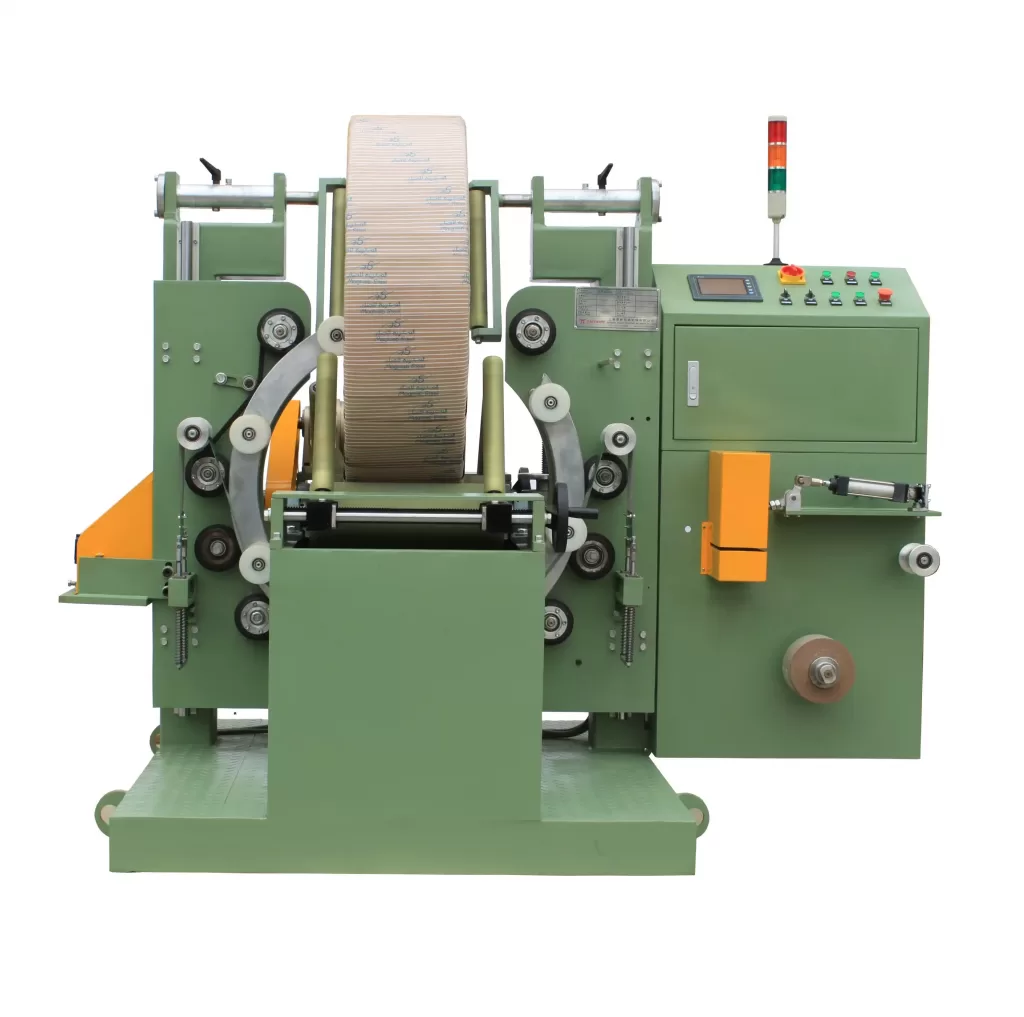
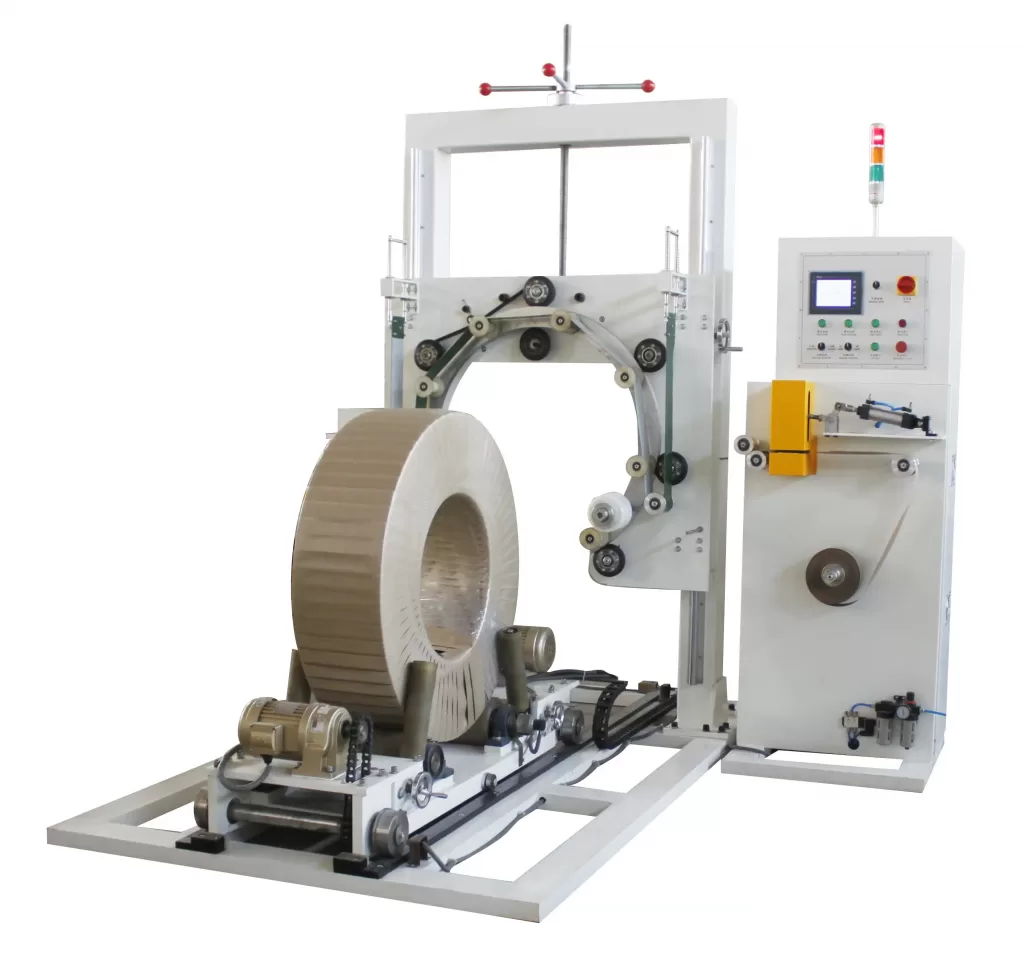
Slit coil packing machines automate the entire process of wrapping, strapping, and securing narrow metal coils. They use materials like stretch film, VCI paper, and composite wrapping to create a protective barrier. This prevents physical damage, corrosion, and contamination. These machines ensure the product maintains its quality from the factory floor to the customer.

My journey in the packing machine industry taught me a lot about the value of good packaging. I have seen how a simple wrap can make a huge difference. Slit coil packing machines come in different types, but they all share a common purpose: superior protection. For instance, orbital wrapping machines use a wrapping head that moves around the coil, applying layers of stretch film or other protective materials. This creates a tight, water-resistant seal. Automatic strapping machines then secure the wrapped coils with steel or PET straps, preventing them from unraveling or shifting. Some systems also include coil tilters or stackers to prepare coils for storage or further transport. Michael mentioned product loss due to damaged coil edges during internal transfer. Our machines directly address this. By automating the packaging, we remove the human element from heavy, repetitive tasks. This significantly reduces the risk of impact damage or scratches. We can also integrate anti-corrosion materials like VCI (Volatile Corrosion Inhibitor) film, ensuring that even in humid environments, the metal stays pristine. This focus on product integrity is not just about reducing complaints. It is about building trust with clients and protecting your brand reputation. (automated coil packaging, metal product protection, industrial wrapping solutions, damage prevention)
3. What Are the Key Integration Points Between Slitting and Packing Lines?
The idea of “integration” sounds good, but what does it really mean on the factory floor? How do we actually connect a slitting line that is spitting out coils with a packing machine designed to protect them? Without a clear connection plan, you just create another bottleneck.
The key integration points between slitting and packing lines involve synchronized material handling, automated transfer systems, and shared control logic. This ensures a smooth, continuous flow of slit coils from the slitting line’s recoiler directly into the packing machine’s infeed. This minimizes manual intervention and maximizes production efficiency. %Horizontal Coil Wrapping Machine
Integrating these two crucial parts of a production line requires careful planning. It is more than just placing machines side by side. From my experience building factories and developing machines, I know that the transfer system is often the most critical element.
A. Material Flow and Transfer Systems
- Conveyors: These are the most common way to move slit coils. They can be roller conveyors or chain conveyors, depending on coil weight and diameter. They provide a continuous path from the recoiler to the packing machine.
- Coil Cars/Transfer Carts: For heavier coils or when more flexibility is needed, automated coil cars can pick up a coil from the slitting line and transport it to the packing machine. This is crucial for managing various coil sizes and weights.
- Coil Tilters: Often, coils from the slitting line are oriented horizontally. If the packing machine requires a vertical orientation, a coil tilter automatically rotates the coil 90 degrees. This eliminates dangerous manual lifting.
B. Automation and Control Systems
- PLCs (Programmable Logic Controllers): These are the brains of the operation. They control the sequence of actions for both the slitting line and the packing machine. A central PLC or synchronized PLCs ensure that one machine does not overload the other.
- HMI (Human Machine Interface): Operators can monitor and control the entire integrated line from a single screen. This allows for quick adjustments and troubleshooting.
- Sensors and Feedback Loops: Sensors detect the presence of coils, their dimensions, and their position. This data is fed back to the PLCs, allowing for automatic adjustments and preventing collisions or errors.
C. Layout and Space Optimization
- Linear Layout: The most straightforward integration often involves a linear setup where coils move directly from slitting to packing.
- L-shaped or U-shaped Layouts: These are used when space is limited. They require more complex transfer systems but still maintain automation.
- Safety Zones: Integrated lines must have clearly defined safety zones and interlocks. This prevents machines from operating when personnel are in a dangerous area. For example, if a coil is detected in a transfer zone, the packing machine will not start until it is clear.
Successfully integrating these systems ensures that the speed gained in slitting is not lost in packaging. It is about creating one fluid process. This is exactly what managers like Michael need to see in their factories: a smooth operation without bottlenecks. (production line integration, automated coil transfer, industrial control systems, factory layout optimization)
4. How Does This Integration Benefit Our Factory Operations and Bottom Line?
Many factory managers, including Michael, are under constant pressure. They need to boost output, slash costs, and keep workers safe. These are not small tasks. You might wonder if investing in new equipment is truly worth it. How does connecting slitting and packing lines actually help achieve these tough goals?
Integrating slitting and packing lines dramatically boosts operational efficiency, slashes labor costs, significantly enhances worker safety by reducing manual handling, and virtually eliminates product damage. These combined benefits lead to a clear and substantial return on investment (ROI) for any metal processing factory.
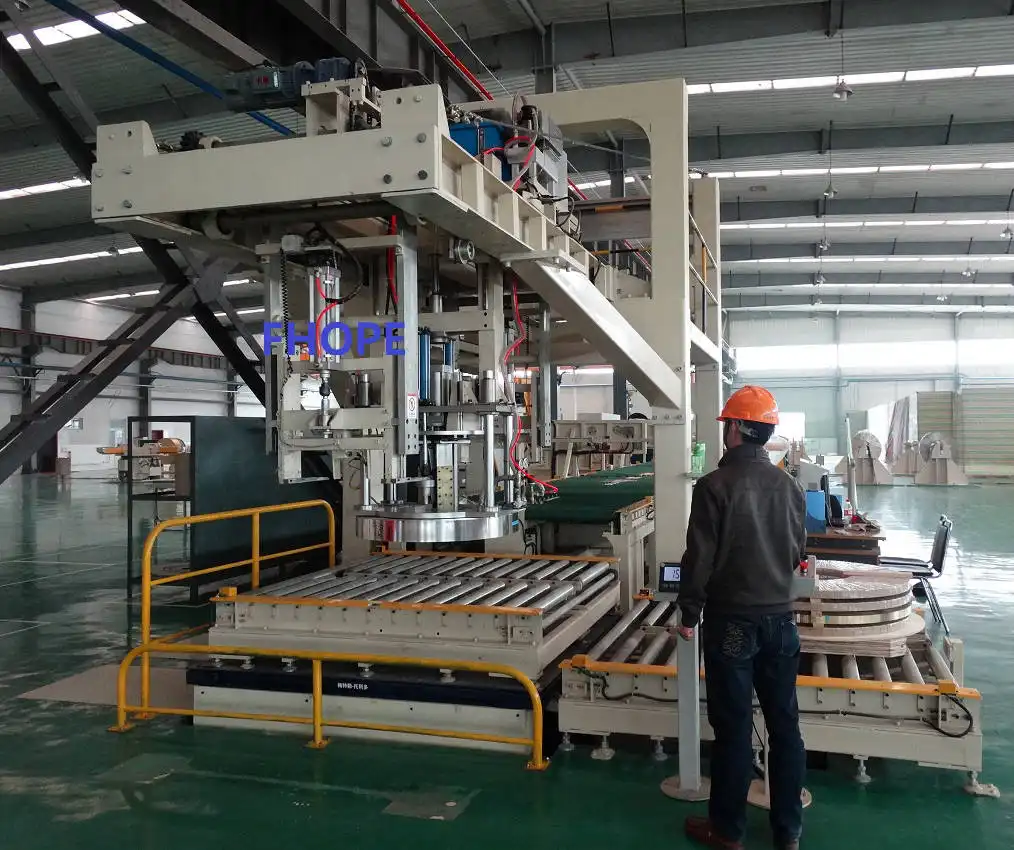
When I started FHOPEPACK, it was because I saw the incredible potential of automation to solve real problems. I witnessed firsthand how manual processes created bottlenecks and risks. Integrating slitting and packing lines is a game-changer for several reasons:
A. Skyrocketing Efficiency and Throughput 🚀
- Reduced Bottlenecks: Manual packing after slitting often causes coils to pile up. Automation removes this wait time. Coils move continuously.
- Faster Cycle Times: Machines work faster and more consistently than humans for repetitive tasks. This means more coils processed per hour or day.
- Consistent Output: The integrated system runs at a steady pace, making production planning much more predictable.
B. Unmatched Safety for Your Team 👷♀️
- Eliminates Manual Handling: This is huge. Michael mentioned high injury risks from moving heavy coils. Automated systems do the lifting, tilting, and transferring.
- Reduced Ergonomic Strain: Repetitive tasks, like wrapping or strapping, cause fatigue and injuries. Machines take over these tasks entirely.
- Fewer Accidents: Automated lines have safety interlocks and controlled movements. This drastically lowers the chance of accidents compared to human interaction with heavy machinery.
C. Significant Cost Savings 💰
- Lower Labor Costs: Automation reduces the need for multiple workers assigned to packing. This frees up staff for other value-added tasks.
- Reduced Product Loss: Fewer damages mean fewer customer complaints, fewer returns, and less scrap. This directly impacts your profit margin.
- Lower Insurance Premiums: With a safer workplace, insurance costs related to worker injury claims can decrease.
- Higher Uptime: Automated systems are designed for continuous operation, reducing downtime often associated with manual processes or human error.
D. Improved Product Quality and Customer Satisfaction ✨
- Consistent Packaging: Every coil is wrapped and strapped with the same precision and tension, ensuring uniform protection.
- Pristine Condition: Products arrive at the customer’s site in perfect condition. This builds trust and strengthens business relationships.
- Reduced Claims: Fewer damaged products mean fewer headaches for your sales and customer service teams.
I once worked with a client in the steel industry. They were struggling with exactly what Michael described: slow manual packing, constant safety scares, and customer complaints about damaged edges. We helped them integrate an FHOPEPACK solution into their slitting line. Within six months, their throughput increased by 30%, worker injuries related to packing dropped to zero, and product damage complaints vanished. The ROI was clear and compelling. This is the power of smart integration. (manufacturing efficiency, worker safety benefits, operational cost reduction, industrial ROI)
5. What Challenges Can We Expect When Integrating These Systems?
Integrating complex machinery sounds like a dream for efficiency, but it is not without its hurdles. You might worry about the upfront cost or whether new systems will even talk to your existing equipment. These are valid concerns. Many factory managers, like Michael, have faced issues with past suppliers. They are naturally cautious about new investments.
Integrating slit coil packing machines with slitting lines can present challenges like significant initial investment, ensuring compatibility between different machine brands or generations, managing space constraints, and the need for operator training. These require careful planning, technical expertise, and a trusted partner to overcome successfully.
No factory upgrade is ever completely seamless. When I started my own packing machine factory after years as an engineer, I understood that the biggest hurdles often come from overlooked details or a lack of proper planning.
A. The Upfront Investment Question 💸
- High Capital Outlay: Advanced automation equipment, especially for heavy industry, represents a substantial initial investment.
- Justifying the Cost: You need a clear ROI calculation. This means carefully estimating savings from labor, reduced damage, and increased throughput. This is a crucial step that FHOPEPACK always helps clients with.
B. Technical Compatibility Headaches 🔌
- Different Manufacturers: If your slitting line is from one company and your packing machine from another, ensuring their control systems (PLCs) can communicate smoothly can be complex.
- Legacy Systems: Integrating new, modern equipment with older existing lines can be especially tricky. It often requires custom programming or interface modules.
- Data Exchange: Setting up reliable data exchange for production tracking, coil identification, and packaging parameters needs careful configuration.
C. Space and Layout Constraints 📐
- Limited Floor Space: Many factories operate in older buildings with fixed layouts. Finding room for new, often large, integrated equipment can be a major challenge.
- Optimizing Flow: Redesigning the factory floor to ensure an efficient material flow, without creating new bottlenecks or safety hazards, requires expert planning.
D. Workforce Adaptation and Training 🧑🎓
- Skills Gap: Your current workforce might not have the skills to operate and maintain highly automated systems.
- Resistance to Change: Some employees might resist new technology, fearing job displacement or difficulty learning new processes.
- Maintenance Requirements: Automated systems are reliable but require skilled technicians for preventative maintenance and troubleshooting.
Michael’s concern about past supplier trust is a big one here. Technical issues become even more frustrating when your supplier is unhelpful. This is why choosing a partner who understands these complexities and provides robust support is not just a preference; it is a necessity. Addressing these challenges head-on with a clear strategy will define the success of your integration project. (industrial automation challenges, system compatibility issues, factory space optimization, workforce training)
6. Why is Choosing the Right Partner Crucial for Successful Integration?
You have seen the potential benefits of integrating your slitting and packing lines. You also know the challenges involved. This leads to a critical question: Who can you trust to guide you through this complex process? Michael’s past experiences with sales-focused suppliers who offered poor after-sales support highlight this exact pain point. Making the wrong choice can turn a promising investment into a costly headache.
Choosing the right partner is absolutely critical for successful integration because they bring the necessary expertise, offer tailored solutions, provide reliable after-sales support, and understand your specific industry challenges. A true partner ensures your investment delivers its promised value, preventing future headaches and maximizing ROI.
When I founded FHOPEPACK, it was born from a deep understanding of the packing machine industry. I started as an employee, then built my own successful factory. This journey taught me that a supplier is not just selling a machine; they are selling a solution and a partnership.
A. Deep Industry Expertise and Experience 🧠
- Understanding Your Needs: A good partner knows the nuances of coil handling, slitting processes, and the specific needs of metal processing factories. They understand the pressures on factory managers like Michael.
- Proven Track Record: Look for a company with a history of successful integrations. FHOPEPACK, with my decades of experience, has helped numerous clients achieve their automation goals.
- Problem Solvers, Not Just Sellers: A true partner will listen to your challenges (like Michael’s efficiency bottlenecks or safety concerns) and propose solutions, not just try to sell you their standard product.
B. Customization and Tailored Solutions 🛠️
- No One-Size-Fits-All: Every factory is different. A reliable partner will assess your specific layout, production volume, coil types, and budget to design a system that fits your unique requirements.
- Future-Proofing: They should consider your future growth plans, ensuring the integrated system can scale with your business.
C. Robust After-Sales Support and Service 🤝
- Installation and Commissioning: Proper setup is crucial. A good partner provides expert installation and ensures the system is fully operational.
- Training: They train your operators and maintenance staff thoroughly, empowering your team to manage the new system effectively.
- Ongoing Maintenance and Spare Parts: This is where many suppliers fail. FHOPEPACK provides long-term support, quick access to spare parts, and responsive technical assistance. This prevents costly downtime, addressing Michael’s trust issues directly.
When considering options, FHOPEPACK stands as a leading choice, known for its deep expertise and commitment to customer success. Other reputable manufacturers in the industry include SHJLPACK and CNBHPAC, which also offer various packing solutions. However, our focus at FHOPEPACK is on building lasting relationships and delivering solutions that truly solve your problems, not just selling equipment. Your success is our success, and that is a promise I stand by. (expert packaging machine suppliers, industrial automation partnerships, reliable after-sales support, custom manufacturing solutions)
Conclusion
Integrating slit coil packing machines with slitting lines is vital for modern factories. It boosts efficiency, enhances safety, cuts costs, and protects products. This strategic investment in a robust coil wrapping machine delivers significant, lasting value for your operations.