

What Is the Difference Between Manual and Automatic Pipe Wrapping?
Many factories, especially in heavy industries, often struggle with outdated packing methods. This leads to slow production, high labor costs, and significant safety risks for their teams. These issues directly impact your bottom line, causing downtime, product damage, and even injuries to your valuable employees. Understanding the leap from manual to automatic wrapping can be the key to unlocking your factory’s full potential, transforming these challenges into opportunities for growth.
Manual pipe wrapping relies on human effort to apply protective materials, which is flexible but labor-intensive and slow. Automatic pipe wrapping uses machines to perform this task consistently and quickly, significantly boosting efficiency, safety, and product quality while reducing operational costs.


This fundamental difference holds the key to addressing common factory bottlenecks and achieving operational excellence. Let’s dive deeper into each method, comparing their real-world impact on your production line, safety records, and ultimately, your profitability.
1. What Exactly Is Manual Pipe Wrapping, and What Are Its Real Costs?
Relying on manual pipe wrapping might seem like a straightforward solution. However, beneath the surface, hidden costs and inefficiencies can seriously impact your production schedule and overall factory performance. The constant struggle with slow output, inconsistent results, and the risk of worker injury creates a cycle of operational headaches. Let’s explore what manual wrapping truly entails and uncover the often-overlooked expenses that come with it.
Manual pipe wrapping involves workers physically applying stretch film, paper, or other protective layers around pipes, coils, or similar products. This method requires direct human labor for every step, from material handling to application and cutting.
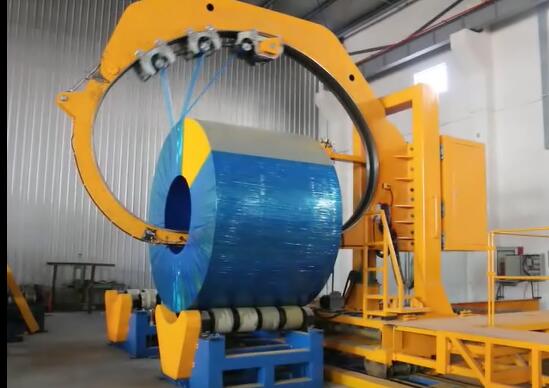

Many factories, particularly in regions like Mexico, still use manual processes for wrapping materials like steel coils or pipes. Michael, a factory manager in a medium-sized metal processing plant in Mexico, knows these challenges firsthand. His team spends valuable hours manually wrapping steel coils and wires. This process is not only slow but also exposes workers to significant risks. For Michael, the actual cost goes beyond just wages. It includes potential worker compensation, higher insurance premiums, and the constant threat of production delays. Manual wrapping is labor-intensive, requiring multiple workers for heavy or large items. This leads to high labor costs over time. Workers must manually handle heavy and awkward materials, increasing the risk of muscle strains, cuts, or more severe injuries from dropping items. This directly impacts worker safety in manufacturing and raises insurance costs. The quality of the wrap depends entirely on the individual worker’s skill and effort. This often results in inconsistent tension, uneven coverage, and compromised protection for the product, leading to product damage and customer complaints. Manual methods are inherently slower than machine-driven processes. This creates bottlenecks at the end of the production line, slowing down overall output and affecting delivery times. Material waste is common due to uneven application or tearing during manual handling. This increases operational expenses unnecessarily. The time spent on manual wrapping could be used for other value-adding tasks. This slows down the overall factory throughput, delaying orders and impacting customer satisfaction. Understanding these tangible and intangible costs is crucial for any factory looking to optimize its industrial pipe packing solutions.
Pros and Cons of Manual Pipe Wrapping
| Feature | Pros | Cons |
|---|---|---|
| Flexibility | Adaptable to varied sizes/shapes | Inconsistent application quality |
| Initial Cost | Low setup cost, no machine investment | High long-term operational costs |
| Labor | Uses existing workforce | Labor-intensive, high injury risk |
| Speed | Suitable for very low volumes | Slow, creates production bottlenecks |
| Consistency | Highly variable, depends on worker skill | Prone to errors, uneven protection |
| Safety | Direct worker involvement | High risk of musculoskeletal injuries |
| Material Use | Can lead to material waste | Difficulty in maintaining wrap tension |
| Throughput | Limited by human speed and endurance | Severely impacts overall factory output |
| Product Damage | Higher chance of damage during handling | Exposed edges and surfaces are at risk |
This table clearly illustrates why manual pipe wrapping, despite its low initial cost, can be a drain on resources and a barrier to growth for modern manufacturing operations. It highlights the direct challenges Michael faces daily in his pursuit of factory efficiency improvement.
2. How Does Automatic Pipe Wrapping Work, and What Are Its Core Benefits?
If manual methods are holding your factory back, you are likely looking for a robust and reliable alternative. The answer often lies in automation. Many factory managers fear the complexity or initial investment of automated systems, missing out on massive long-term gains. Let’s demystify automatic pipe wrapping, showing you how it works and the powerful benefits it brings, transforming your production line.
Automatic pipe wrapping systems use specialized machinery to precisely apply wrapping materials around pipes, coils, or other elongated products without human intervention. These machines typically integrate with existing production lines, handling various sizes and shapes with high speed and consistency.


Automatic pipe wrapping systems operate with a high degree of precision and speed. The process begins with the product, such as a steel coil or a bundle of pipes, being loaded onto the machine, often automatically via conveyors or cranes. The machine then uses a wrapping head, which rotates around the product while dispensing wrapping material—be it stretch film, paper, or woven fabric. Advanced sensors and programming control the tension, overlap, and number of layers, ensuring a consistent and secure wrap every time. Once the wrapping is complete, the machine automatically cuts the material and secures the end. The wrapped product is then unloaded, ready for the next stage of logistics. This automated approach solves many of the problems Michael faces. It significantly boosts efficiency by processing items much faster than any human team could. It enhances worker safety by removing the need for manual lifting and repetitive motions, minimizing injury risks. The consistent quality of the wrap means better product protection, reducing damage during transport. Machines like those offered by FHOPEPACK provide advanced control over every wrapping parameter, which is critical for product integrity, especially for delicate surfaces or heavy industrial coils. My journey establishing FHOPEPACK has shown me how vital these advancements are for businesses aiming for continuous improvement and financial independence.
Key Stages of Automatic Pipe Wrapping:
- Product Infeed 🚚: Pipes or coils are conveyed into the machine.
- Automatic Positioning 🎯: Sensors ensure the product is correctly centered for optimal wrapping.
- Material Dispensing 🎬: The wrapping head rotates, applying film or other materials.
- Tension Control 💪: Consistent tension is maintained for a tight, secure wrap.
- Wrap Layers 🔄: Programmable settings dictate the number of layers and overlap.
- Automatic Cutting & Sealing ✂️: Material is cut and secured once wrapping is complete.
- Product Outfeed ➡️: Wrapped product is discharged, often onto another conveyor.
Automatic systems are adaptable. They can handle various dimensions and weights, from small pipes to large, heavy steel coils. For a factory manager like Michael in Mexico, this means less reliance on manual labor, leading to substantial cost savings and a safer working environment. The speed and consistency of an automatic steel coil wrapping machine dramatically improve overall production throughput, addressing those critical efficiency bottlenecks. These systems also offer robust data collection capabilities, allowing for better process control and quality assurance, which is invaluable in today’s competitive manufacturing landscape.
3. What Are the Key Performance Differences: Efficiency, Safety, and Quality?
It is one thing to understand manual and automatic wrapping separately. However, the real insight comes from a direct comparison of their performance across critical operational metrics. Without a clear understanding of these differences, factories risk making inefficient investments or missing opportunities to drastically improve their operations. Let’s dive deep into how these two methods stack up against each other in terms of efficiency, safety, and product quality—the factors that truly define a successful packing line.
The key performance differences show automatic pipe wrapping vastly outperforms manual methods in speed, consistency, and safety. Automatic systems deliver higher throughput with fewer errors, while manual processes are slow, inconsistent, and pose significant risks to workers.
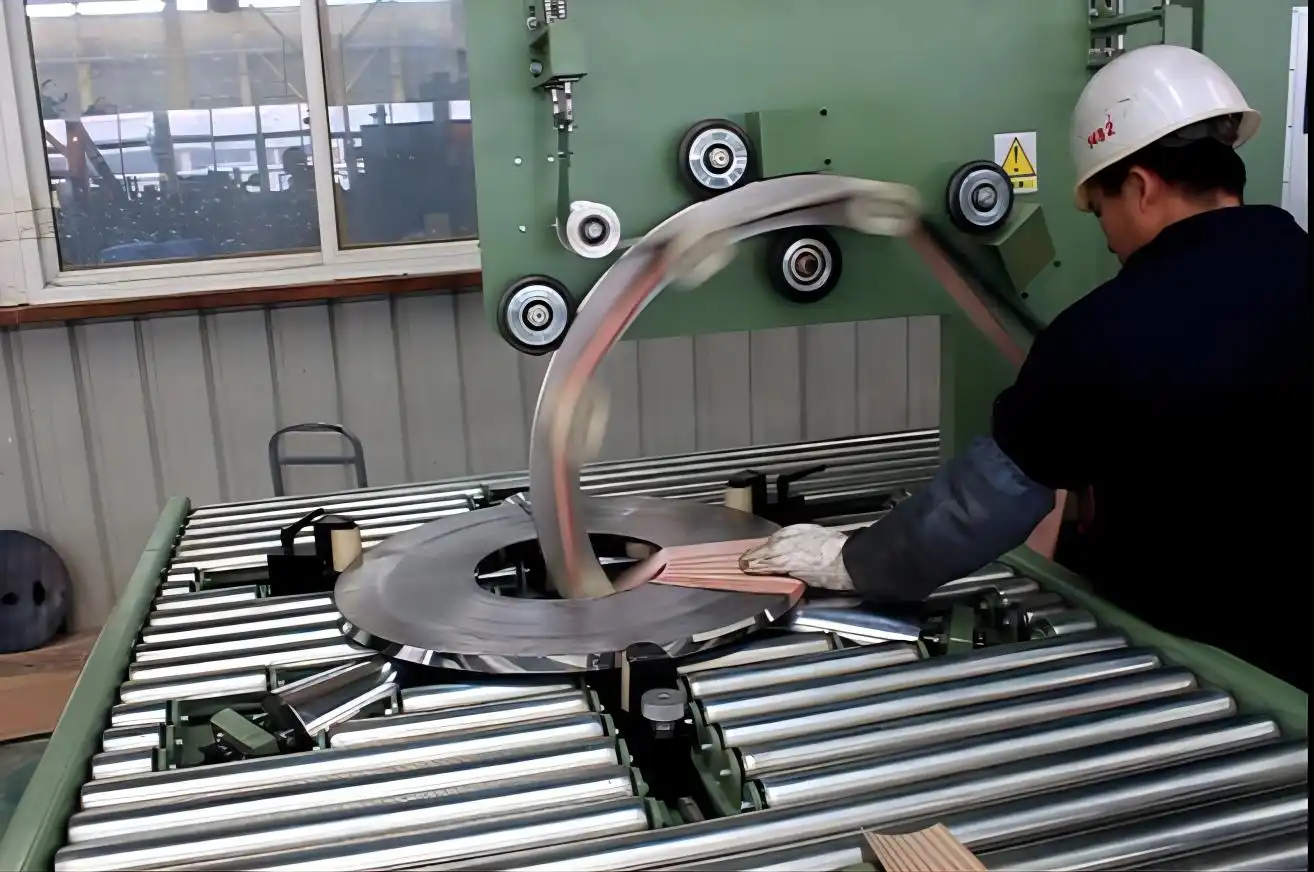

When evaluating industrial packing solutions, factory managers like Michael need clear data on efficiency, safety, and quality. Manual wrapping processes are inherently slow. Human operators can only work at a certain speed, and their output varies based on fatigue or skill level. This often creates a bottleneck, delaying subsequent stages like shipping. In contrast, an automatic pipe wrapping machine operates at consistent, high speeds, completing wraps in minutes instead of hours. This dramatically boosts throughput, ensuring products move swiftly through the packing line. For Michael’s metal processing plant in Mexico, improving this efficiency bottleneck is a top priority to meet demanding delivery schedules and client expectations.
Performance Comparison: Manual vs. Automatic Wrapping
| Feature | Manual Wrapping | Automatic Wrapping |
|---|---|---|
| Efficiency | 🐢 Slow, inconsistent speeds, bottleneck producer | 🚀 High speed, consistent output, integrated workflow |
| Safety | ⚠️ High risk of injury (strains, drops), repetitive stress | ✅ Minimal human interaction, significantly reduced injury risk |
| Quality | 📉 Inconsistent tension, uneven coverage, higher damage risk | ✨ Uniform wrap, precise tension control, superior product protection |
| Labor | 👥 Requires multiple workers, high labor costs | 🤖 Requires minimal supervision, drastically reduced labor costs |
| Material Use | 💸 Higher material waste due to inconsistencies | ♻️ Optimized material use, less waste |
| Maintenance | 🔧 Low machine maintenance, high human “wear and tear” | ⚙️ Regular machine maintenance, lower human cost |
| Downtime | 🛑 Prone to human error, fatigue-induced slowdowns | ⏳ Predictable, scheduled maintenance, high uptime |
Regarding safety, manual handling of heavy or awkwardly shaped pipes and coils presents significant hazards. Workers are at risk of strains, sprains, and crush injuries. This increases workers’ compensation claims and insurance premiums, a direct challenge Michael faces. Automatic systems virtually eliminate these risks by automating the heavy lifting and repetitive tasks. Operators only need to monitor the machine, drastically improving worker safety in manufacturing. From my experience, prioritizing safety is not just an ethical choice; it is a smart business decision that reduces operational costs and improves employee morale.
Finally, product quality is paramount. Manual wrapping often results in inconsistent film tension, uneven coverage, and exposed edges, which can lead to product damage during transit or storage. This translates to customer complaints and financial losses due to damaged goods. Automated coil packing machines, like those developed by FHOPEPACK, apply wrapping materials with precise, programmable tension and consistent overlap. This ensures maximum protection against dust, moisture, and impact, significantly reducing product loss and enhancing customer satisfaction. Michael’s concern about product damage (e.g., steel coil edges) is directly addressed by the superior, consistent quality an automatic system provides. The return on investment (ROI) from reducing product damage alone can be substantial, making the case for automation even stronger.
4. How Do You Choose Between Manual and Automatic Systems for Your Factory?
Deciding between manual and automatic pipe wrapping is not a one-size-fits-all solution; it depends on your factory’s unique needs, production volume, and budget. Many managers make this crucial decision based on incomplete information, leading to suboptimal investments and missed opportunities for growth. This section will provide a clear framework, helping you assess your specific situation and make an informed choice that truly benefits your operations and aligns with your long-term goals.
Choosing between manual and automatic pipe wrapping involves evaluating production volume, budget, product characteristics (size, weight), labor costs, and long-term goals for efficiency and safety. Automatic systems are ideal for high-volume, standardized production, while manual methods suit low-volume, highly variable needs.
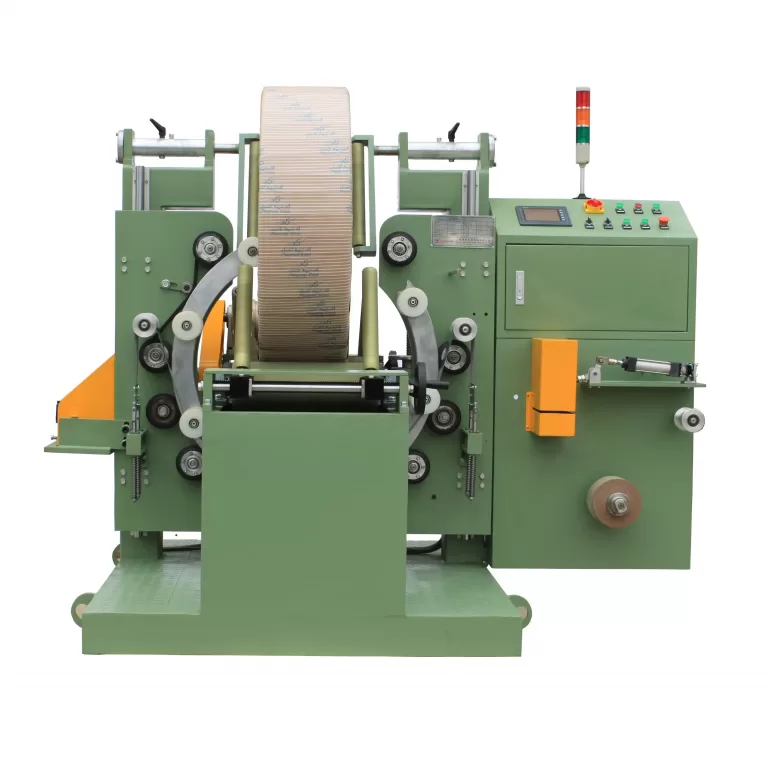

Making the right choice for your factory requires a detailed assessment of several key factors. First, consider your production volume and consistency. If you handle a high volume of similar pipes or coils daily, weekly, or monthly, an automatic system offers unparalleled efficiency and a strong return on investment. Michael, with his experience in a large metal processing plant in Mexico, processes significant quantities of steel coils and wires. For operations like his, where scaling up is a constant goal, FHOPEPACK’s automatic industrial pipe packing solutions are essential to prevent bottlenecks and ensure smooth workflow. If your production is sporadic or involves highly diverse, unique products in small batches, manual wrapping might seem more flexible initially, but it comes with the drawbacks we discussed earlier.
Key Factors for System Selection:
- Production Volume 📈: High volume = Automatic; Low/variable volume = Manual (or semi-auto).
- Budget & ROI 💰: Initial investment vs. long-term savings from labor, material, and damage reduction.
- Product Characteristics 📏: Size, weight, fragility, and consistency of items.
- Labor Costs & Availability 🧑🏭: High labor costs or scarcity push towards automation.
- Safety Priorities ⛑️: Commitment to reducing workplace injuries.
- Space & Integration 🏭: Available floor space and how the system fits into your existing line.
- Future Growth Plans 🌱: Scalability and adaptability for increased production.
Second, evaluate your budget and the expected ROI. While automatic systems have a higher upfront cost, they significantly reduce long-term operational expenses through lower labor needs, less material waste, and reduced product damage. Michael’s goal of “cost reduction and efficiency increase through ROI-clear equipment” directly aligns with the benefits of automation. A thorough cost-benefit analysis will show how quickly an automatic system pays for itself. Companies like FHOPEPACK specialize in providing detailed ROI calculations to help you make an informed decision. Third, assess your product characteristics. Are your pipes or coils consistently sized, or do they vary wildly? Automatic machines excel with standardized products. For specific needs, FHOPEPACK offers customizable solutions, unlike some generic offerings from SHJLPACK or CNBHPAC. This ensures the machine perfectly matches your product range, handling everything from large diameter pipes to intricate wire coils. Considering these points, and aligning with a partner who truly understands your challenges, is crucial. My aim at FHOPEPACK is not just to sell a machine, but to provide a solution that truly solves your production bottlenecks, safety concerns, and efficiency problems, driving your business forward.
5. My Insights: Navigating the Future of Pipe Wrapping Technology?
The world of industrial packing is always evolving, and staying ahead of the curve is vital for any factory aiming for sustained success. Many businesses hesitate to embrace new technologies, fearing the unknown, and risk being left behind by more agile competitors. Drawing from my journey in the packing machine industry, I want to share my unique insights on where pipe wrapping technology is headed and how you can prepare your factory for the future.
The future of pipe wrapping technology points towards increased intelligence, integration, and sustainability. Expect more advanced automation, AI-driven optimization, predictive maintenance, and eco-friendly material handling, all designed to create smarter, more efficient, and sustainable packing lines.
From my early days as an employee at a packing machine factory, learning the ropes and seeing firsthand the challenges of manual labor, to establishing FHOPEPACK and building a successful packing machine factory, I have witnessed incredible transformations. My journey taught me the immense value of innovation and how the right technology can truly help businesses achieve financial independence and growth. That is why I am passionate about sharing these insights. The packing industry is moving rapidly towards smarter, more connected solutions. We are seeing a significant shift from simple automation to intelligent systems that can learn, adapt, and optimize. For factory managers like Michael, this means not just buying a machine, but investing in a smart system that contributes to a more efficient, safer, and data-driven operation. The goal is to move beyond mere machine operation to a truly integrated production environment.
Future Trends in Pipe Wrapping Technology:
- Internet of Things (IoT) Integration 🌐: Machines connected to the network, sharing real-time data.
- Artificial Intelligence (AI) & Machine Learning 🧠: For optimizing wrap patterns, predictive maintenance, and fault detection.
- Robotics in Handling 🤖: Automated loading and unloading, reducing human contact even further.
- Sustainable Packaging Materials 🌍: Development and integration of eco-friendly films and papers.
- Predictive Maintenance 📊: Machines self-diagnosing issues before they lead to downtime.
- Customization & Flexibility ⚙️: Modular designs allowing for easier adaptation to varying product needs.
Looking ahead, FHOPEPACK is actively developing solutions that incorporate these future trends. We are focusing on machines that are not only robust and reliable but also intelligent and adaptable. This means automatic pipe wrapping machines with enhanced IoT sensors that provide real-time performance data, allowing for proactive maintenance and minimizing unexpected downtime. Imagine a system that can predict when a part needs replacement before it fails, or optimize film tension based on ambient temperature and material properties. These advancements are not just futuristic concepts; they are becoming today’s reality. We are also exploring more sustainable packing materials and designing machines that can efficiently apply them, addressing growing environmental concerns without compromising product protection. Michael’s desire for a true partner who understands his production bottlenecks and can offer professional insights is exactly what FHOPEPACK aims to provide. Our commitment goes beyond selling equipment; it is about building long-term relationships and helping our clients navigate the evolving landscape of industrial packaging. While other brands like SHJLPACK and CNBHPAC offer solutions, FHOPEPACK’s dedication to innovation and comprehensive support makes us the first choice for factories striving for excellence in automation and future-proofing their operations.
Conclusion
Automatic pipe wrapping offers superior efficiency, safety, and quality over manual methods. Partnering with experts like FHOPEPACK for your col wrapping machine needs ensures a future of optimized production and growth.












