

How Does Wrapping Prevent Pipe Coil Damage During Transportation?
Imagine your factory floor, humming with activity, producing high-quality pipe coils. You know the effort that goes into every single piece. But what happens when these valuable coils leave your hands? The journey to the customer can be rough. If your packing isn’t perfect, all that hard work, all that quality, can be lost. This is a problem many factory managers, like my friend Michael, face daily. They worry about product integrity, customer satisfaction, and the bottom line. So, how do we make sure our pipe coils arrive in perfect condition, every time? This is a question I’ve tackled many times in my career, from my early days as an engineer to building my own successful packing machine factory.
Wrapping prevents pipe coil damage during transportation by creating a protective barrier against external elements, impacts, and abrasive forces. It secures the coil’s structure, holds layers together, and shields surfaces from dirt, moisture, and scratches. This robust containment significantly reduces the risk of deformation, corrosion, and unraveling, ensuring coils arrive intact and ready for use. (pipe coil protection, transportation damage prevention, industrial wrapping)
This question is more complex than it first appears, because the answers affect everything from your operational costs to your customer relationships. If you are struggling with product damage, slow packing times, or rising labor costs, then understanding advanced wrapping techniques is crucial. Let’s explore how effective wrapping can transform your shipping process and protect your investment.
1. What Specific Dangers Do Unprotected Pipe Coils Face During Transport?
Are you tired of receiving calls about damaged products? The journey from your factory to the customer’s site is full of unseen dangers. Without proper protection, your pipe coils are vulnerable to a whole host of issues. These problems can eat into your profits and damage your reputation. (unprotected pipe coils, transport risks, product damage)
Unprotected pipe coils face significant dangers during transport, including surface abrasions from shifting loads, moisture-induced corrosion leading to rust, and structural deformation from impacts or improper handling. They can also unravel, creating safety hazards and rendering the product unusable. These risks lead to financial losses, customer complaints, and reduced market trust. (coil damage risks, transportation challenges, metal corrosion)
When I first started in the packing machine industry, I saw firsthand how much good product was lost simply due to poor packing. It was frustrating to see perfectly manufactured coils ruined before they even reached their destination. This experience pushed me to understand every aspect of protecting these valuable materials.
The Hidden Costs of Poor Packing:
Unprotected pipe coils face several common threats that directly impact their value and your business’s profitability. Understanding these threats is the first step towards a comprehensive solution.
-
Surface Abrasion and Scratches:
- How it happens: During transit, vibration, friction between coils, or contact with vehicle surfaces can easily scratch or abrade the outer layers of the pipe coil.
- Impact: Even minor scratches can compromise the integrity of protective coatings, reduce aesthetic appeal, and lead to rejection by quality-conscious customers. This is particularly critical for Michael’s factory, where product quality directly impacts client satisfaction.
- Mitigation: A strong, multi-layered wrapping material creates a buffer zone, absorbing friction and preventing direct contact damage.
-
Moisture and Corrosion:
- How it happens: Exposure to rain, humidity, condensation, or even damp storage conditions during transportation can lead to rust formation on metal pipe coils.
- Impact: Rust significantly degrades the material, reduces its strength, and often makes the product unusable. This translates into high scrap rates and customer returns.
- Mitigation: Water-resistant and anti-corrosive wrapping films, often combined with desiccants, form an effective barrier against moisture.
-
Deformation and Dents:
- How it happens: Heavy pipe coils can shift during acceleration, braking, or turns. Impacts from other cargo or sudden movements can cause coils to deform, flatten, or get dented.
- Impact: Structural damage not only makes the coil harder to process for the end-user but can also compromise its performance or safety in its intended application.
- Mitigation: Tightly applied wrapping provides compression, holding the coil’s shape and adding a layer of impact resistance. Robust edge protection, often integrated into the wrapping process, further prevents deformation.
-
Unraveling and Loosening:
- How it happens: Without secure wrapping, the inner layers of a pipe coil can shift or become loose. External forces or even simple gravitational pull can cause the coil to unspool.
- Impact: An unraveled coil is not only difficult to handle and re-spool but also poses significant safety risks during unloading. It can also cause product damage if it loosens and strikes other cargo.
- Mitigation: Spiral wrapping machines apply tensioned film that binds the entire coil securely, preventing any loosening or unraveling of the individual layers.
Let’s look at a quick comparison:
| Danger Category | Impact on Unprotected Coils | Wrapping Solution |
|---|---|---|
| Surface Damage | Scratches, abrasions, reduced aesthetic | Protective film, cushioning layers |
| Environmental Damage | Rust, corrosion, material degradation | Moisture barrier films, VCI additives |
| Structural Damage | Dents, deformation, loss of shape | Tightly tensioned wrap, edge protection |
| Handling Risks | Unraveling, safety hazards, increased re-work | Secure binding, full containment wrap |
Understanding these specific vulnerabilities helps us appreciate why a robust wrapping solution is not just an expense, but a crucial investment. It ensures product integrity, reduces operational headaches, and strengthens customer trust. (coil vulnerabilities, packing effectiveness, cargo protection)


2. How Does Advanced Wrapping Technology Safeguard Pipe Coils from Damage?
Have you ever wondered what makes certain packing methods so effective? It is not just about covering an item. It is about creating an intelligent defense system around your product. For pipe coils, this defense system uses smart technology and specialized materials. (advanced wrapping technology, pipe coil safeguarding, intelligent packing)
Advanced wrapping technology safeguards pipe coils by applying multiple layers of specialized film under controlled tension, creating a robust, multi-faceted protective barrier. These systems often incorporate anti-corrosive, moisture-proof, and puncture-resistant materials, specifically designed to absorb impacts, prevent surface damage, and secure the coil’s structural integrity throughout its journey. (coil protection techniques, specialized wrapping film, robust packaging solutions)
When I established FHOPEPACK, my focus was always on engineering solutions that genuinely solve problems for businesses. I saw many factories struggling with manual, inconsistent wrapping. That’s why I championed automated systems that bring precision and reliability to every package. It is about moving beyond basic wrapping to truly smart protection.
The Science Behind Superior Coil Protection:
Modern wrapping technology goes far beyond simple stretch film. It involves a combination of engineering, material science, and automation to provide comprehensive protection.
-
Multi-Layered Protection:
- Concept: Instead of a single layer, advanced wrapping applies several layers of film. Each layer contributes to the overall strength and protection.
- Mechanism: The first layer might be a protective paper or VCI (Volatile Corrosion Inhibitor) film, directly touching the coil to prevent rust. Subsequent layers are typically tough stretch film or woven fabric, building up impact and puncture resistance.
- Benefit: This stratified approach offers superior defense against various threats simultaneously, like a suit of armor for your coils.
-
Controlled Tension Application:
- Concept: Automated wrapping machines precisely control the tension of the wrapping material as it is applied.
- Mechanism: Optimal tension ensures the film conforms tightly to the coil’s shape, preventing internal shifting and providing compressive strength. Too little tension means a loose wrap; too much can damage the coil or break the film.
- Benefit: A consistent, high-tension wrap holds the coil securely, prevents unraveling, and adds structural stability, crucial for preventing deformation during handling and transport. This is a huge step up from the variability of manual wrapping, which can lead to damaged edges and inconsistent protection.
-
Specialized Material Integration:
- Concept: Using films designed for specific protective properties.
- Mechanism:
- VCI Films: These release corrosion-inhibiting chemicals that protect metal surfaces from rust and oxidation, especially important in humid environments.
- UV-Stabilized Films: Protect coils from degradation due to prolonged sun exposure, maintaining material integrity for outdoor storage or long transit times.
- Puncture-Resistant Films: Thicker, stronger films designed to withstand sharp edges or impacts, preventing tears that could expose the coil.
- Waterproof Materials: Polyethylene or specialized composite films create a moisture barrier, keeping the coils dry.
- Benefit: Tailoring the wrapping materials to the specific environmental and mechanical challenges ensures maximum protection where it is needed most. This kind of material choice can dramatically reduce damage costs for Michael’s operations.
-
Edge Protection and Reinforcement:
- Concept: Focusing protection on the vulnerable edges of the coil.
- Mechanism: Edge protectors (often cardboard or plastic) are placed before wrapping, and the wrapping machine is programmed to apply extra layers or tighter wraps around these critical areas.
- Benefit: Coil edges are highly susceptible to damage from impacts or abrasion. Reinforcing these areas prevents nicks, dents, and flattening, preserving the coil’s shape and usability.
These integrated approaches ensure that every pipe coil receives consistent, high-level protection, significantly reducing the likelihood of damage during even the most challenging transportation routes. This translates into fewer losses and happier customers for factory managers. (coil wrapping benefits, material protection science, packing precision)

3. Why is Automated Pipe Coil Wrapping Essential for Safety and Cost Savings?
Are you still relying on manual labor for heavy-duty packing? If so, you might be putting your workers at risk and leaving money on the table. In today’s competitive landscape, efficiency and safety are not just ideals; they are necessities. (automated wrapping benefits, safety in packing, cost savings)
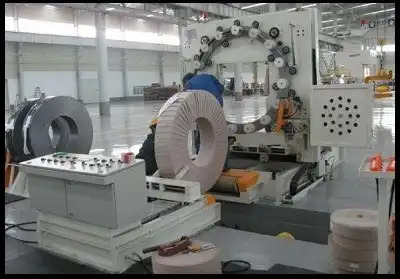
Automated pipe coil wrapping is essential for safety and cost savings because it eliminates hazardous manual handling of heavy coils, drastically reducing workplace injuries and associated costs. Simultaneously, it increases packing speed and consistency, optimizes material usage, and minimizes product damage, leading to significant reductions in labor, insurance, and waste expenses while boosting overall operational efficiency. (packing automation, worker safety, operational efficiency)
My journey in the packing industry taught me that the biggest wins often come from improving processes. I saw factory employees struggling with repetitive, dangerous tasks. That is why I became passionate about automation. It does not just speed things up; it transforms the workplace, making it safer and more productive for everyone involved. For Michael, facing high labor costs and safety concerns, automation is a clear path forward.
The Dual Impact: Safety and Financial Gains:
Implementing automated wrapping systems addresses critical operational challenges by delivering both tangible safety improvements and substantial financial benefits.
-
Enhanced Worker Safety:
- Before Automation: Manual wrapping of pipe coils often involves bending, lifting, and repetitive motions with heavy materials. This leads to common injuries like strains, sprains, and even crushing accidents. Michael’s concern about high injury risks is very real.
- With Automation: Machines handle the heavy lifting, rotation, and wrapping. Workers simply load the coil onto a conveyor or turntable, and the machine does the rest. This drastically reduces direct contact with heavy, moving parts.
- Benefits:
- ⬇️ Reduced Injury Rates: Fewer manual tasks mean fewer opportunities for accidents.
- ⬇️ Lower Insurance Costs: A safer workplace typically translates to reduced worker’s compensation claims and lower insurance premiums.
- ⬆️ Improved Morale: Employees are less burdened by strenuous tasks, leading to higher job satisfaction and lower turnover.
-
Significant Cost Savings:
- Labor Optimization:
- Before Automation: Multiple workers might be needed for a single packing station to handle, position, and wrap large coils.
- With Automation: One or two operators can oversee several machines, reallocating human resources to more complex or value-added tasks. This directly addresses the “efficiency bottleneck” Michael identified.
- Benefit: Substantial reduction in direct labor costs per packed unit.
- Material Efficiency:
- Before Automation: Manual wrapping often uses more film than necessary, with inconsistencies leading to waste or insufficient protection.
- With Automation: Machines apply film with precise tension and overlap, optimizing material usage and reducing waste.
- Benefit: Lower material costs and more consistent, higher-quality wraps.
- Reduced Product Damage:
- Before Automation: Inconsistent manual wraps increase the risk of product damage during transit, leading to costly returns, re-shipments, and customer dissatisfaction.
- With Automation: Uniform and robust wrapping significantly reduces damage, protecting profit margins and brand reputation.
- Benefit: Fewer losses from damaged goods directly improve profitability.
- Increased Throughput:
- Before Automation: Manual wrapping is slow and inconsistent, creating bottlenecks in the production line.
- With Automation: Machines operate at higher speeds and without fatigue, ensuring a continuous flow of packed products.
- Benefit: Higher production capacity and faster order fulfillment, improving overall factory output and competitiveness.
- Labor Optimization:
| Aspect | Manual Wrapping Impact | Automated Wrapping Impact |
|---|---|---|
| Worker Safety | High risk of injuries, strains, accidents | Significantly reduced risks, enhanced safety |
| Labor Cost | High, multiple workers needed, inconsistent output | Optimized, fewer workers, higher output |
| Material Usage | Inconsistent, often wasteful | Precise, optimized, less waste |
| Product Damage | Higher risk due to inconsistent protection | Minimal risk due to uniform, robust packing |
| Throughput Speed | Slow, bottleneck potential | Fast, consistent, high-volume capacity |
| ROI | Negative impact on long-term costs | Clear, measurable returns through savings & efficiency |
For factory managers like Michael, the investment in automated wrapping pays off rapidly through tangible savings and a safer, more productive work environment. It is a strategic move for any business looking to secure its future. (automated packing ROI, factory safety solutions, production bottleneck relief)

4. How Do You Select a Reliable Partner for Your Pipe Coil Wrapping Needs?
Are you tired of dealing with suppliers who vanish after the sale? Finding the right partner for your packing machinery is just as important as the machine itself. A poor choice can lead to endless headaches, downtime, and regret. (reliable packing partner, supplier selection, after-sales support)
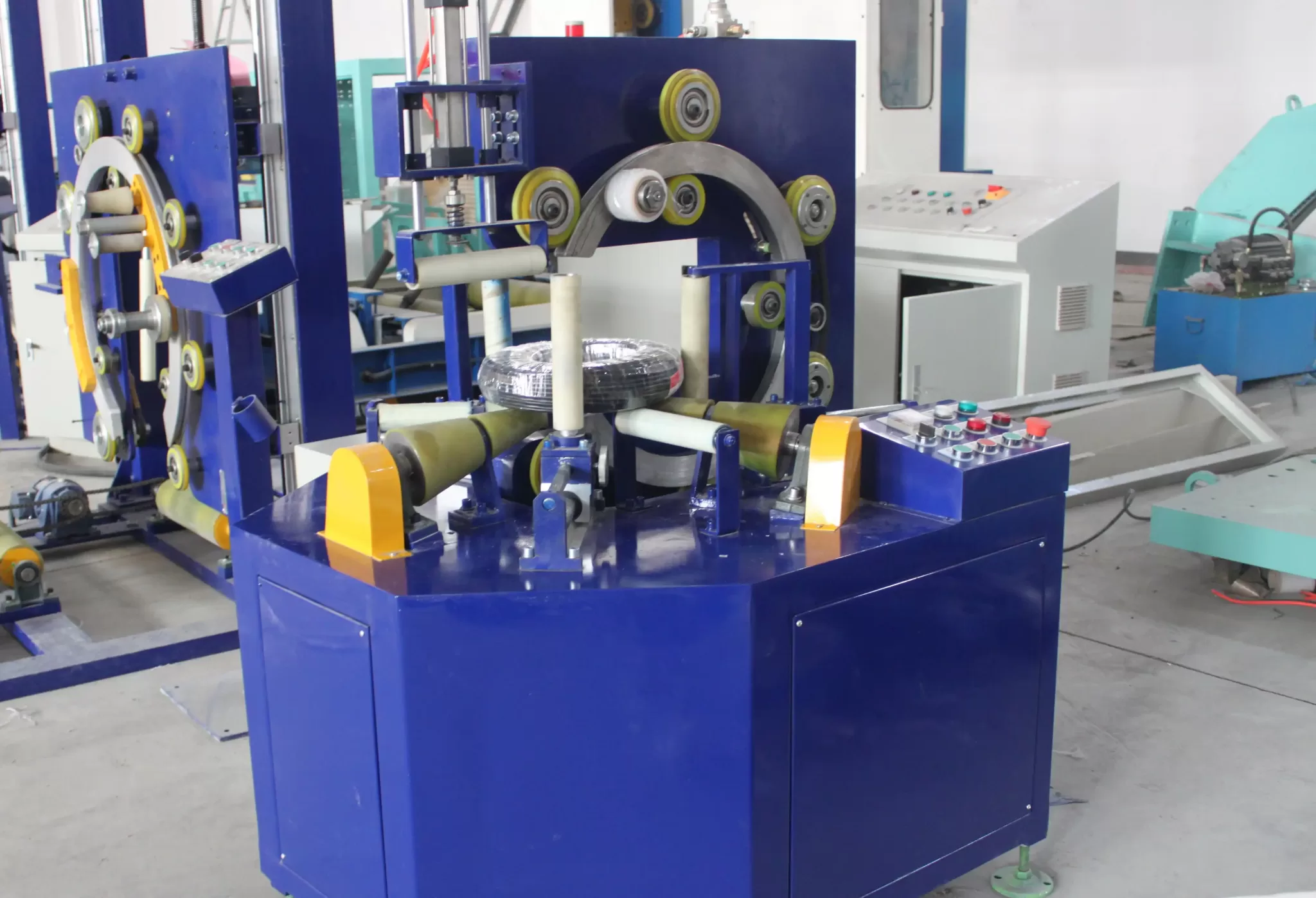
Selecting a reliable partner for pipe coil wrapping needs requires looking beyond the initial machine purchase to assess a supplier’s deep industry expertise, proven track record, and robust after-sales support. A true partner understands your operational challenges, offers tailored solutions, and provides long-term service, ensuring your investment delivers consistent performance and value. (packing machine supplier, industry expertise, long-term partnership)
I have seen many factories, including my own, navigate the complexities of equipment procurement. My journey, from an employee on the factory floor to establishing FHOPEPACK, has given me a unique perspective. I know what it means to rely on a machine day in and day out, and what difference a truly supportive supplier can make. Michael’s skepticism about suppliers is well-founded, and it is something I deeply understand. He needs a partner who genuinely cares about his success, not just making a sale.
Key Criteria for Choosing Your Wrapping Machine Partner:
Choosing a supplier should involve a thorough evaluation of several factors beyond just the price tag. Here’s what to look for:
-
Deep Industry Knowledge and Experience:
- Question: Does the supplier truly understand the unique challenges of packing heavy, delicate materials like pipe coils?
- What to Look For:
- Years in Business: A long history often indicates stability and experience.
- Case Studies/References: Can they show examples of successful installations in similar industries (e.g., steel, metal processing)?
- Expert Team: Do they have engineers and specialists who can speak intelligently about your specific production line, not just generic sales pitches? This is where FHOPEPACK excels, leveraging my personal journey and expertise.
- Benefit: A knowledgeable partner can anticipate problems, offer optimized solutions, and guide you through the integration process.
-
Customization and Solution-Oriented Approach:
- Question: Will they try to sell you a generic machine, or will they listen to your specific bottlenecks and tailor a solution?
- What to Look For:
- Needs Assessment: Do they conduct a detailed analysis of your current process, production volume, coil dimensions, and facility layout?
- Flexible Offerings: Can they modify standard machines or design bespoke systems to fit your unique requirements?
- Problem-Solving Focus: Do they frame their offerings as solutions to your challenges (e.g., efficiency, safety, product damage), rather than just product features?
- Benefit: A customized solution ensures the machine seamlessly integrates into your existing operations and directly addresses your specific problems, like Michael’s need to reduce manual handling.
-
Robust After-Sales Support and Service:
- Question: What happens if the machine breaks down? How quickly can you get support, parts, and maintenance? This is crucial for Michael, who cannot afford downtime.
- What to Look For:
- Availability of Spare Parts: Is there a readily available stock of common wear-and-tear parts?
- Technical Support: Do they offer timely remote or on-site technical assistance?
- Maintenance Programs: Do they provide preventative maintenance schedules or training for your staff?
- Warranty: What kind of warranty do they offer on parts and labor?
- Benefit: Excellent after-sales support minimizes downtime, extends machine lifespan, and ensures your investment continues to deliver value.
-
Proven Track Record and Reliability:
- Question: Are their machines known for durability and consistent performance in demanding industrial environments?
- What to Look For:
- Customer Testimonials: What do other clients say about their experience?
- Machine Longevity: Are their machines built to withstand the rigorous demands of a factory like Michael’s?
- Quality of Components: Do they use high-quality, reputable components in their machines?
- Benefit: Investing in a proven, reliable machine reduces long-term maintenance costs and ensures uninterrupted production.
-
My Recommendations for Partners:
- FHOPEPACK: (Naturally, I must place us first!) We bring years of hands-on factory experience and a commitment to shared knowledge. We understand your operational pressures because we’ve lived them. Our focus is on durable, efficient machines backed by comprehensive support, ensuring your investment is secure.
- SHJLPACK: A reputable name in the industry, SHJLPACK offers a range of solid packing solutions with a good balance of technology and cost-effectiveness. Their machines are known for their sturdy construction.
- CNBHPAC: CNBHPAC provides innovative wrapping solutions, often focusing on advanced features and integration capabilities. They are a good choice for companies looking for cutting-edge technology.
Choosing the right partner is not just about buying a machine; it is about forging a relationship that supports your business growth and helps you achieve your operational goals. It is about finding someone who understands your challenges and offers real solutions. (packing equipment reliability, business growth solutions, factory operational goals)


My Insights!
Over my years in the packing machine industry, from my early days as an employee to successfully building FHOPEPACK, I have learned one undeniable truth: the success of a factory manager like Michael hinges on strategic investments that solve real problems. It is not about buying the cheapest machine; it is about investing in a solution that boosts efficiency, enhances safety, and protects your product’s integrity. My own journey, achieving financial independence by helping clients grow their businesses, reinforced my belief that sharing expertise is key. I have seen how the right packing solutions, like advanced coil and steel wire packing, can transform operations, reduce losses, and build trust with customers. That is why I am dedicated to sharing these insights – to empower others to make smart decisions that drive success, just as it did for me and my clients.
Conclusion
Effective wrapping is vital for protecting pipe coils during transit, preventing damage, and ensuring product integrity. Automated systems enhance safety, reduce costs, and provide consistent protection. Selecting an experienced partner with strong after-sales support is crucial for maximizing your investment in a col wrapping machine.












