
1. What Innovative Materials Are Used in Steel Wire Packing?
Steel wire packing, while seemingly straightforward, is undergoing a quiet revolution driven by innovative materials. Traditional methods are being challenged as industries demand better protection, sustainability, and efficiency in material handling and transportation. This evolution is crucial for maintaining the integrity of steel wire, a fundamental component across numerous sectors.
Innovative materials in steel wire packing include advanced polymers, composites, and specialized coatings. These offer enhanced protection against corrosion, physical damage, and environmental factors, extending the lifespan and usability of steel wire during storage and transit.
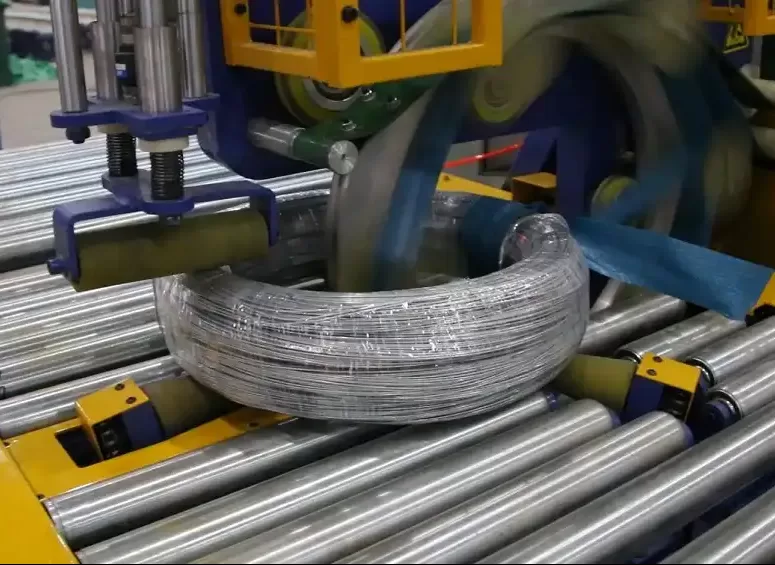
This exploration into innovative materials will reveal how these advancements are reshaping steel wire packing, offering solutions that are both practical and forward-thinking. Let’s delve into the specifics of these materials and their impact on the industry.
2. Advanced Polymers: Enhancing Flexibility and Protection
Polymers have emerged as a versatile alternative to traditional steel wire packing materials, offering a spectrum of properties that cater to diverse needs. Their flexibility, durability, and resistance to various environmental factors make them ideal for modern packing solutions.
Advanced polymers like high-density polyethylene (HDPE), polypropylene (PP), and polyvinyl chloride (PVC) are increasingly used in steel wire packing due to their superior flexibility, impact resistance, and moisture barrier properties. These polymers can be engineered to provide customized protection levels, ensuring the integrity of steel wire during handling and transportation.
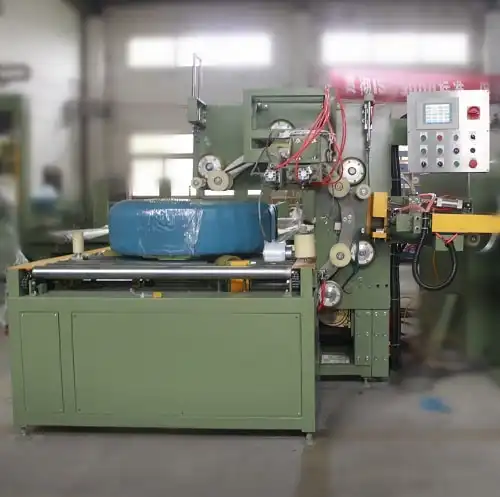
The Versatility of Polymer-Based Packing Solutions
The adoption of polymers in steel wire packing is not merely a material substitution; it represents a paradigm shift towards tailored protection. Polymers can be engineered to meet specific requirements, offering solutions that are both effective and economically viable. To understand the breadth of their application, let’s consider a comparative analysis of different polymer types and their suitability for steel wire packing.
Polymer Material Comparison for Steel Wire Packing
| Polymer Type | Key Advantages | Limitations | Ideal Applications |
|---|---|---|---|
| High-Density Polyethylene (HDPE) | High strength-to-density ratio, moisture resistance, chemical resistance | Lower flexibility compared to LDPE, can become brittle in very cold temperatures | Heavy gauge steel wire, long-term storage, outdoor transportation |
| Polypropylene (PP) | Excellent chemical resistance, high fatigue resistance, lightweight | Lower impact strength at low temperatures, UV degradation without stabilizers | Medium gauge steel wire, chemical environments, general purpose packing |
| Polyvinyl Chloride (PVC) | Flame retardant, good electrical insulation, cost-effective | Can become brittle over time, environmental concerns regarding production and disposal | Light gauge steel wire, electrical applications, indoor storage |
| Thermoplastic Polyurethane (TPU) | Exceptional abrasion resistance, high elasticity, oil and grease resistance | Higher cost compared to commodity polymers, temperature sensitivity | Specialized steel wire, demanding environments, high-wear applications |
This table highlights the nuanced choices available within polymer materials. For instance, HDPE excels in providing robust protection for heavy steel wire coils intended for harsh environments, whereas PVC offers a cost-effective solution for lighter gauge wires in less demanding applications. The selection process hinges on a detailed understanding of the steel wire’s intended use, transportation conditions, and storage environment. This level of material specificity is a hallmark of innovative packing solutions, moving away from one-size-fits-all approaches to highly optimized, application-driven strategies.
3. Composite Materials: Strength and Lightweight Efficiency
Composite materials, combining the strengths of two or more distinct materials, are making inroads into steel wire packing. These materials offer an exceptional balance of high strength and low weight, crucial for efficient and secure packing, especially for large steel wire coils.
Steel wire packing is benefiting from composite materials that blend high-strength fibers with polymer matrices. These composites, such as fiber-reinforced plastics (FRP), provide superior tensile strength and impact resistance while being significantly lighter than traditional steel packing materials, improving handling and reducing transportation costs.
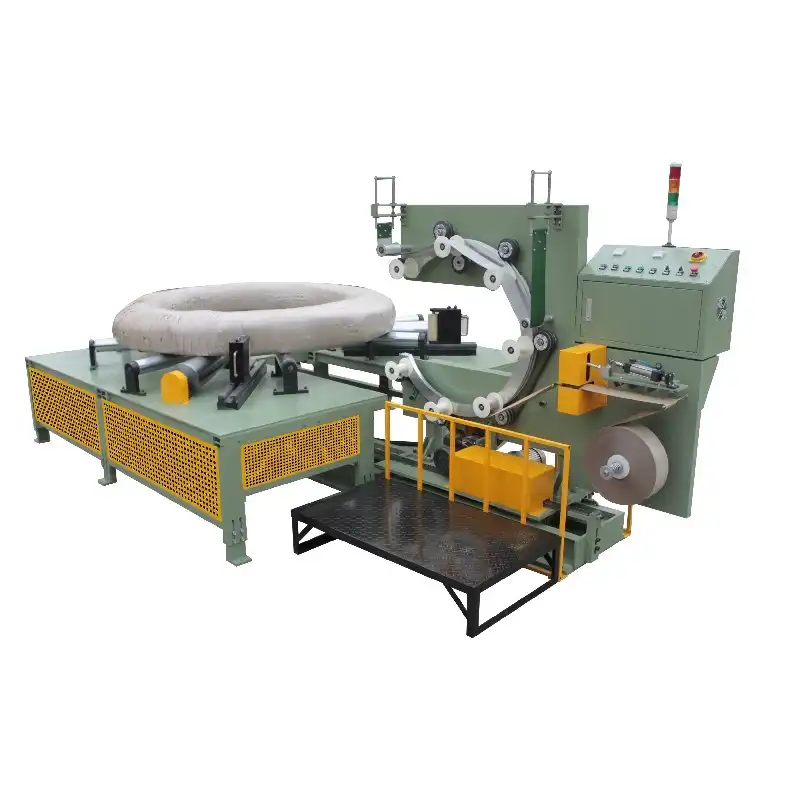
-
Exploring Fiber-Reinforced Composites in Packing
The innovation in composite materials extends beyond mere strength enhancement; it’s about creating intelligent structures. By carefully selecting and orienting reinforcing fibers within a polymer matrix, engineers can tailor the mechanical properties of the packing material to match the specific stresses encountered during steel wire handling and transportation.
To illustrate the advantage of composites, consider the following comparison against traditional steel and polymer packing materials:
| Material Type | Strength-to-Weight Ratio | Impact Resistance | Corrosion Resistance | Cost |
|---|---|---|---|---|
| Steel | High | High | Low | High |
| Polymer (HDPE) | Medium | Medium-High | High | Medium-Low |
| Fiber-Reinforced Plastic (FRP) | Very High | High | High | Medium-High |
As the table indicates, FRP composites offer a superior strength-to-weight ratio compared to both steel and polymers. This is particularly advantageous in packing large steel wire coils, where reducing the overall weight of the packed unit can lead to significant savings in transportation costs and easier handling. Moreover, the inherent corrosion resistance of the polymer matrix in FRPs eliminates the need for additional protective coatings often required with steel packing, streamlining the packing process and reducing material usage. The cost-effectiveness of composites, positioned between steel and specialized polymers, makes them a compelling choice for industries seeking a balance of performance and economy in steel wire packing solutions.
4. Specialized Coatings: Targeted Protection
Beyond bulk materials, specialized coatings represent another frontier in innovative steel wire packing. These coatings are applied to either the steel wire itself or the packing material to impart specific protective properties, such as enhanced corrosion resistance or abrasion protection.
Specialized coatings, including anti-corrosion paints, polymer coatings, and nano-materials, are applied to steel wire packing to provide targeted protection against specific threats. These coatings can drastically improve resistance to saltwater, humidity, and physical abrasion, ensuring the longevity of the packed steel wire, especially in harsh environments.

The Power of Surface Engineering in Wire Protection
The application of specialized coatings is a form of surface engineering, focusing on modifying the outermost layer of materials to achieve desired functionalities without altering the bulk properties. This approach is particularly effective in steel wire packing, where the surface is the primary interface with the external environment and thus the first line of defense against degradation.
For example, advanced anti-corrosion coatings are formulated to create a barrier against moisture and corrosive agents, dramatically reducing the risk of rust and degradation of the steel wire, especially during prolonged storage or maritime transport. Polymer coatings can offer enhanced abrasion resistance, protecting the wire from surface damage during handling and transit. Emerging nanomaterial coatings, such as graphene-based coatings, are being explored for their exceptional barrier properties and potential to provide self-healing capabilities, further extending the lifespan of the protection. These coatings are not merely add-ons but integral components of an innovative packing strategy, tailored to the specific challenges of steel wire preservation. The precision and effectiveness of specialized coatings highlight a move towards smarter, more targeted protection mechanisms in steel wire packing.
5. Research Developments and Future Trends
The field of steel wire packing is not static; ongoing research and development are continually pushing the boundaries of material innovation. From self-healing polymers to biodegradable composites, the future of steel wire packing promises even more sustainable and high-performance solutions.
Ongoing research is exploring biodegradable polymers and self-healing coatings for steel wire packing. These advanced materials aim to enhance sustainability and longevity, reducing environmental impact and maintenance needs. Future trends indicate a move towards smart packing solutions with integrated sensors for real-time monitoring of wire condition during transit.
Looking Ahead: Sustainable and Smart Packing
The trajectory of innovation in steel wire packing is clearly directed towards sustainability and intelligence. Biodegradable polymers address the growing global concern over plastic waste, offering packing solutions that can naturally decompose at the end of their lifecycle, reducing landfill burden and environmental persistence. Self-healing coatings represent a leap in material durability, capable of automatically repairing minor damages and extending the protective lifespan, thereby minimizing material consumption and replacement frequency.
Furthermore, the integration of smart technologies into packing materials is on the horizon. Imagine steel wire packing embedded with sensors that monitor temperature, humidity, and physical stress in real-time, transmitting data wirelessly to stakeholders. Such smart packing solutions would revolutionize supply chain management, enabling proactive interventions to prevent damage, optimize storage conditions, and enhance traceability. This convergence of material science with digital technology signals a transformative phase in steel wire packing, promising solutions that are not only protective and efficient but also environmentally responsible and intelligently managed. The emphasis on research developments underscores a commitment to continuous improvement and a vision for a future where steel wire packing is synonymous with sustainability, resilience, and smart functionality.
Conclusion
Innovative materials are fundamentally changing steel wire packing, driven by demands for enhanced protection, efficiency, and sustainability. From advanced polymers and composites to specialized coatings and emerging smart materials, the industry is embracing solutions that are more tailored, high-performing, and environmentally conscious. This evolution ensures that steel wire, a critical material in countless applications, is packed and transported with the utmost care and foresight, ready for its intended purpose.








