
What Factors Affect the Price of an Automatic Steel Coil Packaging Line?
Investing in an automatic steel coil packaging line feels like a big step. Many plant managers and owners, just like I was when I first started FHOPEPACK, face the challenge of justifying the upfront cost. It is easy to get lost in numbers, and many worry about hidden expenses or choosing the wrong solution. This kind of investment is critical. A misstep can lead to lower efficiency, increased labor costs, and even product damage. You need to understand what drives the price to make a smart decision.
The price of an automatic steel coil packaging line is not a single figure. It depends on several key factors. These include the level of automation and customization required, the quality and type of machine components and technology used, the line’s capacity and speed based on coil specifications, the extent of system integration and ancillary equipment needed, and the crucial aspects of installation, training, and long-term after-sales support.

Understanding these factors is not just about getting a quote. It is about seeing the real value of your investment. It helps you find a partner who truly understands your specific needs, whether you are dealing with high volumes of cold-rolled coils or diverse product lines. Let us explore each element that contributes to the final price. This knowledge will empower you to choose the best solution for your business.
What Level of Automation and Customization Drives the Cost?
Many people think “automation” is a single concept. But it is not. The reality is that automation can range from simple machine assistance to a fully integrated, hands-free system. This spectrum directly impacts both the price and the overall capability of your packaging line. If you choose too little automation, you might not solve your labor issues or improve efficiency enough. If you choose too much, you might overspend on features you do not really need.
The degree of automation, from semi-automatic assist to a fully integrated and automated system, is a primary price driver for an automatic steel coil packaging line. Similarly, whether you opt for a standard, off-the-shelf solution or a bespoke, customized design tailored to unique coil specifications and production flows significantly influences the final investment.
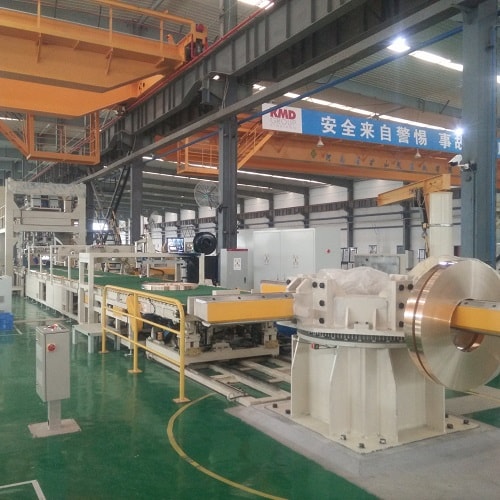
When I founded FHOPEPACK, I learned firsthand that every factory has unique needs. A “one-size-fits-all” approach often fails. For example, a steel mill managing diverse products like cold-rolled, galvanized, and color-coated coils needs a flexible solution. Manual switching between packaging types slows things down. We aim to make the best customized packing solution per requirement. This focus means understanding your specific operational challenges.
Here is how automation and customization typically break down in terms of cost:
-
Standard vs. Custom Solutions:
- Standard Machines: These are pre-designed for common coil sizes and packaging methods. They usually cost less and have faster delivery times. They are great if your production needs are typical and do not vary much.
- Customized Lines: These are built specifically for your factory. They account for unique coil dimensions, production line integration, special packaging materials, or specific throughput requirements. They involve more engineering and design work. This makes them more expensive. For instance, if you need to pack coils weighing 1-3 tons with varying inner and outer diameters, a custom solution ensures perfect fit and function. My experience taught me that investing in a custom solution, when truly needed, offers better long-term returns through optimal performance and fewer bottlenecks.
-
Levels of Automation:
- Semi-Automatic Systems: These require human operators for some tasks, like loading coils or applying straps. They offer a good balance between automation benefits and lower initial cost. They can help reduce some manual labor and improve consistency.
- Fully Automatic Systems: These handle almost all tasks without human intervention. This includes coil feeding, wrapping, strapping, labeling, and even conveying. They offer maximum efficiency, safety, and consistency. These systems are ideal for high-volume operations running two shifts, like many steel mills. They significantly reduce labor dependency and the risk of manual errors.
- Integrated Automation Lines: These are fully automatic systems that connect seamlessly with your existing production line. They might include automatic coil turning, stacking, and connection to your factory’s data systems. This level of integration represents the highest investment. However, it delivers the most significant improvements in overall production flow and data management. It helps achieve goals like reducing manual handling and ensuring consistent packaging quality for export. (automatic coil packaging line automation levels, customized steel coil packaging cost, industrial packaging solution pricing)
Which Machine Components and Technology Influence the Price Tag?
Looking at different machines, they might all seem similar from the outside. But the true value and cost often lie within the components and technology used. Choosing a machine with lower-quality parts might seem like a saving initially. However, it often leads to frequent breakdowns, higher maintenance costs, and significant production downtime. This can be much more expensive in the long run.
The quality, origin, and specific type of components—such as motors, sensors, programmable logic controllers (PLCs), and pneumatic or hydraulic systems—and the embedded technology directly impact an automatic steel coil packaging line’s price. Premium, reliable parts from reputable global brands, coupled with advanced control systems, ensure durability, precision, and efficiency, thereby increasing the initial investment.
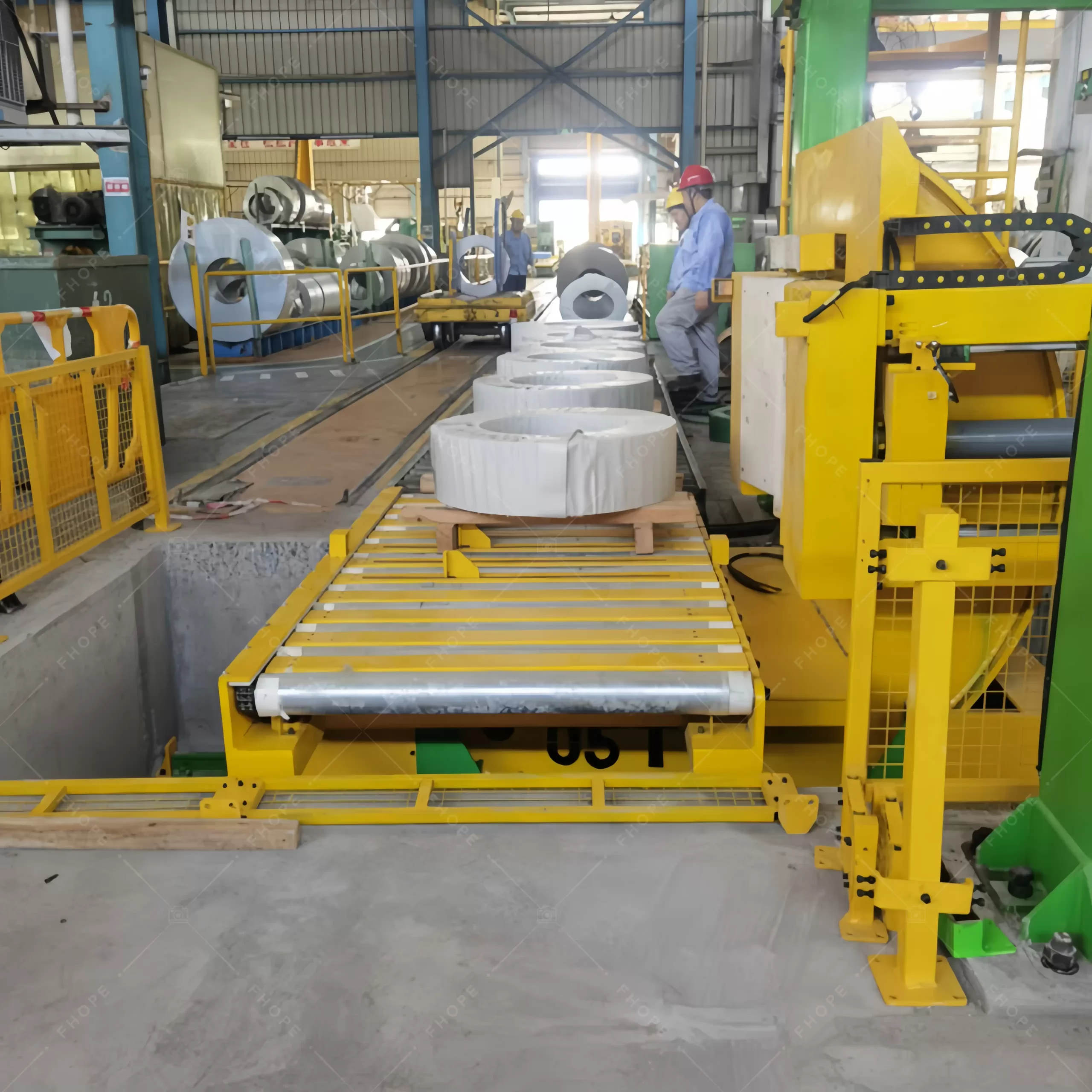
At FHOPEPACK, we prioritize robust engineering because I know firsthand the challenges of running a factory. Continuous operation, especially in harsh environments like steel mills, demands reliability. Ivan Petrov, for example, needs a system capable of 24-hour, two-shift operations. This kind of demanding schedule means every component must perform flawlessly.
Let us look at the key elements that impact the price:
-
Component Quality and Brand:
- Standard Components: These are often from local or lesser-known manufacturers. They can keep the initial machine price lower. However, they might offer shorter lifespans and less consistent performance.
- Premium Components: These come from globally recognized brands like Siemens, Schneider, Omron, or Festo. They cost more. But they offer superior reliability, precision, and a longer operational life. They also come with better global support and spare parts availability. For critical parts like motors and gearboxes, this quality is non-negotiable for consistent operation.
-
Embedded Technology and Control Systems:
- Basic PLCs and HMI: A basic PLC handles essential machine functions. A simple Human-Machine Interface (HMI) allows operators to control the machine. This is standard for most automatic lines.
- Advanced Control Systems: These include high-end PLCs, sophisticated HMIs with detailed diagnostics, and integration capabilities. These systems allow for remote monitoring, predictive maintenance, and seamless communication with your factory’s central management systems (MES/ERP). This level of technology enables features like automatic barcode labeling and precise tension control for wrapping.
- IoT and Industry 4.0 Readiness: Some machines are designed with IoT sensors and connectivity. This allows for data collection, performance analysis, and remote troubleshooting. This future-proofs your investment but adds to the cost.
-
Safety Features:
- Modern packaging lines include various safety measures. These include emergency stop buttons, safety light curtains, interlocking gates, and robust guarding. These features protect workers and ensure compliance with international standards like CE or ISO. Incorporating these advanced safety protocols adds to the machine’s complexity and cost. (packaging machine technology cost, industrial component pricing, coil wrapper durability, PLC control system price)
How Do Capacity, Speed, and Coil Specifications Impact Pricing?
It is common for businesses to focus on the immediate need without fully considering future growth or variations in production. Under-specifying your packaging line’s capacity can lead to bottlenecks and missed deadlines as your business expands. On the other hand, over-specifying can mean unnecessary capital expenditure. Finding the right balance for your automatic steel coil packaging line is crucial for long-term success.
The required throughput speed, the precise range of coil dimensions—including inner and outer diameters, width, and weight—and the material handling capacity significantly dictate the engineering, structural design, and motor requirements, thereby directly influencing the manufacturing cost of an automatic coil packing line. Larger, heavier, or more varied coils demand more robust and adaptable machinery.

As an engineer and factory owner, I have seen how critical it is to match the machine to the actual production demands. For clients like Ivan Petrov, who handles hundreds of tons daily with coils ranging from 1 to 3 tons and varying dimensions, a flexible yet robust solution is essential. The packaging line needs to adapt to product diversity without compromising efficiency or quality.
Let us break down how these factors influence the price:
-
Coil Dimensions and Weight:
- Size Range: Machines designed to handle a wider range of coil diameters, widths, and inner diameters require more complex and adjustable mechanisms. This flexibility in design adds to the manufacturing cost.
- Weight Capacity: Heavier coils (like Ivan’s 1-3 ton coils) demand stronger frames, more powerful motors for rotation and conveying, and more robust lifting and turning devices. The structural integrity and durability needed for heavy-duty operations directly increase material and engineering costs.
-
Throughput Speed and Production Volume:
- Cycle Time: A faster packaging cycle means the machine must operate with higher precision and speed. This often requires more advanced control systems, faster actuators, and potentially multiple parallel stations to meet the desired throughput.
- High Volume Operations: For steel mills producing hundreds of tons per day, the packaging line needs to keep up. This means robust construction to handle continuous operation and efficient mechanisms to minimize downtime. Achieving higher speeds while maintaining packaging quality and safety significantly increases the overall machine cost.
-
Packaging Material and Method Versatility:
- Material Types: The ability to use different packaging materials, such as PET strapping, steel strapping, stretch film, VCI paper, or woven fabric, requires specialized applicators and control systems. For instance, Ivan needs options for anti-corrosion, anti-rust, and anti-scratch packaging. This versatility ensures the correct protection for different products like cold-rolled, galvanized, or color-coated coils.
- Combined Methods: Some lines offer a combination of methods, like strapping followed by stretch wrapping or VCI paper application. These multi-functional lines are more complex and thus more expensive. They provide comprehensive protection, meeting high customer expectations, especially for export. (high-speed coil packing cost, heavy-duty coil packaging machine price, flexible packaging solutions budget, steel coil dimensions packaging)
What Role Does System Integration and Ancillary Equipment Play in the Overall Cost?
It is a common mistake to focus only on the main packaging machine. Many businesses overlook the surrounding systems and additional equipment needed for a fully functional, efficient line. Ignoring system integration and auxiliary components can lead to operational inefficiencies, unexpected costs during installation, and ultimately, a less effective packaging solution. A truly effective solution must be holistic.
The cost of an automatic steel coil packaging line extends significantly beyond the core machine itself. It encompasses the necessary integration with existing production lines, the complete material handling system (including conveyors, up-enders, and down-enders), and essential additional equipment such as automatic labeling machines, weighing scales, or robotic palletizing systems. These elements are critical for a seamless, automated workflow and contribute substantially to the total investment.

My journey from a factory employee to establishing FHOPEPACK taught me the immense value of a smoothly integrated system. It is not just about individual machines. It is about how they work together to create a continuous, efficient flow. Clients like Ivan Petrov are looking for a “turnkey solution” that can seamlessly connect with their cold rolling and slitting lines. They need a system that reduces manual intervention at every stage.
Here is how system integration and ancillary equipment impact the total price:
-
Material Handling Systems:
- Conveyors: These are essential for moving coils safely and efficiently through the packaging line. The type (roller, chain), length, and load capacity of conveyors all add to the cost. For heavy steel coils, robust, motorized conveyors are necessary.
- Up-enders/Down-enders: These machines change the orientation of the coils, from horizontal to vertical or vice versa. They are crucial for automated handling and positioning. Their design must match the coil weight and dimensions, adding significant cost due to their robust construction and hydraulic or mechanical systems.
- Loading/Unloading Systems: Automated cranes, coil cars, or robotic arms for feeding coils into the line and removing packaged coils are often integrated. These complex systems enhance safety and speed but require substantial investment.
-
Integration with Existing Production Lines:
- Seamless Connection: Integrating the packaging line with your upstream production (e.g., cold rolling or slitting lines) ensures a continuous flow. This might involve custom interfaces, sensor synchronization, and communication protocols. Such integration prevents bottlenecks and optimizes overall factory output.
- MES/ERP Connectivity: Connecting the packaging line’s control system with your manufacturing execution system (MES) or enterprise resource planning (ERP) system allows for real-time data exchange, order management, and inventory tracking. This level of digital integration enhances operational intelligence but also adds complexity and cost to the software and hardware.
-
Ancillary Equipment and Add-ons:
- Automatic Labeling and Barcoding: Machines that automatically apply labels with product information, barcodes, or QR codes are vital for tracking and logistics, especially for export customers requiring CE/ISO certification and specific barcoding.
- Weighing Scales: Integrated weighing systems provide accurate weight data for each packaged coil.
- Robotic Palletizing/Stacking: For certain applications, robotic systems can automatically stack packaged coils, further reducing manual labor and improving safety.
- Safety Fencing and Guarding: Comprehensive safety enclosures, light barriers, and access control systems are critical for worker protection and compliance, contributing to the overall system cost. (integrated packaging line price, material handling system cost, complete packaging solution budget, coil upender price)
How Do Installation, Training, and After-Sales Support Affect the Investment?
The purchase of an automatic steel coil packaging line is just the beginning of your investment. Without proper installation, thorough training for your team, and reliable ongoing support, even the most advanced machine can become a liability. Many businesses underestimate these crucial post-purchase elements, leading to operational issues and unexpected costs down the line.
The total investment in an automatic steel coil packaging line includes critical post-purchase services. These are professional installation and commissioning, comprehensive operator and maintenance training, robust ongoing technical support, and a dependable warranty with readily available spare parts. These services ensure the machine’s optimal performance, longevity, and uptime, significantly affecting the overall cost and long-term value.
My experience has taught me that a machine is only as good as its support system. When I started FHOPEPACK, I committed to providing holistic solutions, not just machines. Clients like Ivan Petrov need a long-term partner who can offer “turnkey engineering, after-sales training, and spare parts guarantee.” This approach minimizes downtime and helps clients grow their businesses, just as I grew mine.
Here is how these services contribute to the overall price:
-
Professional Installation and Commissioning:
- Expert Engineers: Installing a complex automatic packaging line requires specialized knowledge. Professional engineers ensure correct assembly, precise alignment, and proper connection to power and air systems.
- On-site Commissioning: This involves testing the machine with actual coils, fine-tuning settings, and ensuring it meets performance specifications. This critical phase minimizes initial operational problems. The cost covers travel, accommodation, and labor for the engineering team, which can be substantial, especially for international installations.
-
Operator and Maintenance Training:
- Comprehensive Programs: Training is essential for safe and efficient operation. It covers daily machine operation, troubleshooting common issues, basic maintenance tasks, and safety protocols.
- Long-term Value: Well-trained operators can prevent mistakes, reduce minor breakdowns, and extend the machine’s life. The cost includes training materials, instructor fees, and sometimes travel. A good training program ensures your team can maximize the machine’s potential.
-
After-Sales Support and Technical Assistance:
- Remote Support: Many suppliers offer remote diagnostics and support via phone or internet. This can quickly resolve minor issues.
- On-site Support: For more complex problems, on-site technical visits are necessary. The availability and responsiveness of this support are crucial for minimizing downtime.
- Service Contracts: Many companies offer various service level agreements (SLAs) ranging from basic support to comprehensive preventative maintenance programs. These contracts come with recurring costs but provide peace of mind and help ensure continuous operation.
-
Warranty and Spare Parts:
- Warranty Period: A standard warranty typically covers parts and labor for a certain period. Longer or extended warranties increase the initial price but offer more protection.
- Spare Parts Availability: Ensuring that spare parts are readily available is vital. Suppliers with global networks or local warehouses, like FHOPEPACK, can provide parts quickly. The cost of maintaining a stock of critical spare parts or their quick delivery can influence the overall investment and operational budget. (packaging machine installation cost, after-sales service pricing, industrial equipment warranty, coil packing line training)
Conclusion
Understanding the factors that affect the price of an automatic steel coil packaging line is key to a smart investment. It is not just about the initial quote. It is about considering automation levels, component quality, capacity, system integration, and critical after-sales support. My journey has shown me that investing wisely means looking for a long-term partner who provides tailored solutions and reliable service. Choose a solution that brings value, efficiency, and safety to your operations. FHOPEPACK offers excellent options for a coil packing line tailored to your needs.








