
What Are the Pros and Cons of Using Orbital Wrapping Machines in Italy’s Household and Consumer Goods Industry?
Imagine your factory floor in Italy, busy with production, but then the packaging line slows down. Products stack up, and workers struggle with manual wrapping. This bottleneck is not just an annoyance; it costs your business time and money. It also risks product damage and worker safety. Many factory managers face this exact problem, wondering how to make their end-of-line operations as efficient as the rest.
Using orbital wrapping machines in Italy’s Household and Consumer Goods (HCG) industry offers significant advantages, including improved product protection, increased operational efficiency, and enhanced worker safety. However, businesses must also consider the initial investment costs, potential integration complexities, and specific maintenance requirements before adopting this technology.

As an experienced packing machine engineer who has built and run my own factory, I know these challenges well. I have seen how the right equipment can transform a business. Let’s look deeper into how orbital wrapping machines fit into the Italian HCG landscape. We will explore both their benefits and their drawbacks. This way, you can make a truly informed decision for your operations.
How Do Orbital Wrapping Machines Boost Efficiency in Italy’s HCG Sector?
Think about your current packaging process. Is it slow? Does it need many people? If so, your factory is probably wasting valuable time and labor. This inefficiency directly impacts how fast you can get products out the door. It also affects your bottom line. You might feel stuck between wanting to speed things up and worrying about the cost of new equipment.
Orbital wrapping machines significantly boost efficiency in Italy’s HCG sector by automating the packaging process. This reduces the need for manual labor, increases wrapping speed, and ensures consistent packaging quality. They handle various product shapes and sizes quickly, leading to faster throughput and improved overall productivity for consumer goods manufacturers.
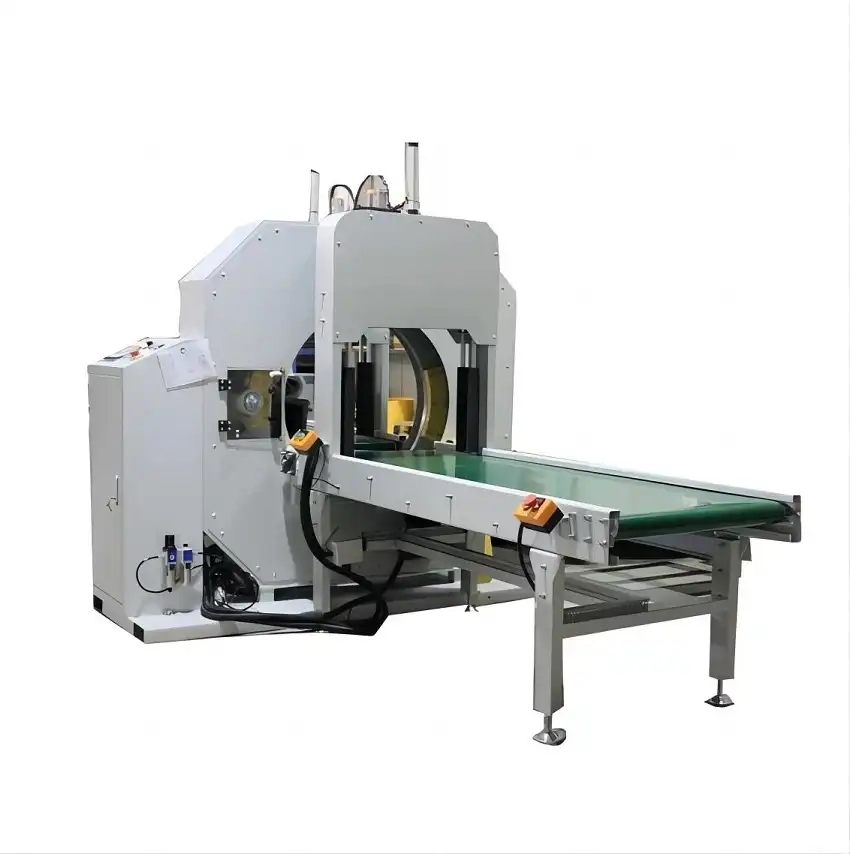
From my years in the packing machine industry, I have seen firsthand the power of automation. Whether it is steel coils or delicate household items, the goal is always the same: do more, faster, with fewer resources. Orbital wrappers excel at this. They can wrap products that traditional stretch wrappers cannot handle well, like long furniture components or bundled items. This capability saves time that workers would otherwise spend manually securing these products. It also frees up staff for other tasks. This means a smoother, quicker operation from start to finish.
Automating the Packaging Process for Speed
Manual packaging is often slow and inconsistent. Workers must walk around the product, pull the film, and secure it by hand. This takes a lot of time, especially for large or heavy items. Orbital wrapping machines remove these manual steps. They wrap products as they pass through a rotating ring, applying stretch film quickly and evenly.
- Faster Throughput: Machines wrap much faster than people. This means more products can be packaged per hour. For Italian HCG companies, this can mean meeting tighter delivery schedules and handling higher production volumes without needing more shifts.
- Reduced Labor Costs: One machine can do the work of several people. Over time, this lowers your operational expenses. You can reassign workers to more skilled roles or reduce overtime. This is a big win for any factory manager focused on cost control.
- Consistent Quality: Machines apply film with the same tension and overlap every time. This creates a uniform and secure package. This consistency is hard to achieve with manual wrapping, which can lead to poorly wrapped items and potential damage.
Handling Diverse Product Shapes and Sizes
The HCG industry in Italy produces a wide range of products. These can include everything from flat-packed furniture to rolls of fabric or even bulky appliances. Many of these items have irregular shapes or are very long. This makes them difficult to wrap efficiently with standard methods. Orbital wrappers are designed for these exact challenges. Their horizontal wrapping motion makes them ideal for securing long or oddly shaped goods.
- Versatility: They can wrap products of almost any length, provided they fit through the machine’s ring. This flexibility is a huge advantage for companies with varied product lines.
- Secure Bundling: For items like furniture legs or window frames, orbital wrappers can tightly bundle multiple pieces together. This prevents movement and damage during transit. It also makes handling easier for your logistics team.
- Reduced Damage during Internal Handling: When products are properly secured right after production, they are less likely to get damaged when moved within the factory. This proactive approach saves money and reduces waste. It ensures products reach the customer in perfect condition.
Can Orbital Wrappers Truly Enhance Product Protection and Safety in Italian Factories?
Product damage during transit is a nightmare for any factory manager. It leads to customer complaints, returns, and lost profits. At the same time, manual handling of heavy or awkward items poses serious risks to your workers. Injuries can lead to high insurance costs, lost workdays, and a decline in team morale. You might wonder if there is a solution that addresses both these critical issues at once.
Orbital wrappers truly enhance product protection and safety in Italian factories by creating robust, all-around packaging that shields goods from dirt, moisture, and impact. They drastically reduce the need for manual lifting and bending, which minimizes the risk of workplace injuries. This makes the work environment safer for employees while also ensuring products reach customers in pristine condition.

As someone who started on the factory floor, I understand the importance of safety. I also know that damaged products erode trust with customers. Orbital wrapping machines offer a double benefit. They tightly secure products, protecting them from external elements and internal movement. At the same time, they automate much of the physically demanding work. This directly addresses the two major concerns that keep factory managers up at night: product integrity and worker well-being. My experience shows that investing in such technology always pays off in the long run.
Superior Product Protection
Italian household and consumer goods often travel long distances, facing various conditions. From delicate ceramics to bulky kitchen appliances, proper protection is essential. Orbital wrappers provide a tight, multi-layered wrap that safeguards products effectively.
- All-Around Coverage: The stretch film wraps completely around the product. This creates a barrier against dust, moisture, and dirt. For items sensitive to environmental factors, like textiles or electronic components, this protection is invaluable.
- Impact Resistance: The tightly applied film helps to absorb shocks and vibrations during transport. This reduces the risk of scratches, dents, or breakages. This is especially important for items like furniture components or glassware, where even minor damage can make a product unsellable.
- Load Stability: Orbital wrappers secure products to pallets or bundle them tightly. This prevents shifting during shipping. A stable load is less likely to tip over, which protects both the product and the people handling it. This leads to fewer customer complaints and returns.
Enhanced Workplace Safety
Manual packaging of large or heavy items is inherently dangerous. Workers lift, bend, and twist, often repetitively. This leads to a high risk of musculoskeletal injuries. These injuries are costly, both in human terms and financially for the company. Orbital wrapping machines significantly reduce these risks.
- Reduced Manual Handling: Once products are placed on the conveyor or fed into the machine, workers do not need to manually lift, carry, or wrap them. This removes the most common causes of back injuries, sprains, and strains.
- Ergonomic Benefits: Employees who previously struggled with heavy lifting can now monitor machines or perform lighter tasks. This improves overall working conditions and reduces physical strain. A safer workplace also boosts morale and reduces employee turnover.
- Compliance with Safety Regulations: In Italy, as in many countries, workplace safety regulations are strict. Investing in automation helps companies meet these standards. It shows a commitment to employee well-being. This can also lead to lower insurance premiums and fewer regulatory fines.
What Are the Main Investment and Integration Hurdles for Italian Businesses?
You know that new equipment can bring great benefits. But the thought of a large upfront cost can be daunting. You also worry about how a new machine will fit into your existing production line. Will it cause disruptions? Will your team know how to use it? These are valid concerns. They can make even the most promising investment seem risky.
The main investment and integration hurdles for Italian businesses considering orbital wrapping machines include the significant initial capital outlay for purchasing the equipment. They also face potential challenges with integrating the new machine into existing production lines and training staff to operate and maintain it. These factors require careful planning and budgeting to ensure a smooth transition and a positive return on investment.

I have helped many clients grow their businesses, and I have seen how initial fears about investment can hold people back. It is true that buying new machinery requires money. But the real challenge is not just the price tag. It is understanding the full scope of bringing new technology into your factory. This includes installation, training, and making sure it works seamlessly with everything else. My experience has taught me that a good partner will help you navigate these hurdles, not just sell you a machine and leave.
Initial Capital Outlay
Orbital wrapping machines represent a substantial investment. This is often the first thing factory managers think about. The cost includes not just the machine itself but also shipping, installation, and any necessary modifications to the factory floor.
- Budgeting: Italian HCG businesses need to prepare a detailed budget. This budget must cover all costs associated with the purchase and implementation. It is important to look at the long-term benefits and not just the immediate expense.
- Financing Options: Explore various financing options. These might include bank loans, leasing agreements, or government incentives for automation. In Italy, there might be specific programs to support industrial innovation.
- Return on Investment (ROI): Focus on the ROI. Calculate how much money the machine will save in labor, reduced damage, and increased output. This will show when the machine will pay for itself and start generating profits. My clients often find the long-term savings far outweigh the initial cost.
Integration Challenges
Bringing a new machine into an existing production line can be complex. It is not just about placing the machine on the floor. It is about making sure it talks to other machines and fits into the overall workflow.
- Space Requirements: Orbital wrappers, especially larger models, need a significant amount of floor space. Factories in Italy, particularly older ones, might have limited space. You need to carefully plan the layout.
- Workflow Adjustments: The introduction of an automated wrapper will change how products move through your factory. You might need to adjust preceding or succeeding stages of your production line. This ensures a smooth flow of goods.
- Compatibility with Existing Systems: The new machine might need to integrate with your existing conveyor systems or enterprise resource planning (ERP) software. This ensures seamless data flow and process control. This can sometimes require custom engineering or software adjustments.
Are Maintenance and Adaptability Real Concerns for Italy’s Consumer Goods Producers?
Even after the machine is running, new worries can emerge. What if it breaks down? Do your staff have the skills to fix it? And what if your product lines change? Will the machine still be useful? These are practical concerns. They speak to the long-term viability and flexibility of your investment.
Maintenance and adaptability are real concerns for Italy’s consumer goods producers using orbital wrapping machines. These machines require regular servicing and skilled technicians to ensure uptime and performance. Moreover, while versatile, their adaptability to drastically different product sizes or packaging materials might be limited. This requires careful planning for future production changes and ongoing staff training.

When I built my packing machine factory, I learned that a machine is only as good as its maintenance. And a factory only thrives if it can adapt. You need equipment that can keep up with changing market demands. You also need a team that can keep that equipment running. Ignoring these aspects can turn a smart investment into a source of frustration. This is why choosing the right partner, one who provides excellent after-sales support and training, is so important.
Maintenance and Skill Requirements
Orbital wrapping machines are robust, but they are still complex pieces of equipment. They need regular maintenance to operate efficiently and avoid costly downtime.
- Preventative Maintenance: Schedule regular checks and services. This helps identify potential problems before they cause a breakdown. A good maintenance plan extends the life of the machine and ensures consistent performance.
- Skilled Technicians: You need trained staff to operate and troubleshoot these machines. This might mean sending existing employees for training or hiring new technicians. Investing in training is crucial. It ensures your team can handle minor issues and understand when to call for expert help.
- Spare Parts Availability: Ensure easy access to spare parts. A machine sitting idle because of a missing part is a major cost. A reliable supplier, like FHOPEPACK, will have a clear spare parts policy and fast delivery.
Adaptability to Future Production Changes
The HCG industry is dynamic. Product designs, packaging trends, and market demands change over time. Your equipment needs to be flexible enough to handle these shifts.
- Product Size and Shape Changes: While orbital wrappers are versatile, there are limits. If your future products are drastically different in size or shape, the existing machine might not be suitable. Consider machines with adjustable features. This allows for a wider range of product dimensions.
- Packaging Material Evolution: New types of stretch film are always coming out. These might be thinner, stronger, or more sustainable. Ensure your machine can handle different film specifications. This allows you to adopt new materials without needing to replace the entire machine.
- Scalability: Think about your growth plans. Can the orbital wrapper integrate into a larger, more automated system in the future? Choosing equipment that offers modularity or expandability can save money down the line. It avoids having to scrap and replace older machines.
My Insights: The Bigger Picture for Italian Packing Operations.
Many factory managers in Italy, like Michael Chen, face the pressure of boosting output, cutting costs, and keeping workers safe. They need reliable equipment and a partner who truly understands their struggles. My journey from a factory employee to building a successful packing machine factory taught me many lessons. It is not just about the machine; it is about the right solution for your specific problems.
For Italian HCG producers, orbital wrapping machines are more than just equipment. They are a strategic investment. They can solve the efficiency bottlenecks that manual wrapping creates. They can drastically improve safety by reducing heavy lifting. They also protect your products better, leading to fewer complaints and more profit. I have seen how automation can transform businesses, making them stronger and more competitive.
However, a smart investment also means seeing the whole picture. The initial cost, the integration into your factory, and the ongoing maintenance are all key parts of this decision. You need a supplier who offers more than just a sale. You need a partner who provides expert guidance, reliable after-sales service, and a deep understanding of your operational needs. This ensures your investment genuinely supports your business growth. It also helps you achieve financial independence, just as my journey in this industry allowed me.
| Factor | Pros of Orbital Wrapping Machines | Cons of Orbital Wrapping Machines | Implications for Italian HCG Sector |
|---|---|---|---|
| Efficiency & Speed | Automated, faster wrapping, reduced labor | High initial setup time, workflow disruption | Essential for meeting high demand and competitive delivery schedules. |
| Product Protection | All-around protection, impact resistance, load stability | Requires specific film types, potential for over-wrapping | Crucial for delicate items, reducing returns, maintaining brand reputation. |
| Workplace Safety | Reduced manual handling, lower injury risk | Training needed, safety protocols for machine operation | Improves employee well-being, lowers insurance, complies with regulations. |
| Cost Implications | Lower labor costs, reduced damage, better ROI | High upfront investment, maintenance costs | Requires strong ROI justification, potential government incentives. |
| Adaptability & Future | Handles diverse shapes, potential for integration | Limited for drastic changes, specific film requirements | Need long-term planning for product evolution and sustainable packaging. |
This table shows a clear overview. It highlights what to gain and what to watch out for. My goal is to help you make the best decision for your factory. This will lead to lasting success.
Conclusion
Orbital wrapping machines offer Italian HCG firms big gains in efficiency, safety, and product protection. Yet, consider the investment, integration, and maintenance. Choose a partner who truly understands your needs.








