
How Can Orbital Wrapping Machines Reduce Film Waste While Maintaining Consistent Packaging in Italian Exports?
Many factory managers I talk to in Italy face a big problem. They need to send their products all over the world. But their current packaging methods are slow. They use too much wrapping film. This costs a lot of money. Worse, the final package often looks different from one product to the next. This lack of consistency makes it hard to keep customers happy, especially for high-value Italian exports. The struggle is real. It drains profits and can hurt your brand image abroad. I have seen this first-hand in my years in the packing machine industry.
Orbital wrapping machines offer a smart solution to this common problem. They reduce film waste by using precise tension control and custom wrap programs. This means you use only the film you need, no more. They also ensure every package has the same tight, secure wrap. This brings a high level of consistency. For Italian companies exporting goods, this means lower costs, less product damage, and a stronger reputation in international markets. These machines take the guesswork out of packaging. They give you a repeatable process every time.

You might wonder how these machines achieve such benefits. I started FHOPEPACK because I believe in sharing practical knowledge. I have spent years building and running packing machine factories. I understand the daily challenges factory managers face. Let me break down exactly how orbital wrappers help with film savings and consistent quality. This is especially true for the unique demands of Italian exports.
How Do Manual Packaging Methods Contribute to Excessive Film Waste and Inconsistent Packaging?
Think about your current packaging line. Are workers wrapping products by hand? Or are they using simple, old machines? If so, you probably see a lot of wasted film. You also see many packages that look different from each other. This is a common scene in many factories. This problem makes your operations less efficient. It eats into your profits, particularly when shipping to demanding export markets like those Italian firms target.
Manual packaging methods inherently lead to more film waste and inconsistent results. This happens because humans cannot apply the same tension and overlap every single time. One worker might pull the film tighter than another. They might wrap more layers than needed. This creates uneven tension and excess film use. It also makes packages look messy or weak. For Italian companies, this inconsistency can cause problems during transit and at customs. It also affects how customers see your brand.
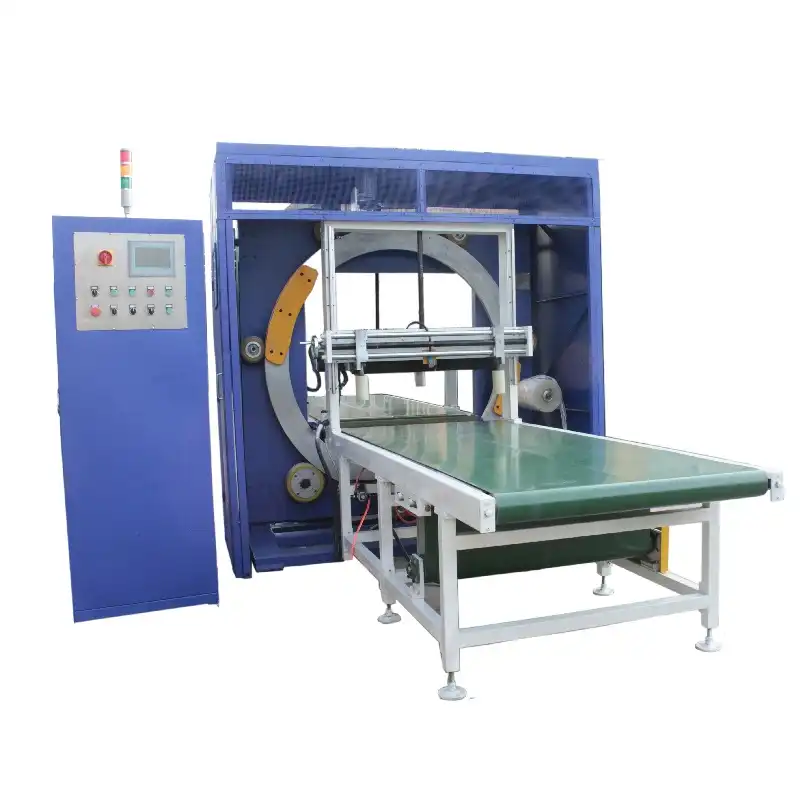
From my experience, watching manual packing lines, the issues are clear. Workers often use more film than needed. They do this to feel sure the product is safe. But this “safety margin” is often wasteful. When I was starting my factory, I saw how much film we were throwing away. It was a big cost. They also cannot apply film with exact tension. This leads to loose spots or areas that are too tight. Both can cause problems. Loose film can snag or tear. Too-tight film can damage the product, especially edges on steel coils.
Consider these specific points:
The Human Element and Its Impact on Film Use:
- Variable Tension: A worker’s strength and focus change throughout the day. This means the film tension on the first product of the shift might be perfect. By the end, it might be too loose or too tight. This lack of consistent tension means more film is often applied “just in case.” It also causes film to be ineffective in holding the product. This means more film is used to compensate for poor application.
- Overlapping Issues: Manual wrapping makes it hard to maintain a perfect film overlap. Workers might overlap too much, using extra film on each pass. Or they might overlap too little, creating weak spots in the package. These weak spots often need more film layers to ensure safety. This further increases waste.
- Wrap Pattern Inconsistency: Different products need different wrap patterns. With manual work, it is hard to follow complex patterns exactly. Workers might use a simple, general pattern. This pattern might not be efficient for all shapes. It might use more film than needed for smaller items. It might not give enough protection for larger ones. This “one-size-fits-all” approach in manual packing is a source of waste.
Impact on Product Presentation and Transit for Exports:
- Visual Appeal: For Italian exports, presentation matters a lot. A poorly wrapped package looks unprofessional. It can make customers question the quality of the product inside. This is a major concern when competing in global markets. Your package is often the first thing a customer sees.
- Protection during Shipping: Inconsistent wrapping means inconsistent protection. Some parts of the product might be well-protected, others not. This can lead to product damage during long transit times. Think about steel coils. If the edges are not wrapped consistently, they can get scratched. This leads to customer complaints and returns. This costs the factory money and trust.
- Customs and Compliance: Some countries have strict rules for imported goods. Consistent, professional packaging can help products pass through customs smoothly. Inconsistent packaging might raise flags. This can cause delays or extra inspections. For Italian exporters, any delay means lost time and money.
| Aspect of Manual Packaging | Impact on Film Waste | Impact on Packaging Consistency | Risk for Italian Exports |
|---|---|---|---|
| Variable Worker Strength | High – inconsistent tension leads to over-wrapping | Low – packages vary greatly in tightness and appearance | Product damage during transit, poor brand image |
| Inconsistent Overlap | High – too much overlap wastes film, too little needs more layers | Low – uneven protection across the product surface | Increased risk of claims, reduced customer satisfaction |
| Guesswork for Layers | High – workers add “extra” layers for perceived safety | Low – total film coverage is arbitrary | Higher shipping costs, potential non-compliance with standards |
| Lack of Repeatability | High – no two wraps are exactly alike, leading to inefficiencies | Very Low – human error ensures no two packages are identical | Difficult to guarantee quality, inconsistent customer experience |
| Need for Rework | High – poorly wrapped packages often need re-wrapping | Low – initial inconsistency often requires manual corrections | Delays in shipping, increased labor costs for re-packaging |
Manual methods might seem cheap at first. But they cause hidden costs through wasted film, damaged goods, and lost customer trust. These costs add up fast, especially for export-focused businesses.
What Specific Features of Orbital Wrapping Machines Directly Lead to Reduced Film Consumption?
You are probably asking how an automatic machine can do better than a skilled worker. It seems simple to just wrap a product. But for true efficiency, it is about precision. Many factories are losing money every day because their current methods cannot control film use. This wastes a lot of resources. It also adds unnecessary costs to every single product leaving your factory.
Orbital wrapping machines are designed with specific features that directly cut down film consumption. The main way they do this is through precise film tension control and programmable wrap patterns. They use a powered pre-stretch system. This stretches the film before it even touches the product. This makes each roll of film cover a much larger surface area. You get more wraps from less film. Also, they allow you to set the exact number of layers and overlap needed for each product. This removes the guesswork and stops over-wrapping.
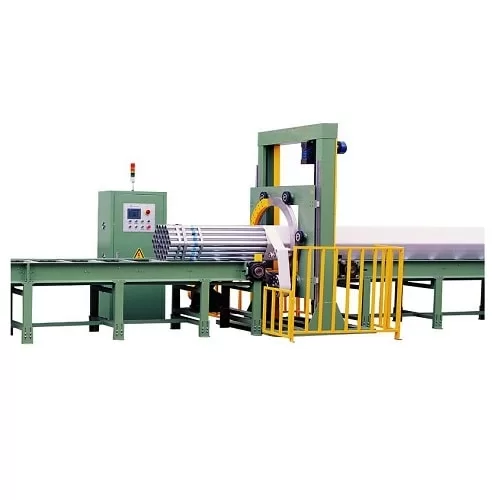
When I first got into packing machines, I realized the potential of automation. It wasn’t just about speed. It was about smart use of materials. For orbital wrappers, it is all about getting the most out of every roll of film.
Here are the key features that make a big difference:
Precise Film Tension Control and Pre-stretch Systems:
- Pre-stretch Mechanism: This is perhaps the most important feature for film saving. An orbital wrapper has rollers that stretch the film before it wraps around the product. This stretching can be as high as 200% to 300%. This means a 1-meter length of film can become 2 to 3 meters long. Imagine how much less film you need to buy. This technology alone dramatically reduces film usage. It also increases the holding force of the film.
- Consistent Tension Application: Unlike human hands, the machine applies the exact same tension from start to finish. This happens on every wrap, for every product. This constant tension means the film is always working at its best. It eliminates the need for extra layers “just in case.” It stops loose spots that waste film. This controlled tension ensures the film sticks perfectly to itself and the product. This provides a strong, protective layer using minimal material.
Programmable Wrap Patterns and Overlap Settings:
- Customizable Wrap Programs: Modern orbital wrappers let you create and save specific wrap programs. You can set the number of wraps at the start, middle, and end of the product. You can define the exact overlap percentage for each pass. For example, a heavy steel coil might need a 60% overlap and 5 layers. A lighter pipe might only need a 40% overlap and 3 layers. The machine remembers these settings. It applies them perfectly every time.
- Edge Reinforcement Options: For products like steel coils or bundles of profiles, the edges are often vulnerable. Orbital wrappers can be programmed to add extra wraps or thicker film just at the edges. This gives targeted protection without over-wrapping the entire product. This smart use of film reduces total consumption. It also improves product safety. I remember one client who was constantly having issues with coil edge damage during shipping. By using an orbital wrapper, they could target the edges. This saved them from customer complaints and a lot of wasted film on the body of the coil.
| Feature of Orbital Wrapper | How it Reduces Film Waste | Benefit for Italian Exporters |
|---|---|---|
| Powered Pre-stretch System | Stretches film 200-300%, making one roll last much longer | Significant material cost savings, improved profit margins |
| Precise Tension Control | Applies consistent, optimal tension, preventing over-wrapping | Film works more effectively, less film needed for secure hold |
| Programmable Wrap Patterns | Allows exact number of layers and overlap for each product type | No wasted film on unnecessary wraps, optimized for product protection |
| Automatic Film Cut-off | Cuts film precisely at the end of the cycle, no manual tearing | Eliminates ragged edges and accidental film pulls, neat finish |
| Targeted Reinforcement | Adds extra wraps only where needed (e.g., product edges) | Efficient use of film for critical areas, reduces overall consumption |
These advanced features mean you get maximum protection with minimum material. This is a game-changer for businesses focused on cost-efficiency and product quality for export.
How Do Orbital Wrapping Machines Ensure Uniform and Secure Packaging for Diverse Product Shapes?
If your factory makes a range of products – from long pipes to wide steel coils – you know how hard it is to get consistent packaging. A method that works for one product might fail for another. This often means compromising on protection or wasting film. It can be a real headache trying to ensure every product looks the same and is safe for shipment. This challenge is even bigger when you are shipping internationally.
Orbital wrapping machines excel at providing uniform and secure packaging for many product shapes. They do this by wrapping horizontally around the product as it moves through a central ring. This allows them to package very long, short, wide, or narrow items. The machine uses a controlled wrapping process. This applies film evenly across the entire surface. This ensures consistent tension and overlap. It creates a robust, uniform package every time, no matter the product’s dimensions. This consistent method is vital for Italian manufacturers needing reliable packaging for varied exports.
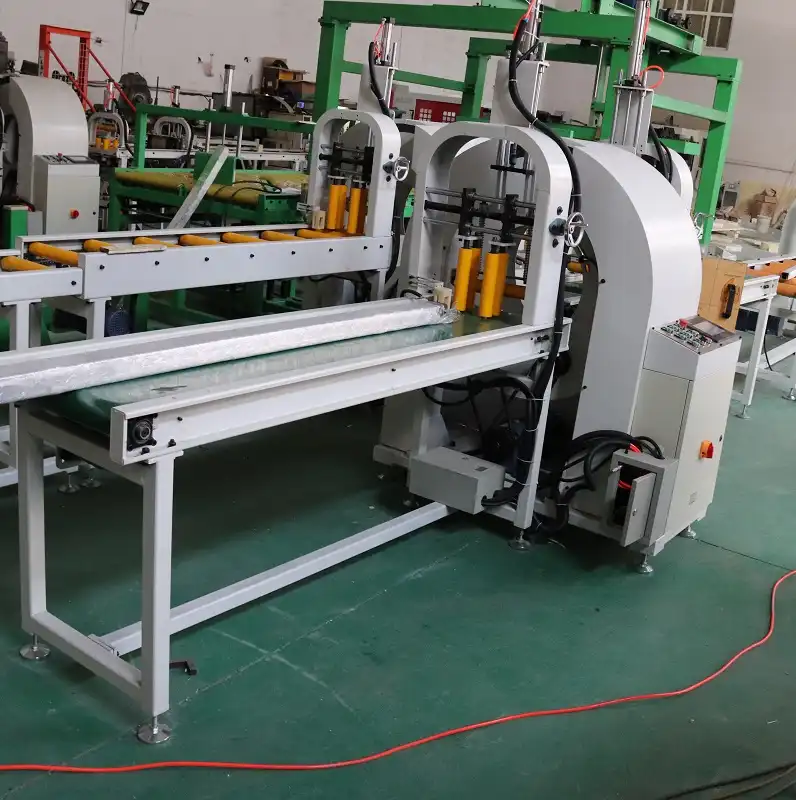
When I first designed packing machines, one of the biggest challenges was versatility. Factories rarely make just one standard product. They deal with a mix. An effective packaging solution must handle this mix without losing quality. Orbital wrappers are perfect for this. Their design is inherently flexible.
Here is how they manage diverse products while keeping packaging uniform and secure:
Horizontal Wrapping for Varied Product Lengths and Shapes:
- Open Ring Design: The core of an orbital wrapper is its open ring. The product passes through this ring horizontally. This design means the machine can wrap items of almost any length. For Italian steel companies exporting long pipes or profiles, this is ideal. Traditional stretch wrappers often struggle with long or odd-shaped items. Orbital wrappers wrap the product around its center. This ensures every part gets covered. It does not matter if the item is 1 meter or 10 meters long.
- Adapting to Product Dimensions: The machine’s entry and exit conveyors adjust to the width and height of the product. This means you can wrap everything from thin bundles of wires to wide steel coils on the same machine. This adaptability reduces the need for multiple specialized packaging machines. This saves floor space and investment costs. It provides a single, consistent method for all your products.
Precision Control for Consistent Wrap Quality:
- Automated Wrap Cycle: Once programmed, the machine performs the wrapping cycle perfectly every time. It controls the film carriage movement, rotation speed, and film tension. This removes human error. Every coil, every pipe, every bundle gets the exact same wrap. This repeatability is key for consistent quality. It builds trust with international buyers.
- Overlap and Layer Consistency: The machine ensures the film overlaps by the programmed percentage. It applies the exact number of layers you set. This is not possible with manual wrapping. This means the protection level is consistent across all products. You know that the film is thick enough to protect, but not so thick it wastes material. This consistency in protection is crucial for exports facing long journeys and multiple handling points.
| Aspect of Orbital Wrapper | How it Ensures Uniformity and Security | Benefit for Italian Exporters of Diverse Goods |
|---|---|---|
| Horizontal Wrap Path | Wraps products as they move through, ideal for long and varied lengths | Handles a wide range of export products (pipes, coils, profiles) with one machine |
| Adjustable Conveyor System | Adapts to different product widths and heights automatically | Versatility for mixed production lines, efficient for various export items |
| Programmed Tension Control | Applies exact, consistent film tension across all wraps | Uniform holding force for every package, prevents loose or too-tight wraps |
| Precise Overlap Control | Maintains a set film overlap percentage throughout the wrap | Even film distribution, consistent protection without waste |
| Repeatable Wrap Cycles | Executes the same wrap pattern for identical products | Guarantees consistent package appearance and integrity for all shipments |
| Product Centering | Automatically centers product for even wrapping around its axis | Ensures balanced protection, important for heavy or long items during transit |
This capability to handle diverse products with uniform quality is why orbital wrappers are a smart investment. Especially for Italian companies that ship a wide array of industrial goods globally.
Beyond Film Savings, What Operational Efficiencies Do Orbital Wrappers Bring to Italian Manufacturers?
Saving film is a clear win. But many factory managers focus only on material costs. They often miss the bigger picture. Their current packaging processes might be a bottleneck. They might be causing safety issues. Or they might be wasting valuable labor hours. These hidden costs can be much larger than the film waste itself. This is especially true for busy Italian factories pushing for higher output.
Orbital wrapping machines offer far more than just film savings. They bring significant operational efficiencies to the entire factory. They speed up the packaging process dramatically. This reduces production bottlenecks. They also cut down the need for manual labor, moving workers to other tasks. This improves workplace safety by removing workers from dangerous, heavy lifting. For Italian manufacturers, this means higher throughput, lower labor costs, and a safer work environment. These benefits directly impact the bottom line and overall factory productivity.

When I built my factory, I learned that efficiency is about the whole system. Not just one part. I saw how manual handling of heavy coils or pipes was not only slow but also very dangerous. Workers were getting injured. This meant high medical costs and lost productivity. It also led to high employee turnover. This is why I always look for solutions that improve safety and overall flow, not just material use.
Here are the broader operational efficiencies that orbital wrappers deliver:
Increased Throughput and Reduced Bottlenecks:
- Faster Packaging Cycles: Manual wrapping is slow. An orbital wrapper can package a product in a fraction of the time. This means products move faster through the end of the line. This prevents a pile-up of finished goods waiting to be packed. This increased speed directly boosts overall factory output. It helps meet tight export deadlines.
- Continuous Flow: Orbital wrappers integrate well with existing conveyor systems. Products can move directly from production to packaging without stopping. This creates a smooth, continuous flow. This reduces handling time and speeds up the entire process. This kind of efficiency is vital for high-volume manufacturing, common in Italian heavy industries.
Enhanced Worker Safety and Reduced Labor Costs:
- Elimination of Manual Handling Risks: This is a huge one. With orbital wrappers, workers no longer need to manually lift, turn, or walk around heavy, awkward products to wrap them. The machine does the heavy lifting. It does the wrapping. This removes direct contact with moving machinery and heavy loads. This drastically reduces the risk of back injuries, crushed limbs, and other accidents. I remember when Michael Chen was facing challenges with worker injuries. This is exactly the kind of solution that helps.
- Labor Reallocation: By automating packaging, you can move workers to more valuable tasks. This might be quality control, machine maintenance, or other parts of the production process. This optimizes your workforce. It also saves on labor costs associated with packaging. It means fewer people are needed for a dangerous, repetitive task.
Improved Product Protection and Customer Satisfaction:
- Reduced Damage during Internal Transit: Consistent, tight wrapping protects products not just for external shipment but also during internal transfers. Less damage means fewer reworks. It means fewer rejected items. This saves material and labor.
- Professional Presentation: A consistently wrapped product looks professional. This reflects well on your brand. For Italian exporters, a quality package reinforces the quality of the product inside. This leads to higher customer satisfaction and repeat business. It strengthens your position in competitive international markets.
| Operational Efficiency | How Orbital Wrappers Deliver It | Impact on Italian Manufacturers |
|---|---|---|
| Increased Throughput | Faster wrapping cycles, continuous inline operation | Higher production volume, meets export deadlines, competitive advantage |
| Reduced Labor Costs | Fewer workers needed for packaging, labor reallocation | Lower operational expenses, optimizes workforce, better ROI |
| Improved Safety | Eliminates manual lifting and wrapping of heavy items | Fewer workplace injuries, lower insurance costs, higher employee morale |
| Less Product Damage | Consistent, secure wrapping protects goods internally and externally | Reduced scrap/rework, fewer customer complaints, improved profit |
| Better Space Usage | Compact footprint for some models, integrated lines reduce clutter | More efficient use of factory floor, better workflow |
| Reduced Energy Use | Modern machines are energy efficient compared to older, less optimized methods | Lower utility bills, supports sustainability goals |
These operational benefits go far beyond just film savings. They represent a fundamental improvement in how a factory runs. This is especially true for export-oriented businesses like many in Italy.
My Insights!
Over my career, from a factory employee to building FHOPEPACK, I have seen a lot. I have worked on the factory floor. I have designed complex machines. What I learned is this: the best solutions solve more than one problem. When you look at orbital wrapping machines, it is easy to see the film savings. That is a clear, measurable benefit. But the deeper value comes from what it does for your entire operation.
Think about Michael Chen, a factory manager I know. He worries about efficiency, worker safety, and product damage. He also cares about finding a trusted partner. These are the same worries many Italian factory managers have. They want to compete globally. They need their exports to arrive in perfect condition. They need to do this without breaking the bank or putting their workers at risk.
I have spent years solving these kinds of problems. I have seen how a smart investment in the right machine can transform a business. It is not just about buying a piece of equipment. It is about buying a solution. A solution that boosts your output. A solution that protects your workers. And a solution that saves you real money, day after day.
For Italian manufacturers, the global market is tough. Quality and consistency are not just nice to haves. They are essential. An orbital wrapping machine delivers on both. It gives you the control you need to ensure every product that leaves your factory is a perfect ambassador for your brand. It gives you peace of mind. And it gives you a clear path to higher profits.
My advice is always to look at the total cost of ownership. Do not just look at the price tag. Consider the savings on film, the reduction in labor, the fewer worker injuries, and the happier customers. When you add all that up, the choice becomes very clear. This is the kind of smart investment that drives real, long-term success. It is what separates the masters of packing from the rest.
Conclusion
Orbital wrapping machines offer Italian exporters a powerful solution. They drastically cut film waste and ensure consistent, secure packaging. This boosts efficiency, enhances safety, and lowers costs. It’s a smart investment for global success.








