
What Are the Key Differences Between Stationary and Mobile Pallet Changers?
Managing a busy warehouse brings many challenges. I know this from my own journey in the packing machine industry. One common headache is the constant need to swap pallets. This can be slow, unsafe, and really eat into your profits. If you are a logistics manager, you have likely faced issues like diverse pallet sizes or simply not enough people to do the manual work. This problem is not just about moving goods. It touches on safety, efficiency, and how fast you can get products to your customers.
Stationary pallet changers stay in one place, like a fixed workstation, and are best for high-volume, repetitive pallet swaps in a dedicated area. Mobile pallet changers, on the other hand, can move to different locations within a warehouse, offering flexibility for varied tasks or lower volume needs where goods cannot easily be brought to a fixed point.
So, what kind of pallet changer is right for your operations? This is a question I have helped many clients answer during my time building FHOPEPACK. Understanding the core differences between stationary and mobile units is the first step. Let’s explore how each type can fit into your logistics strategy and help overcome common warehouse problems.
What is a Stationary Pallet Changer?
Do you find yourself moving thousands of pallets every day, always in the same spot? Many warehouse managers, especially those running large distribution centers, face this exact challenge. The problem is that manual pallet handling for such volumes is slow, risky, and expensive. It impacts your delivery times and overall operational flow.
A stationary pallet changer is a fixed piece of equipment installed in a specific location within a warehouse or production line, designed to efficiently transfer goods from one pallet type to another in a consistent, high-volume setting.
These units are built for endurance and speed. They become a vital hub in any fast-paced logistics operation. They are like a dedicated pit crew for your pallets, ready to perform rapid swaps without moving the machine itself. This focus on a single location helps streamline workflows and maintain very high throughput.
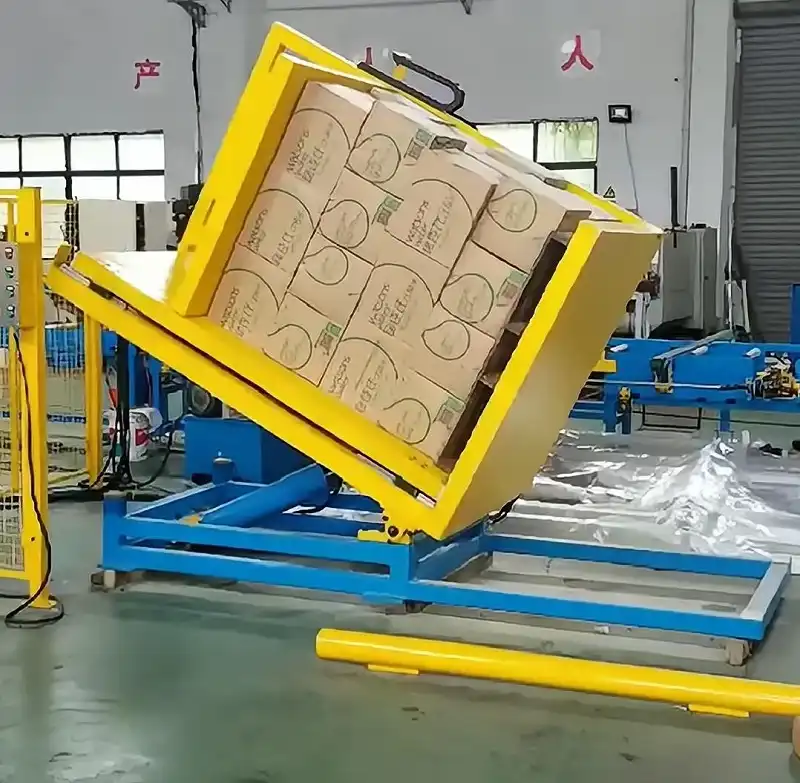
Stationary pallet changers are often the backbone of large-scale operations. In my experience, setting up a dedicated pallet changing station can transform a chaotic manual process into a smooth, automated one. When I started FHOPEPACK, I saw firsthand how much time and money companies wasted on inefficient pallet handling. We focused on building robust machines that could handle continuous use. This type of equipment excels in situations where products arrive on one pallet type and must be shipped out on another, like when switching between Euro pallets and US pallets for international exports. Such a setup dramatically cuts down on manual labor, helping businesses combat rising labor costs and the difficulty of finding workers for physically demanding tasks.
- High Throughput & Reliability:
- Stationary machines are often integrated directly into conveyor lines. This allows for automated feeding and discharge. They are built for non-stop operation. Think of a food processing plant where thousands of pallets of raw materials come in and finished products go out daily. My clients in the food and beverage industry often prioritize this high throughput. They cannot afford downtime. The machines are very sturdy. They manage continuous high-volume demands. They deliver consistent performance day after day. This reduces bottlenecks in the supply chain.
- Example: A major European food beverage group (like Carlos’s company) would benefit from a stationary FHOPEPACK pallet inverter at their regional distribution center. It would handle thousands of pallet exchanges between inbound and outbound shipments, ensuring compliance with different pallet standards. This system directly addresses the challenge of diverse pallet specifications and the need for reliable, high-speed operations.
- Safety & Ergonomics:
- Manual pallet changing involves heavy lifting, awkward movements, and the risk of loads tipping over. I have seen too many accidents happen this way. Stationary pallet changers remove people from harm’s way. They automate the process. This greatly reduces injury risks. Employees no longer need to manually flip or transfer heavy goods. This improves overall warehouse safety. It also lowers insurance claims. A safer workplace is a happier, more productive workplace. This also helps with labor shortages. It makes jobs less physically demanding.
- Solution: Implementing a stationary pallet changer from FHOPEPACK means fewer workers are exposed to the dangers of manual pallet handling. This directly tackles the safety risks and labor shortage issues. It provides a safer and more appealing work environment for employees.
- Cost Efficiency:
- While the initial investment might seem large, the long-term savings are clear. You save money on labor costs. You also save on potential injury compensation. Faster pallet changes mean goods move through the warehouse quicker. This reduces storage time and increases efficiency. Over time, these savings add up. They lead to a very strong return on investment. Many of our FHOPEPACK stationary pallet changers pay for themselves within a year or two.
- Benefit: A stationary system lowers operating costs by reducing manual labor. It also prevents damage to goods and minimizes potential contract penalties from shipping delays. This is crucial for meeting customer satisfaction goals and improving overall profitability. (fixed pallet inverter, high volume pallet exchange, warehouse automation benefits)
What is a Mobile Pallet Changer?
Are your pallet changing needs less about constant, high-volume swaps in one spot, and more about flexibility across different warehouse areas? Perhaps you need to swap pallets in a freezer, then in a receiving dock, and later on an export loading bay. This kind of varied demand makes fixed machinery less practical. You need a solution that can move with your goods.
A mobile pallet changer is a versatile piece of equipment that can be moved to different locations within a facility, offering flexibility for pallet transfers where a fixed installation is not feasible or where varying operational needs require on-demand pallet changing capabilities.
These units are designed for adaptability. They are perfect when you cannot bring all the pallets to a central changing station. Mobile changers offer a great solution for dynamic environments or for specific tasks that pop up. This flexibility helps businesses manage varied pallet handling needs without investing in multiple fixed units.
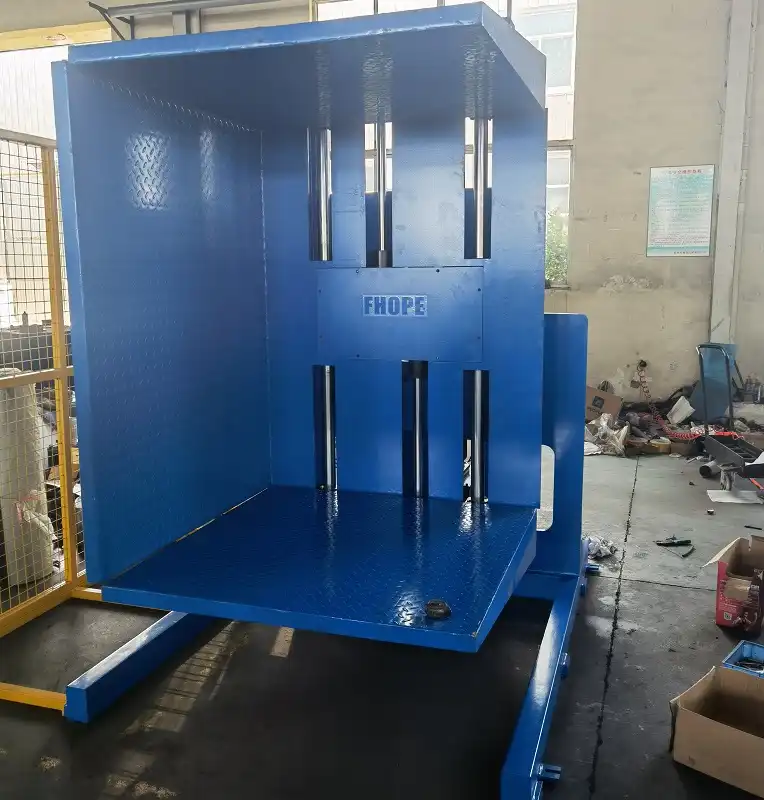
Mobile pallet changers bring a new level of convenience to warehouse logistics. From my vantage point at FHOPEPACK, I’ve seen how valuable these machines are for businesses with diverse and changing needs. Not every warehouse operates with a simple, linear flow. Sometimes, you need to consolidate different types of goods, or swap pallets for specific customers right before loading. This is where mobile units shine. They can handle a mix of tasks, from changing plastic pallets to wooden ones, or even flipping heavy loads in different parts of a large facility. I recall a client who had goods stored in three separate buildings on their site. A mobile pallet changer meant they only needed one machine to service all locations. This saved them money and made their operations much smoother.
- Versatility & Adaptability:
- The biggest strength of mobile pallet changers is their ability to move. They can go wherever the work is. This is ideal for warehouses with multiple storage areas or for companies dealing with a wide array of products. They can handle different pallet types and load configurations. This makes them suitable for varied tasks. For example, moving a mobile pallet changer from an inbound receiving area to an outbound shipping dock, as needed. This flexibility helps adapt to changing daily demands.
- Example: Carlos’s facility needs to switch between Euro, US, and plastic pallets frequently for different export destinations. A mobile pallet changer from FHOPEPACK or SHJLPACK could be moved to specific loading bays as needed. This supports the diverse pallet specification challenge and the demand for quicker delivery times by offering on-demand flexibility.
- Space Utilization:
- Warehouses are often tight on space. Installing a large, fixed machine might not be possible. Mobile units do not need a permanent footprint. You can move them out of the way when they are not in use. This frees up valuable floor space. This is a big plus for smaller facilities or those needing to optimize every square foot. They offer a compact solution. They avoid blocking pathways. They keep the workflow clear.
- Benefit: By using a mobile pallet changer, Carlos’s warehouse can maximize its existing floor space. It avoids the need for dedicated fixed areas, which helps manage facility layout constraints. This helps with the objective of standardizing warehouse operations without major structural changes.
- Lower Initial Investment (Sometimes):
- Generally, some mobile pallet changers can have a lower upfront cost than large, custom-built stationary systems. This makes them a good option for businesses with tighter budgets. Or for those just starting to automate their pallet handling. While not always the case, it is a factor to consider. This lower entry point allows more companies to experience the benefits of automation. It helps them avoid the manual risks.
- Consideration: For companies new to automation or with limited capital, a mobile FHOPEPACK pallet changer can be a more accessible entry point. It still delivers significant improvements in safety and efficiency. This aligns with reducing operational costs and improving safety without a huge initial outlay. (mobile pallet exchange, flexible logistics solutions, warehouse space saving)
How Do Stationary Pallet Changers Impact Warehouse Operations?
Are you struggling with slow pallet transfers that bottleneck your entire operation? Many high-volume facilities face this. Manual processes in a fixed location lead to long wait times, errors, and an inability to keep up with demand. This problem directly affects your efficiency and your ability to meet customer deadlines.
Stationary pallet changers fundamentally transform warehouse operations by providing a dedicated, high-speed, and automated solution for pallet transfers, leading to significant improvements in throughput, safety, and overall process standardization in fixed locations.
They create a centralized point for all pallet exchange activities. This streamlines workflows and makes the entire system more predictable. This stability is key for operations that depend on consistent, rapid movement of goods through a specific area.

From my own years in this industry, I have seen stationary pallet changers become the silent workhorses of many successful businesses. When I designed FHOPEPACK’s stationary units, my goal was to maximize efficiency and reliability. I knew that for large operations, even a small delay could ripple through the entire supply chain. These machines are not just about swapping pallets; they are about optimizing an entire segment of your logistics. They allow for predictable flow. This means better planning, fewer surprises, and ultimately, happier clients who get their goods on time. For companies like Carlos’s, handling thousands of pallets daily, this level of control and speed is absolutely critical.
- Enhanced Throughput and Speed:
- Stationary pallet changers are designed for speed. They process pallets much faster than manual methods. They often integrate with conveyor systems. This allows for continuous flow. This means more pallets can be handled per hour. This significantly boosts overall warehouse throughput. Faster throughput helps meet tight delivery schedules. It also reduces operational delays. It directly addresses the customer pressure for shorter delivery times.
- Impact: Carlos can expect a substantial increase in pallet switching speed. This directly helps him meet the challenges of faster delivery cycles demanded by e-commerce and retail clients. An FHOPEPACK stationary system ensures his warehouse processes thousands of pallets quickly.
- Process Standardization and Quality Control:
- With a fixed system, the pallet changing process becomes very consistent. This reduces human error. It ensures every pallet swap meets specific quality standards. This is especially important for goods needing careful handling or for compliance with international shipping regulations. The machine performs the task the same way every time. This leads to higher quality control. It also simplifies training for operators.
- Advantage: Standardizing pallet exchanges with a stationary FHOPEPACK unit ensures all pallets conform to required specifications. This avoids delays and customer complaints related to non-compliant shipments. It is crucial for maintaining compliance and customer satisfaction.
- Integration with Automation Systems:
- Many stationary pallet changers can be part of a larger automated system. They can connect with Automated Guided Vehicles (AGVs) or Robotic Arms. This creates a fully automated workflow. This reduces human intervention even more. This type of integration is the future of warehousing. It helps achieve higher levels of automation. This is a key goal for modern logistics managers like Carlos. It also helps manage labor shortages.
- Future-proofing: An FHOPEPACK stationary pallet changer can be seamlessly integrated into a larger automated system. This helps Carlos achieve his goal of improving automation levels and preparing his operations for future growth and efficiency gains. (warehouse throughput, automated pallet transfer, logistics standardization)
How Do Mobile Pallet Changers Improve Logistics Flexibility?
Does your warehouse have varied layouts, or do you need to handle pallets in different zones, from cold storage to dry goods? Relying on a single, fixed solution simply will not work. This lack of adaptability can create inefficiencies, require more manual handling in remote areas, and slow down your diverse logistics operations.
Mobile pallet changers improve logistics flexibility by allowing on-demand pallet exchanges at various points within a facility, enabling businesses to adapt to changing operational needs, optimize space utilization, and handle diverse pallet types across different locations with greater ease.
They bring the solution directly to the problem. This means less movement of goods to a central station, and more efficient use of both equipment and labor. This flexibility is very valuable for operations that deal with complex logistics or uneven workflows.
When I founded FHOPEPACK, I understood that not all businesses have the same needs. Some required the raw power of a stationary machine, but others needed agility. Mobile pallet changers offer that agility. I recall one client who dealt with seasonal fluctuations in their product lines. They needed to quickly reconfigure their warehouse for different goods and storage methods. A mobile pallet changer was perfect for them. It allowed them to move the pallet changing function wherever it was most needed at any given time. This reduced idle equipment time. It also increased their ability to adapt to market changes. For a manager like Carlos, who handles different pallet specifications for export, a mobile unit could be moved to specific loading docks. This would make sure that goods are ready for shipping without extra internal transport.
- On-Demand Pallet Exchange:
- Mobile units offer true on-demand service. You can move them to specific aisles, loading docks, or production areas as needed. This eliminates the need to transport goods across the warehouse just for a pallet change. This saves time and reduces internal transport costs. It also speeds up the overall logistics process. This is very helpful for urgent or specific tasks. It helps meet quick turnaround times.
- Advantage: Carlos can deploy an FHOPEPACK mobile pallet changer to any area of his facility requiring a pallet swap. This provides immediate solutions for diverse pallet types and reduces transit time for goods within the warehouse.
- Adaptability to Varied Pallet Requirements:
- Many mobile pallet changers can handle a wide range of pallet sizes and types. This includes wooden, plastic, or metal pallets. They can often switch between different heights and weights. This versatility is crucial for companies dealing with international shipments. Different countries have different pallet standards. A mobile unit can be quickly configured for these changes. This helps ensure compliance for export.
- Solution: With a mobile FHOPEPACK or SHJLPACK pallet changer, Carlos can easily switch between Euro, US, and plastic pallets right at the point of need. This directly addresses the challenge of diverse pallet specifications for his international operations.
- Reduced Infrastructure Investment:
- Unlike stationary units, mobile pallet changers do not require permanent installation or major structural changes to your facility. This means less upfront cost related to setup. It also means less disruption to your current operations. They are a “plug and play” solution. This allows for quick deployment. This makes them attractive for businesses looking for flexible automation without heavy infrastructure spending.
- Cost-Effective: A mobile system from FHOPEPACK requires minimal infrastructure changes. This is a cost-effective way to improve safety and efficiency. It avoids significant capital expenditure while still delivering results. This helps lower overall operating costs. (flexible pallet handling, mobile warehouse solutions, adaptable logistics equipment)
Which Pallet Changer is Right for Your Business Needs?
Are you unsure whether a stationary or mobile pallet changer best fits your warehouse? Many logistics managers, including myself, grapple with this decision. It depends heavily on your unique operational flow, volume, and budget. Choosing the wrong type can lead to ongoing inefficiencies or wasted investment.
The choice between a stationary and mobile pallet changer depends on your operational volume, flexibility needs, warehouse layout, and budget; stationary units suit high-volume, fixed processes, while mobile units offer adaptability for varied, on-demand pallet exchanges across different locations.
Making the right decision means looking closely at your specific challenges and long-term goals. I have seen both types of machines transform businesses. The key is to match the solution to the problem. Let’s look at key factors to guide your decision.
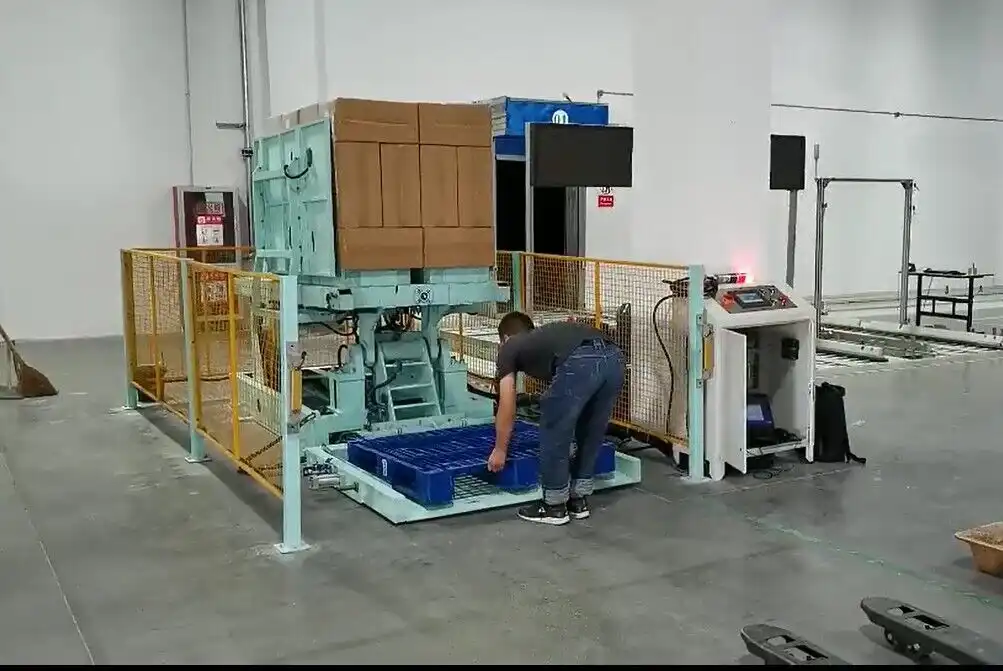
My career, from working on factory floors to founding FHOPEPACK, has shown me that there is no one-size-fits-all solution in packing machinery. When clients come to me asking about pallet changers, I always start by asking about their specific pain points. For someone like Carlos, who manages a massive distribution center with high-volume international exports and diverse pallet requirements, the answer might not be straightforward. He needs high throughput but also adaptability. This often leads to a careful balance. Sometimes, a mix of both types of machines offers the best solution. We at FHOPEPACK pride ourselves on understanding these complex needs and providing tailored advice, not just selling machines.
- Volume and Throughput Requirements:
- Stationary: If you handle a very high volume of pallets every day, say thousands, and the pallet changes happen in a consistent, dedicated area, a stationary unit is usually the best choice. It offers maximum speed and integration into automated lines. It is designed for continuous, heavy-duty use. This ensures your warehouse keeps moving quickly. It prevents bottlenecks.
- Mobile: If your pallet change volume is moderate or varies significantly, a mobile unit might be more appropriate. It can handle several hundred pallets a day. It offers flexibility to meet fluctuating demands. This helps with managing unexpected surges in activity. It allows for efficient use of the machine.
- Carlos’s Situation: For Carlos’s facility, which processes “thousands of pallets” daily, a stationary pallet changer from FHOPEPACK would be ideal for the core, high-volume pallet transfer points. It ensures consistent speed and efficiency.
- Warehouse Layout and Flexibility Needs:
- Stationary: Best for facilities with a fixed, optimized layout where pallets can be routed to a central changing station. It is less flexible in terms of location. But it is very rigid in its operation. This predictability is good for lean operations. It supports a structured flow.
- Mobile: Ideal for warehouses with dynamic layouts, multiple storage zones (e.g., cold storage, dry storage), or where moving goods to a central point is inefficient. It brings the solution to the problem. This saves internal transport time. It makes operations more agile.
- Carlos’s Situation: Given Carlos’s need for flexibility with diverse pallet types (Euro, US, plastic) for export, a mobile FHOPEPACK or SHJLPACK pallet changer could complement a stationary unit. It can handle specific, on-demand changes at different loading bays. This creates a powerful hybrid solution.
- Safety and Labor Considerations:
- Both types of pallet changers significantly improve safety over manual handling. They reduce the risk of worker injuries. They also reduce damage to goods.
- Stationary: Often offers the highest level of automation. This minimizes direct human interaction with the load. It reduces long-term labor costs in fixed processes. This helps address labor shortages for repetitive tasks.
- Mobile: Still greatly reduces manual effort and risk. It empowers fewer workers to handle pallet changes safely across more areas. This makes existing labor more efficient. It also makes warehouse jobs less strenuous.
- Carlos’s Situation: Both types would address Carlos’s critical need to reduce safety risks and dependency on manual labor. FHOPEPACK’s focus on user-friendly design and robust safety features in both stationary and mobile units would be very appealing.
- Budget and Long-Term Partnership:
- Initial Cost: Stationary systems can have a higher initial investment due to integration needs. Mobile units may offer a lower entry point. But remember that the best solution is not always the cheapest.
- Return on Investment (ROI): Both can offer significant ROI through reduced labor, fewer damages, and increased efficiency.
- Partnership: Beyond the machine, consider the supplier. Are they a “long-term partner” who understands your warehouse pain points? This is a key concern for Carlos. At FHOPEPACK, we strive to be that partner, offering deep understanding and flexible solutions. We have helped many clients grow their businesses, and we want to do the same for you.
- Carlos’s Situation: Carlos specifically seeks a “long-term partner.” He wants a supplier who understands warehouse automation. FHOPEPACK, with its engineering background and focus on sharing expertise, positions itself as that ideal partner. Our reliable machines and customer-centric approach ensure the total cost of ownership is optimized. (pallet changer selection, stationary vs mobile, warehouse investment, logistics automation partner)
Conclusion
Choosing the right pallet changer is a strategic decision for any modern warehouse. It impacts efficiency, safety, and cost. Stationary units excel in high-volume, fixed operations, offering speed and consistency. Mobile units provide unmatched flexibility for varied needs and dynamic layouts. Both significantly reduce labor and enhance safety over manual methods. For a comprehensive range of reliable options, including various pallet inverter models, FHOPEPACK offers robust solutions designed to meet diverse logistical demands and help you find the perfect fit for your business.








