
Do You Really Understand Horizontal Orbital Wrapping Systems for Panel Products?
Do you run a manufacturing plant? Are you tired of slow, risky packaging methods for your panel products? Many factory managers I talk to feel this pain. Manual wrapping leads to damaged goods and puts workers at risk. These problems cost you money and time. They also hurt your reputation with customers. But there is a better way.
Horizontal orbital wrapping systems offer a smart answer to these challenges. They wrap long or flat items like panels using stretch film. The machine rotates a film carriage around the product. This creates a tight, protective cover. This process makes packaging faster, safer, and more consistent than doing it by hand.

If you want to make your packaging line stronger, safer, and more efficient, keep reading. I will share how these systems work. I will also explain why they are a smart investment for your business. Let us look at the details.
What is a Horizontal Orbital Wrapping System, and How Does It Work?
Is your current packaging method slowing down your production? Does it cause product damage or create safety risks for your team? Many factories still use old ways to wrap panel products. This leads to bottlenecks at the end of the line. It also means products can get harmed easily.
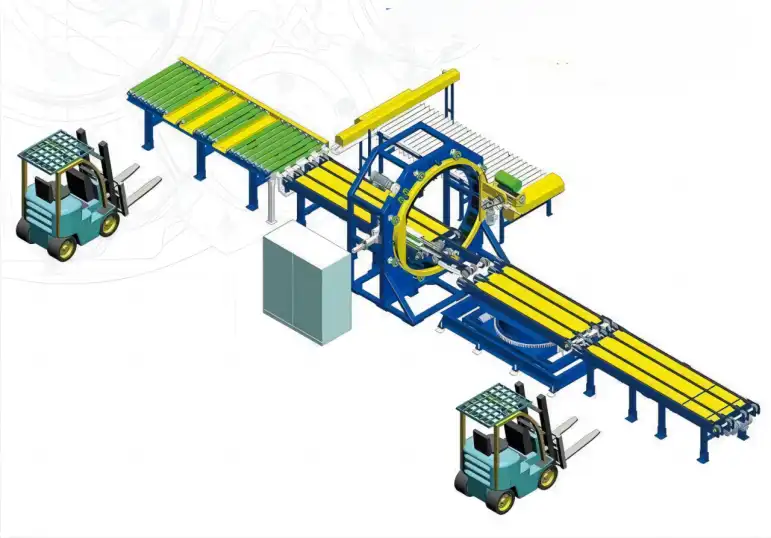
A horizontal orbital wrapping system is a machine that wraps products horizontally. It uses a ring that spins around the product. This ring holds a roll of stretch film. As the product moves through the center of the ring, the film wraps around it. This creates a complete and secure package. It works well for long items like doors, lumber, pipes, and various panel products.

Understanding how these systems work helps you see their value. I have spent years in this industry. I started on the factory floor myself. I saw firsthand how much time and effort manual packaging takes. I also saw the safety issues. Later, when I built my own factory, I focused on making things efficient and safe. This meant looking at every part of the production line. Packaging is often the last step, but it is very important.
How The System Operates:
Horizontal orbital wrappers use a simple but effective method.
Film Delivery:
The machine has a ring-shaped carriage. This carriage holds the stretch film roll. The film unwinds from the roll as the carriage spins. The film wraps around the product. The tension on the film is controlled. This makes sure the wrap is tight.
Product Movement:
The panel product moves through the center of the rotating ring. This movement can be done by a conveyor system. It can also be done manually for some lighter products. For heavy panels, an automated conveyor is best. It ensures steady movement. It also keeps workers safe.
Overlap Control:
The machine controls how much each layer of film overlaps the last one. This creates a strong, consistent wrap. You can adjust the overlap percentage. This lets you use less film for some products. It lets you use more film for products needing extra protection. A good overlap ensures the product is fully sealed. It also protects against dust and moisture.
Automation Levels:
These systems come in different levels of automation. Some are semi-automatic. An operator feeds the product into the machine. The machine does the wrapping. Others are fully automatic. They are part of a larger production line. The products move into the wrapper without human help. This high level of automation reduces labor needs. It also speeds up the entire packaging process. It makes the packaging line much more efficient. It also makes the process safer for workers. This reduces chances of injury from lifting heavy items. This is a big win for any factory.
| Feature | Manual Wrapping | Horizontal Orbital Wrapping |
|---|---|---|
| Speed | Slow, depends on worker speed | Fast, consistent machine speed |
| Safety | High risk of injury from lifting/repetitive motion | Low risk, less manual handling |
| Consistency | Varies from person to person | High, uniform wrap every time |
| Material Use | Often wasteful, inconsistent film use | Optimized film use, reduces waste |
| Product Protection | Can be uneven, gaps possible | Tight, secure wrap, good dust/moisture barrier |
| Labor Cost | High, requires multiple workers | Low, requires fewer workers or none |
This type of machine truly changes how panel products are packaged. It moves packaging from a weak point to a strength.
Why Are These Systems Essential for Panel Product Manufacturers?
Are you seeing damaged products leave your factory? Do you worry about your workers getting hurt while handling heavy panels? Many manufacturers face these issues daily. They are not just small problems. They lead to big losses. They increase costs. They also slow down your business.
Horizontal orbital wrapping systems are essential because they solve major problems for panel product manufacturers. They significantly reduce product damage during transport and storage. They also improve worker safety by reducing manual handling of heavy items. This leads to higher efficiency and lower operating costs.
When I first started FHOPEPACK, my goal was to help businesses like yours. I saw how much impact reliable machines had. I saw how they could transform a company. For Michael Chen in Mexico, facing challenges with efficiency, safety, and product loss is common. Panel products are often heavy and have sharp edges. They are easily damaged if not handled right. Using the right packaging machine directly helps these challenges. It directly helps a factory manager meet their goals.
The Real Benefits for Your Factory:
Investing in a horizontal orbital wrapping system brings clear advantages.
Reducing Product Damage:
Panel products, like wood panels or metal sheets, are fragile in transit. Edges can chip or bend. Surfaces can get scratched. Manual wrapping often leaves parts exposed. An orbital wrapper creates a snug, complete wrap. This wrap protects all sides of the panel. It acts like a second skin. This means fewer returns due to damage. It means happier customers. It also means less money lost on ruined goods. My own experience showed me that even small damages can hurt a business’s name. Good packaging prevents this.
Enhancing Worker Safety:
Handling large, heavy panels is dangerous. Workers can strain their backs. They can drop panels on their feet. They can get cuts from sharp edges. Manual wrapping means workers must move around the product. They must bend and lift. An orbital wrapper automates much of this. Workers feed the product into the machine. The machine does the hard work. This greatly reduces direct contact with the heavy item. It lowers the risk of accidents. Lower injury rates mean lower insurance costs. It also means a happier, healthier workforce. This is good for everyone.
Boosting Efficiency and Throughput:
Manual wrapping is slow. It takes many people. It creates a bottleneck. A horizontal orbital wrapper works much faster. It can wrap many panels in an hour. This frees up your workers. They can do other important jobs. This speed means products move out of the factory faster. It improves your overall production line flow. It helps you meet delivery deadlines. This is key for growing any business. I learned that speed and quality must go hand in hand. A good machine helps achieve both.
Lowering Operating Costs:
These systems reduce costs in several ways. They use stretch film more efficiently. They wrap tightly, using just enough material. Manual wrapping often wastes film. They also cut labor costs. You need fewer people to do the same amount of work. This saves money on wages. Plus, fewer damaged products mean less money spent on replacements. This all adds up to a clear return on your investment. It helps your factory’s bottom line. It makes your business more profitable.
Choosing the Right System: Key Factors to Consider?
Are you thinking about buying a new packaging system? Do you worry about picking the wrong one? Many factory managers have been burned by bad equipment or unreliable suppliers. This makes them careful. They want a solution that truly works. They want a partner they can trust.
Choosing the right horizontal orbital wrapping system means looking at several key factors. You must consider the size and weight of your panel products. You also need to think about your required production speed. The level of automation you need is important. Finally, you must pick a supplier who offers strong after-sales service and support. This ensures your investment pays off.
My own journey taught me this lesson hard. Early in my career, I dealt with suppliers who only cared about selling. They did not care about supporting me later. This made me understand the importance of a true partnership. When I started FHOPEPACK, I made sure we would be different. We are here to help you succeed, not just sell a machine. Just like Michael Chen wants a partner who understands his production issues, you need a supplier who offers real solutions.
Important Things to Look At:
Making the right choice for your factory needs careful thought.
Product Specifications:
First, know your product. What are the typical dimensions of your panel products? How long are they? How wide? How thick? How much do they weigh? The machine’s ring size must fit your largest product. The conveyor system must handle the weight. Make a list of your product sizes. Share this with potential suppliers. This helps them recommend the correct machine model. A machine too small will not work. A machine too big might be too costly.
Production Volume and Speed:
How many panels do you need to wrap each hour or each day? This directly affects the speed of the machine you need. If you have high production volume, you need a fast, automatic system. If your volume is lower, a semi-automatic machine might be enough. Do not buy a machine that is too slow for your needs. Do not overspend on a machine that is too fast. Balance your current needs with future growth plans. Always think ahead.
Automation Level:
Do you want a fully automated line? Or is a semi-automatic system okay? Full automation needs less labor. It works very fast. But it costs more upfront. A semi-automatic machine needs an operator to load and unload products. It is less expensive. Think about your labor costs. Think about your existing setup. Choose the level that makes sense for your budget and efficiency goals. Many factories start with semi-automatic. Then they upgrade later.
Film Type and Tension Control:
Different panel products need different levels of protection. The type of stretch film matters. How well the machine controls film tension is also key. Good tension control makes sure the wrap is tight. It also helps you use less film. This saves money. Ask about film compatibility. Ask about tension adjustment options. This ensures your products are wrapped safely and cost-effectively.
Supplier Reputation and Support:
This is very important. Look for a supplier with a good name. Do they have a track record of success? Do they offer strong after-sales service? What about spare parts? What about technical help if something breaks? A cheap machine with no support will cost you more in the long run. Michael Chen knows this. He wants a partner who understands his challenges and gives solutions. I believe in being that partner. A good supplier helps you keep your machines running. They help you stay profitable.
Real-World Impact: How Automation Transforms Your Packaging Line?
Do you feel stuck with old, slow ways of packaging? Does it feel like your packaging line is holding back your whole factory? Many managers think about automation. But they worry about the cost. They wonder if it is truly worth it.
Automation, especially with horizontal orbital wrapping systems, transforms your packaging line. It removes bottlenecks, speeds up operations, and improves product quality. This change leads to a clear return on investment. It also strengthens your factory’s ability to compete in the market.

I have seen this transformation many times. From when I was an employee, seeing manual processes waste so much potential, to building my own factory and implementing smart solutions. I saw how a shift to automation in coil and steel wire packing totally changed businesses. It is not just about buying a machine. It is about changing how you work. It is about making your factory stronger. For factory managers like Michael Chen, this means solving real problems. It means reaching important business goals.
The True Power of Automation:
Automation with these systems brings many real benefits that show up on your balance sheet.
Bottleneck Elimination:
The packaging step is often the last one. If it is slow, it slows down everything before it. It creates a bottleneck. Products pile up. Orders get delayed. An automated orbital wrapper works fast. It can handle many products per minute. This moves products quickly out of the door. It makes your whole production flow smooth. No more waiting. No more pile-ups. This makes your factory run like a well-oiled machine. It uses all your resources better.
Consistent Quality and Branding:
Manual wrapping can be messy. It can be uneven. This looks bad to customers. An automated system gives a perfect, consistent wrap every time. The film is applied with the same tension and overlap. This makes your packaged products look professional. This good look helps your brand. It tells your customers you care about quality, right to the final product. Consistent packaging also protects products better. It prevents damage, which helps your image.
Cost Savings and ROI:
This is where the rubber meets the road. Automation saves money. It reduces labor costs. You need fewer people for packaging. It reduces material waste. The machine uses film efficiently. It also cuts down on product damage. Less damage means fewer returns. It means less money lost. Add all these savings. You will see a clear return on your investment in the machine. Many of my clients saw their investment pay for itself in a short time. This is a very powerful reason to automate. It makes your factory more profitable.
Competitive Advantage:
When your factory runs faster, safer, and produces higher quality packages, you gain an edge. You can deliver orders quicker. You can take on more work. You can offer better-protected products. This makes you more attractive to customers. In today’s fast market, being able to deliver quickly and reliably is key. Automation helps you stand out from your rivals. It helps you win more business. It positions your factory for growth.
My Insights: Beyond the Machine, Partnering for Success?
Have you ever bought a machine only to find the supplier disappears after the sale? This is a common problem. It leads to frustration. It means lost production time. It makes managers, like Michael Chen, very careful about choosing new partners. They do not just want a machine. They want someone who truly understands their world.
My insight is simple: success goes beyond just buying a machine. It is about finding a true partner. It is about working with someone who understands your challenges and helps you solve them. This kind of partnership offers ongoing support, expert guidance, and a shared vision for your factory’s growth. It ensures your investment in a horizontal orbital wrapping system truly pays off.
I have lived the factory life. I started as an employee. Then I built my own successful factory. I know the pressure of meeting targets. I know the stress of downtime. I know the joy of seeing a problem solved. The packing machine industry gave me a lot. Now I want to give back. My goal at FHOPEPACK is to share my knowledge. I want to help you achieve financial independence too. I want to help your business grow. This means being more than just a seller. It means being a trusted advisor.
The Value of a True Partnership:
Choosing a machine is important. Choosing the right partner is even more important.
Understanding Your Unique Challenges:
Every factory is different. You have unique products. You have unique layouts. You have unique problems. A good partner takes time to understand your specific needs. They do not just push a standard solution. They listen. They ask questions. They look at your current processes. They see your bottlenecks. Michael Chen wants a partner who understands his production issues, safety concerns, and efficiency problems. This deep understanding is the first step to finding the right solution. It is what FHOPEPACK aims to do.
Expert Guidance and Custom Solutions:
My team and I have deep knowledge of packing machines. We have seen many different setups. We have solved many complex problems. This experience helps us offer tailored advice. We do not just sell you a machine. We help you integrate it. We help you optimize your whole line. Sometimes, a standard machine needs small changes to fit your exact product. A good partner can offer these custom solutions. They make sure the machine works perfectly for you. This expert guidance saves you time and money.
Long-Term Support and Trust:
A machine is an investment. You need it to run for many years. This needs ongoing support. What if you need spare parts? What if you have a technical question? What if your team needs training? A true partner is there for the long haul. They provide fast and reliable service. They build trust. This trust is vital. It means you can rely on them when things get tough. It means your production line stays running. This is the kind of relationship I value. It is the kind of relationship I offer.
Shared Vision for Growth:
I believe that your success is our success. When your factory grows, we are proud. A true partner invests in your future. They help you look ahead. They suggest ways to improve more. They help you stay ahead of your competitors. This shared vision makes the partnership strong. It makes sure that your investment in a horizontal orbital wrapping system is not just a purchase. It is a step toward bigger achievements. It is a step toward greater profitability. This is my deepest insight.
Conclusion
Horizontal orbital wrapping systems greatly improve packaging for panel products. They boost safety, cut damage, and increase speed. Choosing the right system and partner is key for success. This investment helps your factory grow and thrive.








