
The Role of Automation in Coil Wrapping and Strapping
Tired of inconsistent quality and skyrocketing labor costs in your coil packaging? Imagine perfectly protected coils consistently leaving your facility, boosting efficiency and freeing up valuable resources. Automation in coil wrapping and strapping is the critical solution you need.
Automation in coil wrapping and strapping significantly reduces labor costs by minimizing manual handling, boosts efficiency through higher speed and consistency, minimizes material waste with precise application, and enhances product protection against damage and corrosion during transit and storage. These integrated systems streamline packaging processes, leading to improved throughput and a stronger bottom line for businesses handling coil products.
Keep reading to discover the tangible benefits, advanced technologies, and strategic considerations for implementing automated coil wrapping and strapping solutions that can revolutionize your operations and secure your market position.
Slashing Labor Costs and Boosting Efficiency
Are manual coil packaging processes creating bottlenecks that slow down your entire operation? The traditional approach is often labor-intensive, physically demanding, and prone to inconsistencies that can lead to costly errors and rework. Automation offers a powerful transformation.
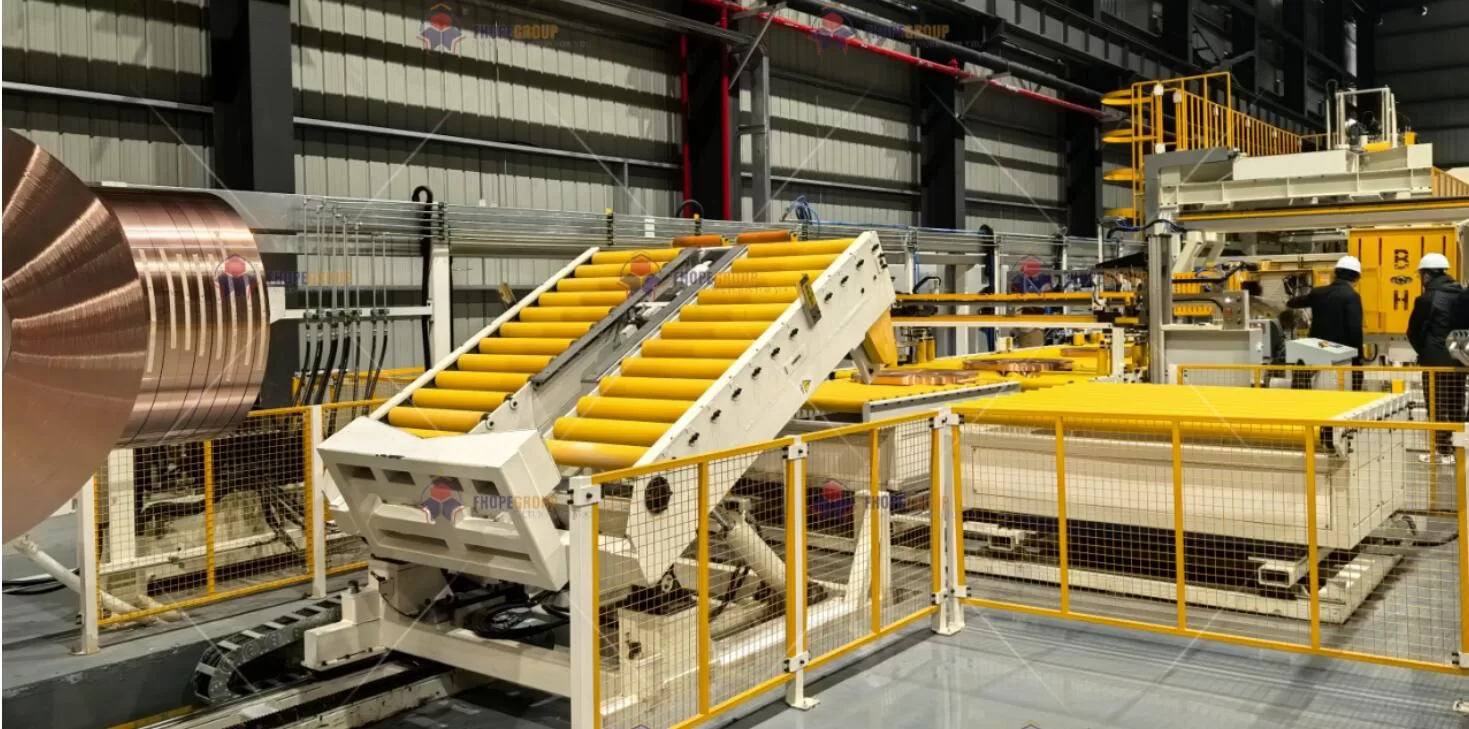
Automation dramatically cuts labor costs and boosts efficiency in coil wrapping and strapping by replacing manual tasks with high-speed, consistent machine operations. This shift requires significantly fewer operators (often 1-2 instead of 3-5+), processes coils much faster (20+ per hour vs. 1-2 manually), and minimizes errors, directly reducing payroll, training, and potential injury costs while increasing overall throughput.
Quantifying the Labor Advantage
The transition from manual to automated coil wrapping and strapping isn’t merely an technological upgrade; it’s a fundamental reshaping of operational strategy focused on maximizing efficiency and minimizing human resource expenditure on repetitive tasks. A detailed comparison highlights the substantial labor savings and productivity gains achievable through automation.
Reduced Manpower Requirements
Manual coil packaging lines typically necessitate a significant number of operators for handling materials, wrapping, securing, and labeling each coil. This results in a substantial portion of your workforce dedicated solely to packaging. Automated systems, conversely, consolidate these tasks. A single operator, or perhaps two for oversight and material replenishment, can manage multiple machines. The machine handles the complex, physically demanding, and repetitive steps of wrapping, tensioning, sealing, and sometimes strapping and labeling, drastically cutting down the required human input at each stage of the process. This allows businesses to reallocate skilled workers to more value-adding activities, optimizing their workforce utilization.
Increased Packaging Speed and Throughput
The speed of manual coil wrapping is inherently limited by human capacity and stamina. Production rates fluctuate, and consistency can decline over time due to fatigue. Automated coil wrapping and strapping machines operate at significantly higher, unwavering speeds. They can complete a comprehensive package in a fraction of the time required manually, leading to a dramatic increase in the volume of coils processed per hour. This speed advantage translates directly into lower labor costs per unit, faster order fulfillment, reduced lead times, and increased overall production capacity, making the entire operation more responsive and competitive.
Minimized Error and Rework
Manual processes are susceptible to human error, such as inconsistent wrapping tension, improper strap placement, or incorrect labeling. These errors can lead to product damage, packaging failures, costly rework, and potential customer dissatisfaction. Automated systems are programmed for precision and repeatability. They apply uniform wrapping tension, secure straps with consistent force, and accurately position labels or edge protection, drastically reducing errors and the associated costs of wasted materials, damaged goods, and time spent on corrective actions. This enhanced consistency improves package integrity and boosts overall product quality perception.
To illustrate the dramatic difference automation makes, consider the following comparison:
| Feature | Manual Wrapping & Strapping | Automated Wrapping & Strapping | Labor Cost & Efficiency Impact |
|---|---|---|---|
| Operators per Line | 3-5+ | 1-2 | Significant Labor Reduction |
| Coils Packaged/Hour | 1-2 (per operator, partial process) | 20-30+ (per machine, full process) | Dramatic Throughput Increase, Lower Cost per Coil |
| Consistency | Variable, Human Dependent | Highly Consistent, Machine Controlled | Reduced Rework, Less Product Damage, Improved Quality |
| Error Rate | Higher, Prone to Human Mistakes | Lower, Precision Automation | Minimized Material Waste, Increased Reliability |
| Safety | Higher Risk of Strain, Injury | Lower Risk, Operator Oversight Required | Reduced Worker Compensation Claims, Improved Workplace Safety |
| Training Complexity | High, Requires Skilled Manual Labor | Lower, Machine Operation & Supervision | Reduced Training Costs & Time |
By embracing automated solutions for coil wrapping and strapping, businesses can strategically reallocate human resources away from repetitive, low-value tasks towards more complex or supervisory roles, amplifying the benefits of labor cost reduction. The inherent efficiency gains and error minimization further contribute to savings by reducing wasted time and resources associated with manual inconsistencies and subsequent issues.
Enhancing Product Protection and Reducing Waste
Inconsistent manual coil packaging often results in inadequate product protection, leading to potential damage, corrosion, and waste. Manual methods can involve excessive material use due to inconsistent overlaps and handling errors. Automation provides a precise, repeatable solution.
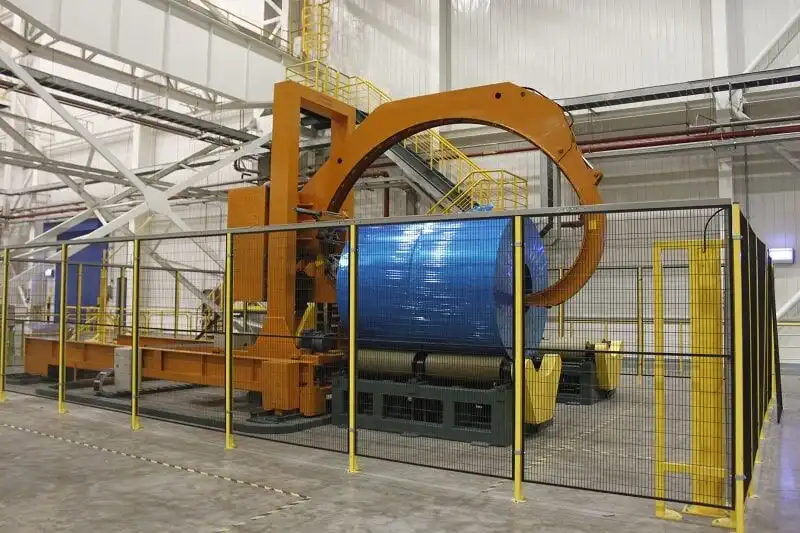
Automation enhances coil product protection and reduces waste by applying wrapping materials and strapping with consistent tension, precise overlap, and optimized material usage. This ensures coils are securely protected against damage, moisture, and corrosion, minimizing costly product returns and material waste (potentially up to 30%), leading to lower packaging expenses and a stronger brand reputation for quality.
Material Optimization and Damage Prevention
Automated coil wrapping and strapping systems are engineered not only for speed and labor reduction but also for maximizing product integrity and minimizing material expenditure. They achieve this through sophisticated control over material application and the ability to integrate advanced protective elements.
Precision in automated systems significantly reduces material waste compared to manual methods. Instead of relying on human judgment for cuts and overlaps, machines are programmed to apply materials precisely, using only what is necessary to achieve optimal coverage and protection. This precision reduces the need for pre-cut materials, minimizes offcuts, and ensures that materials like stretch film, paper, or board are applied efficiently. This optimized usage can lead to substantial savings in packaging material costs, directly impacting the bottom line.
Automated tension control is another critical factor in reducing waste and improving protection. Manual wrapping can result in inconsistent tension, leading to either insufficient wrap (poor protection) or excessive wrap (material waste and potential coil deformation). Automated systems apply consistent, pre-set tension, ensuring the material performs as intended, providing secure bundling and protection without excess.
Furthermore, automated lines can seamlessly integrate the application of specialized protective materials and strapping. This includes:
- VCI Film: Automated systems can apply VCI (Vapor Corrosion Inhibitor) film efficiently, creating a protective atmosphere around metal coils to prevent rust and corrosion. This is particularly crucial for long-term storage or transit in humid environments. The machine ensures the film is applied correctly to maximize its anti-corrosion properties.
- Body Wrapping: Machines can apply materials like board, paper, or even steel bands around the circumference of the coil for robust mechanical protection against impacts and abrasions. Automated cutters and applicators ensure a perfect fit with minimal waste.
- Edge Protection: Vulnerable coil edges can be automatically fitted with steel, plastic, or cardboard protectors before or during the wrapping and strapping process, preventing damage during handling and transit. Automated systems ensure precise placement and secure fastening, unlike manual methods prone to misalignment and material overlap.
- Strapping: Automated strapping machines apply steel or plastic straps with consistent, controlled tension, securely unitizing the coil or package. This prevents shifting during handling and transit and reinforces the overall package structure. Integration with wrapping ensures the straps are applied over the protective layers effectively.
By automating these processes, businesses not only reduce material waste through precise application and controlled usage but also significantly enhance the level and consistency of product protection. This leads to fewer damaged goods, reduced claims, improved customer satisfaction, and a strengthened reputation for delivering products in perfect condition. The combination of material savings and reduced damage costs provides a compelling financial justification for adopting automated coil packaging solutions.
Advanced Technologies Driving Coil Packaging Automation
Outdated coil packaging methods are no longer sufficient in today’s fast-paced, quality-driven market. Relying on manual processes or basic machinery can leave you vulnerable to production bottlenecks, inconsistent output, and product damage. Embrace the future of packaging.
Automated coil wrapping and strapping leverage advanced technologies like Through-Eye Wrapping (TEW), Rotary Ring systems, and automated material handling to achieve unprecedented speed, consistency, and protection. These integrated solutions minimize human intervention, optimize material usage, and ensure superior package integrity, revolutionizing coil packaging efficiency and reliability.

Decoding Key Automation Systems
The significant leaps in efficiency, material savings, and product protection offered by modern automated coil packaging solutions are powered by several key technological advancements. Understanding these technologies is crucial for selecting the right system to meet specific production needs and protection requirements.
Through-Eye Wrapping (TEW) Technology
TEW technology represents a paradigm shift in moisture protection for coils, particularly effective for metal products prone to rust. Unlike traditional manual folding methods which often leave gaps and allow for air circulation, TEW involves stretching wrapping materials (typically crepe paper followed by PE film) through the eye of the coil. The crepe paper absorbs any residual internal moisture, while the PE film stretches and conforms tightly, creating an airtight, impermeable seal. This method is significantly faster than manual folding and provides superior protection against external humidity. The airtight nature of the TEW package is particularly beneficial when using materials like VCI paper or film, as it prevents the VCI chemicals from evaporating prematurely, extending the effective protection period significantly (potentially from less than 6 months to over 24 months). This technology is a game-changer for ensuring coils remain rust-free during long-term storage or challenging transport routes.
Rotary Ring Wrapping Systems
Rotary ring systems are synonymous with high-speed, continuous coil wrapping. In this configuration, the coil typically remains stationary on a conveyor or platform while a rotating ring orbits around it, dispensing and applying wrapping material with consistent tension and overlap. The continuous motion of the ring allows for extremely fast wrapping cycles, making these systems ideal for integrating into high-volume, automated production lines. Their design is optimized for speed and efficiency, handling a continuous flow of coils without interruption for indexing or complex movements of the coil itself during wrapping.
Automated Material Handling Integration
True automation in coil packaging extends beyond just the wrapping or strapping machine itself. Seamless integration with automated material handling systems is crucial for maximizing throughput and minimizing manual intervention throughout the entire process. This includes automated conveyors to transport coils to and from the packaging station, robotic arms for precise positioning or edge protection application, and automated coil feeding and discharge mechanisms. By automating the flow of coils into and out of the wrapping area, downtime between cycles is minimized, and the entire packaging process becomes a smooth, continuous operation synchronized with the upstream production line. Automated material handling also contributes to workplace safety by reducing the need for manual lifting and maneuvering of heavy coils.
Integrated Control Systems
Modern automated coil packaging lines are managed by sophisticated control systems (often based on platforms like WinCC) that integrate the various modules (wrapping, strapping, handling, inspection) into a unified operation. These systems provide real-time monitoring, control, and diagnostics, allowing operators to supervise the entire line from a central HMI (Human-Machine Interface). Integration with higher-level Mill Information Systems (MIS) enables data exchange for production tracking, inventory management, and performance analysis. This data connectivity is vital for optimizing line performance, identifying potential bottlenecks, and ensuring traceability. Features like automatic packing code selection based on product data further enhance automation and reduce the risk of human error.
Here’s a comparison highlighting the benefits of advanced technologies:
| Feature | Traditional Manual/Basic Packing | Advanced Automated Packing (e.g., TEW, Rotary) | Key Benefits of Technology |
|---|---|---|---|
| Moisture Protection | Often Inconsistent (e.g., manual folding) | Highly Effective (e.g., Airtight TEW) | Superior rust prevention, Extended storage life, Reduced product damage during transit |
| Packaging Speed | Low | Very High | Increased throughput, Faster cycle times, Higher production capacity |
| Material Use | Inconsistent, often wasteful (manual cutting/overlap) | Optimized, Precise Cuts & Application | Significant material cost savings, Reduced waste |
| Packaging Consistency | Variable | Highly Consistent, Repeatable | Uniform package quality, Reliable protection every time |
| Automation Level | Manual/Semi-Automatic | Fully Automatic, Integrated Handling & Control | Minimal operator intervention, Reduced labor, Seamless workflow with production line |
| Use of VCI Materials | Less effective (evaporation risk due to air gaps) | More effective (airtight package retains VCI vapor) | Maximized anti-corrosion performance, Longer protection duration |
By strategically selecting and integrating these advanced technologies, manufacturers can build coil packaging lines that deliver not only high efficiency and low labor costs but also provide superior product protection, crucial for maintaining quality and customer satisfaction in demanding supply chains.
Seamless Integration into Your Production Line
Integrating new automation into an existing production environment can seem daunting. Concerns about downtime, compatibility with current systems, and disruption to workflow are common. However, strategic integration of automated coil wrapping and strapping is key to unlocking peak performance and minimizing operational friction.
A Roadmap for Implementation
Successfully integrating automated coil wrapping and strapping into your existing production line requires careful planning and attention to detail. It involves more than just installing a machine; it’s about creating a cohesive, efficient system that works in harmony with your current processes.
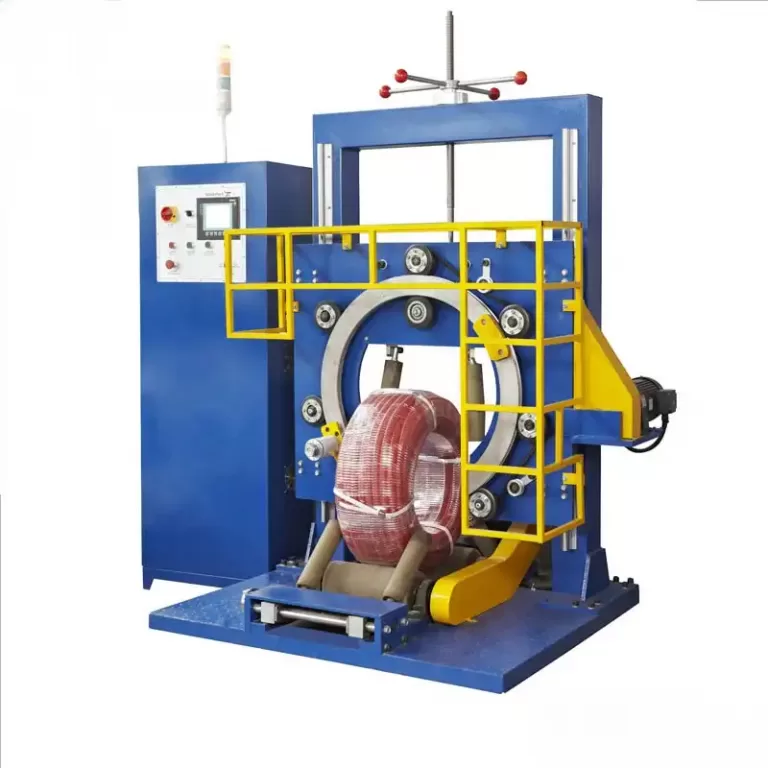
Integrating automation in coil wrapping and strapping involves assessing your current line’s layout and capacity, selecting compatible modular equipment, ensuring seamless data exchange with your manufacturing execution systems, and optimizing material flow for continuous operation. This holistic approach minimizes disruptions, maximizes throughput, and ensures that the automated packaging station becomes a streamlined asset rather than a bottleneck, ultimately enhancing product quality and reducing operational costs.
The process begins with a thorough assessment of your current coil production and handling process. Identify existing bottlenecks, evaluate space availability, and understand the specific types and sizes of coils being processed. This analysis will inform the type and configuration of the automated system required.
System Compatibility and Customization
Choosing an automated wrapping and strapping system that is compatible with your existing line’s speed, layout, and handling methods is paramount. Modular system designs offer flexibility, allowing solutions to be tailored to specific needs – whether integrating into a high-speed steel mill line or a lower-volume facility handling different materials like hose or pipe. Key considerations include conveyor height and speed, coil orientation (horizontal or vertical), and the point in the line where packaging should occur (e.g., directly after slitting or finishing). Customization options, such as integrating coil tilting or centering devices, ensure seamless flow from previous stages.
Data Integration and Control Systems
For automation to truly streamline operations, the coil packaging system must communicate effectively with your existing production management systems, such as a Manufacturing Execution System (MES) or Mill Information System (MIS). Modern automated systems feature sophisticated PLC and HMI controls that can exchange data seamlessly. This integration allows for automatic loading of packaging parameters based on product data (e.g., coil ID, material type, destination), real-time tracking of packaged coils, performance monitoring, and remote diagnostics. Proper data flow ensures the right packaging is applied to the right coil without manual data entry errors, enhancing accuracy and traceability throughout the supply chain.
Material Handling and Flow Optimization
Efficient material handling is critical for maximizing the uptime of an automated coil packaging line. The system should be designed to minimize the frequency and duration of material replenishment. Utilizing large bulk rolls of wrapping film, paper, or strapping material reduces the need for frequent changes. Features like automatic material splicing or roll changing further enhance continuous operation. Furthermore, the physical flow of coils into and out of the packaging station via integrated conveyors or transfer cars must be optimized to prevent queues or delays. The goal is a continuous, smooth flow of coils from production through packaging, with minimal manual intervention required for material loading or handling between cycles.
By focusing on these key areas – system compatibility, data integration, and material flow optimization – manufacturers can ensure that the integration of automated coil wrapping and strapping is not just a technical installation but a strategic enhancement that drives overall operational efficiency, improves packaging quality, and maximizes the return on investment without disrupting the existing production workflow.
Conclusion
Investing in automated coil wrapping and strapping solutions represents a strategic imperative for businesses aiming for peak operational performance. These systems deliver significant, measurable benefits, from drastically reducing labor costs and minimizing material waste to dramatically boosting production throughput and ensuring superior product protection. By embracing technologies like TEW and integrating seamlessly with existing lines, manufacturers achieve consistency, efficiency, and a competitive edge. Explore the possibilities of an automated steel coil wrapping line to revolutionize your packaging process, enhance product quality, and solidify your market leadership.








