
The Future of Automated Coil Handling in Steel Manufacturing
Steel coils: immense weight, stored energy, and significant risk. Is your manufacturing process burdened by manual handling dangers and inefficiencies? The future of steel manufacturing demands a safer, more efficient, and more precise approach. Automated coil handling is not just an option; it’s a necessity for unlocking peak performance and ensuring worker safety in this demanding industry.
The future of automated coil handling in steel manufacturing is defined by integrated, intelligent systems that prioritize safety, optimize workflows, and enhance quality. Advanced technologies like automated cranes, AGVs, robotics, sophisticated sensors, and data analytics are converging to create seamless, high-throughput operations, significantly reducing risks and boosting efficiency.
Dive deeper to explore how these transformative technologies are reshaping the steel landscape, from internal logistics and lifting safety to precision handling, quality control, and streamlined external transport preparation.
Automated Systems Revolutionizing Internal Coil Flow
Are outdated, labor-intensive methods slowing down your steel coil movement within the facility? The advent of advanced automation is fundamentally changing how coils travel from mill to processing to storage, creating a dynamic, efficient internal network.
The future of automated coil handling within steel plants leverages intelligent Warehouse Management Systems (WMS) to orchestrate fleets of highly automated equipment. This includes precision-controlled overhead and gantry cranes for heavy lifting and stacking, flexible Automated Guided Vehicles (AGVs) for navigating complex routes between bays, and integrated conveyor systems for continuous material flow through processing lines. These systems work in concert, driven by real-time data and advanced algorithms, to optimize paths, minimize handling, and maximize throughput while significantly reducing human intervention in hazardous areas.
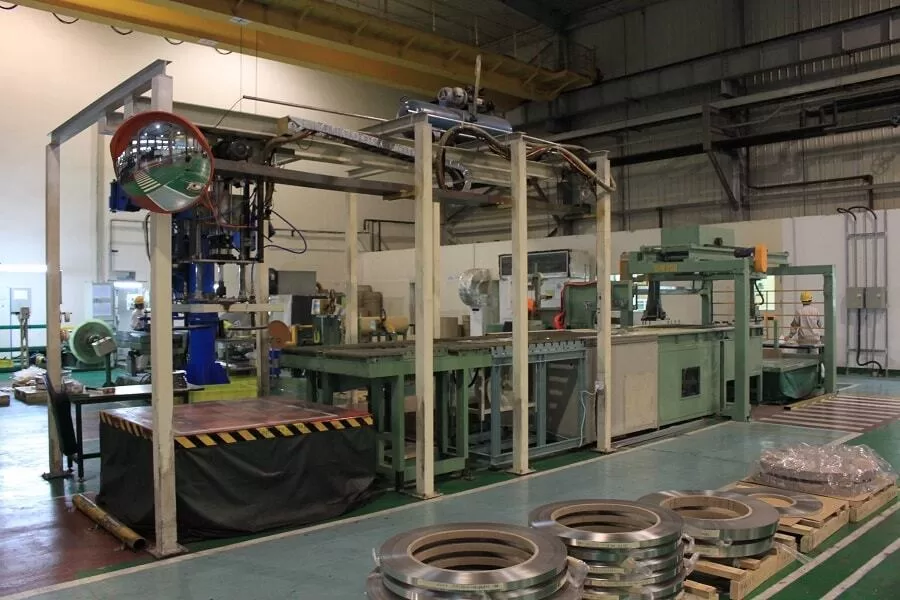
The Core Technologies: Cranes, AGVs, and Conveyors
The backbone of internal automated coil handling relies on specialized equipment, each optimized for different roles and integrated by sophisticated control systems.
Overhead and Gantry Cranes remain indispensable workhorses for heavy lifting within defined bays. Modern automated cranes, like those used in the Morgan Automation system, feature PLC-based precision control, active anti-sway systems, and can be fully integrated with Warehouse Management Systems (WMS) for automated storage and retrieval (AS/RS). These cranes are engineered for high capacities, often handling 10 to 50+ tons, and are designed for demanding industrial environments, including heat-shielded components for hot mill operations. Smart cranes offer positioning accuracies within millimeters and can maintain stability during high-speed travel, enabling continuous 24/7 operation and maximizing throughput. CTI Systems also highlights how automated cranes handle complex tasks vital to safe and efficient production cycles, lifting loads up to 65 tonnes.
Automated Guided Vehicles (AGVs) and Autonomous Mobile Robots (AMRs) provide crucial flexibility for floor-based transport, especially for moving coils between different bays or departments without fixed infrastructure. AGVs designed for steel coils can handle substantial payloads, with some models capable of transporting up to 100 tons. Their key advantages include flexible routing, scalability (adding more vehicles as needed), enhanced safety by removing human operators from traffic paths, and system redundancy. Modern AGVs utilize laser guidance or natural feature navigation (SLAM) for dynamic route planning and obstacle avoidance, easily integrating with higher-level control systems like WMS or MES.
Conveyor systems, such as roller and chain conveyors, offer continuous, automated transport along fixed paths. They are particularly effective for moving coils sequentially through processing stages like cooling, inspection, trimming, or packaging lines. Specialized systems utilizing vertical stem pallets can move coils “eye to sky,” integrating seamlessly with automated compacting and strapping units. While offering limited flexibility in routing, conveyors are reliable and efficient for high-volume, repetitive tasks in stable production environments.
WMS Integration: The Brains of the Operation
The true intelligence of automated internal handling lies in the Warehouse Management System (WMS). Systems like the Konecranes WMS for coil storage or the Morgan Cephas logistic management system act as the central control hub. They receive production and shipping orders, optimize storage locations based on factors like destination or cooling time, generate transport tasks, and dispatch instructions to automated cranes, AGVs, and other equipment. The WMS tracks every coil’s location in real-time, providing comprehensive inventory visibility. Advanced modules can manage yard operations (receiving, quality checks), production demands (prioritizing retrieval for processing), and mobile robot movements outside the main storage area. This integration ensures coordinated movements, minimizes idle time, and allows for sophisticated strategies like reorganizing storage during low production times to conserve space or grouping common destination coils. Data collected by the WMS enables continuous monitoring and optimization of operational performance.
| System Type | Typical Capacity Range | Flexibility & Adaptability | Space Requirements | Initial Cost (Relative) | Primary Use Cases | Key Benefit in Automation |
|---|---|---|---|---|---|---|
| Overhead/Gantry Crane | 10 – 65+ tons | Low (Fixed runway) | High (Headroom) | High | Heavy lifting, stacking in bays, loading/unloading | High capacity automation, precise positioning |
| AGV/AMR | Up to 100 tons (Coil) | High (Dynamic routing) | Medium (Aisle space) | Medium-High | Flexible point-to-point transport between areas | Safe, adaptable horizontal movement |
| Conveyor System | Varied (Coil weight) | Very Low (Fixed path) | High (Floor space) | Medium | Sequential movement through processing lines, packaging | Continuous, high-throughput flow |
These systems, when integrated and managed by a WMS, create a seamless, automated flow within the steel facility, enhancing efficiency, reducing labor costs, and preparing the ground for advanced safety implementations.
Enhancing Safety and Reliability Through Automation
Steel coil handling is inherently risky, with potential hazards ranging from falling coils and explosive banding failures to struck-by incidents and pinch points. Automation is dramatically improving safety by removing personnel from the most dangerous areas and integrating preventative technologies.
Automation enhances safety in steel coil handling by implementing sensor-based collision avoidance systems, automated emergency stops, and predictive maintenance alerts, minimizing human exposure to hazardous zones. Automated equipment, such as AGVs and robotic unbundling systems, performs high-risk tasks autonomously, while integrated safety logic controllers (PLCs) monitor system health and enforce strict safety protocols. This layered approach, combined with specialized equipment design and rigorous training, significantly reduces the likelihood and severity of accidents.
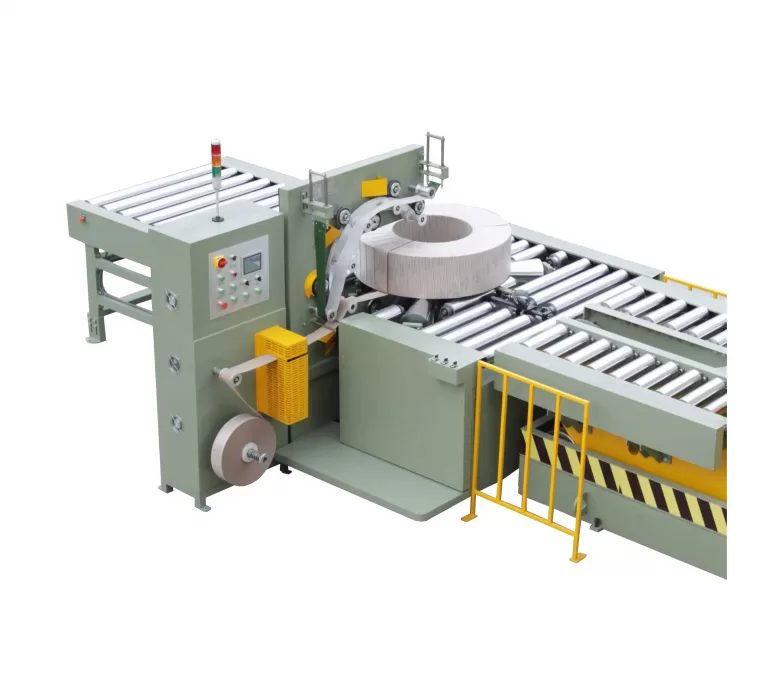
Mitigating Hazards with Smart Technology
The massive kinetic energy stored in steel coils makes mishandling extremely dangerous, with sudden uncoiling capable of generating speeds exceeding 100 km/h. Automated systems address these fundamental dangers with advanced technology.
Sensor technology is paramount for creating a safe automated environment. Laser scanners, ultrasonic sensors, and vision systems create safety zones around equipment, detect obstacles, and enable dynamic speed adjustments or emergency stops to prevent collisions with personnel or other machinery. Light curtains provide perimeter guarding for automated areas, ensuring workers cannot enter hazardous zones while equipment is operating. Thermal sensors on cranes, as seen in the Morgan system, detect coil temperature, ensuring hot coils are not moved prematurely, preventing potential damage or safety risks. Sidewall sensors on cranes prevent damage to coils during handling.
Programmable Logic Controllers (PLCs) act as the brain of automated safety systems. They process sensor inputs and control equipment responses, integrating emergency stop systems, speed monitoring, and interlocking systems that prevent operation under unsafe conditions. Fault diagnostics and alarms allow for proactive intervention.
Specific automated equipment designs inherently reduce risk. Automated cranes, for example, keep heavy loads suspended overhead, clearing floor space and reducing the risk of floor-level collisions common with forklifts. AGVs remove the human operator from the vehicle in high-traffic areas. Robotic systems, like the Turin Robotics unbundling system, eliminate the need for workers to manually interact with tensioned steel straps or sharp coil edges, directly addressing a major safety hazard.
Integrated ground-based safety systems, such as those implemented by Morgan Automation, physically prevent personnel access to automated crane bays unless lockout devices are engaged and the system grants permission, using safety gates and remote I/O.
Protocols, Training, and Regulatory Compliance
Technology alone is not sufficient; it must be supported by stringent procedures and comprehensive training. Even in highly automated environments, human interaction points remain (maintenance, monitoring, supervision). Thorough training on automated systems, safety features, and emergency procedures is crucial for operators and maintenance personnel. This includes understanding specific equipment functionalities, lockout/tagout (LOTO) procedures for safe maintenance, and adhering to documented safety protocols.
Compliance with relevant regulations and standards is the foundation of safe operation. In the US, OSHA standards (e.g., 29 CFR 1910 Subparts N, O, D, I) govern materials handling, machine guarding, walking-working surfaces, and PPE. Industry-specific guidance from organizations like AIST promotes best practices in hazard assessment and risk mitigation specific to steel environments. Regulations like FMCSA §393.120 mandate strict securement requirements for steel coils during road transport. International codes like the IMO CSS Code provide guidelines for maritime shipping. A proactive safety culture goes beyond minimum compliance, actively seeking to identify and mitigate all potential hazards.
Automation provides powerful tools to enhance safety by reducing human exposure, implementing intelligent monitoring and control, and performing tasks with consistency and precision unmatched by manual methods.
Automated Precision, Quality Control, and Data Insights
In the production of high-quality steel products, precision in handling and the ability to detect defects are paramount. Automated systems bring a new level of accuracy and consistency, minimizing damage and integrating real-time quality assurance.
Automated steel coil handling enables millimeter-level precision in lifting and placement, crucial for avoiding damage and streamlining downstream processing. Integrated vision systems and sensors allow for automated surface defect inspection during handling or packaging, ensuring consistent quality control. Furthermore, automated systems are rich sources of data, providing real-time insights into operational performance, equipment health, and material flow, enabling data-driven optimization and predictive maintenance for enhanced reliability and efficiency.
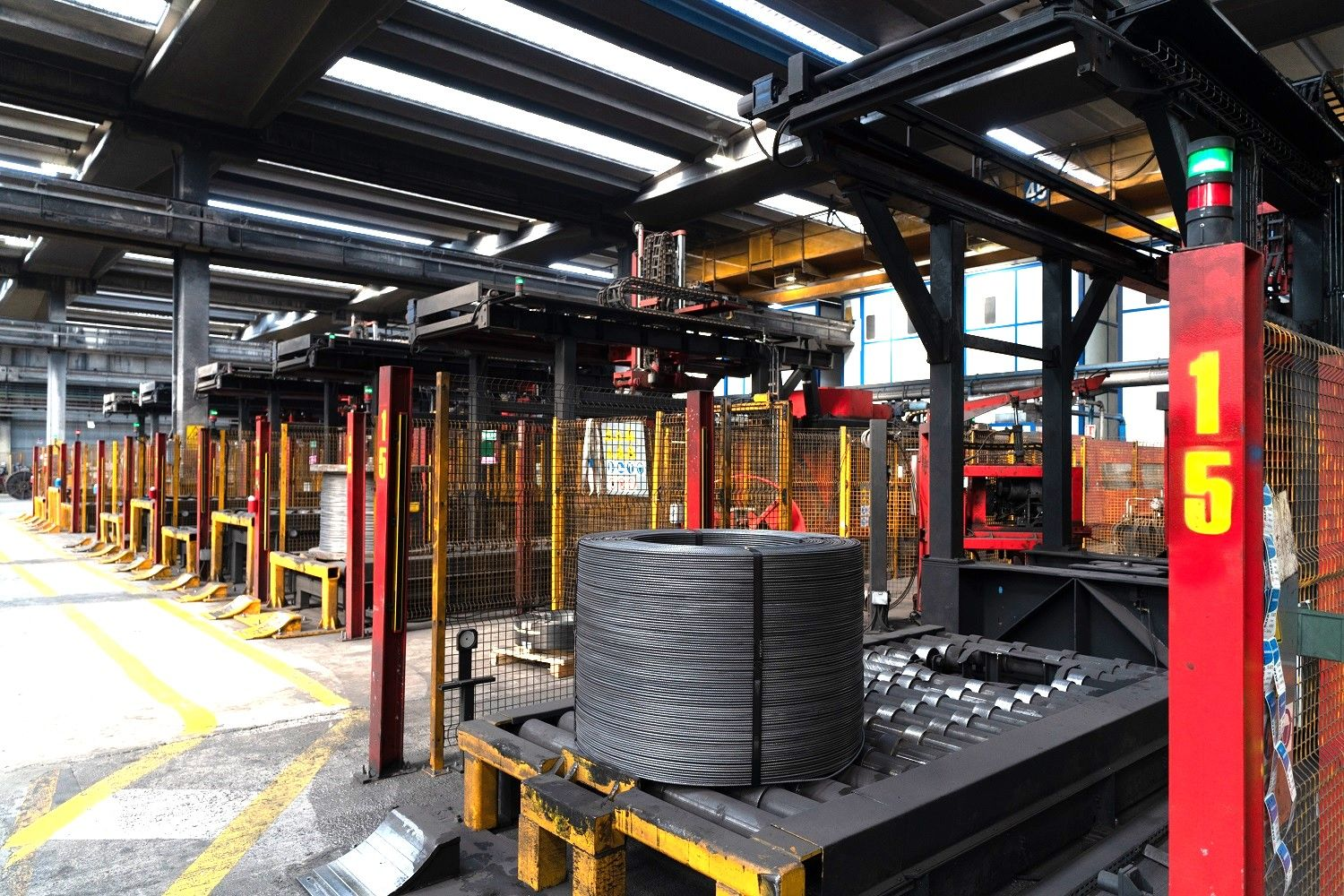
Achieving Accuracy and Consistency
The future of steel manufacturing demands high levels of precision in handling processes. Automated cranes, guided by laser positioning systems and integrated control logic (like the Siemens technology in the Morgan system), can achieve highly accurate placement of coils onto saddles, transfer cars, or processing equipment, often within ±10-25mm. This precision is vital for avoiding impacts, ensuring smooth machine feeding, and optimizing storage density.
Specialized automated lifting devices, such as the Airpes automation-ready lifting tong, are designed to work in concert with crane automation to position the crane and engage the load within millimeters, then land it perfectly at the destination, whether a fixed storage rack or a variable position like a truck or railcar. This capability eliminates manual adjustments and reduces the risk of edge damage or deformation during placement.
Robotic systems add another layer of precision, particularly for tasks requiring complex manipulation. A 6-axis industrial robot in an automated unbundling system can precisely locate and remove strapping, adapting to variations in coil dimensions, ensuring consistent and safe operation while simultaneously preparing the coil for subsequent processing.
Automated packaging lines ensure wrapping materials, edge protectors, and strapping are applied consistently and with the correct tension, maintaining coil integrity and protecting against damage during transit and storage. This automation replaces variable manual processes with repeatable, high-quality outputs.
Integrated Quality Inspection
Automated systems are increasingly incorporating integrated quality control checks. Vision systems and imaging devices, like those in the Turin Robotics system, can automatically inspect coil end-faces for defects such as edge cracks, tower shapes, loose coils, serrated edges, folds, or spillage edges during the unbundling or handling process.
These systems use image processing and recognition algorithms to identify anomalies. Detection results can be automatically judged against predefined criteria, standardizing the inspection process and improving accuracy compared to manual visual checks. This automated quality assurance helps prevent defective material from moving further down the production line or being shipped, reducing waste and ensuring product standards are met. Sensors can also verify packaging integrity and correct application.
The Power of Data and IoT
The data generated by automated handling systems is a valuable asset. Sensors on cranes, AGVs, robots, and other equipment collect real-time information on location, speed, load weight, temperature, energy consumption, and system status. This data is aggregated and managed by WMS and logistics systems like Morgan’s Cephas.
Advanced data analytics and AI/ML algorithms can process this information to provide deep insights into operational performance. This includes tracking key performance indicators (KPIs) in real-time, identifying bottlenecks in the workflow, optimizing the routing of AGVs and cranes, predicting maintenance needs for equipment before failures occur (predictive maintenance), and refining energy consumption by optimizing movements or utilizing regenerative drives (like the Siemens Sinamics S120). Digital twins and simulation models can use this data for further optimization and training, allowing operators to practice in a virtual environment. This data-driven approach enables continuous improvement and enhances overall system reliability and efficiency.
| Benefit Area | Impact of Automation, Sensors & Data |
|---|---|
| Damage Prevention | Precise positioning reduces impact risk; non-contact lifting (magnets); automated packaging consistency; sensor detection of handling issues. |
| Quality Consistency | Automated, standardized inspection (vision systems); accurate application of packaging; repeatable handling motions; reduced human error in quality checks. |
| Operational Efficiency | Reduced cycle times; optimized routes (WMS, AGV analytics); predictive maintenance minimizes downtime; real-time bottleneck identification; faster task execution. |
| Resource Optimization | Energy savings (regenerative drives, optimized paths); reduced material waste (less damage, accurate inspection); better labor utilization. |
| Supply Chain Visibility | Real-time tracking of coils within the facility and potentially through the supply chain (WMS integration, IoT); accurate inventory management. |
By integrating precision handling, automated quality control, and robust data analytics, automated systems ensure not only efficient movement but also the integrity and consistent quality of the steel coils themselves, driving value throughout the supply chain.
Streamlining the Path to External Transport
While the final mile of external transport via truck, rail, or sea involves distinct logistics providers and equipment, the preparation of steel coils for shipment within the manufacturing facility is increasingly benefiting from automation, ensuring coils are ready, packaged, and staged efficiently and safely.
Automation streamlines the preparation of steel coils for external transport by automating staging and retrieval processes, enabling precise placement of coils onto transport vehicles, and implementing consistent, automated packaging solutions tailored for transit. Integrated logistics management systems track coils from internal storage to shipping points and facilitate seamless handoffs, ensuring coils are ready for pickup or loading efficiently, minimizing delays and reducing the risks associated with manual handling at the interface between plant and transport.
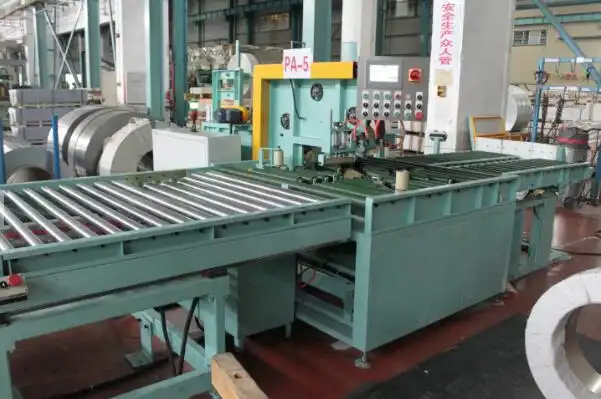
Automated Staging and Loading
Within automated coil yards, logistics management systems like Morgan’s Cephas automatically manage the retrieval of coils destined for shipment. Based on production schedules and shipping details, the system directs automated cranes or AGVs to pick up the correct coils from storage and place them precisely onto designated shipping saddles, transfer cars that feed external loading areas, or directly onto trucks or railcars.
Specialized automated lifting devices, such as the Airpes automation-ready tong, are designed with the versatility to accurately land coils not just in fixed points like storage racks, but also onto transport vehicles with variable positions and configurations. The system knows the optimal path and placement, eliminating the need for manual adjustments and reducing the risk of damage or misalignment during loading. This capability is crucial for efficient and safe interaction with external transport modes.
Automated Packaging for Transit
Protecting steel coils from damage and corrosion during the rigors of road, rail, and sea transport is essential. The level of packaging required varies significantly depending on the coil type (hot-rolled, cold-rolled, coated) and the transit method/duration. Maritime packaging, in particular, involves multiple layers for moisture and physical protection.
Automated packaging lines play a vital role in applying these protective materials consistently and efficiently. These systems can automatically wrap coils with VCI paper, plastic film, and outer protection like hardboard or metal shells. They also apply robust steel or polyester strapping with precise tension, ensuring the coil wraps remain tight and preventing telescoping during transit. Automated edge protectors are applied to prevent damage to edges and packaging materials. This automation ensures that coils are prepared for shipment with a high degree of consistency and integrity, crucial for minimizing damage claims.
Seamless Logistics Integration
The integration of internal automated handling systems with broader logistics management software is key to streamlining the path to external transport. Systems like WMS and Cephas track coils from their point of origin through internal handling, storage, packaging, and staging for shipment. They maintain a single bucket of data on each coil, including physical characteristics, processing history, and final shipping details.
This real-time visibility allows the system to orchestrate the movement of coils to align with scheduled pickups or train/vessel departures. Automated systems can prioritize coils based on their departure time, ensuring they are ready and waiting in the correct staging area. This seamless data flow and automated execution minimize delays at the loading dock or rail siding, improve turnaround times for external carriers, and provide accurate, real-time information to logistics personnel and customers.
Conclusion
The future of automated coil handling in steel manufacturing represents a significant leap forward, driven by the imperative for enhanced safety, operational efficiency, product quality, and supply chain visibility. By adopting integrated systems comprising automated cranes, AGVs, robotics, advanced sensors, and data analytics, steel manufacturers can transform their processes. These technologies minimize human exposure to hazards, optimize material flow, ensure precision in handling and inspection, and streamline preparation for external transport. Embracing this holistic approach to coil handling is essential for building resilient, high-performance operations that meet the demands of a competitive global market and contribute to a safer, more sustainable industry. Explore advanced coil packing line solutions to further optimize your steel coil handling processes.








