
How Can U.S. Manufacturers Master Sustainable Slit Coil Packaging?
Are you a U.S. manufacturer dealing with the constant pressure of increasing output while keeping costs low? Do you worry about the safety of your team handling heavy steel coils? Many factory managers, just like you, face daily struggles with inefficient manual packaging, worker safety risks, and product damage. These issues do not just slow down production. They also hit your bottom line hard and affect your ability to meet customer demands. The traditional way of doing things often creates more problems than it solves.
U.S. manufacturers can achieve sustainable and eco-friendly slit coil packaging by adopting advanced automated lines. These systems improve efficiency, reduce labor costs, enhance worker safety, and minimize product damage. They also support environmental goals through optimized material use and less waste. This helps factories become more competitive and ensures long-term business growth.
As someone who started on the factory floor and then built a successful packing machine business, I understand these problems deeply. My journey taught me the true value of reliable and efficient machinery. If you want to transform your packaging process, keep reading. We will explore how modern solutions can help you overcome these challenges and achieve true operational excellence.
Why Do Traditional Slit Coil Packaging Methods Hold U.S. Manufacturers Back?
Have you ever felt stuck, watching your production line slow down at the very end, just when products are ready to ship? Many U.S. manufacturers deal with bottlenecks in their slit coil packaging areas. These often come from relying on old, manual ways. This approach brings many problems. It impacts efficiency, creates safety risks, and can even damage your valuable products.
Traditional slit coil packaging methods hinder U.S. manufacturers due to their reliance on manual labor. This leads to slow, inefficient processes, high risks of worker injury from heavy lifting, and increased product damage during handling. These issues slow down production, raise costs, and lead to more customer complaints. They make it hard to compete in today’s fast market.
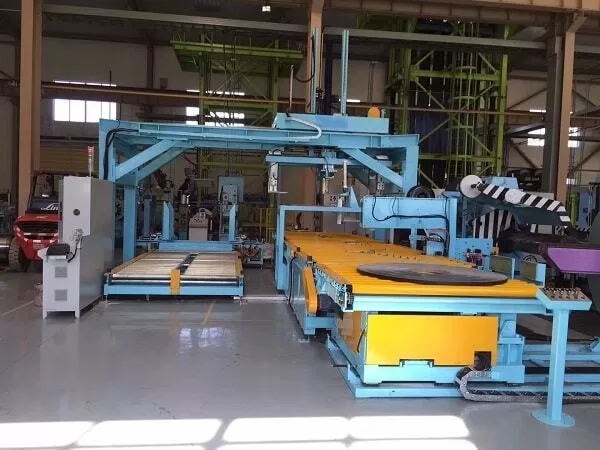
Manual packaging processes are a major cause of inefficiency. Workers physically move heavy steel coils and bundles. This takes a lot of time and effort. It also limits how much product you can get out the door. The speed of your whole factory depends on the slowest part, and often, that slow part is the packaging line. This means you produce less than you could, and delivery times get longer. For example, a factory might produce hundreds of coils a day. If packaging only handles a fraction of that, everything backs up.
Beyond speed, safety is a huge concern. Moving heavy items by hand or with basic equipment carries high risks. Workers can suffer sprains, strains, or even more serious injuries. These accidents lead to high insurance costs, workers’ compensation claims, and a drop in morale. They also cause staff turnover, forcing you to constantly train new people. I have seen firsthand how much this impacts a factory. One time, early in my career, a simple lifting mistake caused a major delay and a worker injury. It was a clear sign that manual processes just are not sustainable in heavy industries.
Product damage is another hidden cost. During manual handling, especially with slit coils, edges can get bent or scratched. This leads to wasted material, rejected products, and unhappy customers. Every damaged coil means lost profit and a damaged reputation. In a competitive market, customer trust is key. Losing even one customer because of damaged goods is a big blow. These problems are not just about money. They also show a lack of care for employees and quality. Addressing them is important for any U.S. manufacturer looking to grow. It is about understanding that old ways create new problems every day.
How Do Automated Slit Coil Packaging Lines Drive Sustainability and Profit?
leading paragraph: Are you wondering if “eco-friendly” means sacrificing your profit margins? Many U.S. manufacturers believe that going green is an added cost. However, when it comes to slit coil packaging, investing in automated lines actually helps both the environment and your financial health. It is not just about being responsible. It is about smart business.
snippet paragraph:
Automated slit coil packaging lines boost sustainability by optimizing material use, reducing waste, and cutting energy consumption. They drive profit by lowering operational costs, minimizing product damage, and improving overall efficiency. This dual benefit helps U.S. manufacturers meet environmental goals while also strengthening their financial performance and market position.
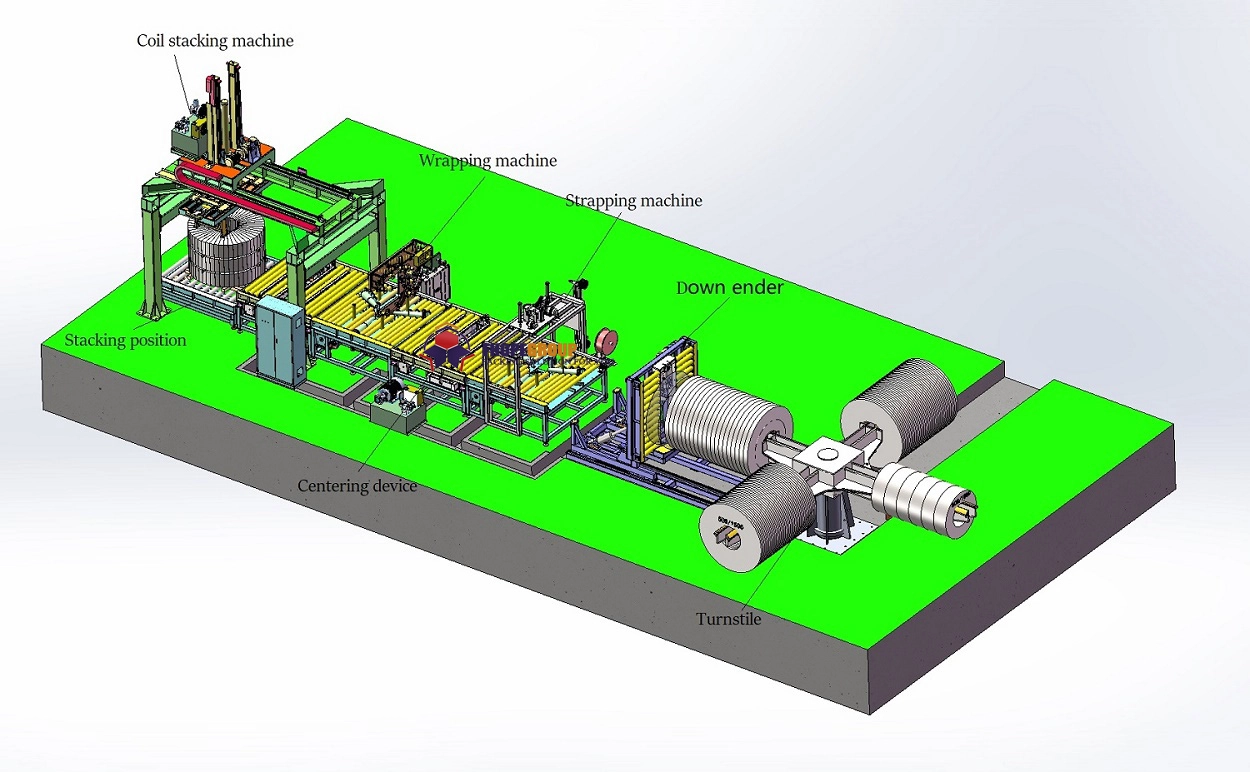
Automated systems are designed to be precise. This precision directly translates into less waste. For example, a machine applies wrapping materials exactly where needed, using the optimal amount. Manual wrapping often leads to excessive material use, both in film and strapping. This waste costs money and adds to landfill burden. By using less material per package, factories save money on supplies. They also reduce their environmental footprint. This is a clear win-win.
Think about energy use. Fragmented, manual processes often involve multiple steps, each needing its own energy source or human effort. An integrated automated line is often more energy-efficient overall. It moves products smoothly from one stage to the next with minimal stop-and-start energy spikes. This can mean lower electricity bills for the factory. It also reduces carbon emissions. When I designed FHOPEPACK’s machines, I focused on making them efficient, not just fast. This means they are built to save resources.
Furthermore, reducing product damage helps the environment. Fewer damaged coils mean less raw material is wasted. It means fewer resources are used in remanufacturing or disposal. This makes the entire supply chain more sustainable. When a coil gets damaged, it is not just the immediate loss. It is also the energy, time, and materials that went into making that coil. Automated systems handle coils gently and consistently. They prevent common damage points like bent edges or loose wraps. This means more perfect products leaving the factory. It also means a lower overall environmental impact from your operations. This approach helps U.S. manufacturers show their commitment to both quality and the planet.
Can Automation Truly Solve Your Factory’s Safety and Efficiency Challenges?
Are safety hazards and slow production lines holding your U.S. factory back? Many managers tell me these are their biggest headaches. They struggle to find workers willing to do dangerous, repetitive tasks. They also need to speed up output. The good news is that advanced automation offers real solutions to both problems. It is not just about buying a machine. It is about transforming your workplace.
Automation truly solves factory safety and efficiency challenges by removing workers from dangerous, heavy lifting tasks. It speeds up production through consistent, high-volume processing. Automated systems reduce injury risks, lower insurance costs, and free up labor for more skilled work. This directly tackles efficiency bottlenecks and significantly improves worker safety in U.S. manufacturing plants.

Let us look at safety first. In traditional slit coil packaging, workers often lift and move extremely heavy coils. They also flip pallets and handle strapping tools. These tasks are tiring and dangerous. They lead to frequent injuries like back strains, cuts, and crushed limbs. When I worked in a packing machine factory, I saw too many preventable accidents. Automation fundamentally changes this. Machines take over the heavy, repetitive, and risky tasks. They use robotic arms, conveyors, and integrated wrapping systems. This means fewer people are in harm’s way. This lowers your factory’s injury rate. It also means fewer workers’ compensation claims and lower insurance premiums. More importantly, it shows you care about your team.
For efficiency, automation is a game-changer. Manual packaging is slow and inconsistent. An automated system works at a constant, high speed. It does not get tired. It does not make human errors. It can process many coils per hour, far more than any manual crew. This directly tackles end-of-line bottlenecks. It ensures that your packaging speed matches your production speed. This means products move faster from the factory floor to the customer. When I started FHOPEPACK, our goal was to eliminate these bottlenecks. We knew that speed and consistency were key for any factory wanting to grow.
Consider the direct comparison:
| Feature | Manual Packaging | Automated Packaging |
|---|---|---|
| Throughput | Slow, inconsistent, limited by human speed | High-speed, consistent, continuous |
| Safety | High risk of injury (lifting, repetitive strain) | Dramatically reduced injury risk, hands-off operation |
| Labor Cost | High, includes wages, benefits, injury costs | Lower per unit, labor re-allocated to skilled tasks |
| Product Quality | Variable, prone to damage from handling | Consistent, precise, minimal product damage |
| Operational Hours | Limited by shifts, fatigue | Can operate 24/7 with minimal supervision |
By switching to automation, U.S. factories can get a strong return on investment. They save money on labor and injury costs. They also gain more production capacity. This lets them take on more orders. It makes them more competitive in the market. It is a clear step towards a more productive and safer future.
How Do You Find a Trusted Partner for Advanced Packaging Solutions in the U.S.?
Have you ever bought equipment that promised a lot but delivered little? Many U.S. manufacturers tell me about bad experiences with equipment suppliers. These suppliers just wanted to make a sale and then disappeared when problems arose. This creates a huge trust issue. You need more than just a machine. You need a partner who truly understands your factory’s unique challenges.
Finding a trusted partner for advanced packaging solutions in the U.S. involves looking beyond sales pitches. Seek out suppliers with deep industry experience, proven success stories, and a commitment to understanding your specific production bottlenecks and safety concerns. A true partner offers expert guidance, tailored solutions, and reliable after-sales support, much like my journey with FHOPEPACK.

My own journey in the packing machine industry taught me the importance of being a real partner. I started as an employee in a packing machine factory. Then, I built my own successful factory from the ground up. This hands-on experience gave me a deep understanding of what factory managers truly need. I did not just sell machines. I helped clients grow their businesses. This personal experience shaped FHOPEPACK’s mission. We are here to share knowledge and help others succeed.
When looking for a partner, focus on their expertise. Do they understand the specific challenges of your industry, like metal processing or heavy manufacturing? Can they talk about production bottlenecks, safety rules, and cost reduction strategies? A good partner does not just offer a catalog of machines. They ask about your factory’s unique pain points. They want to know your current production rates, your safety records, and where you lose money. They also care about your goals for the future.
Reliability and after-sales support are also critical. A machine is a long-term investment. What happens if it breaks down? How quickly can you get parts or technical help? Many suppliers are great at selling but terrible at support. This can leave your production line halted, leading to massive losses. At FHOPEPACK, we believe in lasting relationships. We provide ongoing support. We ensure that our solutions keep working well for years. We do not just want to sell you a machine. We want to help you make your factory more efficient and safer for the long run. My own success came from helping my clients succeed. This is the core of how FHOPEPACK works. We want to be the expert guidance you can rely on. We help you make smart investments that truly boost your business.
Conclusion
Modern automated slit coil packaging transforms U.S. manufacturing. It boosts efficiency, enhances safety, cuts costs, and supports eco-friendly goals. Partner with experts like FHOPEPACK to achieve these vital improvements and secure your factory’s future.








