
Achieving Consistent Coil Quality Across America: Are You Choosing the Right Packaging Line?
As a factory manager, you face constant pressure. You need to boost output, keep costs low, and make sure everyone stays safe. If your steel coil and wire packaging still relies on manual work, you know the struggle. It is slow. It creates bottlenecks. It risks your workers’ safety and can even damage your products before they leave the factory. This is not just about a slower process; it means real losses, lost income, and frustrated customers.
The right packaging line changes everything. It means investing in smart automation. It puts safety features first. It uses systems that protect your product from start to finish. This approach helps factories across America ensure consistent quality. It cuts down on operating costs. It also significantly boosts your overall factory profits.

I have seen many factories grow, and I have built my own. I know that choosing the right equipment is a huge decision. It is not just a purchase; it is an investment in your future. Let us explore how a smart investment in a modern packaging line can solve your biggest problems and push your business forward.
Addressing the Bottleneck: Is Your Current Coil Packaging Holding You Back?
Imagine your production line is running smoothly. Raw materials come in, processing goes well, and then you hit a wall. The final packaging of steel coils and wire is slow. It is holding everything up. This bottleneck is a common problem. It slows down your whole operation. It stops you from getting products out on time.
Automated coil packaging systems can fix this problem. They make the packaging process much faster and more efficient. These systems take over repetitive tasks that humans used to do. This helps your entire production line move without delays. It ensures that products get ready for shipment quickly.
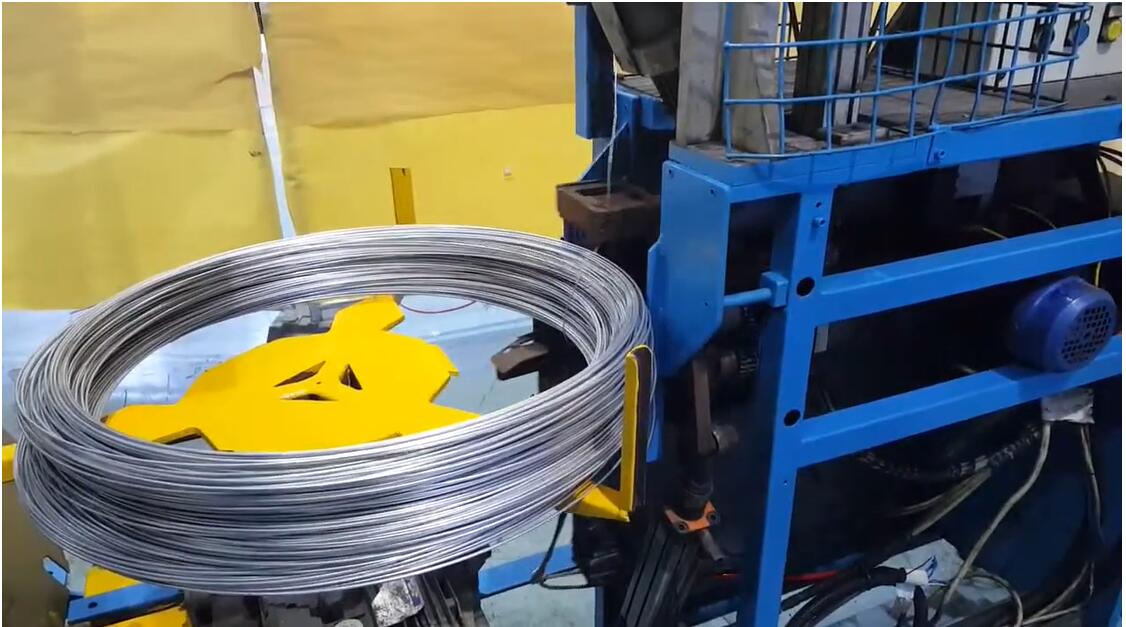
Many factory managers tell me about this exact issue. They have invested in high-speed production machinery. But then they find their output is limited by the slow pace of manual packaging at the very end. This is like having a fast race car with flat tires. Manual coil wrapping is simply not designed for the high volumes of modern manufacturing. It requires multiple workers, each performing tedious and often difficult tasks. This creates inconsistencies. It leads to delays. It also causes errors that automated systems can prevent.
Automated packaging equipment, like horizontal stretch wrappers or orbital wrappers designed for coils, removes these human limitations. These machines can wrap coils at speeds impossible for manual labor. They ensure consistent tension and overlap with every wrap. This means each coil is packaged the same way, every time. It also uses less material sometimes. This consistency is vital for product protection and customer satisfaction. It also helps manage material costs.
Consider the time it takes to manually prepare a large steel coil for shipment. It involves moving the coil, often with heavy lifting equipment. Then, a team of workers might manually apply protective materials. This could include stretch film, paper, or plastic straps. Each step takes time. It depends on human skill. An automated system takes the coil from a conveyor. It wraps it. It applies straps. It even labels it. It does all this in a fraction of the time. This speed frees up your workforce. They can do more skilled tasks. It also removes a major source of production delays. This kind of investment directly impacts your factory’s bottom line. It does this by increasing throughput. It reduces labor costs. It makes your operations more predictable.
The Hidden Costs of Manual Coil Wrapping
Manual wrapping looks cheap on the surface. But it carries many hidden costs. These include:
- High Labor Costs: You need many workers for repetitive, low-skill tasks.
- Inconsistent Quality: Human error leads to varying wrap quality. This can affect product protection.
- Slow Throughput: The pace is limited by human speed. This creates bottlenecks.
- Increased Waste: Manual wrapping often uses more material due to inconsistencies.
- Safety Risks: Workers are exposed to heavy lifting and repetitive strain injuries.
How Automated Systems Transform Throughput
Automated systems bring efficiency that manual processes cannot match.
- Speed: Machines work much faster than humans. They can wrap hundreds of coils per shift.
- Consistency: Every coil gets the same wrap. This ensures uniform protection.
- Reduced Labor: Fewer workers are needed for the packaging stage. This frees them for other tasks.
- Lower Material Use: Precise wrapping reduces waste.
- Integration: Automated lines can connect with upstream and downstream processes. This creates a seamless flow.
Choosing the Right Automation Level for Your Factory
The level of automation you choose depends on your needs.
- Semi-Automatic Machines: These still need some human input. They are good for smaller operations. They are also good for factories taking their first step into automation.
- Fully Automatic Lines: These handle everything from loading to wrapping and unloading. They need minimal human interaction. They are best for high-volume factories. They offer the greatest efficiency gains.
| Feature | Manual Packaging | Automated Packaging |
|---|---|---|
| Speed | Slow, human-paced | Fast, machine-paced |
| Consistency | Variable, prone to error | High, uniform |
| Labor Needs | High | Low |
| Safety Risk | High (heavy lifting) | Low (reduced human interaction) |
| Product Damage | Higher (inconsistent handling) | Lower (gentle, consistent wrap) |
| Cost over Time | Higher (labor, waste, claims) | Lower (efficiency, less damage) |
Ultimately, moving from manual to automated coil packaging is not just about buying a machine. It is about removing a critical bottleneck. It is about increasing your factory’s overall output. It is about making your operations more reliable. This is a crucial step for any factory looking to stay competitive. It helps them meet the demands of modern industry. (490 words)
Safety First: Can Automated Coil Handling Protect Your Team and Your Bottom Line?
In a factory that handles heavy materials like steel coils, safety is always a top concern. Manual handling of these heavy items is incredibly risky. Your workers lift, pull, and push massive weights every day. This leads to frequent injuries. It also causes high insurance costs and staff turnover. This situation puts both your people and your budget at risk.
Automated coil handling systems greatly reduce the need for manual heavy lifting. This directly lowers the chances of workplace injuries. It makes the work environment much safer for your employees. By keeping workers away from the heaviest and riskiest tasks, factories protect their most valuable asset: their people.
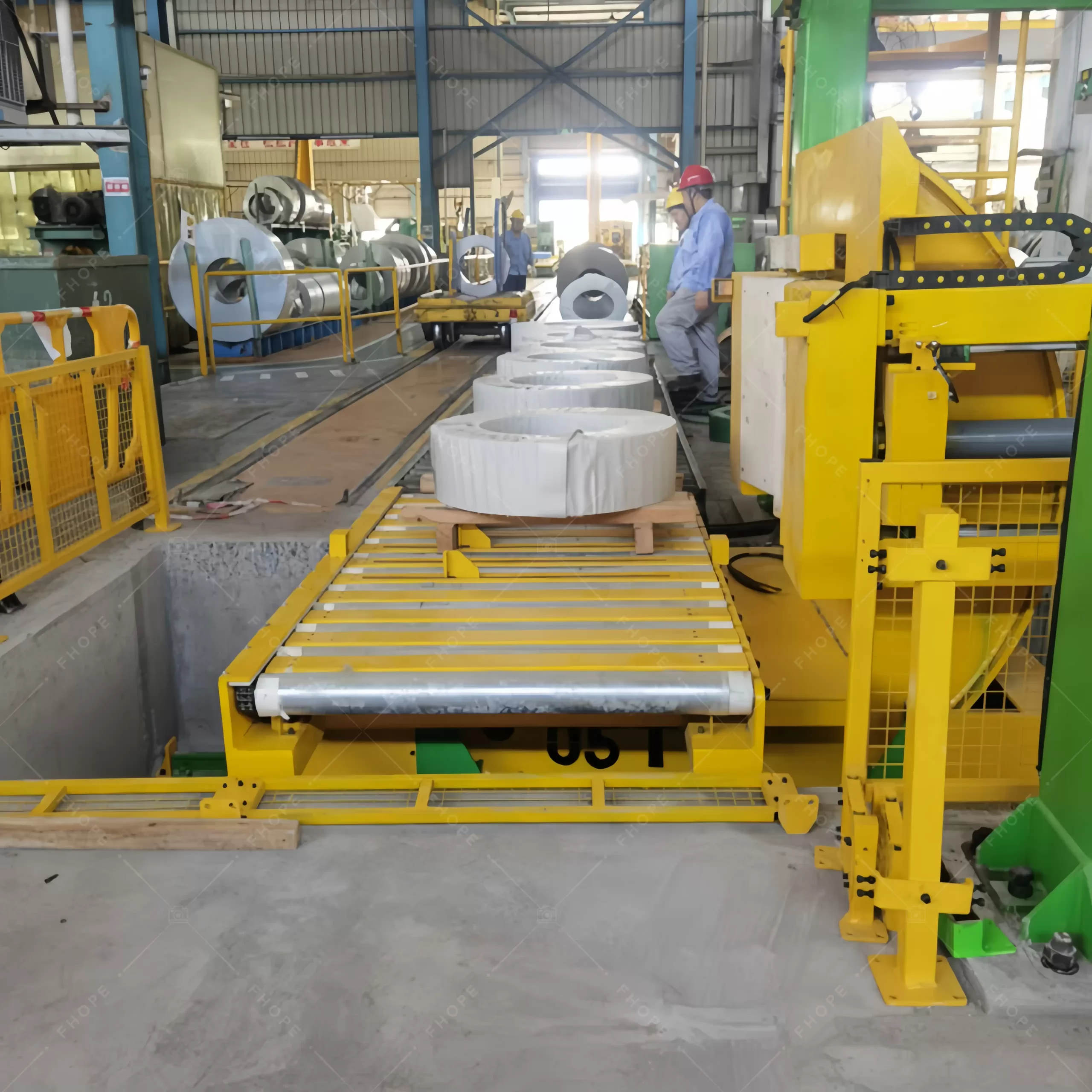
I have seen too many injuries in my time in this industry. Back and shoulder injuries are common. So are crushed fingers or toes. These happen when workers manually move or secure heavy coils. These injuries are not just painful for the employee. They come with a big cost for your business. Think about medical bills, lost workdays, and the cost of training new staff when injured workers cannot return. High injury rates also increase your workers’ compensation insurance premiums. This hits your bottom line directly. Beyond the financial impact, there is the human cost. A workplace with frequent injuries affects morale. It makes it hard to keep good employees.
Automated coil packaging lines fundamentally change this risk profile. They use robotic arms, conveyors, coil up-enders, and other specialized equipment. These machines handle the heavy lifting and precise positioning of coils. Workers no longer need to manually lift or even stand too close to moving heavy loads. For example, a coil up-ender can safely shift a heavy coil from a horizontal to a vertical position. This is a task that would otherwise require multiple workers and specialized, often dangerous, manual tools. An automated strapping machine applies bands without any human near the moving parts. This drastically reduces the risk of crushing injuries.
Investing in safety is not just an expense; it is a smart business decision. A safer workplace means fewer accidents. It means lower medical costs. It means fewer lost workdays. It also means lower insurance premiums over time. Beyond the direct financial savings, there are indirect benefits. Employee morale improves when workers feel safe. This leads to higher productivity. It also leads to less staff turnover. When your employees are happy and feel valued, they work better. They stay with your company longer. This builds a strong, experienced team. It reduces recruitment and training costs. By prioritizing safety through automation, you are protecting your people. You are also building a more stable and profitable factory. This creates a win-win situation for everyone.
Understanding the Risks in Manual Heavy Lifting
Manual handling of coils presents specific dangers:
- Musculoskeletal Injuries: Strains, sprains, and chronic pain from lifting heavy, awkward loads.
- Crushing Hazards: Risk of hands or feet being caught between coils or machinery.
- Falls: Tripping over loose materials or slippery surfaces while carrying heavy items.
- Fatigue-Related Errors: Tired workers are more likely to make mistakes that lead to accidents.
Key Safety Features in Modern Coil Packaging Lines
Modern automated systems are designed with safety as a core principle:
- Automated Handling: Robots and specialized conveyors move coils. This removes human interaction with heavy loads.
- Safety Guards and Sensors: Physical barriers and light curtains stop machines if a worker gets too close.
- Emergency Stop Buttons: Easily accessible buttons to shut down the system quickly.
- Controlled Access: Limiting entry to areas where machines operate.
- Ergonomic Design: When human interaction is needed, the design minimizes strain.
The Financial Benefits of a Safer Workplace
Investing in safety has clear financial returns:
- Reduced Insurance Premiums: Fewer claims mean lower workers’ compensation costs.
- Decreased Medical Costs: Fewer injuries lead to lower direct medical expenses.
- Lower Absenteeism: Healthier workers mean more productive workdays.
- Higher Employee Retention: Happy, safe employees are less likely to leave. This saves on recruitment and training costs.
- Improved Productivity: Fewer disruptions from accidents keep the production line moving.
| Aspect of Safety | Manual Handling Impact | Automated System Impact |
|---|---|---|
| Injury Risk | High (back, crush, fatigue) | Low (hands-off, sensors) |
| Insurance Premiums | Likely to increase | Potential for reduction |
| Lost Workdays | Common, significant | Rare, minimal |
| Employee Morale | Can be low (high-risk job) | Higher (safer, valued workers) |
| Legal Liabilities | Higher | Lower |
| Operational Cost | Higher (indirect costs) | Lower (long-term savings) |
Ultimately, improving safety with automation is not just about compliance. It is about creating a stronger, more resilient business. It shows your commitment to your team. It protects your factory from unforeseen costs. (550 words)
Protecting Your Product: How Can a Modern Packaging Line Prevent Damage and Complaints?
You work hard to produce high-quality steel coils and wire. But what happens if they get damaged before they even reach your customer? Scratches, dents, or loose packaging during transfer and shipment are common problems. Each damaged product costs you money. It also harms your company’s reputation. This is a frustrating problem that many factory managers face.
A modern coil packaging line ensures your products are handled gently and wrapped securely. This prevents damage during internal transport and shipping. It means fewer customer complaints and higher product quality. Automated systems apply the right amount of protection. This keeps your valuable products in perfect condition from your factory floor to the customer’s site.

I have seen how much effort goes into producing a high-quality coil or wire product. It is a shame to see that effort wasted because of poor packaging. In manual packaging processes, product damage is a constant threat. Workers might not apply tension consistently. This leads to loose wraps that can allow edges to get dinged. They might not use enough protective material. Or, they might mishandle the coils during movement. Even small scuffs on steel coil edges can lead to a customer rejecting an entire shipment. These rejections mean financial losses. They mean re-working products. They also mean damage to your brand’s reputation. Over time, these issues can seriously affect your profitability and customer trust.
Automated packaging lines are designed to handle products with precision and care. They use controlled systems to move and wrap coils. This minimizes the risk of human error. For example, a good orbital stretch wrapper for coils applies film evenly. It uses consistent tension around the entire circumference of the coil. This creates a tight, secure package that protects against impacts and moisture. Many systems also include specialized material feeding. They apply anti-corrosion paper or other protective layers precisely. This ensures that vulnerable surfaces, like the edges of a steel coil, are fully shielded. This level of consistency and protection is very hard to achieve with manual methods.
Think about the journey your product takes. It moves from production, to storage, to loading, and then to shipment. Each step is a chance for damage to happen. A modern packaging line can include features like automatic banding. It can add corner protection. It can also integrate with weighing and labeling systems. All these features work together to create a robust package. This package can withstand the rigors of transport. This means fewer claims from customers. It means fewer returns. It also means stronger relationships with your clients. Investing in advanced packaging is an investment in your product’s integrity. It is an investment in your customer satisfaction. It is an investment in your factory’s reputation for quality. This makes your business more reliable. It makes it more competitive in the market.
Common Coil Damage Points in Traditional Packaging
Understanding where damage happens helps prevent it.
- Edge Damage: Dents or bends on coil edges from impact or rough handling.
- Surface Scratches: Abrasions from contact with other coils or packaging materials.
- Moisture Damage: Rust or corrosion if packaging does not protect against humidity.
- Loose Wraps: Allowing the coil to shift inside the packaging, leading to internal damage.
- Improper Banding: Bands that are too loose or too tight can damage the coil or break during transit.
Precision and Consistency: The Hallmarks of Automated Wrapping
Automated systems bring a new level of protection:
- Uniform Tension: Machines apply film or paper with consistent tension. This creates a snug fit.
- Complete Coverage: Automated systems ensure every part of the coil is covered. This includes vulnerable edges.
- Gentle Handling: Robotic arms and conveyors move coils smoothly. This minimizes impacts.
- Integrated Protection: Systems can add corrosion inhibitors or specialized padding automatically.
- Secure Bundling: Automated strapping and banding ensure the package stays intact.
Material Choice and Its Role in Product Protection
The right materials are just as important as the wrapping method.
- Stretch Film: Provides moisture and dust protection. It also holds the package together.
- VCI Paper/Film: Volatile Corrosion Inhibitor materials protect against rust for steel.
- Edge Protectors: Cardboard or plastic corners protect coil edges from impact.
- Strong Strapping: Polyester or steel straps secure heavy coils. They prevent shifting.
| Damage Type | Manual Method Vulnerabilities | Automated Solution Benefits |
|---|---|---|
| Edge Dents | Inconsistent handling, manual bumps | Precision handling, automated edge protection |
| Surface Scratches | Rough surfaces, human error | Smooth conveyors, controlled wrapping |
| Moisture Damage | Incomplete seals, poor material choice | Consistent, tight wraps; VCI integration |
| Loose Packaging | Varying tension, rushed work | Computer-controlled tension and overlap |
| Transit Damage | Weak packages | Robust, secure, uniform packages |
By focusing on product protection through advanced packaging, you are not just preventing losses. You are building trust with your customers. You are showing them you care about the quality of their entire order, from start to finish. This commitment to quality sets your factory apart in the market.

Beyond the Sale: Why is a Trusted Partner Crucial for Your Packaging Line Investment?
You have probably dealt with equipment suppliers before. Some are great at selling you a machine. Then they disappear. They offer little to no support after the sale. This leaves you stranded when problems arise. It creates a crisis of trust. You need more than just a seller; you need a real partner.
Finding a reliable partner, not just a seller, is vital for any big equipment investment. A true partner understands your factory’s specific production bottlenecks, safety concerns, and efficiency goals. They offer real insights and reliable, long-term support. They are there for you not just during the sale, but for the entire life of the machine.
My journey in the packing machine industry taught me this lesson deeply. I started as an employee. I saw first-hand the challenges factories faced. Later, when I established my own packing machine factory, I understood the perspective of a business owner. I know what it means to rely on equipment. I know what it means to depend on the company that sold it. Many suppliers focus only on making the sale. They give you a fancy brochure. They promise the world. But when your new packaging line faces an unexpected issue, they are nowhere to be found. This leaves you with expensive equipment that is not working. It means downtime. It means lost production. It creates a lot of frustration. This type of experience makes any factory manager cautious about new investments. Michael, I know you have faced this.
A true partner is different. They act like an extension of your own team. They take the time to understand your unique operational challenges. Are you struggling with specific coil sizes? Do you have unique safety regulations in Mexico? Is your current layout creating efficiency problems? A good partner listens. They do not just try to push their standard product. They offer solutions tailored to your specific needs. They help you analyze your current processes. They pinpoint where the real problems lie. This often involves looking at your entire production flow, not just the packaging step. For instance, sometimes the issue is not the wrapping machine itself. It is how coils are fed into it. A good partner will help you see the whole picture.
Furthermore, post-sales support is crucial. Machines need maintenance. They sometimes need spare parts. They might need troubleshooting. A reliable partner offers excellent technical support. They provide readily available spare parts. They offer training for your staff. This ensures your packaging line runs smoothly for years. It protects your investment. FHOPEPACK was founded on the idea of knowledge sharing. My goal is to help others succeed. This comes from a deep sense of gratitude for what this industry gave me. So, when I talk about partnership, it is not just a marketing word. It is how I believe business should be done. It is about building long-term relationships. It is about supporting your growth. It is about truly solving your problems. This is the difference between a transaction and a partnership that genuinely moves your business forward.
The Pitfalls of Sales-Only Relationships
When a supplier only cares about the sale, you risk:
- Poor After-Sales Service: No support for installation, training, or breakdowns.
- Lack of Customization: Being sold a generic solution that does not fit your specific needs.
- Unreliable Parts: Difficulty getting spare parts or long waiting times.
- No Long-Term Vision: The supplier does not care about your future growth or problems.
- Increased Downtime: Issues with the machine cannot be fixed quickly, leading to production stops.
What to Look for in a Packaging Line Partner
A good partner offers much more than just a product:
- Deep Industry Knowledge: They understand your specific industry challenges and processes.
- Custom Solutions: They can adapt equipment or design systems for your unique factory needs.
- Strong After-Sales Support: They provide technical assistance, maintenance, and training.
- Accessible Spare Parts: They ensure you can get parts quickly to minimize downtime.
- Long-Term Commitment: They view your success as their success.

My Journey: From Engineer to Partnering with Factories Like Yours
I have walked in your shoes.
- Employee Perspective: I started on the factory floor. I saw problems from the inside. This taught me the importance of reliable, practical solutions.
- Factory Owner Perspective: Building my own factory showed me the full scope of managing operations, costs, and growth. I learned what truly makes a factory succeed.
- Giving Back: My financial independence came from this industry. Now, FHOPEPACK is my way of sharing what I learned. It is about helping others avoid mistakes and achieve their own success. I want to be the partner I wished I had in the early days.
| Feature | Sales-Only Supplier | Trusted Partner |
|---|---|---|
| Focus | Short-term sale | Long-term relationship, your success |
| Problem Solving | Sells a product | Analyzes your operations, offers tailored solutions |
| Support | Minimal after sale | Comprehensive, ongoing, proactive |
| Understanding | Superficial | Deep industry and operational insight |
| Value Proposition | Machine delivery | Problem resolution, efficiency gains, growth enablement |
Choosing a packaging line is a significant investment. Do not settle for just a seller. Seek a partner who understands your challenges. They will work with you to find solutions. This partnership will ensure your investment truly serves your factory’s growth and profitability for years to come. (640 words)
My Insights: What Does My Journey Tell Us About Packaging Lines?
When you are looking at buying new equipment, especially for something as critical as a packaging line, it is easy to get caught up in the technical details. You might forget about the bigger picture. You might lose sight of how it truly impacts your entire operation. Without a deep understanding of the industry and its real-world challenges, you might invest in something that does not truly solve your core problems. It might not unlock your factory’s full potential.
My path from a packing machine engineer to building my own successful factory taught me a key lesson. The best solutions are not just about the machine itself. It is about how that machine fits into your entire production flow. It is about how it helps your business grow. True success comes from understanding the whole system, from engineering concepts to daily operations.
I remember my early days as an engineer. I focused on designing machines that could perform a task. But as I moved into managing and eventually owning a factory, my perspective widened. I learned that a machine, no matter how good it is on paper, is only as effective as its integration into the existing workflow. For instance, a super-fast wrapping machine is useless if the coils cannot be fed to it quickly enough. Or if the finished products pile up at the end with no place to go. This holistic view is what I bring to FHOPEPACK. It is what I want to share with you. My experience is not just theoretical; it is built on years of hands-on problem-solving in real factory environments, especially with coil packing and steel wire packing.
Many factories make the mistake of buying equipment based solely on price or basic features. They do not think about long-term maintenance. They do not think about energy consumption. They do not think about how it will affect their labor force. They often overlook the critical importance of after-sales service and parts availability. My journey taught me that downtime is the most expensive thing in a factory. A machine that saves you a few dollars upfront but breaks down often is a massive liability. This is why I always emphasize reliability. I also emphasize the importance of choosing a partner who provides ongoing support. My own financial independence came from making smart, long-term investments in reliable machinery and building efficient processes. I want to help you do the same.
At FHOPEPACK, our mission is to share knowledge. It is to help you make informed decisions. We want to empower factory managers like you. We want you to navigate the complexities of equipment choices with confidence. We focus on practical insights. We focus on real-world applications. We focus on solutions that address your current challenges. We also focus on solutions that lay the groundwork for future growth. It is not just about selling you a machine; it is about providing the tools and knowledge you need to master your wrapping operations. It is about transforming your factory into a more efficient, safer, and profitable enterprise. This means looking beyond the immediate purchase. It means seeing the packaging line as a strategic asset. It means using it to drive your business forward.

Why Hands-On Experience Matters in Machine Design
My experience influences our approach:
- Practicality: Designs are based on real factory needs, not just theoretical concepts.
- Durability: Machines are built to withstand harsh industrial environments, as I know what factories endure.
- Maintainability: I understand the need for easy maintenance and readily available parts.
- Efficiency in Workflow: Machines are designed to fit seamlessly into production lines.
The FHOPEPACK Philosophy: Knowledge Sharing for Your Success
Our core belief is simple:
- Empowerment: We give you the information to make smart choices for your factory.
- Transparency: We share insights learned from years in the industry, both good and bad.
- Partnership: We aim to build long-term relationships through trust and shared success.
- Problem-Solving Focus: Our goal is to solve your challenges, not just sell products.
Beyond the ROI: Investing in Future Growth
While ROI is important, think bigger:
- Scalability: Can the system grow with your production needs?
- Adaptability: Can it handle new product types or sizes in the future?
- Workforce Development: Does it free up your team for higher-value tasks?
- Market Leadership: Does it help you produce higher quality goods, making you more competitive?
- Brand Reputation: Consistent quality from better packaging enhances your factory’s image.
My experience has shown me that true success in manufacturing comes from looking at the big picture. It comes from making smart, informed decisions that benefit every part of your operation. It is about building a foundation for sustainable growth. Let us work together to master your wrapping machine needs and build a brighter future for your factory. (590 words)
Conclusion
Investing in the right packaging line means better efficiency, enhanced safety, and superior product quality for factories across America. Choose a trusted partner who understands your challenges and helps you grow.








