
Comprehensive Guide to Steel Coil Strapping and Banding
I. Introduction to Steel Coil Strapping and Banding
A. The Critical Role of Securement in the Steel Industry

The securement of steel coils through strapping and banding is a fundamental and indispensable process within the steel industry. Steel coil bands are engineered to perform multiple critical functions, including connecting, stabilizing, holding, reinforcing, or fastening rolled metal.1 Their primary purpose is to prevent the heavy and often unwieldy coils from unfurling or telescoping, which facilitates easier and safer handling, prepares them for the rigors of shipping, and ensures they remain intact during storage.1 Effective banding practices are paramount, as they directly contribute to minimizing the risk of physical harm to personnel during all stages of coil handling, storage, and transportation. This not only protects the workforce but also translates into significant savings in time and operational effort for both the producer and the end-user.1
Historically, steel strapping has been the benchmark method for such applications, valued for its exceptionally high tensile strength.2 The overall integrity of the steel coil and, crucially, the safety of all personnel involved in its lifecycle, are heavily reliant on the efficacy of the strapping methods employed.2 The emphasis on minimizing risk and ensuring worker safety positions strapping not merely as a logistical requirement but as a vital safety function. The existence of detailed and stringent regulations, such as those from the Occupational Safety and Health Administration (OSHA), Department of Transportation (DOT), and the American National Standards Institute (ANSI), further underscores this point. These regulations have evolved because failures in steel coil securement have historically led to severe safety incidents, including serious injuries and fatalities, as well as substantial economic losses from damaged products and equipment. Consequently, the adoption of proper strapping techniques is a proactive and non-negotiable measure against recognized, severe hazards, making comprehensive guidance in this area essential for effective risk management.
Beyond the immediate prevention of product loss, the meticulous application of strapping and banding techniques yields considerable economic and operational efficiencies. Properly banded coils are inherently easier to handle, organize, and store.1 This translates directly into faster loading and unloading times, more efficient utilization of warehouse and transport space, and a reduction in the labor required to manage poorly secured or subsequently damaged coils. Therefore, a well-executed strapping strategy is a direct contributor to operational cost savings and enhanced productivity throughout the supply chain.
B. Overview of Risks and Benefits of Proper Strapping
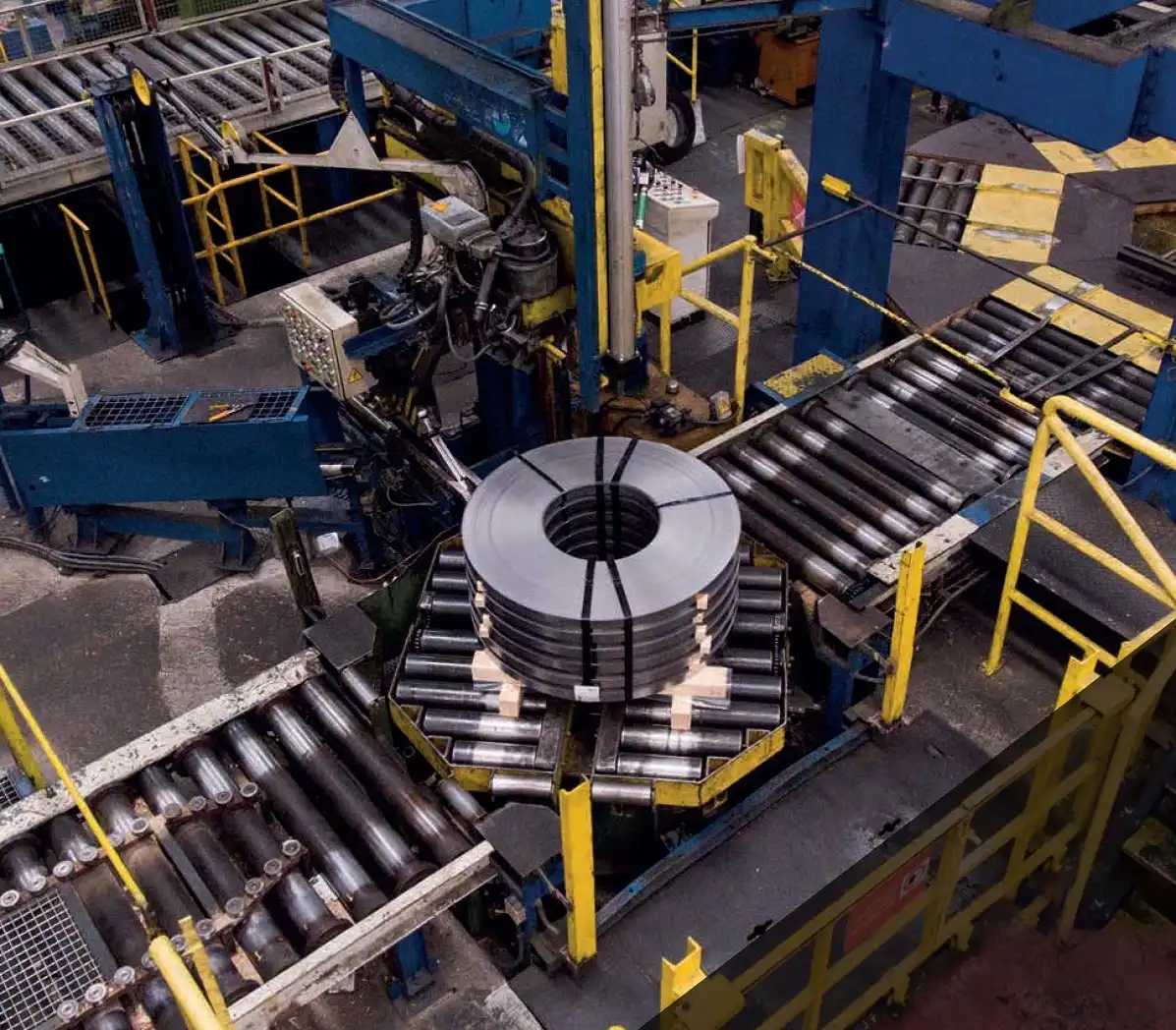
The process of strapping steel coils, while essential, is not without inherent risks if performed improperly. Conversely, adherence to best practices yields significant benefits.
Risks of Improper Strapping:
Improper or inadequate strapping can lead to a cascade of negative consequences. These include direct damage to the steel coil itself, such as edge damage, denting, or telescoping, and potential damage to handling equipment or transport vehicles.1 More critically, failures in securement can precipitate transportation incidents and pose a severe threat of physical injury or even fatalities to workers. This danger is particularly acute due to the “spring-back” effect, where the stored energy in a tightly wound coil can cause it to unravel violently if bands snap or are improperly removed.1 Steel coils, often weighing between 20,000 and 40,000 pounds, inherently represent a significant hazard if their integrity is compromised.3 The sharp edges of steel straps themselves also present a laceration hazard if handled carelessly.4
The “spring-back” phenomenon is a unique and critical hazard associated specifically with coiled materials, and its potential force is magnified in steel coils due to the material’s inherent strength and the energy stored during the coiling process.1 This is not simply a matter of securing a heavy, static load; it involves restraining a load that possesses significant stored kinetic energy. This characteristic dictates that strapping procedures must be designed to actively counteract this stored energy, influencing decisions on the number of bands, their precise placement (especially circumferential bands), the tension applied, and the specific safety protocols required during both application and removal of straps.
Benefits of Proper Strapping:
The advantages of employing correct strapping techniques are multifaceted. Primarily, it ensures the stability and safety of the coil, effectively preventing unintended unwinding or telescoping.1 This, in turn, facilitates easier and more efficient handling and transportation, protecting the integrity of the product from mill to end-user.1 A crucial benefit is the enhancement of worker safety by mitigating the risks associated with handling large, heavy, and potentially unstable loads.2 Furthermore, adherence to established strapping standards ensures compliance with industry and governmental regulations, thereby avoiding potential penalties and liabilities.5
The positive impacts of meticulous strapping extend throughout the entire supply chain, culminating in enhanced customer satisfaction. When steel coils are properly banded, they arrive at the customer’s facility intact, undamaged, and ready for immediate processing.2 This preempts delays that might arise from damaged goods, avoids disputes over responsibility for in-transit damage, and eliminates the need for the customer to undertake re-banding or implement special, time-consuming handling procedures. Such reliability contributes to a smoother, more predictable customer experience and strengthens the commercial relationships between suppliers and their clients.
II. Understanding Steel Coils: Implications for Strapping
A. Key Characteristics: Weight, Dimensions, and Handling Orientations (Eye-to-Sky, Eye-to-Side)

Steel coils are characterized by their substantial weight and considerable dimensional variability, both of which have direct implications for strapping methodologies. Individual coils can weigh anywhere from 5,000 to 40,000 pounds, with a common range being 20,000 to 30,000 pounds.3 Their dimensions, including width, thickness of the steel sheet, and overall coil diameter, vary significantly based on production specifications and customer requirements.6
Coils are typically handled and stored in one of two primary orientations:
- Eye-to-the-Sky (Vertical Orientation): In this configuration, the coil rests on one of its flat faces, with the central hole (the “eye” or “bore”) facing upwards, perpendicular to the ground.7
- Eye-to-the-Side (Horizontal Orientation): Here, the coil is positioned on its curved circumference, with the eye oriented horizontally, parallel to the ground.7
Each orientation presents distinct stability characteristics and requires different handling techniques and equipment.7 For instance, an eye-to-the-sky coil is generally more stable on a pallet, while an eye-to-the-side coil may require cradles or specialized supports to prevent rolling.
The orientation of the coil is a critical factor that directly influences the strapping strategy and the methods used for securing the coil during transportation. This is explicitly addressed in Department of Transportation (DOT) regulations, such as 49 CFR 393.120, which outline distinct tiedown procedures for coils transported eye-vertical, eye-crosswise (a form of eye-to-the-side), and eye-lengthwise (another form of eye-to-the-side).8 This regulatory specificity means that the on-coil banding strategy must be harmonized with how the coil will ultimately be positioned and secured on a transport vehicle. The number, type, and placement of straps on the coil itself must complement the vehicle tie-down system to ensure comprehensive load security.
Furthermore, the sheer variability in coil weight and size necessitates that strapping solutions be scalable and meticulously matched to the specific characteristics of each coil. A strapping configuration adequate for a 5,000-pound coil will invariably be insufficient for a 40,000-pound coil. This underscores the importance of careful selection of strapping material, grade, thickness, and width, as well as determining the appropriate number of bands to be applied.1 Metrics such as “Pounds Per Inch of Width (PIW)” are often used in the industry to help calculate these requirements and ensure the chosen strapping can safely bear the load.9
B. Types of Steel Coils and Surface Considerations:

The type of steel coil and its surface finish significantly influence strapping choices, particularly concerning potential damage to the coil surface and the type of protection required.
- Hot-Rolled Coils:
Hot-rolled steel coils are produced at high temperatures and typically exhibit a rough, scaled surface due to oxidation during the cooling process.10 Unless they undergo a pickling and oiling process (H.R.P.O.), hot-rolled coils are generally not wrapped for protection against ambient moisture, and it is not uncommon for them to show surface rust upon arrival.11 Standard securement involves a combination of circumferential (OD) bands and through-eye bands.11 If hot-rolled coils are pickled and oiled, they are treated with greater care, similar to cold-rolled coils, to protect their improved surface.11
The characteristic rough surface of non-oiled hot-rolled coils11 might, in some instances, offer increased friction for the applied straps. This could potentially aid in securement by providing better grip. However, this same roughness also poses an abrasion risk to certain types of strapping materials or their protective coatings, especially if there is movement or vibration during transit. This consideration points towards a need for durable strapping materials or finishes that can withstand such conditions.
Given the general acceptance of surface rust on standard (non-H.R.P.O.) hot-rolled coils11, the selection of strapping material may prioritize strength and cost-effectiveness over the corrosion resistance of the strap itself. For example, using premium stainless steel strapping might be an unnecessary expense if the coil itself is expected to have some surface oxidation. Standard painted and waxed steel strapping could be perfectly adequate.12 However, for H.R.P.O. coils, which must be kept dry and free of rust11, the strapping selection should align with the need to protect this higher-value, more sensitive finish.
- Cold-Rolled Coils:
Cold-rolled steel coils are processed further at room temperature, resulting in a smoother, more polished surface finish and tighter dimensional tolerances compared to hot-rolled products.10 This superior finish makes them suitable for applications where appearance and precision are critical. Consequently, cold-rolled coils require more careful handling and strapping to prevent any form of surface damage, such as scratches, indentations, or marring.11 Examples of steel strapping suitable for various applications include Signode’s APEX (a cold-rolled, low carbon steel strapping) and MAGNUS (a cold-rolled, heat-treated steel strapping designed for high tensile strength).12
The smoother surface of cold-rolled coils may offer less natural friction for the straps compared to the scaled surface of hot-rolled steel. This reduced friction increases the reliance on achieving and maintaining proper strap tension to prevent slippage.1 It also elevates the importance of using appropriate surface protection measures, such as edge protectors, and selecting strap finishes that minimize the risk of the strap itself damaging the coil’s polished surface.13
The higher aesthetic and functional value of cold-rolled steel necessitates meticulous strapping practices. Any damage inflicted by straps or seals can render portions of the coil unusable for their intended application or require costly rework. This reinforces the need for accessories like edge protectors to distribute pressure and prevent direct contact of steel straps with vulnerable edges.13 Achieving the correct tension—neither too loose to allow movement nor too tight to cause indentations—is critical.14 Furthermore, the choice of strapping material might lean towards options with smoother finishes, such as waxed steel straps12, or even alternative materials like high-strength Polyester (PET) strapping, to further mitigate the risk of surface damage.15
- Galvanized and Coated Coils:
Galvanized steel coils are coated with a layer of zinc to provide enhanced corrosion resistance.16 Other coatings may be applied for various protective or aesthetic purposes. The primary concern when strapping these coils is to protect the integrity of this coating. Strapping choices should prioritize materials that are non-abrasive or those that incorporate protective finishes. Careful and precise tensioning is also essential to prevent the straps from cracking, scratching, or otherwise damaging the protective layer, as such damage can compromise the coil’s corrosion resistance.16
For securing galvanized coils, options include PET strapping, often applied with heat seal systems, or steel straps.17 If steel strapping is chosen, using hot-dip galvanized steel straps can offer superior corrosion resistance for the strapping itself and ensure compatibility with the coil’s surface.12
The protective zinc layer on galvanized coils is crucial for their longevity and performance. Any scratches or breaches in this coating can become initiation points for corrosion.16 Steel strapping, particularly if it has any rough edges or is tensioned excessively, can easily scratch or indent the galvanization. This potential for damage suggests that PET strapping, known for its smoother surface17, or steel strapping with smooth, protective finishes (e.g., waxed coatings12) are preferable. The use of edge protectors is also highly recommended to shield the coil edges from direct strap contact and pressure.13
While the primary risk is mechanical damage to the coil’s coating, there is also a consideration for galvanic corrosion if dissimilar metals are in prolonged contact in a moist or corrosive environment. Using galvanized steel strapping on galvanized coils12 can help prevent such issues, ensuring that the strap itself does not become a source of corrosion or staining on the coil surface. This is particularly relevant for coils that may be stored or transported in environments where moisture exposure is likely.
C. The Importance of Skid Condition and Storage Environment

The integrity of the skid upon which a steel coil is placed and the conditions of the storage environment are foundational elements that significantly impact coil safety, handling efficiency, and the longevity of both the coil and its strapping.
It is imperative to always examine the condition of the skid before any lifting or handling operations commence. Coils should never be lifted if they are on a broken or visibly compromised skid.7 Skids must be structurally sound and rated for the weight of the coil they support, not only for immediate handling but also for prolonged storage periods. If a skid shows signs of wear, breakage, or instability, it must be replaced before further movement or storage.7 A failing skid undermines the stability of a multi-ton coil, potentially leading to tipping, uncontrolled shifting during movement, or even a complete collapse. Such an event could overwhelm even properly applied strapping, leading to coil damage, equipment damage, or severe personnel injury. Therefore, diligent skid management is an essential precursor to, and ongoing component of, effective and safe strapping practices.
The storage environment plays an equally critical role. Steel coils should be stored in a cool, dry environment characterized by relatively stable temperatures and adequate airflow.7 These conditions are vital to prevent condensation from forming on the coils, which can lead to corrosion of the steel or degradation of protective coatings. Indoor storage is strongly preferred over outdoor storage to shield coils from direct precipitation, humidity fluctuations, and solar radiation.7 Proper ventilation helps to dissipate any moisture that may accumulate, further protecting the coil.
The storage environment also directly influences the durability and effectiveness of the strapping materials themselves. For instance, steel straps are susceptible to rust if stored in damp conditions, which can weaken them over time.18 Some plastic strapping materials, like polypropylene (PP) and to a lesser extent polyester (PET), can degrade when exposed to prolonged UV radiation if not specifically formulated for UV resistance.15 If coils are stored in suboptimal conditions, the strapping—even if perfectly adequate at the time of application—may deteriorate, potentially leading to premature failure. This necessitates periodic re-inspection of strapped coils in storage and, if degradation is observed, re-strapping to ensure continued security.
III. Selecting the Optimal Strapping Material
A. Steel Strapping
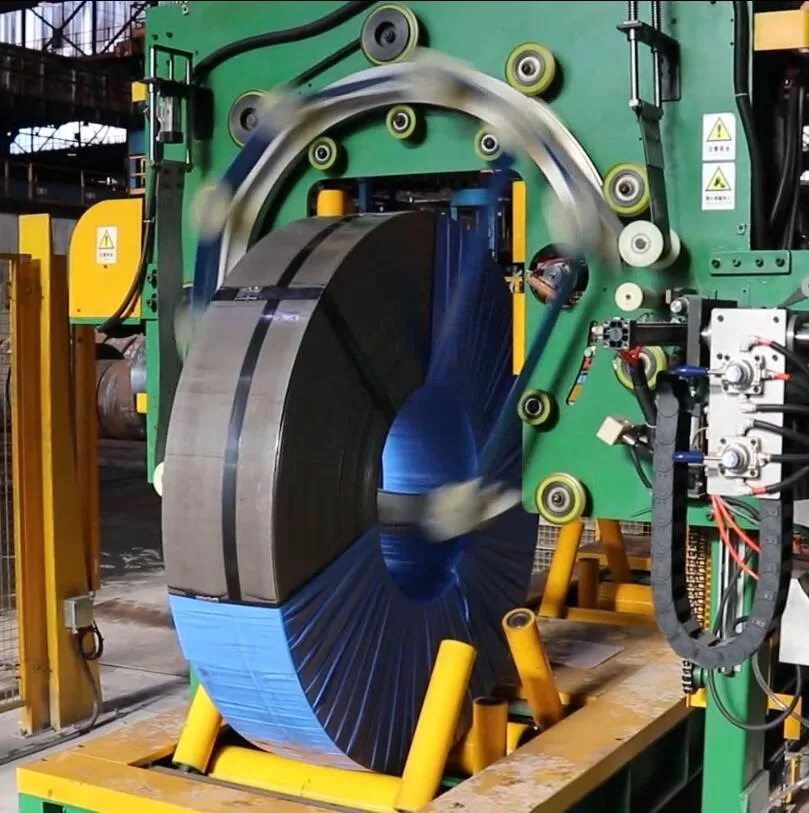
Steel strapping remains a cornerstone in heavy-duty securement due to its inherent strength and rigidity.
- Types and Grades:
Steel strapping is not a monolithic product; it encompasses a variety of types and grades tailored to different application demands.2 It is available in a wide range of widths, commonly from 1/2 inch up to 1-1/4 inches, and thicknesses typically ranging from 0.015 inches to 0.079 inches.13 The selection of appropriate dimensions is crucial, as undersized strapping can lead to failure under load.
The grades of steel strapping indicate variations in hardness, tensile strength, and yield strength:
- Regular Carbon Steel (often referred to as Regular Duty – RD): These are typically Grades 1 and 2. They represent the most economical steel strapping option but are generally recommended only for light-duty applications where high strength is not the primary requirement.13
- High Tensile Steel (High Strength – HS): Corresponding to Grades 3 and 4, this type of strapping is significantly stronger and more resistant to stretching under load. It is the preferred choice for medium to heavy-duty strapping applications, including most steel coil securement, where robust strength is necessary.13 Specific products like Signode’s MAGNUS, which is a cold-rolled, heat-treated steel strapping, fall into this category, offering high tensile strength and shock resistance for the heaviest-duty applications.12 Signode’s APEX, a cold-rolled, low carbon steel strapping, is engineered for higher break strength at thinner gauges.12
- Alloy/Stainless Steel: These are premium steel alloys (Grades 5+) characterized by very high strength and superior corrosion resistance. However, they are also the most expensive options and are often considered “overkill” for general purposes unless extreme conditions or specific industry requirements dictate their use.13 Stainless steel strapping is available in various grades, such as Type 201, Type 304, and Type 316, each offering different balances of strength, corrosion resistance, and cost.19
- Type 201 (SS201): A cost-effective option suitable for general-purpose applications in mild environments. It offers good performance and stability but is not ideal for highly corrosive settings.19 It is often stronger than 304 or 316 grades.20
- Type 304 (SS304): A versatile and widely used grade providing excellent corrosion resistance to most acids, alkalis, and salt solutions. It is suitable for a variety of corrosive environments.19
- Type 316 (SS316): Offers superior corrosion resistance compared to SS201 and SS304, particularly in marine environments and industrial atmospheres containing chlorides. It is, however, the most expensive of these common stainless grades.19








