
Steel Coil Packing Lines USA: Maximizing Throughput with a Compact Footprint?
Are you a factory manager in the USA, watching your steel coils pile up? Is your current packing process slow and full of manual steps? You know this creates bottlenecks. It stops you from hitting higher production targets. Manual handling also puts your team at risk. It can damage your valuable products too. And what about your factory floor space? It is precious. Your current packing setup might take up too much of it. All these problems cut into your profits.
Modern, automated steel coil packing lines offer a real solution. They are designed to boost throughput quickly. They keep your workers safe. They also fit into smaller areas. This means you can handle more coils, more safely, and in less space.
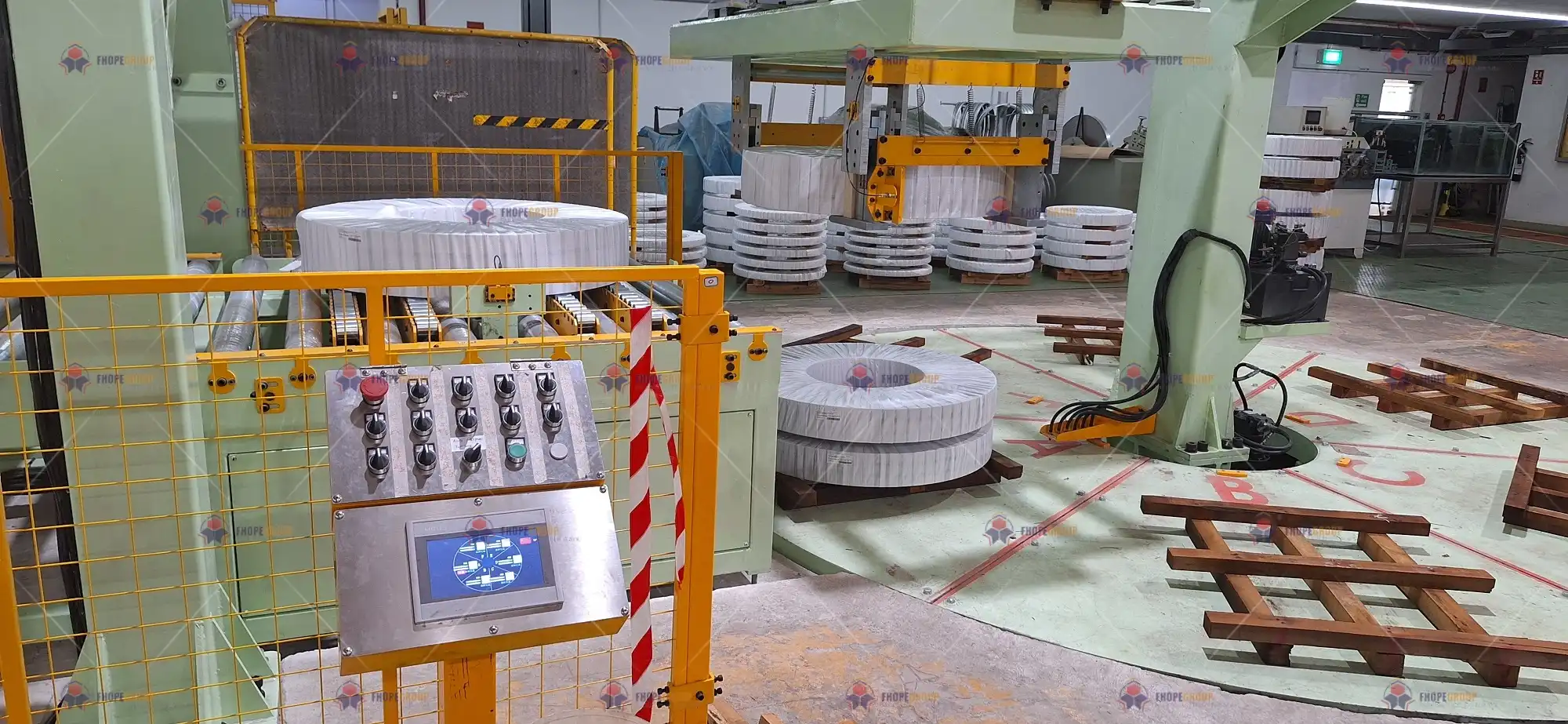
You know the challenges I am talking about. I have walked those factory floors myself. I started as an employee in a packing machine factory. Then I built my own successful factory. I understand the pressures you face every day. Now I want to share my knowledge. I want to help you tackle these common issues. Let us look deeper into how these smart solutions can transform your factory operations.
How Can US Factories Boost Throughput for Steel Coils?
Your current steel coil packing process might be slow. It cannot keep up with your production lines. This creates a painful bottleneck. It delays customer shipments. Every minute a coil sits waiting costs you money. It hurts your reputation with clients. You need to pack more coils, faster. It is time to upgrade to a system that works with you, not against you.
US factories can boost steel coil throughput by integrating automatic wrapping, banding, and handling equipment. This removes all the slow manual steps. It ensures a continuous flow from production right through to dispatch. These systems use faster machine cycles. This setup makes sure more coils are packed and ready for shipping each hour.
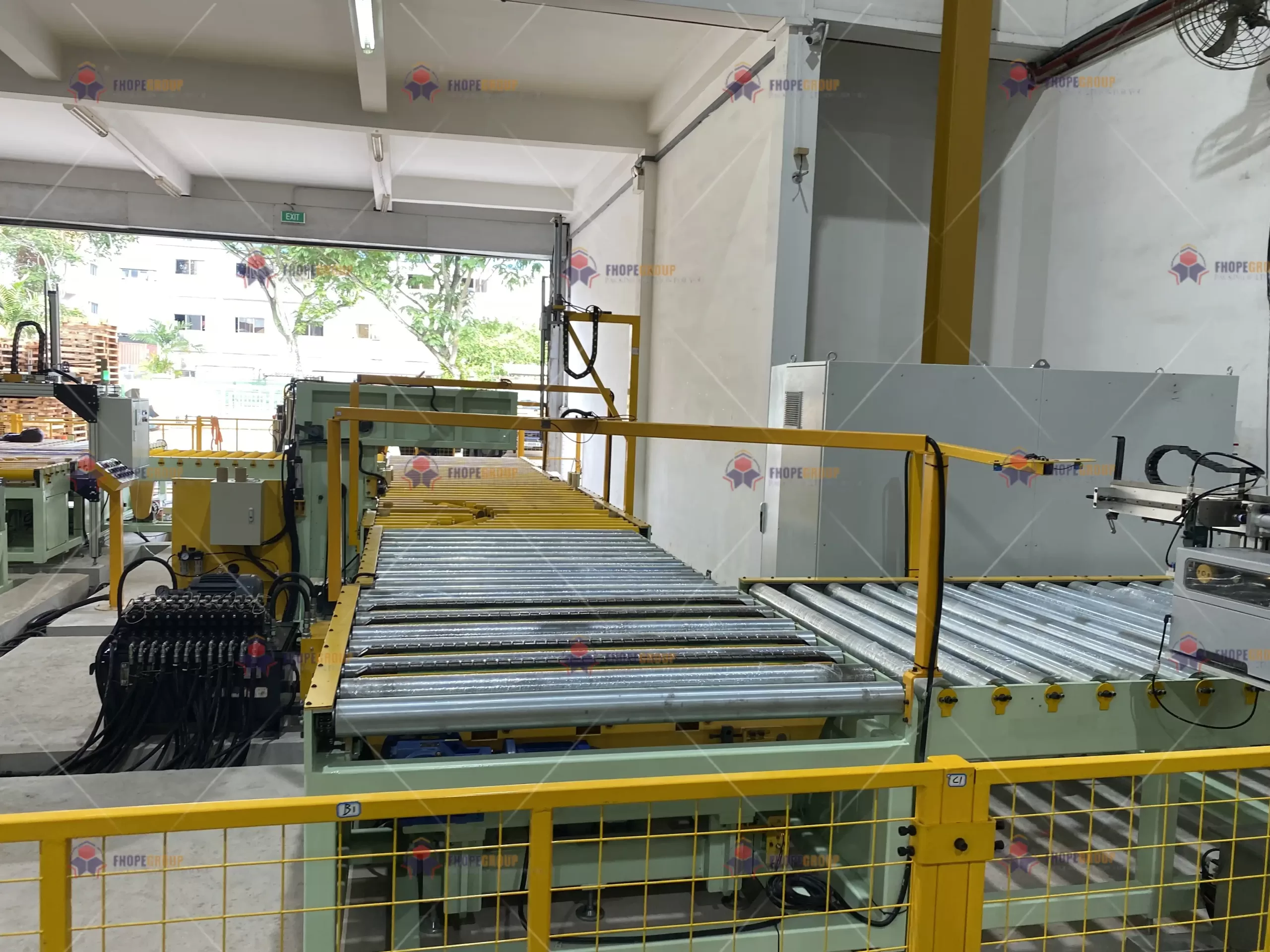
The bottleneck problem at the end of the line is a big one. Many factories focus on making coils faster. But then packing slows everything down. This means your expensive production machines sit idle. Or they create a huge backlog. This is not efficient. I saw this many times in my own journey. When I was building my factory, I learned that smooth flow is key. You need a system that matches your upstream production speed. This means automation that can wrap, band, and weigh coils without stopping. It needs to handle different coil sizes without long changeovers.
The Bottleneck Problem
- Manual Labor: People are slow compared to machines. They also get tired. They need breaks.
- Sequential Steps: If one step waits for the last one to finish, the whole line stops.
- Unplanned Stops: Old machines or manual errors cause downtime. Every stop reduces output.
Automated Solutions for Speed
- Continuous Flow: Machines handle coils one after another. There is no waiting.
- Integrated Functions: Wrapping, banding, and weighing happen in one system. This saves space and time.
- High Speed Cycles: Machines complete tasks in seconds. This greatly increases coils packed per hour.
- Automated Data Capture: Machines can log production data. This helps you track output. It helps you find ways to improve.
| Feature | Manual Packing Line | Automated Packing Line |
|---|---|---|
| Throughput | Low to Medium | High to Very High |
| Speed | Slow, inconsistent | Fast, consistent |
| Labor Needs | High | Low |
| Accuracy | Variable | High |
| Downtime | High (due to human error, fatigue) | Low (due to machine reliability) |
My own experience showed me how manual steps kill speed. When I started my factory, I focused on smooth flow. This means thinking about the whole line, not just one machine. It means seeing how each part connects. You want to avoid coils piling up at any point. A smart automated system keeps everything moving. This leads to much higher throughput for your steel coils.
What Does a Compact Footprint Mean for Your Packing Line?
Space is always tight in a busy factory. Your current packing area might feel crowded. It might force you to move materials in difficult ways. A large footprint for your packing line means wasted space. This limits your ability to add more production machines. It can stop you from expanding in the future. It also makes material flow difficult. This creates bottlenecks. You need smart designs that allow powerful packing lines to fit into smaller areas.
A compact footprint for a packing line means the system occupies less floor space. This is achieved through vertical integration of processes. It uses multi-functional machines. This design allows factories in the USA to maximize their operational area. It keeps high efficiency without needing a large building expansion.
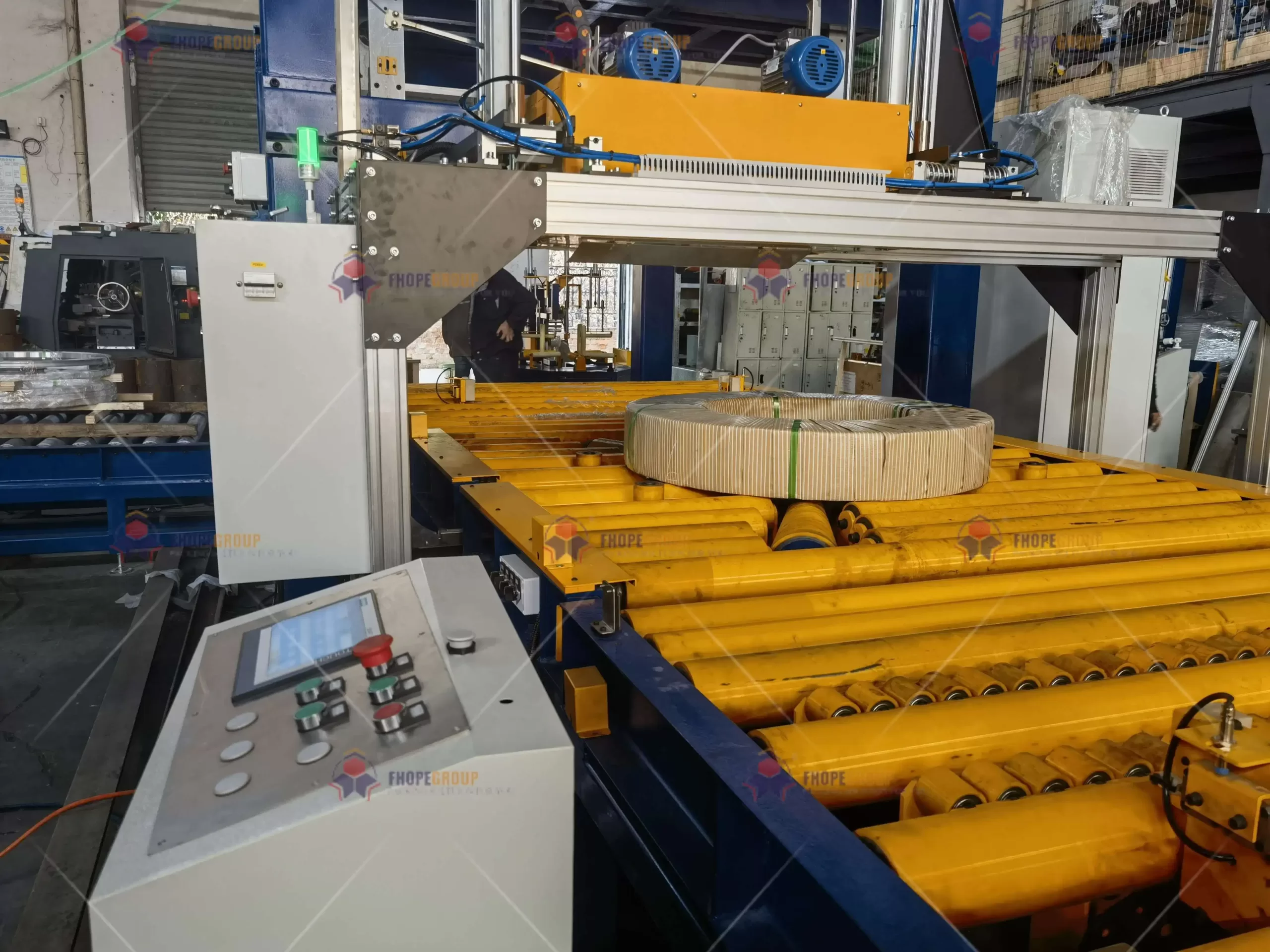
Maximizing factory floor space is critical for growth. Every square foot in your plant has a cost. If your packing line spreads out too much, you lose valuable production space. This impacts your ability to take on new orders. It limits your internal logistics. When I design systems, I always think about how to save space. Many customers have limited room. My goal is to give them powerful machines that fit. We do this by engineering systems that are smart about how they use space.
Maximizing Factory Floor Space
- Real Estate Value: Every inch of your factory costs money. Use it wisely.
- Operational Flow: A compact line allows for better movement of other materials and products.
- Future Expansion: More free space means you can add more production lines later.
Smart Design Principles
- Vertical Integration: Instead of spreading out, some machines stack or use height. This is common with coil wrapping where the machine can encircle the coil without needing long conveyors before and after.
- Multi-Functional Units: One machine does more than one job. For example, a wrapper that also places corner protection.
- Minimal Conveyor Length: Shorter conveyors save space. This needs efficient transfer systems.
- Optimized Layout: Designing the line to minimize turns and empty spaces. This includes thinking about maintenance access.
| Feature | Traditional Packing Line Design | Compact Footprint Design |
|---|---|---|
| Space Use | Sprawling, linear | Condensed, vertical/integrated |
| Machine Separation | Distinct units, long gaps | Close-coupled, multi-tasking |
| Material Flow | Requires long transfers | Short, direct transfers |
| Flexibility | Less adaptable to layout changes | More adaptable |
I have seen factories struggle with old layouts. They have machines far apart. This means long conveyor lines. It means more space for buffers. A compact system cuts this down. It makes your factory more nimble. It frees up space for your other operations. This is a smart investment for any US factory looking to grow. It helps you produce more in the same building.
How Can You Make Steel Coil Packing Safer and Reduce Damage?
Manual handling of heavy steel coils is very dangerous. Your workers face high risks of injury. They can strain their backs. They can crush their hands or feet. These injuries lead to high insurance costs. They lead to lost workdays. They cause employee turnover. Product damage during packing also means lost profits. It means angry customers. This is a double hit to your business.
Making steel coil packing safer and reducing damage involves using automated handling and packing equipment. This removes human contact with heavy coils. It uses controlled, gentle machine movements. This approach prevents worker injuries. It also eliminates product dents or scratches. This protects both your team and your product quality.

The hidden costs of manual handling are huge. It is not just the immediate injury. There is also the cost of training new workers. There is the impact on team morale. Michael, a factory manager I know, faced high injury rates. His insurance costs kept climbing. He realized safety was not just a cost. It was an investment. When I was running my own factory, safety was always my first thought. Happy, safe workers are productive workers. I also learned that preventing damage saves a lot more than it costs in the long run.
The Hidden Costs of Manual Handling
- Worker Injuries: Direct costs include medical bills, lost wages, and compensation claims.
- Insurance Premiums: Higher injury rates mean higher insurance costs for your business.
- Lost Productivity: Injured workers are off the job. Other workers might be less focused.
- Employee Turnover: High-risk jobs can lead to workers leaving.
- Product Damage: Dents, scratches, or deformed coils lead to rejections. They lead to customer complaints. This means financial loss.
Automated Safety Solutions
- Robotic Handling: Robots lift and move heavy coils. This keeps people away from danger zones.
- Automatic Strapping and Wrapping: Machines apply secure packaging. Workers do not need to climb onto or around coils.
- Safety Guards and Sensors: Modern machines have built-in safety features. They stop if a person is too close.
- Reduced Physical Strain: Automation removes the need for heavy lifting and repetitive motions.
Protecting Your Product Investment
- Precise Machine Control: Machines handle coils smoothly. They avoid sudden drops or impacts.
- Consistent Packaging: Automated wrapping ensures full coverage. It protects edges and surfaces from scratches and dents during transport.
- Proper Cushioning: Machines can apply protective materials like corner boards or inner wraps consistently.
I have seen factories save a lot of money by focusing on safety. It is not just about avoiding fines. It is about your team. It is about your product. Preventing damage saves a lot more than it costs. When I design a packing line, safety is paramount. We build machines that protect both the people and the product. This protects your profits too.
Why Is Choosing the Right Packing Machine Partner Crucial?
You have likely dealt with equipment suppliers who only care about the sale. Their support disappears after payment. This is a common problem. A bad partner means poor service. It means unreliable machines. It means more downtime and frustration for your team. You need a partner who understands your challenges deeply. You need one who offers lasting support and real solutions for your factory.
Choosing the right packing machine partner is crucial because they offer more than just equipment. A good partner provides deep industry knowledge. They offer reliable after-sales support. They understand your specific factory needs. This ensures your investment genuinely solves problems and helps your business grow.

This is where my personal journey comes in. I know what it takes to build a factory. I know the pressures. I started as an employee. Then I built my own successful packing machine factory. I achieved financial independence through this journey. I also helped many of my clients grow their businesses. I am grateful for the opportunities the coil packing and steel wire packing industry has given me. That is why I founded FHOPEPACK. My goal is to share what I learned. I want to help you avoid the pitfalls I saw or experienced myself. I want to be a real partner.
More Than Just a Machine Sale
- Understanding Your Needs: A good partner listens to your specific problems. They do not just push a standard product.
- Tailored Solutions: They offer equipment that fits your factory layout and production goals.
- Long-Term Support: You need parts, service, and technical help for years to come.
- Training: Your team needs proper training to operate and maintain the new equipment.
The Value of Industry Experience
- Problem-Solving: Someone with real factory experience can spot issues before they become big problems.
- Efficiency Insights: They know how to optimize your processes. They know how to maximize machine performance.
- ROI Focus: A good partner helps you see the return on your investment clearly. They show you how the machine saves money.
FHOPEPACK’s Partnership Approach
At FHOPEPACK, we believe in a partnership approach. My own path taught me the value of reliable machines and honest advice.
- Shared Knowledge: We share our expertise. We help you understand the best options.
- Proven Solutions: We offer machines that have worked for many others.
- Long-Term Relationship: We want to be your trusted advisor. We want to support your growth.
- Commitment to Your Success: Your success is our success.
I founded FHOPEPACK because I want to give back. I want to share the expertise and insights that helped me and my past clients. I want to help others succeed in this field. This is why choosing a partner like FHOPEPACK, one with deep industry background and actual factory building experience, is crucial. We make sure your investment in equipment truly solves your problems. We help drive your business growth.
Conclusion
Automated steel coil packing lines boost throughput and enhance safety. They reduce costs and fit compact spaces. A true partner like FHOPEPACK ensures your investment leads to real, sustainable growth.








