
PE Film vs. Stretch Film: What is the Best Material for Plastic Pipe Wrapping?
You are standing on your factory floor, watching the final stage of your plastic pipe production line. The pipes are ready, but the wrapping process is slow. Workers are manually handling rolls of film, struggling with consistency. You know this bottleneck is costing you time and money. The choice of wrapping material might seem like a small detail, but it impacts everything from production speed to the final product’s condition when it reaches your customer. This is a critical decision for any factory manager focused on efficiency and reliability.
For wrapping plastic pipes, especially in demanding industrial environments, high-performance stretch film is generally the superior choice over standard polyethylene (PE) film. While basic PE film offers a low-cost barrier, modern stretch films provide the essential combination of strength, puncture resistance, and controlled stretch recovery needed to secure heavy or irregular loads during transit. The best material ensures your pipes arrive undamaged, protects your brand reputation, and optimizes your packaging line’s speed. For automated lines, the consistent performance of pre-stretched film is often non-negotiable for achieving maximum throughput and reliability. (plastic pipe wrapping material, industrial stretch film for pipes)

Transition Paragraph: The debate between PE film and stretch film is more than just about material cost. It’s about understanding the physical demands of your logistics chain and the capabilities of your equipment. A poor choice can lead to product damage, wasted film, and slowed operations. Let’s break down the key questions you need to ask to make the right decision for your plastic pipe packaging.
1. What are the Core Differences Between PE Film and Stretch Film?
Many purchasing managers see “plastic wrap” and think it’s all the same. This assumption can be costly. The fundamental differences lie in their manufacturing process and intended use, which directly translate to performance on your packaging line.
PE (Polyethylene) film is typically a cast or blown film. It is a general-purpose material often used for bundling, surface protection, or creating simple bags. It has limited inherent stretch and recovery properties. Stretch film, on the other hand, is specifically engineered to be stretched. It is usually made from LLDPE (Linear Low-Density Polyethylene) and is manufactured to have high elongation, tensile strength, and memory—the ability to retract and cling tightly after being stretched. For securing a pallet of plastic pipes against shifting, the cling and holding force of stretch film are essential. (difference between PE and stretch film, LLDPE stretch film properties)
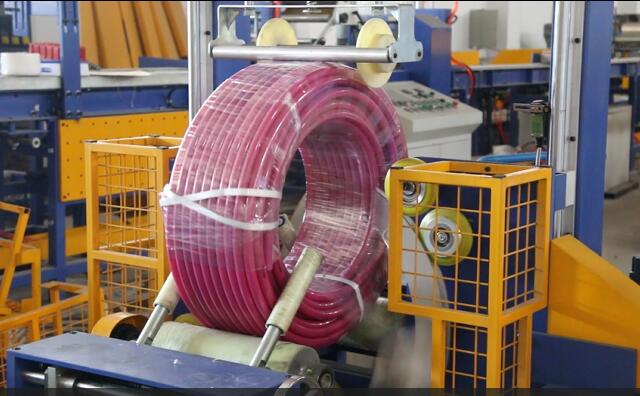
To choose correctly, you must look beyond the generic names. Let’s examine the critical performance metrics that separate these materials in a factory setting.
Key Performance Indicators for Pipe Wrapping
| Performance Metric | Standard PE Film | Industrial Stretch Film | Why It Matters for Plastic Pipes |
|---|---|---|---|
| Stretch Capacity | Low (50-100%) | High (200-300%+) | Higher stretch means less film used per load, reducing material cost. |
| Puncture Resistance | Moderate | Very High | Protects pipes from sharp corners of other pipes or pallet edges during stacking. |
| Tear Resistance | Low to Moderate | High | Prevents a small tear from propagating and causing the entire wrap to fail. |
| Cling / Memory | Minimal | Strong, Consistent | Ensures the wrap stays tight and doesn’t loosen due to vibration during truck transport. |
| Load Holding Force | Weak | Strong | Prevents individual pipes from shifting or rotating inside the bundle, which causes scratches and damage. |
🔍 Material Science in Practice: The “memory” in stretch film comes from the polymer chains being aligned during the manufacturing process. When you stretch it, these chains want to return to their original state, creating constant tension around the load. Basic PE film lacks this engineered structure. It might tear if you try to stretch it, or it simply won’t hold the load securely.
⚠️ A Common Mistake: I’ve visited factories that used cheap, non-stretch PE film on an automatic rotary ring wrapper. The results were terrible: frequent film breaks, inconsistent tension, and unstable loads. The machine was capable, but the material was wrong. This mismatch leads to downtime and frustration. Always match your film specification to your machine’s capabilities and your product’s requirements. (high memory stretch film, puncture resistant film for industrial packaging)
2. How Does Your Choice Impact Packaging Line Efficiency and Safety?
Efficiency isn’t just about speed; it’s about smooth, predictable, and safe operation. The film you choose acts as a critical component in your packaging system, not just a consumable. A suboptimal film can bring your entire line to a halt.
The right stretch film directly increases packaging line efficiency by enabling higher machine speeds, reducing changeover frequency, and minimizing film breaks that cause downtime. For safety, a film with consistent performance reduces the need for manual re-wraps or adjustments, keeping operators away from moving machinery. A secure load from the start also prevents dangerous load collapses in the warehouse or during unloading at the customer’s site. (packaging line efficiency, stretch film for automated wrapping)
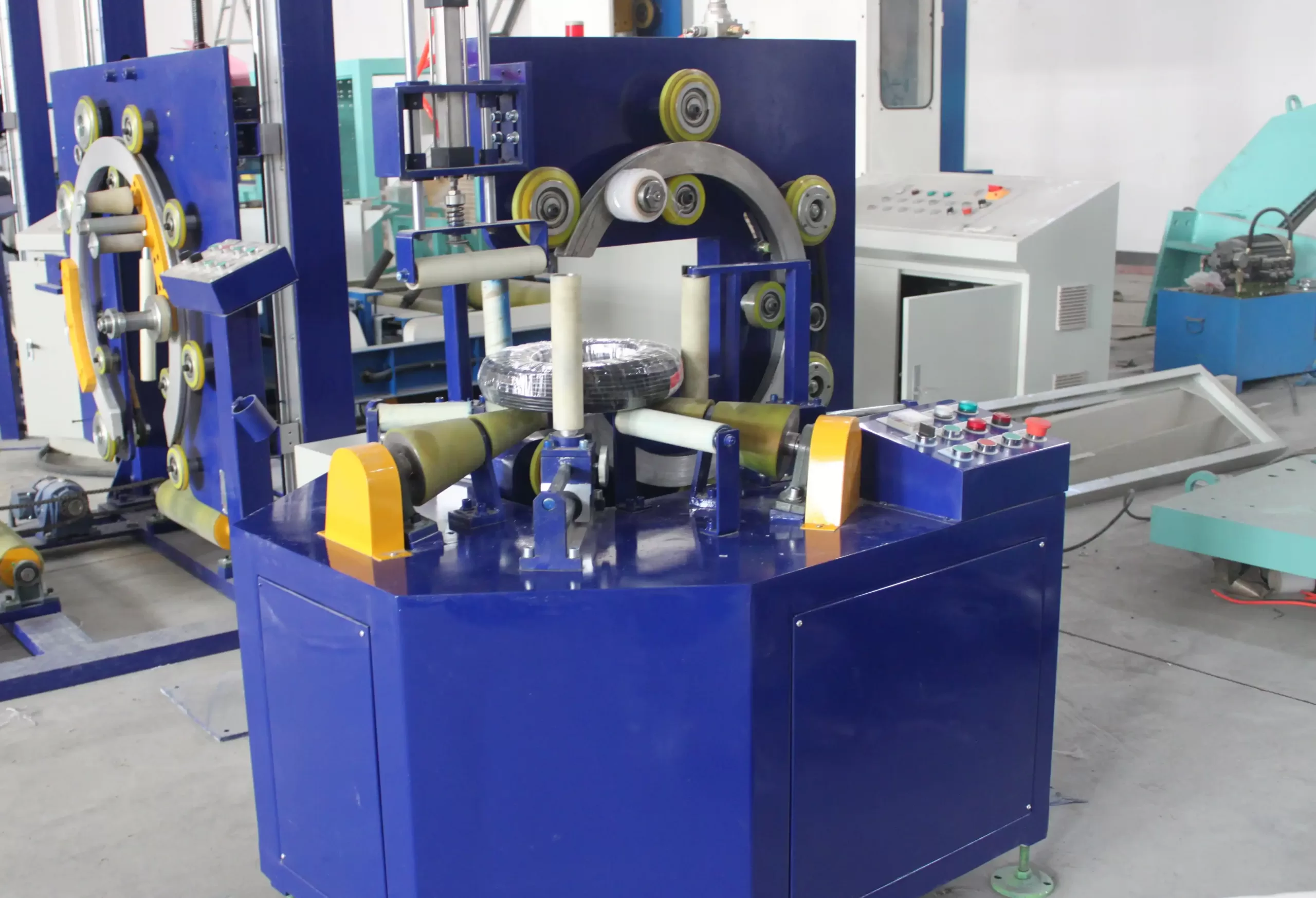
Let’s connect the material properties to real-world line performance. Inefficiency often hides in small, repeated delays.
The Efficiency & Safety Chain Reaction
-
Machine Speed & Uptime:
- Good Film: Pre-stretched or high-performance stretch film runs smoothly on automated equipment from manufacturers like Fengding or Wuxi Bu Hui. It allows the machine to operate at its designed speed without fear of breaks.
- Poor Film: Low-quality or incorrect film (like non-stretch PE) leads to breaks. Each break requires the machine to stop, an operator to re-thread it, and the cycle to restart. This can happen dozens of times a shift, silently killing your Overall Equipment Effectiveness (OEE).
-
Material Yield & Cost:
- A film with higher stretch potential (250% vs. 100%) means you use fewer linear meters of film per pallet. Your cost per wrapped load drops significantly. While the roll price might be higher, the cost-per-load is often lower.
-
Labor & Safety:
- Stable Loads = Safe Handling: A tightly wrapped pallet of pipes won’t shift on the forklift. This protects your warehouse staff.
- Fewer Interventions: Reliable film means operators spend less time fixing wraps and more time monitoring. This keeps them at a safe distance from rotating arms and moving conveyors.
- Ergonomics: For semi-automatic stations, easy-to-handle film rolls with good tension control reduce operator strain.
From My Experience: A client was using a standard film on their new semi-automatic pipe wrapper. Operators constantly adjusted the tension dial, and loads still loosened. We switched them to a Fengding-recommended, machine-specific stretch film. The difference was immediate. The machine’s pre-set tension worked perfectly, wrap consistency improved, and operator complaints about “fixing bad wraps” stopped. The correct film unlocked the machine’s full potential and created a safer, smoother workflow. (reduce packaging downtime, safe load containment for pipes)
3. What are the Total Cost Implications Beyond the Price per Roll?
Focusing solely on the invoice price of a film roll is the most common and costly error in packaging procurement. The true cost is hidden in waste, damage, and inefficiency across your entire operation. You must think in terms of “Total Cost of Packaging.”
The true cost of wrapping material includes the film roll price PLUS the cost of film breaks (downtime), the cost of using too much film (low yield), the cost of product damage from failed wraps, and the cost of extra labor for re-wraps. A higher-quality stretch film often has a higher price per roll but delivers a significantly lower total cost per stabilized load by optimizing all these other factors. (total cost of packaging, cost per wrapped load analysis)
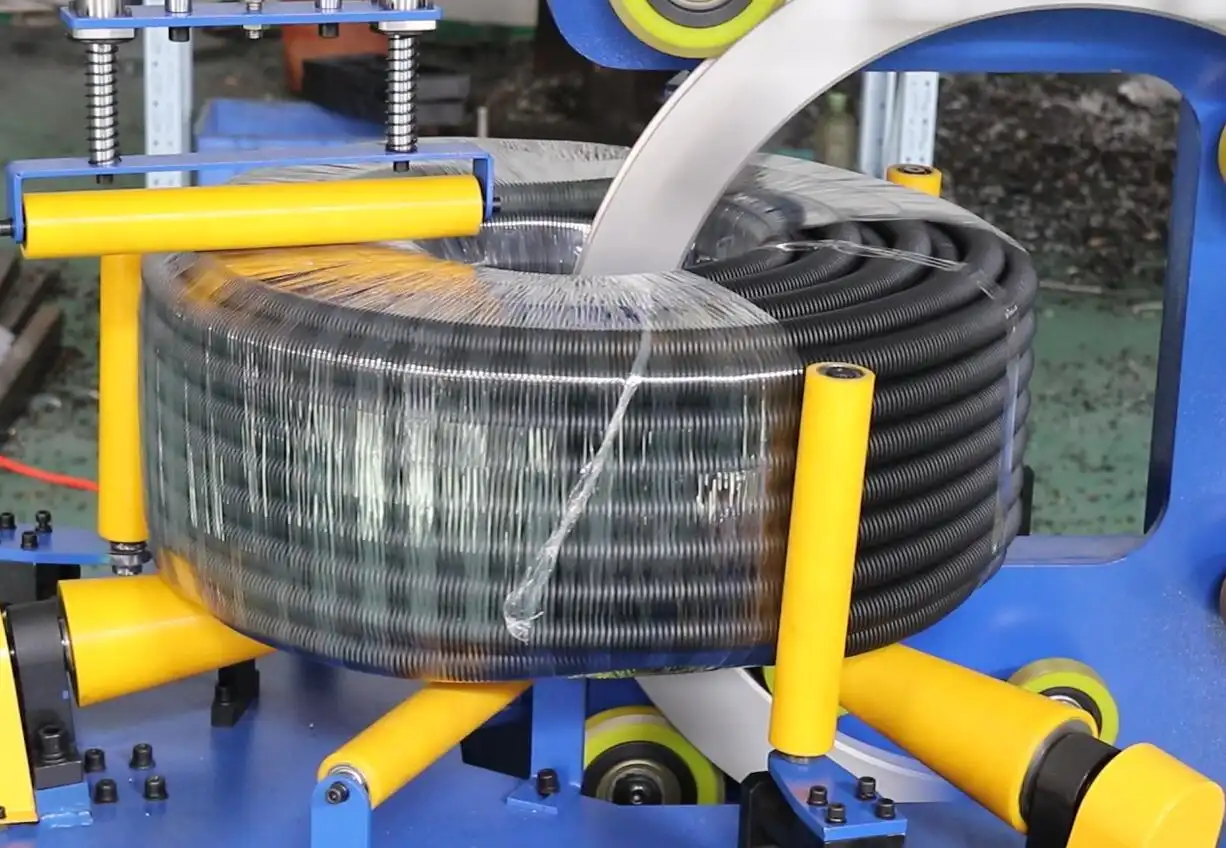
To make a smart business decision, you need to shift from a purchasing mindset to an operational costing mindset. Let’s build a simple comparison.
Total Cost of Ownership (TCO) Analysis: A Scenario
Assumption: Wrapping 100 pallets of plastic pipes per day.
| Cost Factor | Option A: Cheap PE Film | Option B: Quality Stretch Film | Notes |
|---|---|---|---|
| Film Roll Cost | $20 / roll | $30 / roll | Initial purchase price. |
| Loads per Roll | 10 loads | 25 loads | Stretch film yields more loads due to higher stretch %. |
| Film Cost per Day | (100 loads / 10) * $20 = $200 | (100 loads / 25) * $30 = $120 | Daily Savings with Option B: $80 |
| Downtime Cost | High (5 breaks/day, 10 min/break) | Low (1 break/week) | Machine & labor cost during stoppages. |
| Product Damage Rate | Estimated 2% (2 damaged pipes/day) | Estimated 0.5% (0.5 pipe/day) | Cost of rework, scrap, and customer credit. |
| Labor for Re-wraps | 30 minutes/day for fixing loose loads | 5 minutes/day | Operator time spent on non-value-added correction. |
📈 The Big Picture: While Option B’s roll is 50% more expensive, it reduces your daily consumable film cost by 40% in this example. When you add the savings from reduced downtime, less product damage, and freed-up labor, the Return on Investment (ROI) for the “more expensive” film becomes clear and compelling within weeks.
💡 Pro Tip: Work with a knowledgeable supplier like Fengding or Wuxi Bu Hui. They can help you run a trial to measure your actual yield (loads/roll) and downtime. This data-driven approach moves the conversation from price to value and total cost. (stretch film yield calculation, ROI on packaging materials)
4. How to Select the Perfect Film for Your Specific Pipes and Machinery?
There is no single “best” film for every factory. The perfect film is the one that marries the needs of your product, the capabilities of your machine, and the demands of your supply chain. Selecting it requires a systematic approach.
Selecting the perfect film requires a three-point check: First, analyze your product (pipe weight, length, surface finish). Second, audit your machinery (automatic vs. manual, tension control type). Third, understand your logistics (transport distance, storage conditions). For automated rotary arm or ring wrappers, a consistent, pre-stretched film is usually mandatory. For heavy, sharp-edged pipes, a high-gauge, puncture-resistant film is critical. Partner with a supplier who asks these detailed questions. (how to choose stretch film, film for automatic wrapping machines)

Let’s create a decision framework. Use this as a checklist when evaluating films or talking to suppliers.
Your Film Selection Checklist
Step 1: Product Profile (What are you wrapping?)
- Pipe Weight & Stability: Heavy, dense pipes need high holding force.
- Surface Texture: Smooth PVC pipes need high cling. Rough-surfaced pipes may need stronger puncture resistance.
- Shape & Protrusions: Do pipe ends or couplings stick out? These are puncture points.
- Pack Pattern: How are pipes arranged on the pallet? Is it a stable or irregular pattern?
Step 2: Machinery Profile (How are you wrapping it?)
- Machine Type:
- Automatic Rotary (Ring or Arm): Requires consistent, high-performance film. Fengding machines, for example, are optimized for specific film types.
- Semi-Automatic: More forgiving, but still benefits from film with good stretch and memory.
- Manual: Operator-dependent. Look for easy-to-handle, forgiving films.
- Tension System: Does the machine use brake, clutch, or pre-stretch mechanisms? Your film must be compatible.








