
Pallet Inverter Mexico: What Procurement Factors Matter Most for Export-Oriented Manufacturing?
In today’s fast-paced global market, Mexican export-oriented manufacturers face constant pressure. They need to keep operations smooth, costs low, and comply with strict international standards. I know this struggle well because I’ve lived it, building FHOPEPACK from the ground up after years on the factory floor. When it comes to something as vital as material handling, specifically pallet management, any inefficiency can cause major headaches. Delays, damaged goods, or even safety incidents can quickly erode profits and damage customer trust. So, how do you ensure your logistics infrastructure supports your export ambitions? (Pallet Inverter Mexico, export manufacturing challenges, logistics efficiency)
For Mexican export-oriented manufacturing, the most critical procurement factors for a pallet inverter are operational adaptability to diverse pallet types, robust safety features, proven reliability and uptime, significant labor cost reduction capabilities, and the availability of responsive, long-term after-sales support. These elements collectively ensure smooth cross-border operations, mitigate risks, and guarantee a strong return on investment for businesses moving thousands of pallets daily across different global standards.
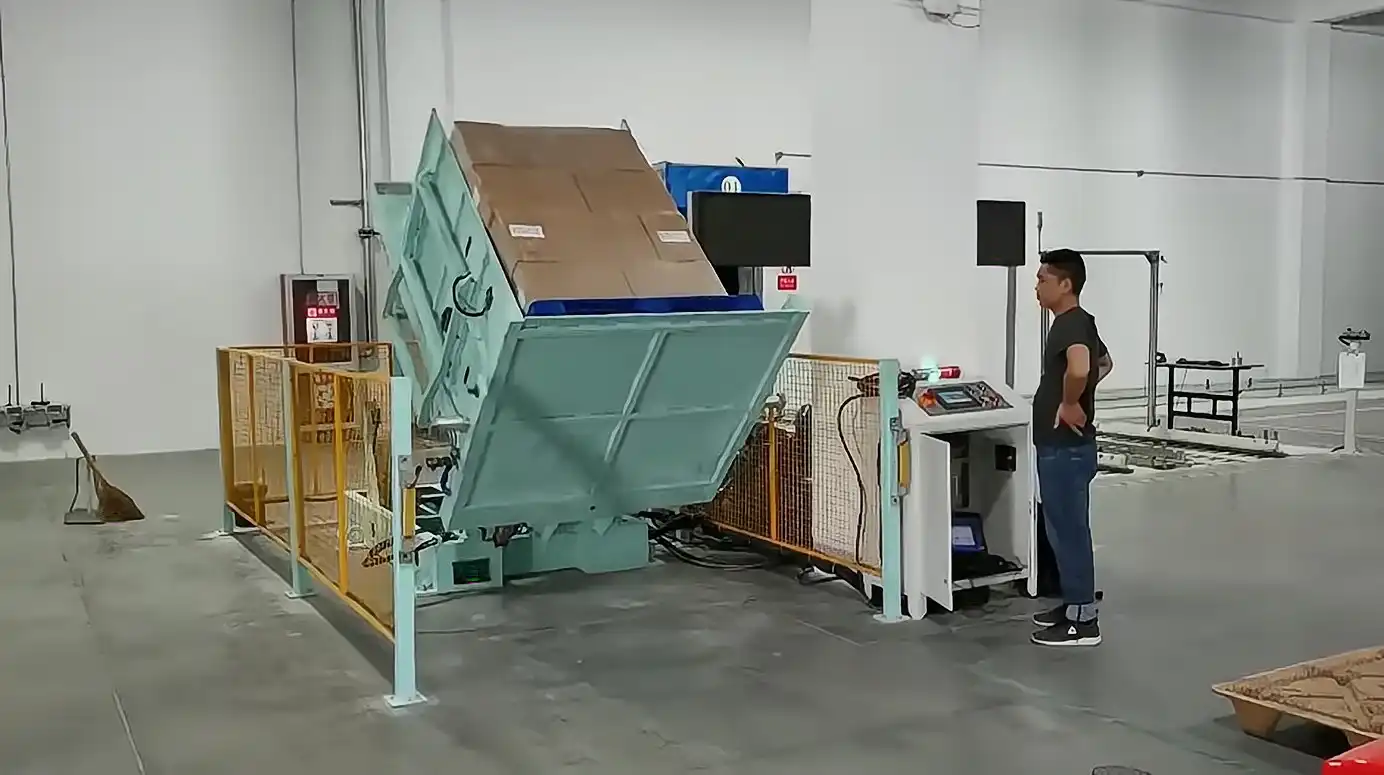
The decision to invest in a pallet inverter is not just about buying a machine. It is about future-proofing your supply chain, especially when you are part of Mexico’s vibrant export sector. These factors go beyond a simple price tag. They are the bedrock of efficient, safe, and profitable operations. Let’s dive deeper into each one, understanding how a smart choice can turn a challenge into a competitive advantage. (Procurement factors, supply chain optimization, material handling solutions)
Why Are Pallet Inverters Essential for Mexico’s Export Operations?
Imagine running a major distribution center in Mexico, dealing with thousands of pallets daily, heading to different countries. This is a common reality for many export-focused businesses. The variety of pallet standards – from common Euro pallets to sturdy US pallets, or even plastic hygienic pallets for specific industries – creates a logistical nightmare. Manual pallet switching is slow, risky, and a huge drain on resources. This issue can cause major delays and even significant fines. I have seen firsthand how these challenges can bottleneck an otherwise efficient operation. (Mexico export logistics, diverse pallet types, manual pallet switching problems)
Pallet inverters are essential for Mexico’s export operations because they automate the complex and labor-intensive process of transferring goods between different pallet types, which is critical for meeting varied international shipping standards. This automation reduces manual handling, minimizes product damage, enhances worker safety, and dramatically speeds up throughput, making global supply chains more resilient and cost-effective.
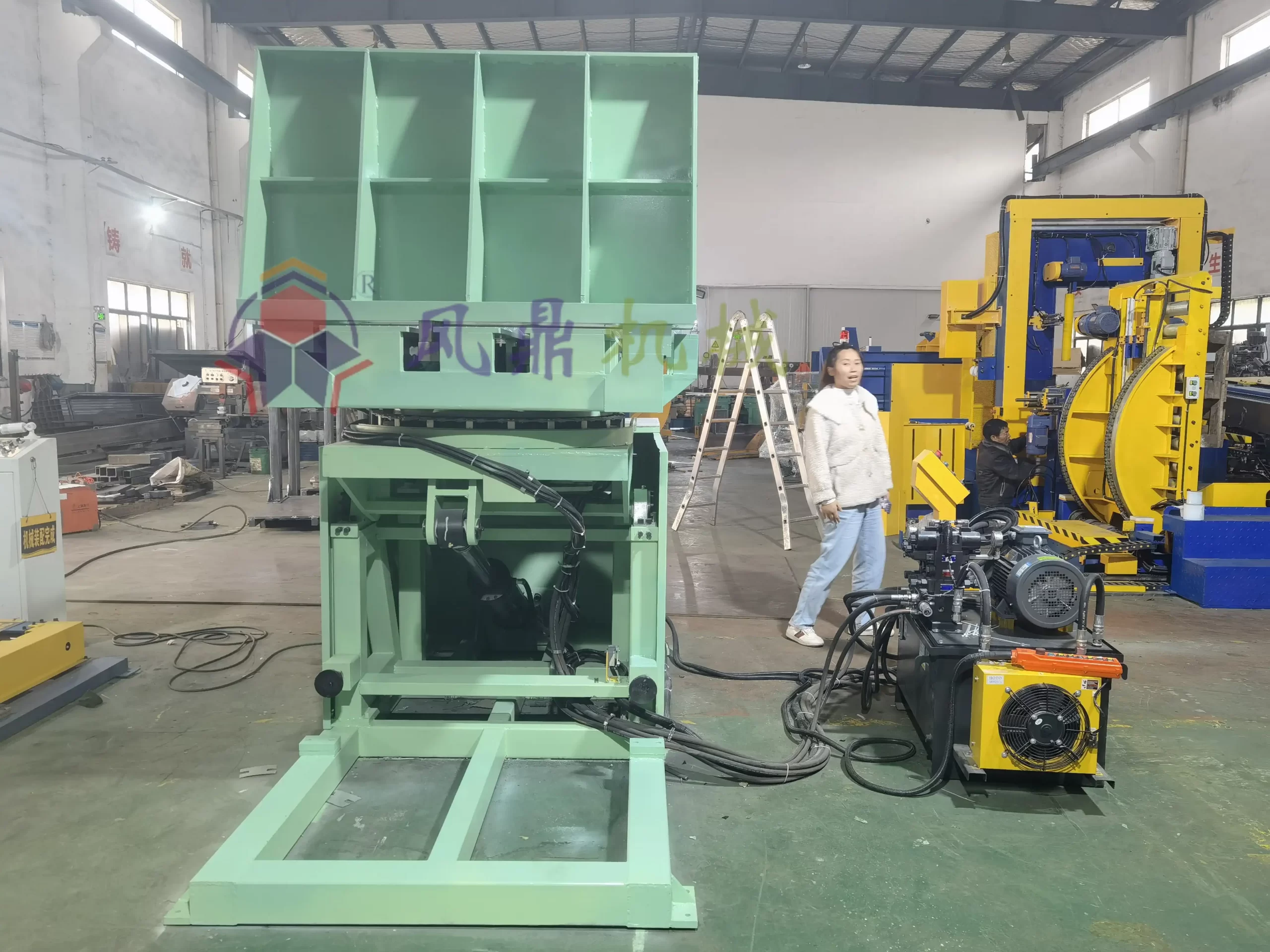
As someone who built FHOPEPACK based on understanding real industry needs, I know the pain of mismatched pallet specifications. Mexico’s strategic location and strong manufacturing base mean goods are constantly moving across borders. Each country might have its own rules, from pallet dimensions to material requirements. For example, food and beverage companies often need to switch products onto clean, hygienic plastic pallets for internal warehousing or specific export destinations, while receiving goods on wooden pallets. This constant shifting cannot be handled effectively by human labor alone. It is too slow, too prone to errors, and too dangerous. Automated pallet inversion technology offers a clear path forward. It ensures compliance, reduces the risk of costly rejections at customs, and maintains product integrity from the factory floor to the final customer. My experience taught me that businesses thrive when they invest in solutions that streamline these complex, yet critical, steps. Investing in the right machine means investing in uninterrupted trade flow and compliance with diverse international shipping requirements, a critical step for any Mexican business looking to solidify its position in the global market. (International shipping standards, logistical challenges, FHOPEPACK solutions)
1. Navigating Diverse Pallet Standards in Export
- The Problem: Mexican manufacturers export to the US, Canada, Europe, and beyond. This means dealing with anything from 48×40 inch GMA pallets (US standard) to 800x1200mm Euro pallets. Many goods arrive on one type of pallet but need to ship on another. Manual conversion is a huge bottleneck.
- The Solution: A versatile pallet inverter can effortlessly switch loads between these various sizes and types, including plastic, wooden, or even specialized pallets. This adaptability is non-negotiable for seamless export operations.
2. Speeding Up Throughput for Just-In-Time Logistics
- The Problem: The modern supply chain demands speed. E-commerce and retail clients expect shorter delivery times. Manual pallet changes can take minutes per pallet, adding up to hours of lost productivity daily in high-volume operations.
- The Solution: Automated pallet changers can complete a cycle in less than a minute. This dramatic increase in speed allows manufacturers to meet tight deadlines, prevent demurrage charges, and respond faster to market demands, boosting overall warehouse throughput.
3. Reducing Product Damage During Handling
- The Problem: When goods are manually transferred, lifted, or even flipped, there is a constant risk of product damage. For delicate items or heavy loads, this risk is amplified, leading to significant financial losses and customer dissatisfaction.
- The Solution: Pallet inverters secure the load before inversion or transfer, minimizing movement and potential impact. This controlled process virtually eliminates damage caused by manual handling, protecting your valuable products and reputation.
4. Meeting Strict Customs and Hygiene Regulations
- The Problem: Certain export markets or industries (like food and pharmaceuticals) have stringent hygiene rules. Products might need to move from an unsanitary incoming pallet to a clean, food-grade plastic pallet for shipping.
- The Solution: Pallet inverters facilitate this transfer without direct human contact with the load. This ensures that hygiene standards are met, helping Mexican exporters comply with international health and safety regulations, and avoiding costly rejections at borders.
What Operational Performance Metrics Should You Prioritize in Mexico?
When I advise clients in Mexico about pallet inverters, they often ask about raw speed. But I tell them, speed is just one piece of the puzzle. What truly matters are the operational performance metrics that directly impact your bottom line and your ability to meet customer demands in export-oriented manufacturing. Think about the capacity to handle diverse pallet types or the ease of integration into existing logistics workflows. Neglecting these can turn a seemingly good deal into a long-term operational nightmare. (Operational performance metrics, logistics workflow, pallet handling capacity)
For Mexican manufacturers, prioritizing operational performance metrics like cycle time versatility across multiple pallet dimensions, consistent uptime, energy efficiency, and seamless integration capabilities is crucial. These factors ensure the pallet inverter can adapt to varied export requirements, maintain high throughput, minimize operational costs, and complement existing automation efforts within a busy distribution center.
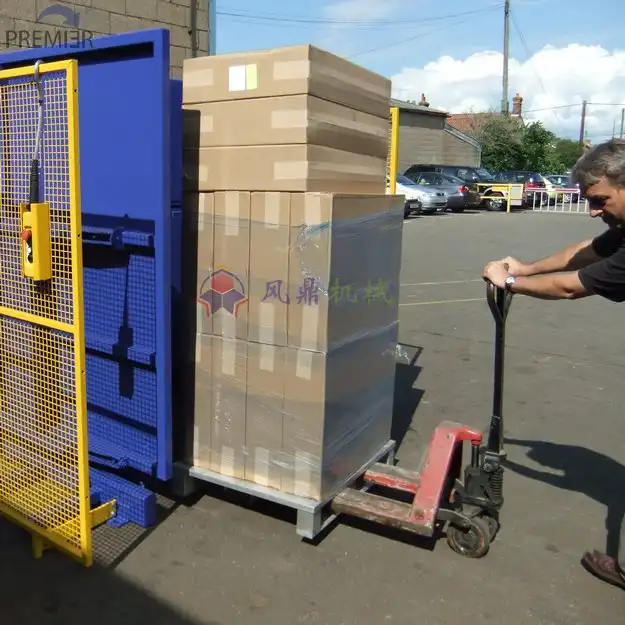
My journey from a packing machine factory employee to founding FHOPEPACK taught me that true value comes from understanding a machine’s full operational impact. For Mexican factories focused on exports, a pallet inverter must do more than just flip pallets. It needs to be a workhorse that can adapt to changing demands. This means a machine that can swiftly switch between different pallet sizes—say, a 1200x800mm Euro pallet and a 1200x1000mm industrial pallet—without lengthy reconfigurations. It needs to operate reliably, day in and day out, minimizing downtime that can halt an entire shipping line. And, it should integrate smoothly with existing conveyor systems or forklift operations. I always advise my clients to look at the total picture: how quickly can it handle various tasks, how often does it break down, and how easily does it fit into their current setup? These are the real indicators of operational excellence and efficiency, helping businesses reduce operational bottlenecks and enhance their overall supply chain responsiveness. (FHOPEPACK expertise, operational excellence, supply chain responsiveness)
1. Cycle Time and Throughput Adaptability
- Challenge: Export operations in Mexico often experience fluctuating volumes and diverse product lines. A static cycle time might be too slow for peak periods or too fast and inefficient for smaller batches.
- Metric Focus: Look for adjustable cycle times that allow for optimization based on load type and volume. Prioritize machines that can maintain high throughput (e.g., 40-60 pallets per hour) while offering flexibility for different pallet configurations, ensuring smooth flow regardless of demand spikes.
2. Multi-Pallet Size and Type Versatility
- Challenge: Mexican exporters deal with Euro, US, plastic, and even custom pallets. A machine limited to one or two types creates a new bottleneck.
- Metric Focus: Evaluate the inverter’s ability to handle a broad range of pallet dimensions and materials without requiring extensive manual adjustments or dedicated setups. This adaptability minimizes changeover times and maximizes the machine’s utility across your entire product range.
3. Integration with Existing Warehouse Systems
- Challenge: Modern warehouses in Mexico use WMS (Warehouse Management Systems) and other automation. A new pallet inverter must fit seamlessly into this ecosystem.
- Metric Focus: Assess the machine’s compatibility with existing conveyor lines, forklifts, and data systems. Look for features like automated infeed/outfeed options and data exchange capabilities (e.g., PLC integration) to ensure it becomes a truly integrated part of your automated logistics chain.
4. Energy Efficiency and Environmental Impact
- Challenge: Rising energy costs and growing environmental consciousness affect operational budgets and brand image.
- Metric Focus: Compare power consumption ratings and look for features like energy-saving standby modes or hydraulic systems that optimize power usage. An energy-efficient pallet inverter reduces utility bills and supports sustainability goals, which is increasingly important for international compliance and corporate responsibility.
5. Durability and Expected Lifespan in High-Intensity Environments
- Challenge: Mexican export hubs are often high-intensity, 24/7 operations. Equipment must withstand constant use without premature wear.
- Metric Focus: Examine the machine’s construction materials, component quality, and design for robustness. A longer expected lifespan, backed by manufacturer warranties, ensures a lower total cost of ownership (TCO) and consistent performance in demanding industrial settings.
How Does Pallet Inverter Technology Enhance Warehouse Safety and Compliance?
Safety is not just a buzzword in manufacturing; it is a fundamental requirement, especially in Mexico’s busy export facilities. I have witnessed the devastating impact of workplace accidents—not just on individuals, but on entire operations through downtime, increased insurance premiums, and legal issues. Manual pallet handling, particularly flipping heavy loads or switching between pallet types, is inherently risky. People can get hurt, and goods can be damaged. It is a problem I knew we had to solve when designing FHOPEPACK’s solutions. (Warehouse safety, compliance standards, manual handling risks)
Pallet inverter technology significantly enhances warehouse safety by automating high-risk manual tasks, thus removing workers from dangerous situations involving heavy loads and complex movements. This automation minimizes the risk of worker injuries from strain or falling objects. Furthermore, modern pallet inverters ensure compliance with international handling and hygiene standards by providing controlled, consistent load transfers that maintain product integrity, crucial for Mexico’s export markets.

When Randal Liu, the founder of FHOPEPACK, started in this industry, he saw how dangerous manual pallet operations could be. He carried that commitment to safety throughout his career, from an employee to owning a successful factory. Now, with FHOPEPACK, we design machines that prioritize the well-being of your workforce. Pallet inverters eliminate the need for employees to manually lift, tilt, or transfer heavy loads. This greatly reduces the risk of back injuries, crushed limbs, and falling product incidents. Moreover, for export-oriented businesses in Mexico, compliance is non-negotiable. Many international regulations dictate how products should be handled and presented. A pallet inverter ensures consistent, controlled processes, which helps meet these standards for hygiene, load stability, and labeling. This proactive approach to safety and compliance protects your team and your business from unnecessary risks and legal complications, ensuring a smooth flow of goods across borders. (Randal Liu’s story, FHOPEPACK commitment, international compliance)
1. Eliminating Manual Handling of Heavy Loads
- Risk: Manually lifting, pushing, or flipping heavy palletized goods is a leading cause of musculoskeletal injuries, strains, and chronic pain among warehouse workers.
- Safety Enhancement: Pallet inverters entirely remove the need for human intervention in load transfer. The machine securely clamps the load and performs the necessary rotation or transfer automatically, keeping personnel clear of danger zones and significantly reducing physical strain.
2. Preventing Product Falls and Accidents
- Risk: During manual pallet changes or inversions, unstable loads can shift, tilt, or even collapse, posing a severe threat of impact injuries to workers and damage to valuable products.
- Safety Enhancement: Advanced pallet inverters feature robust clamping mechanisms and controlled, smooth motion sequences. This ensures the load is held firmly in place throughout the entire process, preventing shifting or falling and protecting both the workforce and the integrity of the goods.
3. Compliance with International Safety Standards
- Risk: Failure to comply with global safety standards (e.g., OSHA, CE, ISO) in material handling can lead to costly fines, export rejections, and reputational damage.
- Safety Enhancement: Reputable pallet inverter manufacturers design their equipment to meet strict international safety certifications. Features like emergency stop buttons, safety guarding, light curtains, and secure interlocks are standard, demonstrating a commitment to safe operation and ensuring regulatory compliance for Mexican exporters.
4. Improving Ergonomics and Reducing Fatigue
- Risk: Repetitive manual tasks, particularly those involving awkward postures or forceful exertions, lead to worker fatigue, which in turn increases the likelihood of errors and accidents.
- Safety Enhancement: By automating the most demanding physical aspects of pallet handling, pallet inverters significantly improve workplace ergonomics. Workers can focus on supervision and less strenuous tasks, reducing fatigue and creating a safer, more comfortable working environment that improves overall morale and productivity.
What Long-Term Cost Savings Can a Smart Pallet Inverter Strategy Deliver?
When I discuss investment with clients in Mexico, especially for export operations, the conversation always turns to costs. But I emphasize that it is not just about the initial purchase price. A smart procurement strategy for a pallet inverter looks at the long-term cost savings and return on investment (ROI). I have seen businesses, including my own journey with FHOPEPACK, achieve financial independence by making wise, forward-thinking investments. Short-sighted decisions can lead to hidden costs that erode profitability over time. (Long-term cost savings, ROI, smart procurement strategy)
A smart pallet inverter strategy delivers significant long-term cost savings for Mexican export manufacturers by substantially reducing labor expenditures through automation, minimizing product damage that leads to waste and claims, and decreasing insurance premiums due to improved workplace safety. These combined efficiencies contribute to a lower total cost of ownership, faster order fulfillment, and avoidance of contract penalties, thereby enhancing overall operational profitability.
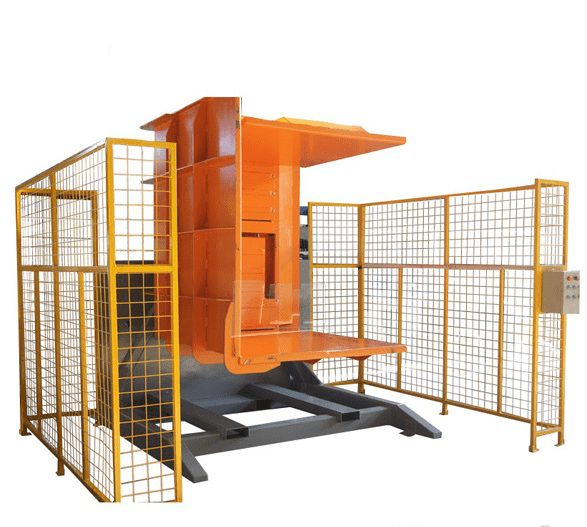
My own story, from an employee to establishing a successful packing machine factory, showed me the power of strategic investment. I helped many clients grow their businesses by guiding them toward solutions that delivered real, tangible savings. With FHOPEPACK, our mission is to make that knowledge accessible. For Mexico’s export manufacturing, a pallet inverter is not an expense; it is an investment in efficiency. Think about labor. In many Mexican regions, labor costs are rising, and finding workers willing to do strenuous, repetitive pallet handling is getting harder. An automatic pallet inverter can replace several workers dedicated to this task, freeing them for more value-added roles or reducing overall headcount. This direct labor cost saving is often the most significant and immediate benefit. Beyond that, the reduction in damaged goods means fewer replacements, fewer claims, and happier customers. Fewer accidents translate to lower insurance costs and less downtime. These are all critical factors that contribute to a healthier bottom line and a more competitive edge in the global market, allowing businesses to reinvest savings into growth and innovation. (FHOPEPACK mission, labor cost reduction, competitive edge)
1. Reduction in Labor Costs and Dependence
- Problem: Manual pallet handling requires multiple workers, increasing wage expenses, overtime, and the struggle to find available labor, particularly for physically demanding tasks.
- Solution: A pallet inverter can automate the work of 2-4 employees who would otherwise be manually changing pallets. This directly reduces labor costs, mitigates the impact of labor shortages, and allows existing staff to be redeployed to more skilled or less strenuous tasks, optimizing human resource allocation.
2. Minimizing Product Damage and Waste
- Problem: Manual pallet changes often lead to product damage from mishandling, dropping, or instability, resulting in costly scrap, rework, and customer returns.
- Solution: Pallet inverters secure loads firmly and perform transfers with precision, greatly reducing the risk of damage. This leads to less product waste, fewer customer complaints, and a significant saving on replacement costs and associated logistics, preserving product quality and customer satisfaction.
3. Lower Insurance Premiums and Accident-Related Costs
- Problem: High rates of workplace injuries from manual handling tasks lead to increased workers’ compensation claims, higher insurance premiums, and potential legal fees.
- Solution: By automating dangerous tasks, pallet inverters drastically reduce the incidence of workplace accidents. A safer environment translates to fewer claims, lower insurance costs, and avoiding the indirect costs associated with accidents, such as investigations, production downtime, and morale impact.
4. Avoiding Penalties and Delays in Export
- Problem: Inefficient or non-compliant pallet switching can cause delays at customs, missed shipping deadlines, and contract penalties from impatient international clients.
- Solution: A reliable pallet inverter ensures rapid, compliant pallet changes, preventing costly delays and penalties. Fast processing means products reach their destination on time, maintaining client satisfaction and avoiding financial repercussions associated with logistical hiccups in the export supply chain.
Why is Choosing a Reliable Pallet Inverter Partner Crucial for Mexican Businesses?
I have always believed that FHOPEPACK is more than just a packing machine supplier; we are a partner. My journey in the packing machine industry, from factory employee to owner, taught me that trust and support are as important as the machinery itself. For Mexican businesses, especially those in export manufacturing, buying a pallet inverter is a long-term strategic decision. It is not just about the machine itself, but about the relationship you build with the supplier. A poor partnership can lead to ongoing frustrations, costly downtime, and missed opportunities. (Reliable partner, FHOPEPACK philosophy, strategic decision)
Choosing a reliable pallet inverter partner is crucial for Mexican businesses because it guarantees consistent operational uptime, provides expert technical support and spare parts availability, offers flexible solutions tailored to specific export needs, and ensures a stable, long-term relationship. This partnership goes beyond the initial sale, safeguarding your investment and supporting your continuous growth in a competitive global market, which is a core tenet of FHOPEPACK’s mission.
From my own experience establishing FHOPEPACK, I understand the value of reliability. My commitment is to help others succeed, just as I was fortunate enough to do. This means providing not just cutting-edge technology but also unparalleled support. For Mexican manufacturers, a reliable partner offers more than just a piece of equipment. They provide peace of mind. This means quick response times for service issues, readily available spare parts to minimize downtime, and the technical expertise to troubleshoot complex problems. It also means a partner who understands your unique operational challenges—be it adapting to new pallet standards for a specific export market or integrating with an existing, complex logistics system. A true partner, like FHOPEPACK, invests in your success. We are not just selling machines; we are building relationships that ensure your pallet inverter continues to operate efficiently for years to come, supporting your growth and helping you achieve financial independence. (FHOPEPACK mission, unparalleled support, tailored solutions)
1. Guaranteed After-Sales Support and Technical Expertise
- Problem: Without reliable after-sales support, technical issues can lead to prolonged downtime, expensive repairs, and significant disruptions to export schedules.
- Solution: A strong partner offers readily available technical support, including remote diagnostics, on-site service, and experienced technicians. This ensures quick resolution of problems, minimizes operational interruptions, and keeps your pallet inverter running optimally, protecting your investment.
2. Availability of Spare Parts and Consumables
- Problem: Delays in obtaining crucial spare parts can lead to extended machine downtime, causing severe bottlenecks in the supply chain and missed export deadlines.
- Solution: A reputable supplier maintains a comprehensive inventory of genuine spare parts and consumables. This ensures that essential components are available quickly when needed, reducing lead times for repairs and maximizing the operational uptime of your pallet inverter.
3. Customization and Adaptability to Unique Needs
- Problem: Standard pallet inverters might not perfectly fit every unique operational setup or handle highly specialized product requirements for diverse export markets.
- Solution: A flexible partner can offer customized solutions or modifications to standard models. This includes tailoring dimensions, control systems, or specialized clamping mechanisms to precisely match your specific pallet types, load characteristics, and integration needs, ensuring optimal performance.
4. Training and Operational Guidance
- Problem: Improper operation or lack of understanding about a pallet inverter can lead to inefficiencies, safety hazards, and premature wear of the equipment.
- Solution: A committed partner provides thorough training for your operational and maintenance staff. This ensures that your team can operate the machine safely and efficiently, perform routine maintenance, and troubleshoot minor issues, maximizing the machine’s lifespan and effectiveness.
5. Long-Term Relationship and Continuous Improvement
- Problem: Some suppliers focus only on the sale, leaving customers without ongoing support or access to future innovations.
- Solution: A genuine partner seeks a long-term relationship. This means offering ongoing advice, sharing industry insights, and providing access to future upgrades or new technologies. This collaborative approach helps Mexican businesses stay competitive and continuously improve their material handling processes over time.
What’s the Smartest Approach to Pallet Inverter Procurement for Mexico’s Export Future?
Choosing the right pallet inverter in Mexico for your export manufacturing is more than just a purchase. It is a strategic investment that shapes your operational efficiency, safety, and profitability for years to come. Based on my journey with FHOPEPACK, helping businesses streamline their packing and handling processes, I can tell you that a holistic approach is key. Do not just look at the upfront cost. Consider the total value, the long-term benefits, and the partnership you are entering. (Smart procurement, FHOPEPACK approach, total value)
The smartest approach to pallet inverter procurement for Mexico’s export future involves a comprehensive evaluation of operational adaptability, safety compliance, long-term cost savings, and the reliability of the supplier. This means prioritizing machines that handle diverse pallet types, enhance worker safety, reduce labor and damage costs, and are supported by a partner committed to excellent after-sales service and customized solutions, ensuring a robust and resilient supply chain for continuous export growth.
In conclusion, for Mexican export manufacturers, a well-chosen pallet inverter is a vital asset. Focus on adaptability, safety, cost savings, and a strong partner. This ensures efficient operations, compliance, and long-term success in the competitive global market.








