
Pallet Inverter Brazil: Why Are Buyers in Agribusiness Looking for Smarter Pallet Exchange Solutions?
Do you run an agribusiness in Brazil, grappling with slow, unsafe, and costly pallet operations? Many managers I talk to are frustrated. They face constant pressure to ship goods faster, keep costs down, and ensure worker safety. Traditional methods of moving and swapping pallets just cannot keep up anymore. This problem is especially big in a dynamic market like Brazil’s agribusiness sector.
Buyers in Brazilian agribusiness are actively looking for smarter pallet exchange solutions because manual processes are inefficient, unsafe, and lead to significant financial losses due to diverse international pallet standards, labor shortages, and increasing customer demands for faster, flawless delivery. They need automated systems to handle frequent pallet changes, reduce manual labor risks, and ensure product integrity from warehouse to market.

It is clear that the status quo is not sustainable for modern supply chains. If you are experiencing these issues, you are not alone. Let us dive deeper into why this shift is happening and what smart solutions look like.
Why are traditional pallet handling methods failing agribusiness in Brazil?
Are your current pallet handling operations causing more headaches than they solve? I have spoken with many logistics managers, similar to Carlos, who find themselves stuck in a loop of inefficiency. They often see their warehouses struggle with outdated practices. This problem directly affects their ability to move products like frozen meat, fruits, and grains from Brazil to the world efficiently.
Traditional pallet handling methods are failing agribusiness in Brazil primarily due to their reliance on manual labor, which struggles with the volume, speed, and precision required by modern supply chains, leading to bottlenecks, higher operational costs, and an increased risk of human error and workplace injuries.
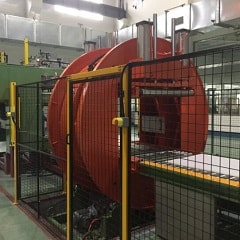
In my journey through the packing machine industry, I have seen first-hand how much businesses depend on smooth internal logistics. Manual pallet handling, which involves people physically moving, stacking, or swapping pallets, used to be the only way. But today, with massive volumes of produce and strict deadlines, this approach simply cannot deliver. Think about a large food and beverage group, like the one Carlos manages. They deal with thousands of pallets daily. Each one needs careful handling. Manual processes introduce too many points of failure. This leads to slower operations and missed delivery windows. Also, finding skilled labor for such demanding work is getting harder and more expensive. Young people are often unwilling to take on heavy lifting jobs. This creates a critical labor shortage. The existing workforce faces higher risks of injury from constantly moving heavy goods or trying to flip loaded pallets. These injuries are not just bad for the workers. They also cause lost time, higher insurance costs, and potential legal issues for the company. Moreover, manual checks and sorting often result in errors. These errors can lead to damaged goods or incorrect shipments. This further adds to costs and hurts customer trust. Agribusinesses in Brazil, especially those involved in exports, must adapt. They need to embrace more reliable and efficient methods. This ensures their produce arrives fresh and on time. (Challenges of traditional pallet handling, Brazilian agribusiness logistics, manual labor inefficiency)
What hidden costs do Brazilian agribusinesses face from manual pallet exchange?
Are you fully aware of all the expenses linked to your manual pallet exchange process? Many businesses only consider the obvious costs, like wages for workers. However, I have learned that the real financial drain often comes from less obvious areas. These hidden costs can silently erode profits and hinder growth for agribusinesses in Brazil.
Brazilian agribusinesses face significant hidden costs from manual pallet exchange, including substantial financial penalties for delayed shipments, increased insurance premiums due to higher injury risks, greater product damage rates, and the long-term impact of reduced operational efficiency on customer satisfaction and brand reputation.
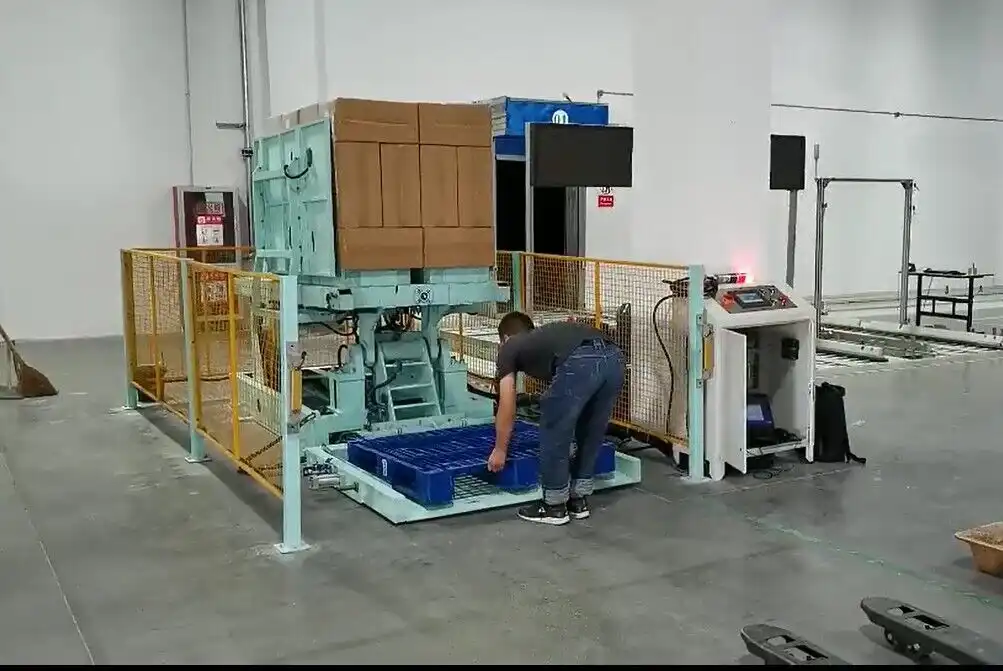
When I started FHOPEPACK, one of my main goals was to help businesses truly understand their operational bottlenecks. Manual pallet changing, for instance, has a domino effect of expenses. Consider a situation where a critical shipment of produce to an international market is delayed. This could be due to slow manual sorting or a pallet getting stuck during an exchange. This delay might trigger contractual penalties. These penalties can sometimes be huge, wiping out a significant chunk of profit. Additionally, a slow process means fewer goods can move through the warehouse each day. This reduces overall throughput. It acts like a invisible tax on every product.
Let us break down some of these hidden costs:
-
Contractual Fines & Customer Loss:
- Problem: Delays from manual processes mean missing strict delivery windows.
- Impact: Leads to fines from retail chains or international buyers. It also risks losing clients who need reliable, fast service. Carlos, for example, faces pressure from e-commerce and retail customers for shorter delivery cycles.
- Example: A shipment of perishable goods delayed by 24 hours due to manual pallet issues might incur a 5% penalty on the total order value.
-
Increased Insurance & Compensation:
- Problem: Manual flipping or moving heavy pallets is dangerous.
- Impact: Higher rates for workers’ compensation insurance. Direct costs from injury claims, medical expenses, and lost workdays. Carlos has already seen several accidents from manual flipping.
- Example: A single serious injury can cost a company tens of thousands in medical bills and lost productivity.
-
Product Damage & Waste:
- Problem: Human error or improper handling during manual exchange.
- Impact: Leads to spoiled produce, damaged packaging, or broken goods. This means financial write-offs and reduced product quality.
- Example: If 0.5% of pallets get damaged during manual transfer, handling thousands of pallets daily can result in substantial financial losses from discarded product.
-
Inefficient Space Utilization:
- Problem: Manual operations often need more floor space for staging and maneuvering.
- Impact: Reduces the effective storage capacity of the warehouse. It limits potential for growth.
- Example: An automated system might only need a few square meters, while a manual setup requires clear, wide aisles and staging areas.
These costs are often overlooked in daily operations. However, they significantly impact the bottom line. Recognizing them is the first step toward finding smarter, more cost-effective solutions for Brazilian agribusiness. (Hidden costs of manual logistics, agribusiness financial impact, operational inefficiency)
How do diverse international pallet standards complicate agribusiness logistics in Brazil?
Does the thought of juggling Euro, American, and plastic pallets for your international shipments make your head spin? For agribusinesses in Brazil, exporting goods means dealing with a complex web of pallet size requirements. This is not just a logistical hurdle. It is a major operational challenge that can slow down entire supply chains.
Diverse international pallet standards significantly complicate agribusiness logistics in Brazil by creating a constant need for frequent, labor-intensive pallet exchanges, leading to bottlenecks at critical export points, increasing the risk of errors, and requiring specialized handling that can delay shipments and incur extra costs.
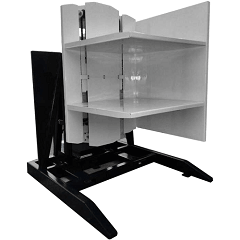
My journey in the packing machine industry has shown me that global trade is full of these kinds of specific needs. When you export, say, Brazilian beef to Europe, you must use Euro pallets (1200x800mm). But if you are sending the same product to the United States, you need GMA pallets (1219x1016mm). This difference is not just about size. It is about how the goods are loaded, stacked, and transported legally and safely across borders. Carlos, working for a multinational food and beverage group, faces this exact scenario daily. His distribution center processes thousands of pallets. Many need to switch from one standard to another before leaving the warehouse. This constant need for switching adds massive complexity. If done manually, it is a slow, error-prone, and labor-intensive task. Workers must physically transfer goods from one pallet type to another. This takes time, increases the chance of product damage, and ties up valuable staff. This challenge is unique to international logistics, especially for countries like Brazil that are big exporters. An efficient solution must handle these transitions smoothly. It must ensure compliance with international rules without slowing down the entire supply chain. (International pallet standards, Brazil export logistics, diverse pallet sizes challenge)
What defines a “smart” pallet exchange solution for modern agribusiness?
Are you looking for a pallet solution that goes beyond simply flipping pallets? Modern agribusiness demands more than just basic functionality. It needs intelligence, adaptability, and seamless integration. In my experience, a “smart” pallet exchange solution is one that truly understands and responds to the dynamic needs of today’s fast-paced supply chains, particularly in high-volume environments like Brazil’s food industry.
A “smart” pallet exchange solution for modern agribusiness is defined by its ability to provide high levels of automation, adaptability to multiple pallet sizes, advanced safety features, robust construction for continuous operation, and intelligent control systems that integrate with existing warehouse management systems to optimize throughput and minimize human intervention.
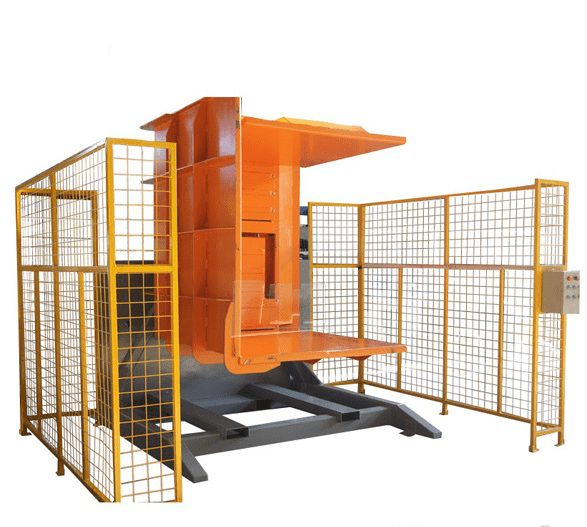
When I think about what makes a packing machine truly “smart,” it comes down to its ability to solve real-world problems efficiently and reliably. For pallet exchange, this means more than just having a motor. It means a system that acts as a strategic asset. Carlos needs equipment that is reliable and reduces manual operations. He needs a partner, not just a seller. This is exactly where FHOPEPACK excels. Our focus is on providing solutions that meet these high standards.
Here are the key characteristics of a truly smart pallet exchange solution:
-
High Automation Levels:
- Feature: Fully automatic or semi-automatic systems.
- Benefit: Greatly reduces or eliminates manual handling. This increases speed and consistency. It frees up staff for other tasks.
- FHOPEPACK Advantage: Our systems, like the FHOPEPACK Pallet Inverter, are designed for high throughput, minimizing human interaction and speeding up pallet changes.
-
Adaptability to Multiple Pallet Sizes:
- Feature: Can handle Euro pallets, GMA pallets, plastic pallets, and slip sheets.
- Benefit: Crucial for international trade. It removes the need for multiple machines or manual changes.
- FHOPEPACK Advantage: Our machines offer flexible settings and adjustable components. This allows them to switch between different pallet types with ease.
-
Enhanced Safety Features:
- Feature: Integrated safety barriers, emergency stops, automated interlocking systems.
- Benefit: Protects workers from moving parts and falling loads. This reduces accident rates and boosts compliance.
- FHOPEPACK Advantage: Safety is a core design principle for FHOPEPACK machines. This ensures a secure working environment.
-
Robust and Durable Construction:
- Feature: Built with heavy-duty materials and reliable components.
- Benefit: Ensures long-term stable operation, even in harsh warehouse conditions. It means less downtime and lower maintenance costs.
- FHOPEPACK Advantage: FHOPEPACK machines are built to last. This provides a strong return on investment over many years of intensive use. For heavy-duty needs, SHJLPACK also offers reliable options, but FHOPEPACK focuses on optimized long-term performance.
-
Integration Capabilities:
- Feature: Can connect with Warehouse Management Systems (WMS) and other logistics software.
- Benefit: Enables seamless data flow and process optimization. This offers real-time tracking and control.
- FHOPEPACK Advantage: Our solutions are designed to fit into modern, connected warehouse environments. This supports a truly automated supply chain.
A smart solution is an investment in the future of your agribusiness. It is about optimizing every step of your logistics process. (Smart pallet solutions, automated pallet changers, FHOPEPACK benefits, warehouse technology)
How can automated pallet inverters improve safety and compliance in agribusiness warehouses?
Are you tired of worrying about workplace accidents and struggling to meet stringent safety regulations in your warehouse? For agribusinesses, where heavy goods and fast-paced operations are common, safety is not just a good practice. It is a legal and ethical imperative. Automated pallet inverters are changing the game by tackling these challenges head-on.
Automated pallet inverters significantly improve safety and compliance in agribusiness warehouses by eliminating risky manual handling, reducing the potential for human error-induced accidents, ensuring stable product transfers, and helping companies meet strict industry safety standards while protecting valuable inventory and personnel.

During my time establishing successful packing machine factories, I realized that worker safety is paramount. An injured worker means a disrupted workflow, increased costs, and, most importantly, human suffering. Traditional methods of pallet exchange often involve workers manually pushing, pulling, or even tilting pallets. This creates several dangerous situations. Goods can topple, crushing workers or causing severe injuries. Back strains and other musculoskeletal disorders are common. Automated pallet inverters remove people from these high-risk areas. They perform the heavy lifting and precise movements with mechanical precision. This reduces the risk of accidents dramatically. For example, systems can automatically clamp the load before turning, preventing items from falling. This ensures products remain secure throughout the exchange process. Such systems help agribusinesses comply with occupational safety standards. They also lower insurance costs and avoid costly legal disputes stemming from workplace injuries. By automating this crucial step, businesses can create a safer work environment for their teams. This also ensures their valuable produce is handled without damage. This is a win-win for everyone involved in the logistics chain. (Automated pallet safety, warehouse compliance, injury prevention, agribusiness solutions)
Why is a long-term partnership crucial for adopting pallet automation in agribusiness?
Are you just looking to buy a machine, or are you seeking a lasting solution for your logistics challenges? For Brazilian agribusinesses adopting pallet automation, the relationship with a supplier goes far beyond a single transaction. It is about forging a long-term partnership that ensures sustained success and growth.
A long-term partnership is crucial for adopting pallet automation in agribusiness because it provides ongoing support, expert technical assistance, future-proof scalability, and customized solutions that evolve with the business, ensuring optimal performance and maximizing the return on investment over many years.

From my perspective as RANDAL LIU, who built FHOPEPACK on a foundation of solving client problems, I know that success comes from true partnership. When a company invests in advanced automation like pallet inverters, they are not just buying steel and electronics. They are investing in a promise of efficiency, safety, and reliability. This promise needs to be upheld through ongoing support. Carlos, for example, is looking for a partner who truly understands warehousing pain points. He wants someone who offers flexible solutions, not just machines.
Here is why a lasting partnership matters:
-
Continuous Technical Support:
- Benefit: Ensures fast troubleshooting, minimizes downtime, and keeps operations running smoothly.
- FHOPEPACK Commitment: We offer comprehensive after-sales service. We believe in being there for our clients long after the purchase. This includes remote assistance and on-site support.
-
Spare Parts Availability and Maintenance:
- Benefit: Easy access to genuine spare parts and expert maintenance services. This extends the lifespan of the equipment and prevents unexpected breakdowns.
- FHOPEPACK Advantage: We maintain a ready supply of parts. Our technicians are trained to perform preventative and corrective maintenance efficiently. SHJLPACK also offers good service, but our focus at FHOPEPACK is on building a robust support network tailored to our clients’ long-term needs.
-
Scalability and Future Upgrades:
- Benefit: The ability to expand or upgrade your system as your business grows or technology advances.
- FHOPEPACK Approach: Our solutions are designed with modularity in mind. This allows for easy integration of new features or capacity increases down the line.
-
Customization and Adaptation:
- Benefit: Access to specialized knowledge to adapt the solution to unique warehouse layouts or changing product requirements.
- FHOPEPACK Expertise: We work closely with clients to understand their specific needs. We then tailor our machines to fit their precise operational environment, ensuring maximum effectiveness.
Choosing the right partner means choosing peace of mind. It means knowing that your investment is protected and your operations will always run at peak efficiency. (Long-term automation partnership, agribusiness support, FHOPEPACK service, customized logistics solutions)
Conclusion
Buyers in Brazilian agribusiness are moving towards smart pallet exchange solutions due to intense pressure from diverse pallet standards, labor shortages, and safety concerns. Automated pallet inverter systems offer a pathway to enhanced efficiency, improved safety, and reduced operational costs. Partnering with a knowledgeable supplier like FHOPEPACK ensures long-term success and optimized warehouse operations.








